Ai Overview
Android commands over seventy percent of global smartphone market share, making it the most strategically important platform for any business or developer building a crypto wallet application in 2026. Requires significant security infrastructure investment and triggers money transmission licensing obligations in most regulated markets including the USA and UK.
Secure Crypto Wallet App Development for Android: Complete Guide for 2026
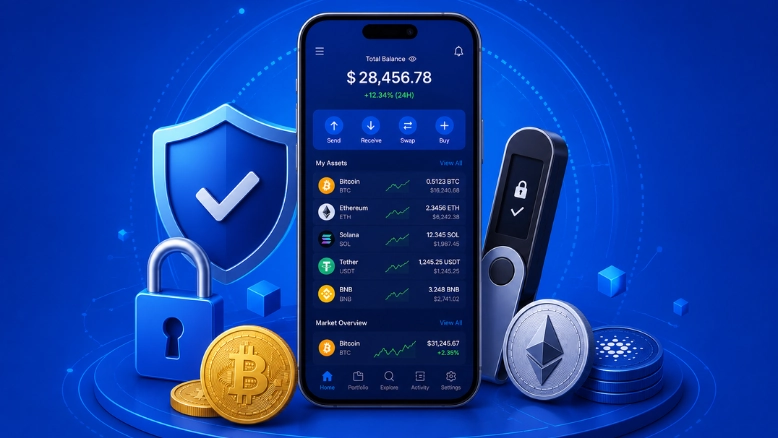
Android commands over seventy percent of global smartphone market share, making it the most strategically important platform for any business or developer building a crypto wallet application in 2026. The combination of Android’s massive reach across the USA, UK, UAE, Canada, and emerging markets with the explosive growth of mobile crypto adoption creates an unprecedented opportunity for well-built wallet applications. But it also creates an environment where the stakes for security failures are extraordinarily high, and where the gap between a compliant, enterprise-grade wallet and an insecure, rejected application is determined almost entirely by the quality of development decisions made before a single line of code is written.
Secure crypto wallet app development for Android in 2026 is a multi-disciplinary engineering challenge that spans cryptographic key management, blockchain protocol integration, mobile security architecture, UX design, regulatory compliance, and performance optimization. Each of these dimensions must be addressed with the same level of rigor for the final application to be competitive, compliant, and trustworthy in a market where users increasingly understand the difference between a well-secured wallet and one that exposes them to preventable risk. Explore comprehensive wallet development resources at Nadcab Labs
This complete guide walks through every critical dimension of Android crypto wallet app development for 2026, from architecture selection and security implementation to feature prioritization, compliance integration, and the emerging trends that will define the next generation of mobile wallet applications across global markets.
Why Android Crypto Wallet Development Matters in 2026
The global cryptocurrency wallet market continues its rapid expansion in 2026, driven by mainstream adoption of digital payments, growth of DeFi protocols accessible from mobile devices, and increasing institutional recognition of crypto as a legitimate asset class. Android’s dominance across developing economies in Southeast Asia, Africa, Latin America, and South Asia means that Android wallet applications reach user segments that iOS-only solutions structurally cannot serve. For businesses targeting global crypto adoption, Android is not just the primary platform; it is often the only platform that matters in their highest-growth markets.
At the same time, the regulatory landscape has matured significantly. Wallet applications operating in the USA, UK, UAE, and Canada now face explicit regulatory requirements around KYC verification, AML transaction monitoring, and data privacy that must be built into the application architecture rather than addressed post-launch. Google Play Store policies have also tightened around financial applications, requiring demonstrated security practices and clear disclosures before crypto wallet apps can be published and maintained on the platform.
Market Reach
Android powers over 70% of global smartphones, making it the essential platform for reaching the broadest possible crypto user base across all markets.
Security Stakes
Crypto wallet security failures result in permanent, irreversible asset loss. Android-specific threats require purpose-built security architecture beyond standard mobile app practices.
Regulatory Maturity
2026 regulatory requirements across all major markets demand compliance infrastructure that must be designed into wallet architecture from the project start, not retrofitted.
Commercial Opportunity
Multiple proven monetization models from transaction fees to DeFi yield sharing create sustainable revenue opportunities for well-built Android wallet applications.
Crypto Wallet Architecture Types for Android
The architecture you choose for your Android crypto wallet determines its security model, user experience, regulatory obligations, and commercial scalability from day one.
Architecture selection is the most consequential decision in crypto wallet app development for Android because it determines everything that follows. The wrong architecture choice creates security vulnerabilities that cannot be patched after launch, compliance gaps that attract regulatory attention, and user experience limitations that drive users to competitors. Our team has built Android wallet applications across all major architecture types and has developed a clear framework for matching architecture to use case and risk profile that we share with all prospective clients before development begins.
Core Features of a Secure Android Crypto Wallet App
The essential feature set that every competitive Android crypto wallet must include in 2026.
The feature landscape for Android crypto wallet apps has expanded dramatically since the early days of simple Bitcoin wallets. In 2026, users expect a rich, multi-chain experience that supports everything from basic send and receive operations to DeFi yield farming, NFT management, and cross-chain swaps from a single interface. But no amount of feature richness compensates for deficiencies in core wallet security and reliability. The following features represent the non-negotiable foundation of any Android wallet that expects to compete seriously in the current market across all user segments in the USA, UK, UAE, and Canada.
Secure Key Generation
BIP-39 compliant mnemonic phrase generation using cryptographically secure random number generation. Android Keystore-backed key storage that leverages hardware security elements available on modern Android devices for maximum protection against extraction attacks.
Biometric Authentication
Fingerprint and facial recognition authentication using Android Biometric Prompt API with hardware-backed key binding. Biometric authentication tied to transaction signing ensures that even if a device is unlocked, fund transfers require explicit biometric confirmation from the authorized owner.
Multi-Chain Support
Native support for Bitcoin, Ethereum, BNB Smart Chain, Polygon, Solana, Arbitrum, and TRON as a minimum 2026 baseline. HD wallet architecture using BIP-44 derivation paths enables single seed phrase management across all supported blockchain networks simultaneously.
Transaction Management
Send, receive, and history tracking with real-time fee estimation, customizable gas settings, transaction status monitoring, and push notification alerts for all wallet activity. QR code scanning and deep link support for seamless payment request integration.
Portfolio Dashboard
Real-time portfolio valuation across all held assets with price charts, performance tracking, and fiat conversion display. Asset allocation visualization helps users understand their portfolio composition and make informed rebalancing decisions from their Android device.
Cross-Chain Swaps
In-app asset exchange across supported blockchain networks without requiring centralized exchange accounts. DEX aggregator integration ensures users receive best available rates across multiple liquidity sources with transparent fee display before confirmation.
Android-Specific Security Architecture
Android’s open ecosystem creates both opportunities and security challenges that iOS does not face to the same degree. Sideloading, device rooting, and the fragmented hardware landscape across thousands of Android device models create attack surfaces that wallet developers must explicitly address. The security architecture of a 2026 Android crypto wallet must be designed with Android-specific threat models in mind, implementing protections that go significantly beyond standard mobile app security best practices used for non-financial applications.
Security Layer Implementation Priority
Recommended Technology Stack for Android Crypto Wallet Development
The technology stack decisions made during Android crypto wallet development directly impact security, performance, maintainability, and the speed at which new blockchain networks and features can be added. In 2026, the recommended stack for serious Android wallet development balances performance, security, and developer ecosystem maturity. Kotlin remains the language of choice for Android native development due to its null safety, coroutine support for asynchronous blockchain operations, and seamless integration with Android security APIs that are essential for wallet key management.
| Layer | Technology | Purpose | Priority |
|---|---|---|---|
| Language | Kotlin (primary), C++ (crypto operations) | Application logic and native cryptographic computation | Essential |
| Key Security | Android Keystore, StrongBox, HSM APIs | Hardware-backed private key generation and storage | Critical |
| Blockchain SDKs | Web3j, Bitcoin J, Solana Kotlin SDK | Blockchain node interaction and transaction building | Critical |
| Architecture | MVVM with Clean Architecture, Hilt DI | Testable, maintainable application structure | High |
| Data Storage | Encrypted Shared Preferences, Room DB with SQL Cipher | Encrypted local storage for wallet data and transaction history | Critical |
| Node Connectivity | Infura, Alchemy, QuickNode APIs or self-hosted nodes | Reliable blockchain data access and transaction broadcasting | High |
DeFi and Advanced Android Wallet Features for 2026
Advanced feature integration separates competitive wallets from basic send-and-receive applications in the current market.
The 2026 Android crypto wallet market is highly competitive, and differentiation increasingly comes from the depth and quality of advanced feature integration rather than core wallet functionality which most serious wallets now handle reliably. DeFi integration, NFT management, and WalletConnect compatibility have shifted from premium features to expected capabilities that users in the USA, UK, UAE, and Canada now evaluate as standard requirements. Wallets that deliver these features with seamless UX while maintaining rigorous security standards command premium user loyalty and generate significantly higher revenue per user than basic wallets competing on transaction fees alone.
DeFi Protocol Integration
In-app access to lending, borrowing, yield farming, and liquidity provision through direct smart contract interaction. Users can earn yield on holdings, supply collateral for loans, and manage DeFi positions without leaving the wallet application, significantly increasing engagement and retention metrics.
NFT Management
Full NFT portfolio display, transfer, and marketplace access integrated directly into the wallet interface. Support for ERC-721, ERC-1155, and Solana NFT standards with metadata fetching, rarity display, and collection organization features that appeal to collector and gaming user segments.
WalletConnect v2 Integration
WalletConnect v2 support enables the wallet to connect securely with thousands of dApps across all major blockchain networks. This single integration unlocks access to the entire Web3 application ecosystem for users, dramatically expanding the utility and perceived value of the wallet application.
Staking Integration
Native staking for Proof of Stake assets including Ethereum, Solana, Polkadot, and others allows users to earn passive income on holdings directly within the wallet. Staking generates ongoing revenue share for wallet operators and creates powerful long-term asset retention incentives.
Fiat On and Off Ramp
Integrated fiat-to-crypto and crypto-to-fiat conversion through licensed payment provider partnerships. Removes the friction of requiring users to use separate exchange accounts for fiat conversion, significantly improving onboarding conversion rates and daily active usage across all markets.
Tax and Reporting Tools
Automated transaction history export in formats compatible with popular tax software used in the USA, UK, UAE, and Canada. Capital gains tracking, cost basis calculation, and annual summary generation reduce the compliance burden that discourages many users from fully engaging with crypto operations.
Compliance Requirements for Android Crypto Wallet Apps by Market
Regulatory compliance is no longer an optional consideration for Android crypto wallet development. In 2026, wallet applications operating in the USA, UK, UAE, and Canada face explicit regulatory frameworks that determine what compliance capabilities must be built into the application before it can legally serve users in those markets. Building compliance infrastructure post-launch is significantly more expensive and disruptive than designing it in from the start, and regulatory gaps discovered after launch can result in mandatory app removal from Google Play Store or enforcement action against the operating company.
| Compliance Area | USA | UK | UAE | Canada |
|---|---|---|---|---|
| KYC Verification | FinCEN / BSA | FCA MLRs | VARA Rulebook | FINTRAC PCMLTFA |
| AML Monitoring | Required | Required | Required | Required |
| Data Privacy | CCPA (California) | UK GDPR | PDPL 2022 | PIPEDA |
| Licensing | MTL (state-level) | FCA Crypto Registration | VARA VASP License | MSB FINTRAC Registration |
| Tax Reporting | IRS Form 1099-DA | HMRC CGT Reporting | FTA Reporting | CRA Capital Gains |
Android Crypto Wallet Development Lifecycle
A proven eight-phase development methodology for building secure, compliant, and production-ready Android crypto wallet applications.
Requirements Definition and Architecture Design
Define target user segments, supported blockchains, feature priorities, security requirements, and compliance obligations for each target market. Select wallet architecture type (non-custodial, custodial, or MPC) based on use case, security requirements, and regulatory implications. Create detailed technical specification and security architecture documentation before any development work begins.
Security Architecture and Threat Modeling
Conduct formal Android-specific threat modeling to identify all attack surfaces and prioritize security controls. Define cryptographic standards, key management procedures, network security policies, and data storage requirements. Document security controls for each identified threat vector before coding begins to prevent security gaps from being discovered only during post-development audit.
Core Wallet Engine Development
Build the foundational wallet engine including key generation, BIP-39 seed management, BIP-44 HD wallet derivation, transaction signing, and blockchain interaction layers. This core engine is the most security-critical component and must be developed by engineers with proven cryptographic and blockchain development experience, with peer review of all security-critical code paths.
Blockchain Network Integration
Integrate all target blockchain networks using appropriate SDKs and node provider APIs. Implement transaction fee estimation, gas optimization, and transaction status tracking for each network. Test all integrations against mainnet and testnet environments, including edge cases around network congestion, failed transactions, and chain reorganization handling.
UI/UX Development and Accessibility
Build the user interface following Material Design 3 guidelines with a focus on clarity for financial operations where user errors have irreversible consequences. Implement comprehensive input validation, transaction confirmation screens with full detail display, and accessibility features. Conduct usability testing with representative users from target markets to identify friction points before launch.
Compliance System Integration
Integrate KYC verification providers, AML transaction monitoring, and tax reporting systems based on the regulatory requirements of target markets. Build user onboarding flows that collect required identity verification data in a way that satisfies regulatory requirements without creating excessive friction that reduces conversion rates during user acquisition.
Independent Security Audit
Commission a comprehensive security audit from an independent firm specializing in mobile application and blockchain security. The audit must cover cryptographic implementation correctness, Android-specific vulnerability testing, smart contract interaction security, network communication security, and penetration testing against all threat vectors identified in the threat model. All critical and high findings must be remediated before any production launch.
Google Play Submission and Post-Launch Monitoring
Prepare Google Play Store submission with all required financial application disclosures, privacy policy, and compliance documentation. Implement crash reporting, performance monitoring, and security event logging for post-launch visibility. Establish a security incident response process and bug bounty program before launch to ensure rapid response to any vulnerabilities discovered after release by researchers or users.
Common Challenges in Android Crypto Wallet Development
Android crypto wallet development presents unique challenges that even experienced mobile developers encounter when entering the blockchain space for the first time. Understanding these challenges in advance allows development teams to allocate appropriate time, resources, and expertise before they become costly blockers that delay launch timelines or compromise security. Our team has compiled the most consistently encountered challenges from Android wallet projects across all markets and the mitigation strategies that have proven most effective in practice.
| Challenge | Severity | Mitigation Strategy |
|---|---|---|
| Android Device Fragmentation | High | Comprehensive device testing matrix, graceful degradation for devices without StrongBox, minimum API level enforcement |
| Key Management Complexity | Critical | Engage dedicated cryptographic engineers, independent audit before launch, automated testing of all key management code paths |
| Multi-Chain Synchronization | Medium | Reliable node provider APIs with fallback nodes, efficient background sync using Android Work Manager, smart caching strategies |
| Battery and Performance Impact | Medium | Efficient background processing, intelligent sync scheduling, battery impact testing, WebSocket connections instead of polling |
| Google Play Policy Compliance | High | Pre-submission compliance review, accurate financial app category disclosure, complete privacy policy, swift response to policy change updates |
| Regulatory Requirement Changes | Ongoing | Modular compliance architecture, regulatory monitoring program, legal counsel in each target market, rapid update deployment capability |
Authoritative Industry Standards for Android Wallet Security
Every serious Android crypto wallet application must be built against established industry security standards that define minimum acceptable security controls for financial applications handling user assets. Adherence to these standards provides a defensible security baseline, simplifies security audit processes, and demonstrates to regulators in the USA, UK, UAE, and Canada that the application was built with institutional-grade security practices. The following eight standards represent the non-negotiable security and development framework our team applies to every Android wallet engagement.
01
OWASP Mobile Security Testing Guide (MSTG)
The definitive standard for mobile application security testing. All Android wallet applications must achieve MSTG compliance for both the MASVS-L1 and MASVS-L2 verification levels before production deployment, with MASVS-L2 required for any wallet holding user funds.
02
BIP Standards (BIP-32, BIP-39, BIP-44)
Bitcoin Improvement Proposals defining HD wallet key derivation, mnemonic phrase generation, and multi-account hierarchy standards that all serious wallets must implement correctly for interoperability and user asset recovery compatibility.
03
Android Security Best Practices (Google)
Google’s official security recommendations for Android developers including network security configuration, data storage, intent security, and WebView security requirements that form the baseline security posture for any Android financial application.
04
NIST Cryptographic Standards (FIPS 140-3)
Federal standard defining approved cryptographic algorithms and key management requirements. Wallets serving US government entities or regulated financial institutions must use FIPS 140-3 validated cryptographic modules throughout their key management infrastructure.
05
FATF Travel Rule Technical Standards
Financial Action Task Force requirements for the transfer of originator and beneficiary information alongside cryptocurrency transactions above threshold values. Wallets operating as VASPs in regulated markets must implement Travel Rule data sharing capabilities.
06
EIP-1559 and EVM Transaction Standards
Ethereum Improvement Proposals defining current transaction fee mechanisms, typed transaction envelopes, and smart contract interaction standards that Android wallets must implement correctly for reliable EVM-compatible chain operation and accurate user fee estimation.
07
ISO 27001 Information Security Management
International standard for information security management systems applicable to the organizational security posture of wallet development teams and operators. Increasingly required by enterprise clients and regulators in UK and UAE markets evaluating wallet providers.
08
WalletConnect v2 Protocol Standard
The current standard for secure dApp-to-wallet communication that Android wallets must implement correctly to enable safe interaction with the Web3 application ecosystem without creating session hijacking or phishing vulnerabilities.
Future of Android Crypto Wallet Development
The Android crypto wallet landscape is evolving at a pace that requires development teams to think two to three years ahead when making architectural decisions today. The wallets that will dominate the market in 2027 and 2028 are being designed and built right now, and the teams making the right bets on emerging technologies and user behavior trends will have significant advantages over those responding reactively to changes that were predictable from the current trajectory. Based on our analysis of the technology roadmap across blockchain, mobile security, and regulatory developments, five trends will most significantly reshape Android wallet development strategy over the coming years.
Embedded Wallet SDKs
Wallet functionality embedded as SDKs into any Android application, enabling seamless crypto capabilities without standalone wallet apps and dramatically expanding the accessible user base.
AI Fraud Detection
On-device machine learning models analyzing transaction patterns in real time to flag suspicious activity before users confirm potentially fraudulent transactions initiated by phishing or social engineering attacks.
Passkey Authentication
Android Passkey integration replacing traditional PINs and passwords with phishing-resistant FIDO2 authentication that ties wallet access to device hardware credentials for dramatically stronger authentication security.
Cross-Chain Interoperability
Native cross-chain bridge integration enabling asset transfers between any supported blockchain without DEX intermediaries, dramatically simplifying multi-chain asset management from Android devices.
Automated Compliance
AI-powered regulatory monitoring and automated compliance updates that keep wallet applications continuously aligned with evolving regulatory requirements across all target markets without manual intervention.
Building for Security, Compliance, and Scale
Secure crypto wallet app development for Android in 2026 is one of the most technically demanding disciplines in mobile software engineering. The combination of cryptographic key management, multi-chain blockchain integration, Android-specific security requirements, evolving regulatory compliance obligations, and user experience expectations across global markets creates a development challenge that rewards thorough preparation, specialized expertise, and disciplined execution above all else. There are no shortcuts to a secure, production-ready Android wallet application.
The framework presented in this guide covers the complete spectrum of decisions and practices that determine whether an Android crypto wallet achieves its security and commercial objectives. From architecture selection and threat modeling through security auditing and compliance integration to post-launch monitoring and future-proofing against emerging trends, each phase of the development lifecycle requires deliberate, informed choices that compound into either a robust, trustworthy application or a compromised one.
For businesses and developers targeting users in the USA, UK, UAE, Canada, and beyond, the investment in getting Android wallet development right from the start pays dividends that compound over the application’s lifetime. Users who trust your wallet with their assets are loyal, high-value customers. Regulatory bodies that see a compliant, well-documented wallet application are easier to work with than those responding to enforcement inquiries. And development teams that build on a solid security architecture spend their time adding features, not patching vulnerabilities.
Final Recommendation
The best Android crypto wallet applications in 2026 share three properties: they treat security as a first-class engineering discipline rather than a compliance checkbox, they build compliance infrastructure into the architecture before writing a single line of business logic, and they design for the features users will expect in two years, not just the ones they ask for today. Teams that internalize these principles and execute against them consistently build wallets that earn and maintain user trust in the most competitive mobile financial application market in history.
Frequently Asked Questions
Q1.What is crypto wallet app development?
Crypto wallet app development is the process of creating a mobile or web application that allows users to store, send, receive, and manage cryptocurrencies securely. These apps interact with blockchain networks such as Bitcoin and Ethereum while protecting users’ private keys.
Q2.How does a crypto wallet app work?
A crypto wallet works by generating public and private keys that allow users to access and manage their cryptocurrency on a blockchain network. The wallet signs transactions using the private key and broadcasts them to the blockchain for verification.
Q3.What are the different types of crypto wallets?
There are several types of crypto wallets used in the cryptocurrency ecosystem, including hot wallets, cold wallets, custodial wallets, and non-custodial wallets. Hot wallets are connected to the internet and allow quick access to funds, while cold wallets store assets offline for better security. Custodial wallets are managed by third-party platforms, whereas non-custodial wallets give users full control over their private keys. Popular wallet applications include MetaMask and Trust Wallet.
Q4.What features should a crypto wallet app include?
A modern crypto wallet app should include several essential features to provide a secure and user-friendly experience. These features typically include wallet creation, private key management, multi-currency support, transaction history, QR code payments, and biometric authentication. In advanced crypto wallet app development projects, developers also integrate additional functionalities such as decentralized finance (DeFi) access, NFT storage, staking, and multi-chain compatibility.
Q5.How long does crypto wallet app development take?
The time required for crypto wallet app development depends on the complexity of the application and the number of features included. A basic cryptocurrency wallet with standard functionality may take around two to three months to develop. However, advanced wallets that support multiple blockchains, decentralized applications, NFT storage, and DeFi integrations may take four to six months or more to complete. The timeline also depends on security implementation, UI design, and testing processes.
Q6.How much does crypto wallet app development cost?
The cost of crypto wallet app development can vary widely depending on the features, blockchain integrations, and security measures required. A simple crypto wallet application typically costs between $20,000 and $40,000, while a more advanced wallet with multi-chain support, DeFi integration, and enhanced security can cost between $50,000 and $120,000 or more. Development costs are also influenced by the expertise of the development team and the complexity of the technology stack.
Q7.What security measures are required for a crypto wallet app?
Security is one of the most important aspects of crypto wallet app development because wallets manage highly valuable digital assets. Developers must implement strong encryption methods such as AES-256 encryption, biometric authentication, and two-factor authentication to protect users’ accounts. In addition, secure key storage solutions like Android Keystore, seed phrase backup systems, and secure transaction signing mechanisms are essential to ensure that private keys remain protected from cyber threats.
Q8.Which technologies are used in crypto wallet app development?
Crypto wallet app development typically involves a combination of mobile development frameworks, blockchain libraries, and backend technologies. Android wallets are usually built using Kotlin or Java, while blockchain interaction is handled through libraries such as Web3.js and Web3j. Backend technologies like Node.js or Python are often used to manage APIs, transaction processing, and blockchain communication.
Q9.Can a crypto wallet support multiple blockchains?
Yes, modern crypto wallets are designed to support multiple blockchain networks within a single application. Multi-chain wallets allow users to manage different cryptocurrencies and tokens without needing separate wallets for each network. For example, a single wallet can support cryptocurrencies like Ethereum, Bitcoin, and Solana, making it easier for users to manage diversified digital asset portfolios.
Q10.Why is Android a good platform for crypto wallet development?
Android is one of the most widely used mobile operating systems in the world, making it an ideal platform for crypto wallet app development. Building a crypto wallet for Android allows businesses to reach a large global audience while leveraging powerful security features such as biometric authentication, secure hardware storage, and encrypted communication protocols. Android also offers flexibility for integrating blockchain APIs and advanced wallet functionalities.
Explore Services
Related Services
Reviewed by

Aman Vaths
Founder of Nadcab Labs
Aman Vaths is the Founder & CTO of Nadcab Labs, a global digital engineering company delivering enterprise-grade solutions across AI, Web3, Blockchain, Big Data, Cloud, Cybersecurity, and Modern Application Development. With deep technical leadership and product innovation experience, Aman has positioned Nadcab Labs as one of the most advanced engineering companies driving the next era of intelligent, secure, and scalable software systems. Under his leadership, Nadcab Labs has built 2,000+ global projects across sectors including fintech, banking, healthcare, real estate, logistics, gaming, manufacturing, and next-generation DePIN networks. Aman’s strength lies in architecting high-performance systems, end-to-end platform engineering, and designing enterprise solutions that operate at global scale.