Ai Overview
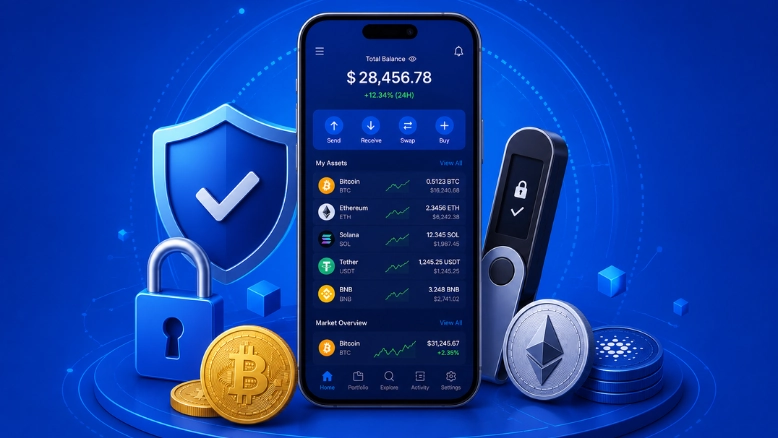
Digital assets have moved far beyond speculative investment into the core of global business operations. It is a strategic response to the limitations of traditional banking infrastructure: high cross-border fees, slow settlement times, currency conversion costs, and limited access to global financial markets. The role of the best crypto wallet for business has evolved accordingly.
Why Businesses Are Using Crypto Wallets in 2026
Digital assets have moved far beyond speculative investment into the core of global business operations. Companies across the USA, UK, UAE, and Canada are now accepting cryptocurrency payments, paying international contractors in stablecoins, holding Bitcoin and USDT as treasury reserves, and managing entire portfolios of tokenized assets through enterprise-grade wallet infrastructure. This shift is not experimental. It is a strategic response to the limitations of traditional banking infrastructure: high cross-border fees, slow settlement times, currency conversion costs, and limited access to global financial markets.
The role of the best crypto wallet for business has evolved accordingly. A business crypto wallet today is not simply a tool for storing digital assets. It is a financial operations platform that supports payment acceptance, treasury management, multi-user governance, compliance reporting, and integration with enterprise accounting and ERP systems. Choosing the right wallet is one of the most consequential technology decisions a modern business can make, directly impacting security, operational efficiency, and regulatory standing. Explore the full spectrum of wallet architecture and infrastructure at nadcab labs.
With over eight years of experience building enterprise crypto wallet screening solutions for clients across global markets, our team has developed a deep understanding of what separates an adequate business wallet from a truly best-in-class solution. This guide covers everything you need to know to make the right choice for your organization in 2026.
What Is a Crypto Wallet for Business?
A crypto wallet for business is a digital asset management platform designed specifically for the operational, governance, and compliance requirements of organizations rather than individual users. While a personal wallet typically serves one person managing their own funds with a single private key, a business wallet is built for team-based operations where multiple people need varying levels of access, all transactions require appropriate authorization workflows, and comprehensive audit trails must be maintained for accounting and regulatory purposes.
At its core, a business crypto wallet performs three essential functions that define its value to any organization. First, it stores digital assets securely using enterprise-grade key management. Second, it enables sending and receiving payments across blockchain networks with appropriate authorization controls. Third, it provides treasury tracking and reporting capabilities that give finance teams the visibility they need to manage digital assets responsibly within broader corporate financial frameworks. For businesses in regulated markets, these three functions must operate within a compliance infrastructure that satisfies local regulatory requirements.
Secure Asset Storage
Enterprise-grade key management protecting company digital assets with multi-layer security that individual wallets do not provide.
Payment Operations
Send and receive crypto globally with approval workflows ensuring authorized personnel control all outgoing fund movements.
Treasury Tracking
Real-time portfolio monitoring, accounting integration, and reporting tools giving finance teams complete digital asset visibility.
Multi-User Access
Role-based permissions allowing different team members to view, initiate, approve, or audit transactions based on their responsibilities.
Why Businesses Need a Crypto Wallet
From global payment acceptance to corporate treasury management, business crypto wallets solve real operational problems that traditional banking cannot address efficiently.
The business case for a dedicated crypto wallet has never been stronger. Enterprises operating across borders face a constant friction from high wire transfer fees, multi-day settlement delays, currency conversion costs, and banking restrictions that vary by jurisdiction. Crypto wallets address these pain points directly by enabling near-instant global payments at a fraction of traditional costs, with complete transparency and no dependency on correspondent banking networks that add both time and cost to every international transaction.
Accepting Global Payments
Businesses receive cryptocurrency from clients worldwide without payment processor intermediaries, chargebacks, or geographic banking restrictions that limit traditional payment acceptance in many emerging markets.
Paying International Freelancers
Companies in the UK and UAE pay remote contractors in USDC or USDT instantly, eliminating week-long wire transfer delays and 3 to 5 percent conversion fees that erode contractor relationships and company margins.
Corporate Treasury Management
Finance teams manage corporate crypto reserves, track portfolio performance, and execute treasury strategies including yield generation through staking using a single business wallet interface with full audit trails.
Stablecoin Currency Hedging
Holding stablecoins like USDT or USDC in business wallets allows companies to preserve dollar-denominated value while maintaining liquidity in the crypto ecosystem without exposure to volatile asset price swings.
Real-World Example
A SaaS company receives subscription payments in USDT from clients across Southeast Asia and Latin America. Using the best crypto wallet for business, their finance team tracks all incoming funds by client account, sets automated alerts for large deposits, and converts holdings to USD at favorable exchange windows. The wallet’s accounting integration exports all transactions directly to their existing ERP system, eliminating manual reconciliation entirely and reducing finance team workload by over forty percent.
Types of Crypto Wallets Businesses Can Use
Four wallet architectures each suited to different business security requirements and operational contexts.
Not every crypto wallet is appropriate for business use. The type of wallet a company selects determines its security posture, operational flexibility, and governance capabilities. Businesses typically use a combination of wallet types to serve different purposes within their broader digital asset strategy. A company might use a custodial wallet for daily payment operations, a non-custodial multi-signature wallet for treasury management, and cold hardware storage for large asset reserves that are rarely moved. Understanding the tradeoffs of each wallet type is fundamental to selecting the best crypto wallet for business in your specific context.
Key Features of the Best Crypto Wallet for Business
The features that separate the best crypto wallet for business from basic alternatives are those that address enterprise governance, security, scalability, and integration requirements that individual wallets simply are not designed to handle. Over eight years of building and deploying business wallet solutions, our team has identified the non-negotiable feature set that every serious business wallet must include. Missing any one of these features creates operational gaps that will either generate security risks, compliance failures, or operational inefficiencies that undermine the business case for crypto adoption.
Feature Importance for Enterprise Use
Crypto Wallets for Business Payments
Business wallets transform payment acceptance and disbursement operations, reducing costs and eliminating geographic constraints on financial flows.
The payment use case remains the most immediately accessible entry point for most businesses adopting crypto wallet infrastructure. Accepting global crypto payments eliminates the three to five percent fees charged by traditional payment processors, removes chargeback fraud risk, and opens access to customer segments in markets where credit card penetration is low but smartphone crypto adoption is high. For businesses in the USA and UK operating internationally, the ability to receive payments in stablecoins like USDC or USDT from clients in Asia, Latin America, and Africa without correspondent banking friction represents a genuine competitive advantage.
Payment Acceptance
- ✓ Receive crypto from clients globally
- ✓ Lower transaction fees vs card processors
- ✓ Instant settlement without waiting periods
- ✓ No chargeback risk for merchants
Payment Automation
- ✓ API-based automated payment systems
- ✓ Smart contract payment triggers
- ✓ Scheduled batch disbursements
- ✓ Automatic accounting reconciliation
Real-World Example
A digital marketing agency with remote teams across Southeast Asia, Eastern Europe, and Latin America uses the best crypto wallet for business to pay all contractors in USDC at the end of each month. What previously required wire transfers to seventeen different countries with varying bank fees and five to seven day delays now completes in under ten minutes with near-zero transaction costs. The wallet’s API integration automatically records each payment against the corresponding project code in their accounting software.
Crypto Wallets for Treasury Management
Corporate treasury management represents one of the highest-value use cases for the best crypto wallet for business. As digital assets become a recognized asset class in institutional portfolios, forward-thinking finance teams are integrating crypto holdings into their broader treasury strategies. Holding stablecoins provides a dollar-correlated store of value that earns yield through DeFi protocols. Bitcoin holdings function similarly to gold as a long-term inflation hedge. Multi-asset crypto treasury strategies enable businesses to diversify reserves, generate passive income through staking, and maintain liquidity without the counterparty risk that comes with traditional custodial banking arrangements.
Stablecoin Holdings
Maintain dollar-correlated value while earning yield and avoiding traditional banking counterparty risk exposure
Crypto Reserve Management
Track and manage Bitcoin, Ethereum, and other digital asset holdings as part of a diversified corporate reserve strategy
Treasury Diversification
Spread reserves across multiple digital assets and blockchain networks to reduce concentration risk in treasury portfolios
Liquidity Management
Maintain appropriate liquid reserves for operational needs while deploying longer-term holdings in yield-generating strategies
Real-World Example
Several publicly traded technology companies now hold Bitcoin as a treasury reserve asset, treating it similarly to gold as a long-term store of value and inflation hedge. Using a business crypto wallet with multi-signature controls and hardware cold storage for the majority of holdings, their treasury teams monitor balances in real time while maintaining strict governance controls that require board-level approval for any movement of reserve assets above defined thresholds.
Crypto Wallets for Digital Asset Management
Managing the expanding universe of business digital assets from a single unified wallet dashboard.
Modern businesses increasingly hold a diverse portfolio of digital assets that extends far beyond cryptocurrency. NFTs representing intellectual property, brand assets, or digital collectibles, tokenized real-world assets, DeFi investment positions, stablecoin reserves, and governance tokens from protocols a business participates in all require active management. The best crypto wallet for business provides a unified dashboard where all these assets can be tracked, valued, and managed through a single interface rather than requiring separate tools for each asset class. This consolidated visibility is essential for accurate financial reporting and strategic decision-making.
NFTs
Digital collectibles, brand assets, and IP tokenization
Tokenized Assets
Real-world asset tokenization for fractional ownership
DeFi Positions
Yield farming, liquidity provision, and lending positions
Stablecoins
USDC, USDT, DAI for operational and treasury use
Governance Tokens
Protocol voting rights and ecosystem participation
Compliance and Regulatory Considerations
Compliance is not optional for businesses operating crypto wallets in regulated markets. Every jurisdiction where a business accepts crypto payments, holds digital treasury assets, or pays employees in cryptocurrency has specific regulatory requirements that must be met. Failure to comply creates regulatory risk, tax liability, and potential criminal exposure for company directors and officers. The best crypto wallet for business includes built-in compliance tools that automate KYC verification, transaction monitoring, tax reporting exports, and audit trail generation, reducing the compliance burden on internal teams while ensuring continuous regulatory readiness across all operating markets.
| Requirement | USA | UK | UAE | Canada |
|---|---|---|---|---|
| KYC Verification | Required | Required | Required | Required |
| AML Monitoring | FinCEN | FCA | VARA | FINTRAC |
| Tax Reporting | IRS Required | HMRC Required | Varies | CRA Required |
| Transaction Transparency | Best Practice | Best Practice | Required | Best Practice |
| Licensing Registration | State-by-state | FCA Registration | VARA License | MSB Registration |
How to Choose the Best Crypto Wallet for Business
Use this three-step framework to evaluate and select the wallet that best fits your organization’s specific needs, scale, and risk profile.
Business Crypto Wallet Evaluation Checklist
| # | Evaluation Criteria | Priority | Notes |
|---|---|---|---|
| 01 | Multi-signature transaction approval capability | Critical | Non-negotiable for enterprise governance |
| 02 | Role-based access control with audit logging | Critical | Required for team operations and compliance |
| 03 | Multi-chain support for required blockchains | High | Verify your specific chains are supported |
| 04 | Accounting software integration available | High | Essential for finance team efficiency |
| 05 | KYC/AML compliance tools integrated | Critical | Required for regulated market operations |
| 06 | API available for payment system integration | High | Critical for payment automation workflows |
| 07 | Proven security audit history available | Critical | Always request third-party audit reports |
Architecture of an Enterprise Crypto Wallet
Understanding the technical architecture of an enterprise crypto wallet helps business leaders evaluate solutions more effectively and communicate requirements to their technical teams. An enterprise wallet is not a single component but a layered system of interdependent infrastructure elements that together provide the security, performance, and functionality that business operations require. The architecture must be designed with both current operational needs and future scalability in mind, particularly for businesses in growing markets like the UAE and Canada where crypto adoption and regulatory requirements are both evolving rapidly.
Wallet Infrastructure
Scalable cloud-native backend with high availability, disaster recovery, and geographic redundancy for enterprise uptime requirements
Key Management
MPC or HSM-based private key management with distributed custody, backup systems, and cryptographic access controls
Blockchain Node Integration
Direct node connections or trusted node provider APIs for reliable, low-latency blockchain data access across all supported networks
APIs and Integrations
RESTful APIs connecting wallet functions to payment systems, accounting platforms, ERP systems, and compliance monitoring tools
Monitoring Systems
Real-time transaction monitoring, anomaly detection, performance dashboards, and automated alerting for security and operational events
Business Crypto Wallet Implementation Lifecycle
Define Business Requirements and Use Cases
Document your primary use cases, asset types, team size, transaction volumes, and compliance requirements. Establish which blockchain networks you need to support and what integrations are required with existing business systems before evaluating any specific wallet solutions.
Map Regulatory Obligations by Market
Document every regulatory requirement applicable to your business across USA, UK, UAE, Canada, or other markets you operate in. Engage legal counsel in each jurisdiction to confirm licensing, KYC, AML, and tax reporting obligations before selecting wallet infrastructure that must support these requirements.
Evaluate and Select Wallet Architecture
Apply the three-step selection framework to shortlist wallet options. Request security audit reports, penetration testing documentation, and compliance certifications from all vendors under consideration. Conduct technical due diligence on API capabilities and integration architecture before making a final decision.
Configure Access Controls and Governance
Set up role-based permissions for all team members, configure multi-signature approval workflows with appropriate thresholds, establish transaction limits by role, and document your governance framework for wallet operations in your internal financial controls documentation.
Integrate with Business Systems
Connect wallet APIs to your accounting software, payment processing systems, ERP platform, and compliance monitoring tools. Test all integrations thoroughly in a staging environment before moving to production to ensure data accuracy and workflow reliability across all connected systems.
Train Team and Establish Operational Procedures
Train all wallet users on their specific roles and responsibilities, establish standard operating procedures for common wallet operations, and create incident response protocols for security events or operational issues. Document emergency access procedures for key team members who manage critical wallet functions.
Launch and Monitor Initial Operations
Go live with limited initial transaction volumes and monitor all operations closely during the first thirty days. Verify that all integrations are functioning correctly, that compliance tools are capturing required data, and that governance workflows are operating as designed before expanding operations to full production volumes.
Optimize, Audit, and Scale
Conduct quarterly reviews of wallet operations, security posture, and compliance status. Optimize fee structures and approval workflows based on operational experience, expand supported asset types and blockchain networks as business needs evolve, and stay ahead of regulatory changes that may require wallet configuration updates across your operating markets.
Challenges Businesses Face with Crypto Wallets
Despite the significant benefits, businesses adopting crypto wallets encounter real challenges that must be anticipated and planned for. Regulatory uncertainty remains one of the most significant obstacles, particularly for businesses operating across multiple jurisdictions where crypto regulations continue to evolve at different speeds. Key management risk is another critical challenge: if private keys are lost or compromised, the assets they protect may be permanently unrecoverable. Market volatility affects the dollar value of non-stablecoin holdings, creating accounting and reporting complications. Cybersecurity threats targeting business wallets are sophisticated and continuously evolving, requiring ongoing investment in security infrastructure and staff awareness.
⚠ Regulatory Uncertainty
Laws change faster than businesses can adapt. Mitigation requires proactive legal monitoring and modular wallet configurations that can be adjusted as regulations evolve across all operating markets.
Key Management Risk
Lost or compromised keys mean permanent asset loss. Mitigation requires MPC architecture, redundant backup systems, and strict access controls with documented recovery procedures reviewed quarterly.
Asset Volatility
Non-stablecoin holdings fluctuate in value, creating accounting complexity. Mitigation involves maintaining operational holdings in stablecoins and using hardware wallets for longer-term volatile asset reserves.
🛡 Cybersecurity Threats
Targeted attacks on business wallets are sophisticated. Mitigation requires multi-layer security, regular penetration testing, staff security training, and cold storage for large reserves.
Future of Business Crypto Wallets
The next generation of business crypto wallets will be dramatically more intelligent, integrated, and automated than today’s solutions. Five emerging trends are converging to reshape the business wallet landscape across all major markets including the USA, UK, UAE, and Canada. Businesses that understand these trends and invest accordingly will be positioned to operate more efficiently, securely, and compliantly as the digital asset ecosystem continues its rapid expansion into mainstream commercial operations throughout the remainder of this decade.
Embedded Wallets
Wallet functionality embedded directly into business applications, enabling seamless crypto operations without switching between separate tools or interfaces.
MPC Wallets
Multi-party computation becoming the standard for enterprise key management, eliminating single points of failure in business wallet security architecture.
AI Fraud Detection
Machine learning models analyzing transaction patterns in real time to detect and prevent fraudulent activity before transactions complete on-chain.
Multi-Chain Ecosystems
Unified management of assets across dozens of blockchains from a single interface as multi-chain operations become standard for global business.
DeFi Treasury Integration
Automated DeFi yield strategies integrated directly into corporate treasury management for passive income generation on idle business holdings.
Conclusion: Choosing the Best Crypto Wallet for Business
Crypto wallets have become essential tools for modern businesses managing digital assets, payments, and treasury operations. The organizations that will lead their industries through the next phase of digital transformation are those that treat their crypto wallet infrastructure as a strategic business asset rather than a technical afterthought. Choosing the best crypto wallet for business is a decision that directly impacts security, operational efficiency, regulatory compliance, and ultimately competitive positioning in an increasingly digital global economy.
The key principles that should guide your selection are clear: prioritize security above all else through multi-signature controls and MPC key management, ensure compliance tools are integrated from the start rather than bolted on later, choose a wallet that can scale with your growth across all the blockchain networks your business needs, and insist on deep integration with your existing business systems to eliminate operational friction that undermines adoption.
Whether you are a startup in the UAE accepting your first crypto payments, a mid-size enterprise in Canada adding Bitcoin to your treasury reserves, or an established corporation in the USA or UK building a comprehensive digital asset management infrastructure, the framework and principles in this guide provide a reliable foundation for making the right wallet choices that will serve your business well through 2026 and beyond.
📌 Final Recommendation
The best crypto wallet for business is not necessarily the most feature-rich option available. It is the one that most precisely matches your specific security requirements, compliance obligations, integration needs, and operational scale while being supported by a team with a proven track record in enterprise crypto infrastructure. Invest the time to evaluate options thoroughly and you will build a foundation that supports profitable, compliant, and secure digital asset operations for years to come.
Frequently Asked Questions
Q1.What is the best crypto wallet for business use?
The best crypto wallet for business is a secure digital wallet designed to manage company cryptocurrency transactions, treasury funds, and digital assets. Business wallets usually support multi-signature approvals, role-based access control, and accounting integrations. These features help companies safely store crypto, process payments, and maintain transparency in financial operations.
Q2.Why do businesses need a crypto wallet?
Businesses need a crypto wallet to accept cryptocurrency payments, manage digital assets, and conduct cross-border transactions efficiently. A business crypto wallet allows companies to store funds securely, track transactions, and automate payment processes. It also helps organizations participate in decentralized finance and manage treasury funds using cryptocurrencies or stablecoins.
Q3.What features should the best crypto wallet for business include?
The best crypto wallet for business should include multi-signature security, role-based user access, multi-chain support, transaction approvals, and real-time portfolio tracking. Advanced wallets may also offer API integrations, accounting compatibility, and compliance tools. These features ensure businesses can manage digital assets securely while maintaining transparency and operational efficiency.
Q4.Are crypto wallets safe for business transactions?
Crypto wallets can be very secure for business transactions when proper security measures are used. Features such as hardware storage, multi-signature authorization, and encryption help protect funds from unauthorized access. Businesses should also implement secure key management, access controls, and regular monitoring to reduce risks associated with cryptocurrency transactions.
Q5.What is the difference between a personal wallet and a business crypto wallet?
A personal crypto wallet is designed for individual users, while a business crypto wallet is built for organizations managing multiple users and large transaction volumes. Business wallets include additional features such as multi-user access, approval workflows, accounting integrations, and enhanced security systems to support corporate treasury management and financial governance.
Q6.Can businesses accept cryptocurrency payments through a crypto wallet?
Yes, businesses can accept cryptocurrency payments through a crypto wallet by generating wallet addresses or integrating payment gateways. Customers can send digital assets directly to the company wallet, enabling faster and cheaper cross-border transactions. Many businesses use crypto wallets to receive payments in Bitcoin, Ethereum, or stablecoins.
Q7.What types of crypto wallets are suitable for businesses?
Businesses can use several types of crypto wallets including custodial wallets, non-custodial wallets, hardware wallets, and multi-signature wallets. Non-custodial and multi-signature wallets are often preferred for corporate treasury management because they offer greater control, enhanced security, and shared authorization for high-value transactions.
Q8.How do businesses manage treasury using crypto wallets?
Businesses use crypto wallets to manage treasury funds by storing digital assets, monitoring portfolio value, and transferring funds when needed. Companies may hold stablecoins for liquidity or cryptocurrencies as long-term reserves. Advanced wallets also provide reporting tools that help finance teams track balances and transactions efficiently.
Q9.What security practices should businesses follow when using crypto wallets?
Businesses should follow several security practices when using crypto wallets, including multi-signature authentication, cold storage for large funds, strong encryption, and role-based access control. Regular audits and transaction monitoring are also important. These practices help protect company funds and reduce the risk of hacking or unauthorized access.
Q10.How do companies choose the best crypto wallet for business operations?
Companies choose the best crypto wallet for business by evaluating security features, supported cryptocurrencies, scalability, compliance tools, and integration capabilities. A good wallet should support multiple users, offer secure key management, and integrate with payment or accounting systems. Businesses should also consider long-term scalability and operational requirements.
Explore Services
Related Services
Reviewed by

Aman Vaths
Founder of Nadcab Labs
Aman Vaths is the Founder & CTO of Nadcab Labs, a global digital engineering company delivering enterprise-grade solutions across AI, Web3, Blockchain, Big Data, Cloud, Cybersecurity, and Modern Application Development. With deep technical leadership and product innovation experience, Aman has positioned Nadcab Labs as one of the most advanced engineering companies driving the next era of intelligent, secure, and scalable software systems. Under his leadership, Nadcab Labs has built 2,000+ global projects across sectors including fintech, banking, healthcare, real estate, logistics, gaming, manufacturing, and next-generation DePIN networks. Aman’s strength lies in architecting high-performance systems, end-to-end platform engineering, and designing enterprise solutions that operate at global scale.