Ai Overview
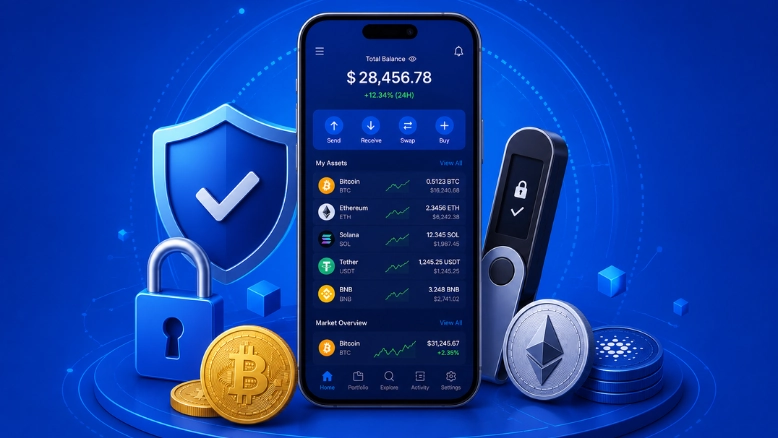
The global cryptocurrency ecosystem has matured far beyond simple buy-and-hold investing. The wallets that win market share and build lasting businesses are those that approach monetization strategically, aligning revenue models with user needs and regulatory requirements simultaneously. Crypto wallet app monetization is the process by which wallet platforms design, implement, and optimize revenue-generating mechanisms within their products.
Introduction to Crypto Wallet App Monetization
The global cryptocurrency ecosystem has matured far beyond simple buy-and-hold investing. Crypto wallet platforms have evolved into full-featured financial products that serve hundreds of millions of users across the USA, UK, UAE, and Canada, processing billions of dollars in digital asset transactions every day. As adoption deepens and competition among wallet platforms intensifies, the question of how to generate sustainable, scalable revenue from these products has become one of the most strategically important questions in the fintech and blockchain industry. This is the domain of crypto wallet app monetization.
With over eight years of experience building and advising on crypto wallet platforms, our team has observed the full spectrum of monetization approaches, from the earliest simple transaction-fee models to today’s sophisticated multi-stream revenue architectures that combine swaps, staking, DeFi integrations, NFT marketplace commissions, and premium subscriptions into unified, profitable products. The wallets that win market share and build lasting businesses are those that approach monetization strategically, aligning revenue models with user needs and regulatory requirements simultaneously. Explore the full spectrum of wallet architecture at wallet-development.
This comprehensive guide breaks down every major monetization model available to crypto wallet platforms in 2026, examines the technology and features required to implement them successfully, and provides actionable frameworks for businesses looking to build profitable, compliant, and user-trusted wallet products in today’s competitive global market.
What Is Crypto Wallet App Monetization?
Crypto wallet app monetization is the process by which wallet platforms design, implement, and optimize revenue-generating mechanisms within their products. Unlike traditional banking applications where revenue flows primarily from interest margins and account fees, crypto wallet monetization is multidimensional and can be layered across transaction processing, value-added services, ecosystem integrations, and premium feature access. The goal is to create a product that users find genuinely valuable while generating sufficient revenue to sustain operations, fund continued improvement, and deliver returns to stakeholders.
At its core, wallet monetization requires a deep understanding of user behavior and needs. A wallet used primarily for DeFi interactions in Dubai will have different optimal monetization pathways than one used primarily for cross-border remittances in Canada or long-term Bitcoin storage in the UK. Successful crypto wallet app monetization strategies are therefore tailored to the specific user demographics, transaction patterns, and regulatory contexts of their target markets rather than applying a one-size-fits-all approach that often underserves both users and business objectives.
The importance of building a sustainable monetization model cannot be overstated. Wallets that fail to generate meaningful revenue struggle to fund the security audits, compliance infrastructure, and product improvements that are essential to retaining users and staying competitive. Conversely, wallets that over-monetize through aggressive fee structures risk losing users to competitors offering better value. The most successful platforms in 2026 have found the precise balance between user value delivery and revenue extraction that creates compounding growth.
Market Growth of Cryptocurrency Wallet Applications
The market opportunity for monetizable crypto wallet platforms has never been larger or more strategically significant than it is today.
The global cryptocurrency wallet market[1] has experienced extraordinary growth over the past five years, with hundreds of millions of active wallets now operating across Bitcoin, Ethereum, and hundreds of other blockchain networks. In the USA alone, surveys consistently show that a significant and growing percentage of the adult population holds digital assets, while the UK’s Financial Conduct Authority, the UAE’s Virtual Asset Regulatory Authority, and Canada’s regulatory bodies have all implemented frameworks that have legitimized crypto ownership at an institutional scale. This regulatory clarity has been a catalyst for enterprise-grade wallet adoption and, consequently, for more sophisticated crypto wallet app monetization strategies.
Market Adoption Indicators
Popular Types of Cryptocurrency Wallet Apps
Understanding wallet types is foundational to selecting the right monetization model for each architecture.
Not all crypto wallets are built the same, and the type of wallet you are building or operating directly determines which monetization strategies are feasible, compliant, and user-acceptable. The four primary wallet architectures each carry distinct monetization potentials and constraints. Custodial wallets operated by centralized businesses like exchanges in the UK and UAE have the broadest monetization flexibility since they control user fund flows. Non-custodial wallets, where users hold their own private keys, must monetize entirely through value-added services and integrations rather than fund custody. Understanding this distinction is the starting point for any serious crypto wallet app monetization strategy.
Top Crypto Wallet App Monetization Models
The most successful crypto wallet platforms in 2026 do not rely on a single revenue source. Instead, they build layered monetization architectures that combine high-volume, low-margin streams like transaction fees with lower-volume, high-margin streams like premium subscriptions and institutional staking services. Understanding each model’s mechanics, revenue potential, and user experience implications is essential before deciding which to prioritize. The following breakdown covers every major monetization model currently deployed by leading wallet platforms across the USA, UK, UAE, and Canada.
| Monetization Model | Revenue Type | Volume Dependency | Scalability |
|---|---|---|---|
| Transaction Fees | Per-transaction commission | High | Very High |
| Swap and Exchange Fees | Spread or flat fee per swap | High | Very High |
| Premium Subscriptions | Monthly or annual recurring | Low | Medium |
| Staking and Yield | Commission on staking rewards | Medium | Very High |
| NFT Marketplace Fees | Commission per NFT trade | Medium | High |
| Affiliate Partnerships | Referral commissions | Low | Medium |
| In-App Advertising | CPM or CPC ad revenue | High | Medium |
Additional Revenue Streams for Wallet Platforms
Beyond the core monetization models, leading wallet platforms are increasingly leveraging deeper ecosystem integrations to unlock revenue streams that were not available even two years ago. These additional streams often carry higher margins than standard transaction fees and can differentiate a wallet platform significantly in competitive markets like the USA and UAE. Token launchpad services, where wallet platforms facilitate initial token distributions to their user base, represent a particularly lucrative model for wallets with large, active communities. The launchpad earns a percentage of tokens sold or charges a listing fee to the issuing project, creating a revenue event that can generate significant income in a short window.
🚀 Token Launchpad Services
Facilitate initial token offerings directly through the wallet interface, earning listing fees and allocation commissions from issuing projects seeking distribution.
💰 Crypto Lending and Borrowing
Integrate lending protocols allowing users to borrow against crypto holdings, with the wallet platform earning origination fees or interest spread on facilitated loans.
🌐 DeFi Protocol Integration
Partner with DeFi protocols to provide liquidity, yield farming, and automated market maker access within the wallet, earning referral fees from protocol volumes.
🔁 Cross-Border Payments
Offer competitive cross-border payment services in high-remittance corridors between the UK, UAE, Canada, and emerging markets, charging a small transaction markup.
Key Features Required for Successful Wallet Monetization
The revenue a crypto wallet generates is directly proportional to the quality and reliability of the features it offers its users.
Crypto wallet app monetization does not happen in a vacuum. A wallet’s ability to generate revenue is fundamentally constrained by the quality of the product underlying it. Wallets that suffer from security vulnerabilities, poor multi-chain support, or clunky user interfaces will lose users before any monetization strategy can take hold. Based on our eight-plus years building wallet products for clients across the USA, UK, UAE, and Canada, we have identified five non-negotiable features that must be in place before a monetization strategy can be effectively deployed and scaled.
Strong Security Architecture
End-to-end encryption, multi-signature authentication, hardware security module integration, and regular third-party security audits form the non-negotiable foundation. Users in all target markets will not entrust assets to a wallet with known vulnerabilities, regardless of how attractive the fee structure is.
Multi-Chain Support
Supporting Ethereum, Bitcoin, Solana, BNB Chain, and other major networks from a single interface dramatically expands the addressable user base and creates more monetization touchpoints per user session, since cross-chain swaps and bridging generate additional revenue compared to single-chain interactions.
High Scalability
Wallet infrastructure must handle peak load periods, such as during market volatility spikes or major token launches, without degraded performance. In the USA and UAE institutional markets, downtime during high-volume periods directly translates to lost transaction fee revenue and damaged user trust that is difficult to rebuild.
Regulatory Compliance
KYC, AML, and local licensing compliance are prerequisites for monetizing in regulated markets. UK FCA guidance, UAE VARA requirements, Canada’s FINTRAC rules, and US FinCEN regulations all require wallet platforms offering financial services to implement comprehensive compliance programs before launching monetization features.
Crypto Wallet App Monetization Implementation Lifecycle
Define Target User Segments and Market
Identify your primary users across regions like the USA, UK, UAE, and Canada. Determine whether your wallet serves retail investors, DeFi users, institutional clients, or cross-border payment users, as each segment has different monetization tolerances and preferred feature sets.
Map Regulatory Requirements
Before building any monetization feature, document the applicable regulatory requirements for each target market. Licensing requirements, KYC mandates, and AML obligations must be mapped and planned for, since non-compliance will block revenue generation and create legal exposure.
Build Core Security and Compliance Infrastructure
Implement the security architecture including encryption, secure key management, multi-signature controls, fraud detection, and compliance tooling before launching any public-facing monetization features. Security failures after launch are far more costly than building it correctly from the start.
Integrate Primary Monetization Streams
Launch your highest-priority revenue streams first, typically transaction fees and swap integrations since these generate revenue from day one with minimal friction for users. A clean, transparent fee structure builds the trust needed to introduce premium features later in the product roadmap.
Add Staking and Yield Services
Integrate staking delegation for major proof-of-stake networks and yield services from vetted DeFi protocols. Structure commission rates that are competitive yet profitable, and clearly disclose all fees and risks to users in compliance with applicable financial services regulations in each market.
Launch Premium Subscription Tier
Introduce a premium subscription once you have established user trust and have enough data on power user behavior. Premium tiers offering advanced portfolio analytics, reduced swap fees, priority customer support, and AI-powered insights can generate significant recurring monthly revenue from your most engaged users.
Expand with NFT and DeFi Ecosystem Integrations
Add NFT marketplace functionality, DeFi protocol access, and token launchpad services as the platform matures. These ecosystem integrations require more complex technical implementation but unlock higher-margin revenue streams and differentiate your wallet significantly from basic transaction-only competitors in the market.
Optimize, Analyze, and Scale Revenue Streams
Use analytics to understand which monetization streams generate the best revenue per user, which features drive subscription upgrades, and where users are churning due to fee friction. Continuously optimize fee structures, introduce new partnerships, and expand into new markets based on data-driven insights from your existing user base.
Technology Stack for Crypto Wallet Applications
The technology decisions made during wallet construction directly impact which monetization models are achievable and how efficiently they can be implemented. For instance, a wallet built on a single-chain architecture cannot generate cross-chain swap fees until a significant rebuild is undertaken. Similarly, a wallet without smart contract integration cannot offer staking, DeFi access, or NFT functionality. Planning the technology stack with monetization goals in mind from the beginning avoids costly architectural rework later. Our experience across client projects in the UK, Canada, and UAE has consistently shown that upfront investment in the right technology stack pays dividends many times over in monetization flexibility.
| Technology Layer | Components | Monetization Enablement |
|---|---|---|
| Blockchain Networks | Ethereum, Solana, BNB Chain, Bitcoin, Polygon | Transaction fees, multi-chain swaps, cross-chain bridges |
| Smart Contracts | Solidity, Rust, Move; ERC standards, DeFi protocols | Staking, NFT minting, DeFi integrations, lending |
| APIs and SDKs | Swap aggregators, price feeds, blockchain nodes, KYC APIs | Affiliate integrations, compliance automation, analytics |
| Security Protocols | HSM, MPC, multi-sig, biometrics, 2FA, AES-256 | User trust enablement, institutional sales, premium positioning |
| Analytics and AI | ML models, on-chain analytics, behavioral tracking tools | Premium analytics features, AI wallet tools, fraud detection |
Security Considerations in Wallet Monetization
Security is not just a product feature for crypto wallets; it is the prerequisite for any monetization strategy to function. A single high-profile security breach can permanently destroy user trust and eliminate a platform’s ability to generate revenue, regardless of how sophisticated its business model might be. Across the crypto industry globally, security failures have repeatedly demonstrated that the cost of poor security vastly exceeds the cost of building it correctly from the outset. Wallet platforms operating in regulated markets like the USA and UK face additional legal exposure from security failures, including regulatory penalties and civil liability claims that can threaten the business entirely.
Authoritative Industry Standards for Wallet Security
S1
All private key operations must occur in isolated, hardware-secured environments with no network access, preventing remote extraction of cryptographic material under any circumstances.
S2
Multi-signature transaction authorization must be required for all high-value wallet operations, with signatories distributed across geographically separate, organizationally distinct parties.
S3
All smart contracts involved in monetization functions including swap routing, staking, and lending must undergo independent third-party security audits before deployment to production environments.
S4
Real-time fraud detection systems must monitor transaction patterns and flag anomalies for human review before execution, protecting both users and the platform from financial losses due to account compromise.
S5
All user data and transaction records must be encrypted at rest and in transit using current best-practice cryptographic standards, with access controls that strictly limit who can view sensitive financial information.
S6
Penetration testing must be conducted at least quarterly and after every major feature release, with findings addressed within defined remediation timelines before any new monetization features are activated in production.
Challenges in Crypto Wallet App Monetization
No crypto wallet app monetization strategy operates without challenges. The competitive landscape, evolving regulatory environment, and inherent volatility of the crypto market create a dynamic operating context that requires wallet platforms to be both strategically patient and operationally agile. Understanding these challenges in advance and building mitigation strategies into your business plan is essential for sustainable, long-term success. From our work with clients across the USA, UK, UAE, and Canada, these are the challenges that most frequently derail wallet monetization efforts and the practical approaches that help navigate them.
| Challenge | Severity | Recommended Mitigation |
|---|---|---|
| Regulatory Compliance | High | Engage legal counsel in each target market from day one; build compliance infrastructure before launching features |
| Security Threats | Critical | Implement continuous security monitoring, regular audits, and a bug bounty program to identify vulnerabilities proactively |
| Market Volatility | Medium | Diversify revenue streams to reduce dependency on transaction volume that fluctuates with market sentiment cycles |
| User Trust and Adoption | Medium | Publish transparent fee schedules, security audit reports, and proof-of-reserves documentation to build credibility |
| Fee Competition | Low | Compete on value through premium features and security rather than on price alone; avoid a race to zero on fees |
Monetization Model Selection Criteria
Use these three evaluation steps to choose the right revenue model combination for your specific wallet platform and target market.
Compliance and Governance Checklist for Wallet Monetization
| # | Compliance Requirement | Markets | Status Category |
|---|---|---|---|
| 01 | KYC/AML program implemented for all custodial features | USA, UK, UAE, CA | Mandatory |
| 02 | FinCEN / FINTRAC registration for money services activities | USA, Canada | Mandatory |
| 03 | UAE VARA virtual asset service provider licensing | UAE | Mandatory |
| 04 | FCA registration for UK crypto asset promotions | UK | Mandatory |
| 05 | Smart contract security audit for all monetization contracts | All markets | Best Practice |
| 06 | Transparent fee disclosure on all monetized features | All markets | Best Practice |
| 07 | Proof-of-reserves published quarterly for custodial wallets | USA, UK, UAE | Recommended |
Conclusion: Building a Profitable Crypto Wallet Ecosystem
Crypto wallet app monetization has evolved from a simple fee-collection problem into a sophisticated discipline that requires strategic thinking across product design, technology architecture, regulatory compliance, and user experience. The most successful wallet platforms in 2026 are those that treat monetization not as an afterthought but as a core design principle that is baked into every feature decision from the earliest stages of product planning.
The evidence from markets across the USA, UK, UAE, and Canada is clear: wallets that combine multiple revenue streams, maintain rigorous security standards, operate within applicable regulatory frameworks, and continuously deliver genuine value to users are the ones that build lasting, profitable businesses. Single-model wallets that rely entirely on transaction fees will be squeezed as competition intensifies and fee compression continues. Multi-model wallets that create value across trading, yield, premium features, and ecosystem integrations will be the category leaders.
Whether you are a startup building your first crypto wallet product or an established platform looking to optimize your existing revenue architecture, the frameworks and models presented in this guide provide a comprehensive starting point for making the monetization decisions that will determine your platform’s long-term success in an increasingly competitive global market.
📌 Strategic Reminder
The best crypto wallet app monetization strategy is the one that your users trust, regulators accept, and your team can execute with excellence. Start with compliance, build on security, and layer revenue streams progressively as user trust and platform maturity grow together.
Frequently Asked Questions
Q1.What is crypto wallet app monetization?
Crypto wallet app monetization refers to the strategies used by wallet platforms to generate revenue from their applications. These strategies include transaction fees, token swaps, staking services, premium features, and advertising. By implementing effective crypto wallet app monetization models, businesses can build sustainable revenue streams while offering secure and user-friendly wallet services.
Q2.How do crypto wallet apps make money?
Crypto wallet apps make money through various monetization models such as charging transaction fees, offering in-app token swaps, staking services, and premium subscriptions. Some wallets also generate revenue through partnerships with crypto exchanges or by integrating decentralized finance services as part of their crypto wallet app monetization strategy.
Q3.What are the most common crypto wallet app monetization strategies?
The most common crypto wallet app monetization strategies include transaction fees, swap and exchange fees, staking commissions, premium security features, NFT marketplace commissions, and advertising. These revenue models help wallet platforms maintain profitability while providing secure and efficient services to users.
Q4.Why is crypto wallet app monetization important for businesses?
Crypto wallet app monetization is important because it allows companies to generate consistent revenue while maintaining a functional wallet ecosystem. A strong monetization model ensures that businesses can support platform development, security improvements, and ongoing updates that enhance user experience.
Q5.Can crypto wallet apps earn revenue from transaction fees?
Yes, transaction fees are one of the most common forms of crypto wallet app monetization. Wallet providers may charge a small percentage or fixed fee for processing cryptocurrency transactions, which helps generate continuous income while maintaining network efficiency.
Q6.How does staking contribute to crypto wallet app monetization?
Staking allows users to lock their cryptocurrency assets in blockchain networks to support transaction validation. Wallet platforms can earn commissions from staking rewards, making staking services a popular and effective crypto wallet app monetization strategy.
Q7.Do crypto wallets generate revenue through token swaps?
Yes, many crypto wallets integrate decentralized exchanges or swap features. These platforms charge a small fee or spread during token swaps, which contributes significantly to crypto wallet app monetization.
Q8.What role do premium features play in crypto wallet app monetization?
Premium features such as advanced security options, portfolio analytics, priority support, and multi-chain integrations can be offered through subscription models. These premium services create an additional revenue stream for businesses using crypto wallet app monetization strategies.
Q9.Is advertising a viable crypto wallet app monetization model?
Advertising can also be used in crypto wallet app monetization. Wallet platforms may display targeted ads for blockchain services, exchanges, or NFT projects. However, the advertising model should be implemented carefully to avoid disrupting user experience.
Q10.What factors make crypto wallet app monetization successful?
Successful crypto wallet app monetization depends on strong security, seamless user experience, scalable infrastructure, regulatory compliance, and integration with DeFi and blockchain ecosystems. These factors help businesses attract users while maintaining profitable wallet operations.
Explore Services
Related Services
Reviewed by

Aman Vaths
Founder of Nadcab Labs
Aman Vaths is the Founder & CTO of Nadcab Labs, a global digital engineering company delivering enterprise-grade solutions across AI, Web3, Blockchain, Big Data, Cloud, Cybersecurity, and Modern Application Development. With deep technical leadership and product innovation experience, Aman has positioned Nadcab Labs as one of the most advanced engineering companies driving the next era of intelligent, secure, and scalable software systems. Under his leadership, Nadcab Labs has built 2,000+ global projects across sectors including fintech, banking, healthcare, real estate, logistics, gaming, manufacturing, and next-generation DePIN networks. Aman’s strength lies in architecting high-performance systems, end-to-end platform engineering, and designing enterprise solutions that operate at global scale.