Ai Overview
Blockchain app development means building software that uses a shared digital ledger. One competitor guide places simple projects at about 15,000 dollars to 25,000 dollars. It places medium projects at about 40,000 dollars to 80,000 dollars. It places advanced products at about 100,000 dollars to 200,000 dollars.
Blockchain app development means building software that uses a shared digital ledger. This ledger stores approved records in a way that is hard to change. A blockchain app can support payments, smart contracts, digital identity, tokenized assets, and supply chain tracking.
Many companies look at blockchain for one simple reason. It can help people trust the same data. It can also improve traceability, cut manual checks, and automate rules.
Key Takeaways
- Blockchain app development is most effective when multiple parties need to trust and share the same data
- Not every use case needs blockchain. Validate the problem before choosing the technology
- A hybrid approach (on-chain + off-chain) helps balance cost, speed, and privacy
- Security, smart contract audits, and compliance should be planned from day one
- Development cost depends on complexity, with most projects ranging from 15,000 to 200,000 USD
- Starting with an MVP reduces risk and helps validate the idea before scaling
What is a blockchain App?
A blockchain app is a web or mobile product that uses blockchain for part of its work. Some apps store many actions on chain. Some store only key proofs on chain and keep the rest in a normal database. This mixed model can help with speed, privacy, and cost.
Think of it as a shared record book. Each approved update is recorded and checked by the network. That record then becomes a trusted source for the people who use the app.
Why Businesses Invest in Blockchain App Development?
Trust is a big reason. In many business flows, more than one party needs to see the same truth. Blockchain can help with that. It can also improve security and traceability. Smart contracts can reduce manual work and lower the chance of human error.
Companies also use blockchain to speed up slow workflows. This matters in areas with many approvals, checks, or handoffs. In the right case, blockchain can reduce disputes and save time.
How Blockchain Apps Work?
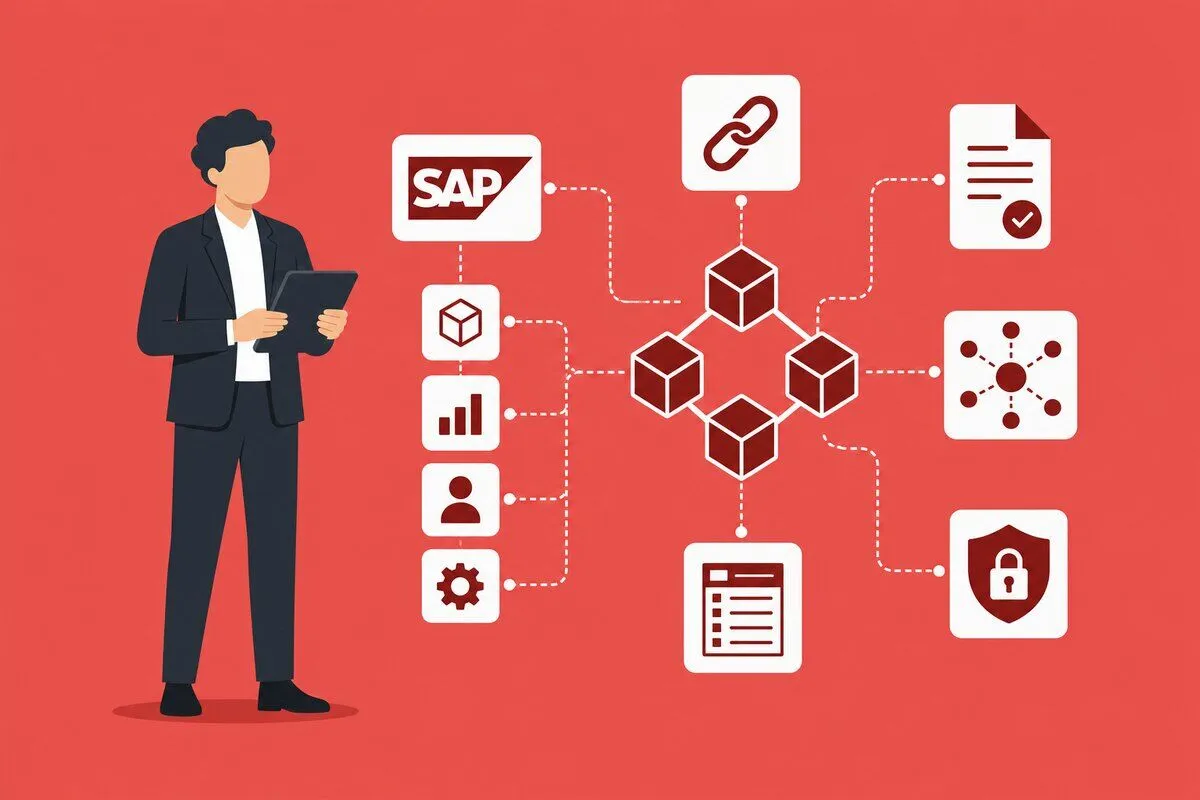
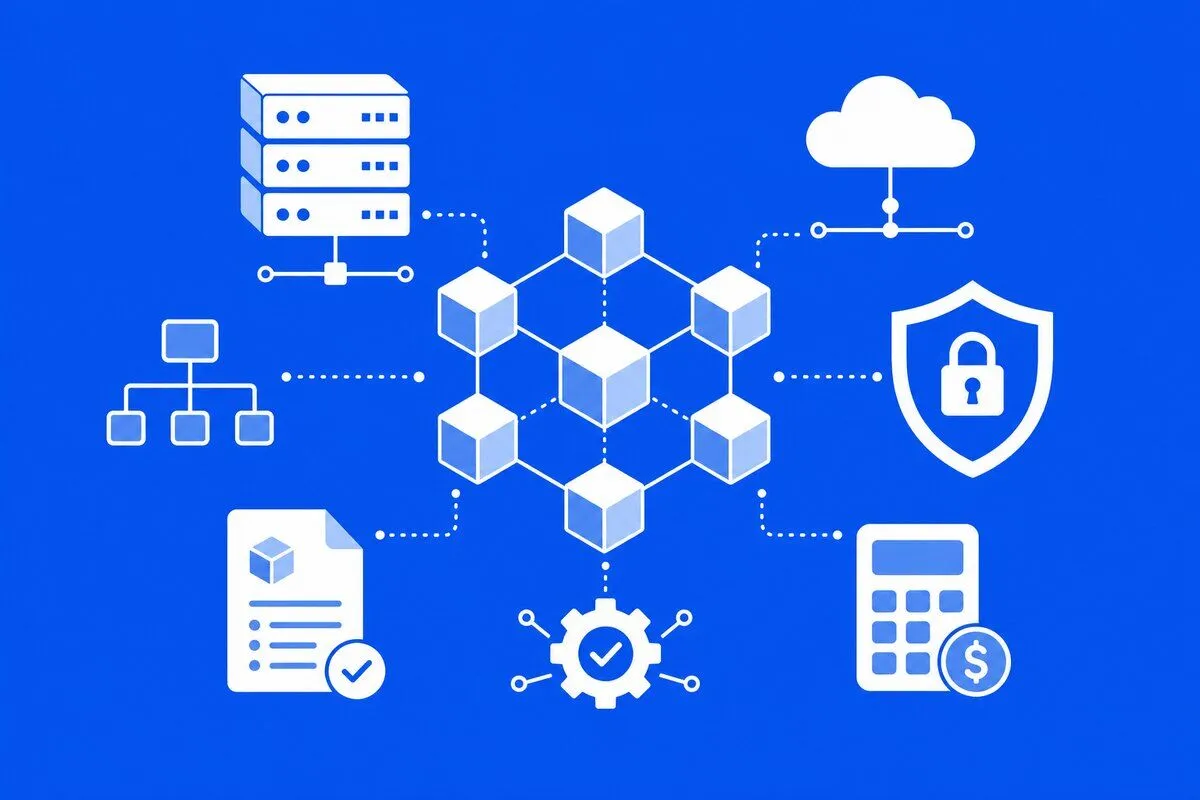
Most blockchain apps have a few core parts. They use a ledger, smart contracts, a method to verify changes, and a front end for users. Some also use wallets, off chain storage, and external data feeds called oracles.
| Step | Action | Result |
|---|---|---|
| 1 | User initiates request | Transaction created |
| 2 | Smart contract processes logic | Rules executed |
| 3 | Network validates | Consensus reached |
| 4 | Data stored | On-chain / off-chain record |
The flow is often simple. A user starts an action in the app. The app sends that request to the logic layer. The network checks it. The result is saved on chain, off-chain, or both. Then the app shows the update to the user.
Types of Blockchain Apps
Public blockchain apps run on open networks. They fit tokens, open finance, and public proof. Private blockchain apps are controlled by one group. They work well for internal business systems. Consortium blockchain apps are shared by selected partners. They are often used in trade, logistics, and joint business workflows.
| Type | Control | Best For | Examples |
|---|---|---|---|
| Public | Open to all | DeFi, tokens, public apps | Ethereum |
| Private | Single organization | Internal systems | Hyperledger |
| Consortium | Group controlled | Supply chain, trade | Corda |
A business should choose the model with care. Privacy needs, speed goals, user access, and compliance rules all matter here.
Top Blockchain App Use Cases
Finance is a major use case. Blockchain apps can support payments, lending, and digital assets. Supply chain is another strong fit. Teams can track goods, prove origin, and improve audit trails. Healthcare can use blockchain for secure records and consent flow. Real estate can use it for asset records and token based ownership. Education can use it for trusted certificates.
Other growing areas include digital identity, media rights, public records, and logistics. The best use case often has many parties, low trust, manual steps, and a clear need for proof.
How to Build a Blockchain App
Step 1: Define the business problem
Start with the problem. Do not start with the chain. Ask what you want to improve. It may be fraud control, faster settlement, better tracking, or rule based automation. This step keeps the project useful and focused.
Step 2: Pick the right blockchain type and platform
Now choose the model. It may be public, private, or a consortium. Then choose the platform. Common names in the competitor content include Ethereum, Solana, Hyperledger, and Corda. The right fit depends on speed, security, governance, support, and cost.
Step 3: Plan the architecture
Decide what should go on chain and what should stay off chain. Define user roles, wallet flow, admin access, APIs, storage, and integrations. Good planning here can save time and money later.
Step 4: Design smart contracts and user flow
Smart contracts should follow clear business rules. The user flow should feel easy and safe. This is important because blockchain apps can confuse first time users if the design is poor.
Step 5: Build the app layers
This step covers the front end, back end, wallet links, admin tools, APIs, alerts, analytics, and business logic. In most real products, blockchain is only one part of the full app stack.
Step 6: Test security and performance
Testing is vital. Teams should test smart contracts, access control, wallet logic, and failure cases. Code review and outside audits can help reduce risk before launch.
Step 7: Launch and improve
After launch, track failed actions, user behavior, support requests, and system health. Plan updates and long term maintenance from the start. A blockchain app needs care after release too.
Best blockchain tech stack choices
The tech stack depends on the product. A common setup may use Ethereum or Hyperledger for the chain layer, Solidity or Rust for contract work, React for the front end, Node.js for APIs, and cloud tools for hosting and monitoring. Some teams also add wallet services, indexers, and analytics tools.
| Layer | Tools |
|---|---|
| Blockchain | Ethereum, Hyperledger |
| Smart Contracts | Solidity, Rust |
| Frontend | React |
| Backend | Node.js |
Do not choose tools because they are trendy. Choose tools that fit your team, users, support plan, and compliance needs.
Security Best Practices for Blockchain Apps
Security must start early. Common risks include contract bugs, weak wallet flow, poor key handling, unsafe APIs, and oracle issues. Good teams use code review, outside audits, test coverage, access rules, and safe upgrade plans to lower these risks.
It also helps to keep contracts simple and modular. Limit permissions where you can. Test strange edge cases before launch. In blockchain, one small bug can become a big problem.
Compliance and Privacy in Blockchain Development
Compliance is now a core part of blockchain work. A business may need to address privacy rules, finance rules, health standards, or data governance. This matters because public ledgers and privacy laws can conflict if private data is stored in the wrong way.
A safer model is to keep sensitive data off-chain and store only proof on-chain. This can support privacy and still give teams a strong audit trail.
How Much does Blockchain App development Cost
Blockchain app development cost depends on scope, features, security needs, platform choice, and team size. One competitor guide places simple projects at about 15,000 dollars to 25,000 dollars. It places medium projects at about 40,000 dollars to 80,000 dollars. It places advanced products at about 100,000 dollars to 200,000 dollars.
Costs rise when you add custom smart contracts, deep integrations, token logic, audits, compliance work, and multi-platform support. That is why many teams start with an MVP. They test the idea first. Then they expand after real feedback.
Major trends shaping blockchain app development
Several trends stand out in the competitor content. Tokenization remains important. Zero-knowledge proofs are gaining more attention for privacy. Interoperability matters because firms want systems that connect across networks. Digital identity is growing as well. Many teams are also exploring how blockchain works with AI, IoT, cloud, edge systems, and big data.
Another trend is practical design. Buyers now care less about hype and more about value, speed, compliance, and long-term support. Energy-aware systems and useful business cases are getting more attention too.
Common mistakes to avoid
One mistake is using blockchain when a normal database would work better. Another is leaving compliance work for late stages. Teams also face trouble when they skip audits, design poor wallet flow, or add too many features at the start.
A better path is to focus on one strong use case. Validate it with real users. Build secure basics first. Then scale with care.
How to choose a blockchain app development partner
Look for a team that understands product strategy and blockchain engineering. They should explain platform tradeoffs, contract risks, integration needs, and support plans in plain language. It also helps if they know your industry and have a clear delivery process.
The best partners ask smart questions early. They help define scope, lower risk, and remove work that does not add business value.
Quick Summary:
- Blockchain apps improve trust, transparency, and automation
- Best for multi-party workflows with low trust
- Costs range from 15,000 to 200,000 USD+
- Security and compliance are critical from day one
- MVP approach helps reduce risk and cost
Final Thoughts
Blockchain app development can create real value when the use case is clear. The best results come from strong planning, the right platform, simple user flow, solid security, and a phased launch. If you follow that path, you can build a useful product that is secure and ready to grow.
FAQs
Q1.Is blockchain app development right for every business?
No. It works best when you need shared trust, a clear audit trail, multi party workflows, or rule based transactions. If one company controls all the data and trust is not a major issue, a standard app may be enough
Q2.How long does it take to build a blockchain app?
The timeline depends on scope and complexity. The competitor guides explain timelines by project size and show that larger apps need more planning, development, testing, and support.
Q3.What industries benefit most from blockchain apps
Finance, supply chain, healthcare, logistics, real estate, education, media, and government are some of the strongest examples.
Q4.What raises the cost the most?
Custom smart contracts, audits, integrations, compliance work, and advanced features are some of the biggest cost drivers.
Explore Services
Related Services
Reviewed by

Aman Vaths
Founder of Nadcab Labs
Aman Vaths is the Founder & CTO of Nadcab Labs, a global digital engineering company delivering enterprise-grade solutions across AI, Web3, Blockchain, Big Data, Cloud, Cybersecurity, and Modern Application Development. With deep technical leadership and product innovation experience, Aman has positioned Nadcab Labs as one of the most advanced engineering companies driving the next era of intelligent, secure, and scalable software systems. Under his leadership, Nadcab Labs has built 2,000+ global projects across sectors including fintech, banking, healthcare, real estate, logistics, gaming, manufacturing, and next-generation DePIN networks. Aman’s strength lies in architecting high-performance systems, end-to-end platform engineering, and designing enterprise solutions that operate at global scale.