Ai Overview
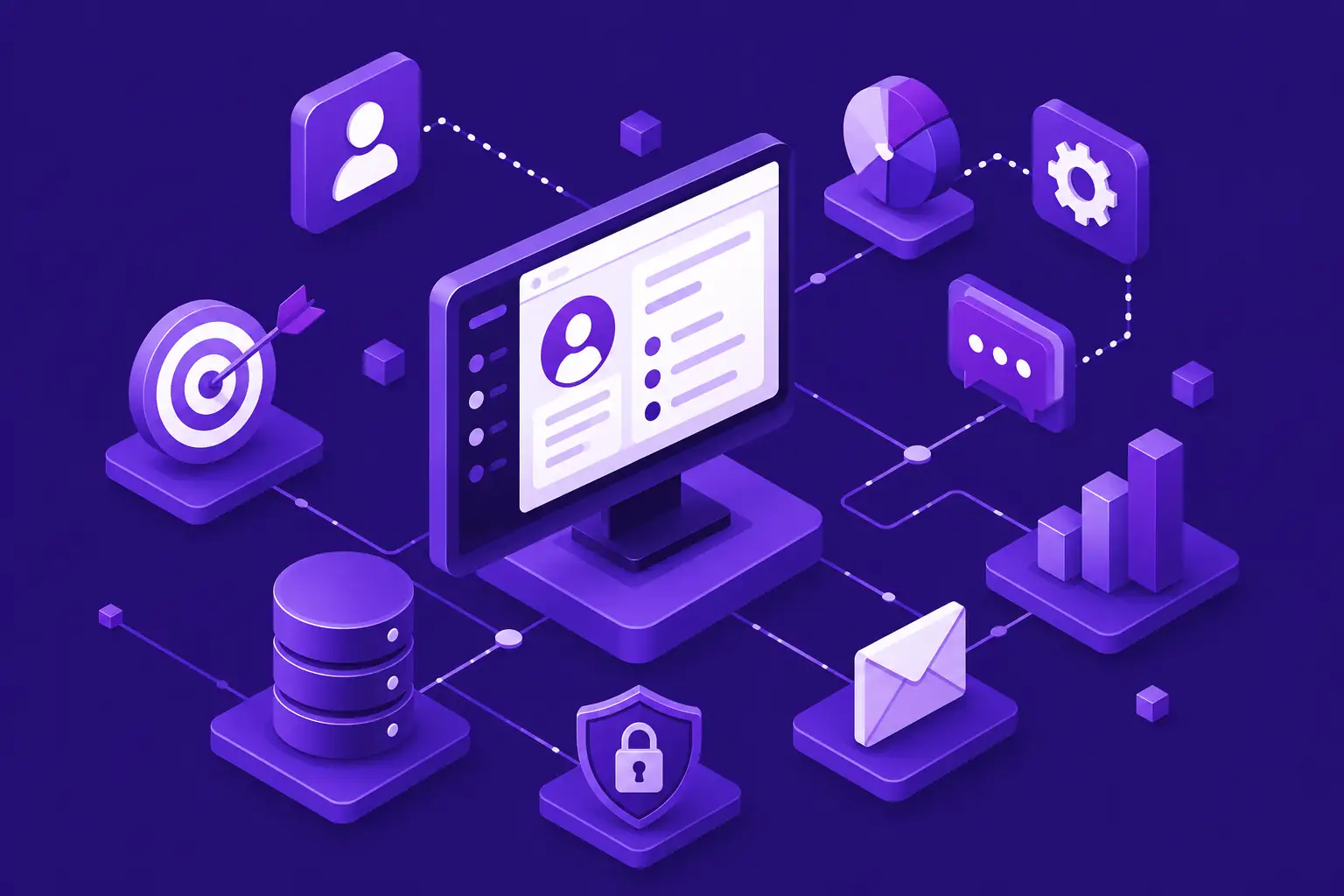
Think of CRM trends as the direction in which customer relationship technology is moving. Just like fashion trends tell you what styles are popular this season, CRM trends 2026 tell businesses which technologies, strategies, and tools are shaping the future of customer management right now. A bank using predictive CRM can identify which customers are most likely to apply for a home loan in the next 90 days based on life events like marriage, new employment, or recent savings activity.
Key Takeaways
- AI powered CRM assistants are automating repetitive tasks and helping sales teams focus on high value conversations.
- Predictive analytics in CRM systems allow businesses to forecast customer behavior and sales outcomes with remarkable accuracy.
- Hyper personalization is the new standard, with CRM platforms tailoring every touchpoint based on individual customer data.
- Omnichannel CRM integration ensures customers receive a consistent experience whether they connect via email, chat, phone, or social media.
- Mobile first CRM solutions are enabling sales and support teams to work efficiently from any location at any time.
- Low code and no code CRM customization tools are making it easier for non technical teams to build powerful workflows.
- Generative AI is transforming customer service by enabling CRM platforms to draft responses, summarize calls, and create content automatically.
- Customer Data Platform integration is giving organizations a single unified view of every customer across all channels and systems.
- Data privacy and security enhancements are becoming critical as CRM systems handle growing volumes of sensitive customer information.
- Industries including healthcare, banking, retail, and real estate are seeing the highest returns from adopting next generation CRM solutions.
The way businesses manage customer relationships is changing faster than ever before. In 2026, CRM trends 2026 are no longer just about storing contact information or tracking sales calls. Modern Customer Relationship Management platforms have become intelligent, predictive, and deeply integrated into every layer of a business. From small startups to large enterprises, organizations across industries are rethinking how they connect with customers, automate processes, and use data to make smarter decisions.
Whether you run a retail store, a healthcare clinic, a SaaS company, or a financial services firm, understanding the latest CRM technology trends is essential. These innovations determine how efficiently your team operates, how satisfied your customers feel, and how quickly your business can grow in an increasingly competitive market.
This guide breaks down the most important CRM software trends 2026 in clear, simple language so you can make informed decisions about your customer management strategy, your technology investments, and the future direction of your business.
What are the top CRM trends in 2026?
The top CRM trends in 2026 include AI powered assistants, predictive analytics, hyper personalization, omnichannel engagement, voice enabled CRM, and generative AI in customer service. Businesses are also adopting low code customization, mobile first CRM platforms, customer data platform integration, and stronger data privacy controls to deliver faster, smarter, and more secure customer experiences.
What CRM Trends 2026 Means for Businesses?
Think of CRM trends as the direction in which customer relationship technology is moving. Just like fashion trends tell you what styles are popular this season, CRM trends 2026 tell businesses which technologies, strategies, and tools are shaping the future of customer management right now.
A decade ago, a CRM was essentially a digital address book with sales tracking features. Today it is a sophisticated business intelligence engine that can predict which leads are most likely to convert, automatically send personalized messages, generate customer service responses, and analyze millions of data points in real time.
For a business owner, understanding these CRM industry trends is the difference between staying competitive and falling behind. For a sales professional, it means working smarter with tools that guide every interaction. For a customer support team, it means resolving issues faster with AI assistance and complete customer context at their fingertips.
Industry Insight: According to Gartner, the global CRM software market is projected to exceed $157 billion by 2026, making it one of the fastest growing enterprise software segments in the world.
How CRM Trends 2026 Impact Your Business
Why CRM Technology Is Evolving Rapidly?
The pace of CRM evolution is being driven by several powerful forces happening simultaneously. Customers today expect instant responses, personalized experiences, and seamless interactions across every channel they use. Meeting these expectations requires technology that goes far beyond traditional database software.
Three major forces are reshaping the CRM technology landscape in 2026:
- Artificial Intelligence Maturity: AI has moved from experimental to production ready. Businesses can now deploy AI tools inside CRM systems without needing a team of data scientists.
- Customer Expectations: Research shows that over 76 percent of customers expect companies to understand their needs and preferences. Traditional CRM systems simply cannot meet this bar.
- Data Explosion: Businesses are generating more customer data than ever before across websites, apps, social platforms, and support channels. Modern CRM systems are built to process and act on this data at scale.
These forces combined are pushing CRM software development companies and enterprise platforms to innovate continuously, creating the rich set of trends we are seeing define the industry in 2026.
AI Powered CRM Assistants
One of the most exciting developments in the future of CRM is the rise of AI powered assistants embedded directly inside the platform. These are not simple chatbots. They are intelligent systems that understand context, learn from historical data, and actively help sales, marketing, and support teams make better decisions faster.
Imagine a sales representative opening their CRM in the morning and seeing a prioritized list of leads to contact today, complete with the best time to call, what topics to discuss, and the most likely outcome of the conversation. That is exactly what AI powered CRM assistants are doing for businesses right now.
Step by Step: How an AI Powered CRM System Works
Data Collection
The CRM collects customer data from emails, website visits, purchase history, support tickets, social media activity, and sales call recordings.
AI Analysis
Machine learning models analyze patterns in the data, identifying which behaviors indicate purchase intent, churn risk, or upsell opportunities.
Smart Recommendations
The AI assistant surfaces actionable recommendations for each team member, such as the best next action, a suggested email draft, or a risk alert for a key account.
Automated Actions
Routine tasks like follow up emails, meeting scheduling, and data entry are handled automatically, freeing team members for strategic work.
Continuous Learning
Every interaction feeds back into the AI model, making the system smarter and more accurate over time as it learns the unique patterns of your business and customers.
For a practical example, consider an e-commerce retailer using an AI development integrated CRM platform. The AI monitors browsing patterns and past purchases, and customer contracts then automatically sends a personalized discount code when a customer shows abandonment signals. This single automation can recover 15 to 20 percent of otherwise lost sales without any manual effort from the team.
Predictive Analytics and Sales Forecasting
Predictive analytics CRM is one of the most valuable capabilities businesses are adopting in 2026. Rather than looking backward at what has already happened, predictive CRM tools look forward, helping businesses anticipate what customers are likely to do next.
Think of it this way. A bank using predictive CRM can identify which customers are most likely to apply for a home loan in the next 90 days based on life events like marriage, new employment, or recent savings activity. The bank can then proactively reach out with relevant offers before the customer even starts comparing competitors.
Market Data: Businesses using predictive analytics within their CRM systems report an average improvement of 28 percent in sales forecast accuracy and a 15 percent reduction in customer churn, according to industry research from Salesforce.
Sales forecasting powered by predictive CRM has also become a critical tool for leadership teams. Instead of relying on gut feeling or manual pipeline reviews, executives can see accurate revenue projections based on real time deal data, historical win rates, and market signals.
- Identify which deals are most likely to close this quarter
- Spot at risk customers before they decide to leave
- Discover upsell and cross sell opportunities within existing accounts
- Optimize pricing and promotions based on demand signals
- Allocate sales resources to the highest value opportunities
Predictive Analytics CRM Flow
Hyper Personalized Customer Experiences
CRM personalization has long been a goal for businesses, but in 2026 it has reached a new level: hyper personalization. This goes beyond simply addressing a customer by their first name in an email. It means tailoring every aspect of the customer journey based on individual preferences, behaviors, purchase history, communication style, and real time context. Pulling all those signals together usually requires a context graph that links every interaction, account, and product touch into one model the CRM can act on instantly.
A retail clothing brand using hyper personalized CRM does not just send a generic sale email to all subscribers. Instead, it sends each customer a curated selection of items based on their size, style preferences, past purchases, and even the weather in their city that week. This level of relevance dramatically increases engagement and conversion rates.
Industry Observation: Organizations that invest in hyper personalization within their customer relationship management platforms report up to a 40 percent increase in marketing campaign ROI and significantly higher customer lifetime value scores. The key differentiator is not the volume of data collected but the speed and intelligence with which CRM systems act on that data. Businesses that can personalize in real time during an active customer interaction see the greatest results.
Modern CRM software development approaches are building personalization engines directly into the core platform architecture, making it possible to deliver individualized experiences at scale without manual effort from marketing teams.
CRM Automation and Workflow Optimization
CRM automation trends in 2026 are fundamentally changing how business workflows operate. Sales teams are no longer spending hours on manual data entry, following up on cold leads, or scheduling meetings individually. Intelligent CRM automation handles all of this in the background.
Here is a practical look at what modern CRM automation can handle for a typical sales and customer service operation:
- Lead Scoring: Automatically scores incoming leads based on firmographics, behavior, and engagement signals
- Email Sequences: Sends personalized follow up messages at the right intervals without manual triggering
- Task Creation: Generates to do items for sales reps when important customer actions occur
- Support Ticket Routing: Assigns customer issues to the right team member based on expertise and availability
- Contract Generation: Automatically generates proposals and contracts when deals reach a certain stage
- Renewal Reminders: Alerts account managers when subscriptions or contracts are approaching expiration
Businesses leveraging business automation solutions integrated with their CRM report an average reduction of 30 to 40 percent in time spent on administrative tasks, freeing their teams to focus on relationship building and strategic selling.
Automation Adoption: A 2025 report from Salesforce State of Sales found that high performing sales teams are 2.8 times more likely to use CRM automation compared to underperforming teams, with AI and automation being the top differentiator.
Omnichannel Customer Engagement
One of the defining customer experience trends of 2026 is the expectation of a seamless omnichannel experience. Customers no longer think in terms of channels. They think in terms of their relationship with a brand. If they start a conversation on Instagram, continue it via email, and then call customer support, they expect the agent to know the full context of every previous interaction.
Modern CRM platforms achieve this by acting as a central hub that connects all customer communication channels, including email, live chat, SMS, WhatsApp, social media, phone calls, and web forms, into a single unified timeline for each customer.
Omnichannel CRM Hub Architecture
A healthcare provider using an omnichannel CRM can see that a patient booked an appointment online, received a reminder via SMS, and called the helpline with a question all within the same interface. This complete visibility enables better care coordination and a far superior patient experience.
Mobile First CRM Solutions
Mobile CRM solutions are no longer a nice to have feature. They are a core business requirement in 2026. Sales professionals, field service agents, and customer success managers are frequently working remotely, visiting clients, or traveling between meetings. They need full CRM functionality on their smartphones and tablets, not just a stripped down mobile view.
Mobile CRM Adoption: Sales professionals who use mobile CRM achieve their sales quotas at a rate 65 percent higher than those using desktop only CRM tools, according to industry research. Mobile CRM adoption has grown by over 11 percent annually since 2022.
Modern mobile CRM applications built by companies like Nadcab Labs offer capabilities including offline data sync, GPS location tracking for field sales, voice to text note entry, push notifications for deal alerts, and one click communication with customers directly from the CRM interface.
Organizations investing in mobile app development for their CRM systems are seeing tangible improvements in response times, field productivity, and customer satisfaction scores.
Customer Data Platform Integration
A Customer Data Platform, commonly called a CDP, is a system that collects and unifies customer data from all sources into a single comprehensive profile. When integrated with a CRM, it creates what industry experts call a 360 degree customer view.
Without CDP integration, a company’s customer data is scattered. The marketing team has email engagement data. The sales team has deal history in the CRM. The support team has ticket records. And the e-commerce platform has transaction data. These data silos make it impossible to truly understand any individual customer.
With CRM and CDP integration, all of these data sources are unified. Every team member can see the complete customer story, including their entire communication history, purchase behavior, support interactions, marketing engagement, and real time activity on the website or app.
This capability is particularly powerful for enterprises and organizations with large customer bases where personalized, data driven engagement at scale is critical to business success.
Low Code and No Code CRM Customization
One of the most democratizing trends in CRM technology is the rise of low code and no code customization tools. Historically, customizing a CRM required a team of developers and weeks of implementation time. In 2026, business users can build custom workflows, dashboards, automation rules, and even entire CRM modules using drag and drop visual interfaces.
A marketing manager can build a lead nurturing workflow in an afternoon. A customer support supervisor can create a ticket escalation rule without writing a single line of code. A small business owner can customize their CRM pipeline stages, fields, and reports to perfectly match their unique sales process.
This shift is significant because it reduces dependency on IT departments and external vendors for routine CRM modifications. Teams move faster, iterate more frequently, and adapt their CRM systems to changing business conditions in real time.
For businesses that need more sophisticated customization beyond what low code tools offer, partnering with a custom CRM development specialist ensures that unique business requirements are met with precision engineered solutions.
Voice Enabled CRM Technology
Voice enabled CRM technology is emerging as one of the most convenient innovations for busy professionals. Rather than typing notes or navigating menus, sales representatives can simply speak to their CRM and have it respond intelligently.
After a client meeting, a salesperson can say “Log a meeting with Sarah from TechCorp, discussed enterprise plan pricing, follow up in three days” and the CRM automatically creates the meeting record, updates the deal stage, and schedules the follow up task. This saves precious minutes across every interaction and ensures that critical information is always captured accurately.
Voice CRM is also being used in call center environments where agents can query customer data hands free, pull up account details during live calls, and update records through voice commands without pausing the conversation. This significantly improves the quality and efficiency of customer service interactions.
CRM Security and Data Privacy Enhancements
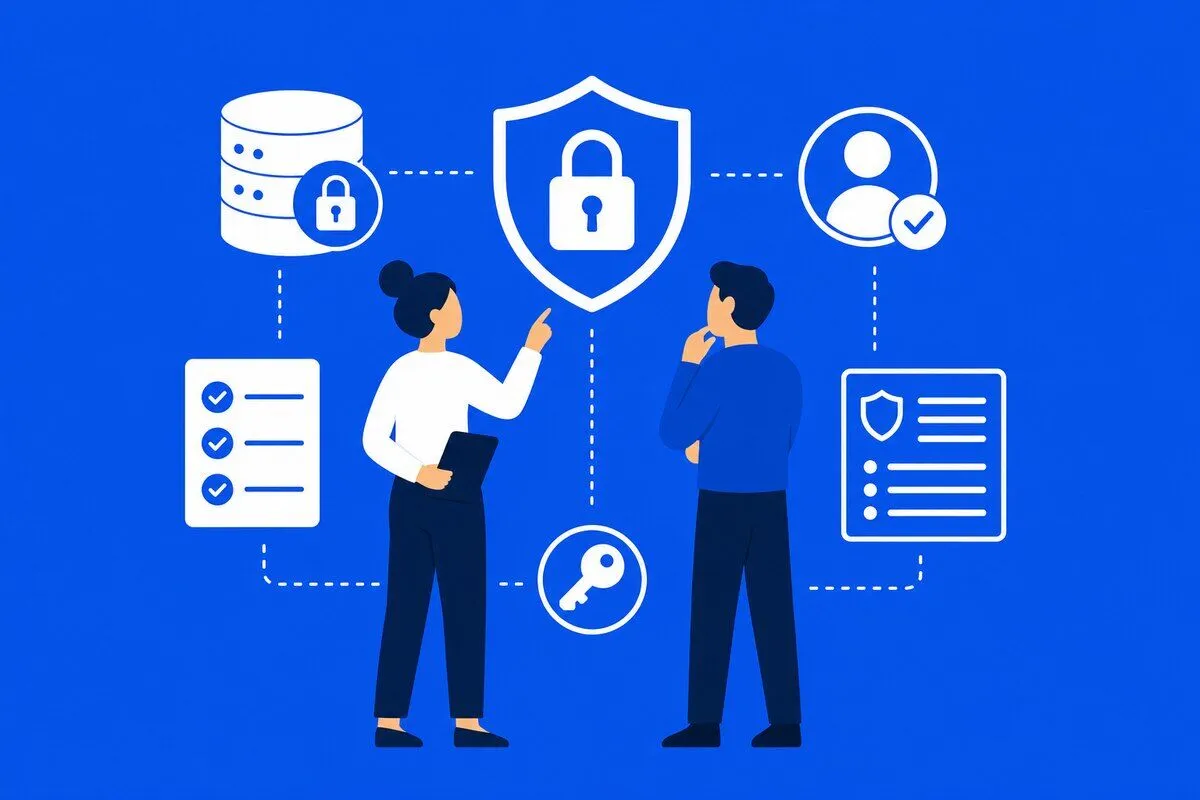
As CRM systems become the central repository for a company’s most valuable asset, its customer data, security and privacy have risen to the top of every IT and business leader’s agenda. The CRM trends of 2026 reflect a significant industry wide investment in security architecture and compliance capabilities.
Key security enhancements being built into modern CRM platforms include:
- Zero Trust Architecture: Every user and system must be continuously verified, even those inside the organization
- AI Powered Threat Detection: Machine learning monitors access patterns and flags anomalous behavior in real time
- Data Residency Controls: Organizations can specify exactly where customer data is stored to meet regional compliance requirements
- Consent Management: Built in tools for tracking and managing customer consent in line with GDPR, CCPA, and other regulations
- End to End Encryption: Customer data is encrypted both in transit and at rest across all CRM modules
Security Investment: Global spending on CRM data security and compliance tools is expected to reach $12.8 billion by 2026, reflecting the growing recognition that protecting customer data is both a legal obligation and a competitive advantage.
Generative AI in Customer Service
Generative AI is perhaps the most transformative technology entering the CRM space in 2026. Unlike traditional AI that classifies or predicts, generative AI can create. It can write emails, summarize conversations, draft proposals, generate reports, and even produce personalized marketing content, all inside the CRM platform.
For customer service teams, generative AI offers remarkable capabilities. When a customer sends a complex complaint, the AI instantly reads the full history of that customer’s interactions, drafts a thoughtful, personalized response, and presents it to the agent for review and sending with a single click. What previously took five minutes of reading and writing now takes under thirty seconds.
Implementation Perspective: The most successful generative AI deployments in CRM environments follow a “human in the loop” model. The AI generates the content, but a trained agent reviews and approves it before it reaches the customer. This approach combines the speed and creativity of AI with the emotional intelligence and accountability of human judgment. Organizations using this hybrid model report 50 to 60 percent faster response times alongside higher customer satisfaction ratings compared to either fully manual or fully automated approaches.
Beyond customer service, generative AI within CRM platforms is being used to create personalized sales scripts, generate meeting summaries automatically after calls, write product descriptions for specific customer segments, and produce data driven business reports in minutes rather than hours.
Industries Benefiting Most from Modern CRM Systems
While every business with customers can benefit from modern CRM technology, certain industries are experiencing particularly dramatic transformations from adopting CRM software trends 2026:
- Healthcare: Patient relationship management, appointment scheduling, care coordination, and follow up automation are dramatically improving patient outcomes and clinic efficiency
- Financial Services: Banks and insurance companies use CRM AI to personalize financial product recommendations, manage advisor relationships, and detect early signs of customer dissatisfaction
- Real Estate: Property agencies leverage CRM automation to nurture long sales cycles, track buyer preferences, and manage large portfolios of property listings and client relationships
- Retail and E-commerce: Personalized shopping journeys, loyalty program management, and post purchase retention workflows are being orchestrated through intelligent CRM platforms
- SaaS and Technology: Customer success teams use CRM data to monitor product usage, identify at risk accounts, and drive upsell conversations at the optimal moment
- Manufacturing and B2B: Complex multi stakeholder deal management, distributor relationship tracking, and after sales service coordination are being streamlined through enterprise CRM systems
Companies in these industries partnering with enterprise software development specialists to build industry specific CRM solutions are gaining significant competitive advantages over those relying on generic off the shelf tools.
CRM Trends 2026: Comparison of Key Innovations
The table below provides a clear overview of the most significant CRM industry trends in 2026, showing what each trend does, who benefits most, and the level of business impact organizations can expect.
| CRM Trend | Core Function | Best For | Business Impact |
|---|---|---|---|
| AI Powered Assistants | Automates decisions and tasks using machine learning | Sales teams, support centers | ⭐⭐⭐⭐⭐ Very High |
| Predictive Analytics | Forecasts customer behavior and sales outcomes | Enterprise sales, banking, SaaS | ⭐⭐⭐⭐⭐ Very High |
| Hyper Personalization | Tailors every customer interaction individually | Retail, e-commerce, healthcare | ⭐⭐⭐⭐⭐ Very High |
| CRM Automation | Eliminates manual repetitive workflows | All business sizes and industries | ⭐⭐⭐⭐⭐ Very High |
| Omnichannel Engagement | Unifies all customer channels into one view | Multi channel businesses | ⭐⭐⭐⭐ High |
| Mobile First CRM | Full CRM functionality on mobile devices | Field sales, remote teams | ⭐⭐⭐⭐ High |
| CDP Integration | Creates unified 360 degree customer profiles | Enterprises, data rich organizations | ⭐⭐⭐⭐ High |
| Low Code Customization | Enables non technical teams to build CRM workflows | SMEs, growing startups | ⭐⭐⭐⭐ High |
| Voice Enabled CRM | Voice commands for CRM data entry and queries | Call centers, field agents | ⭐⭐⭐ Moderate to High |
| Generative AI | Creates content, responses, and summaries automatically | Customer service, marketing, sales | ⭐⭐⭐⭐⭐ Very High |
| Data Privacy Tools | Ensures compliance with data protection regulations | All regulated industries | ⭐⭐⭐⭐ High |
Future of CRM Beyond 2026
Looking beyond the immediate CRM trends of 2026, the next generation CRM landscape will be shaped by even more profound technological shifts. Here are the emerging developments that forward thinking businesses should start watching today:
Autonomous CRM Agents
AI agents that operate independently within CRM systems, making decisions, sending communications, and managing pipelines without any human triggers.
Spatial CRM Interfaces
As AR and VR technology matures, CRM data visualization in three dimensional spatial environments will become a reality for enterprise users.
Blockchain in CRM
Decentralized customer identity and consent management using blockchain will give customers full control over their own data while ensuring organizational compliance.
Emotion AI Integration
CRM systems will analyze the emotional state of customers during interactions and adjust communication strategy in real time to improve outcomes.
The digital transformation journey for most businesses is still in its early stages. Organizations that invest in understanding and adopting modern CRM trends today are laying the foundation for sustainable competitive advantage well beyond 2026.
Ready to Transform Your Business with a Modern CRM?
Whether you are a startup looking to build your first CRM, an SME ready to automate your customer workflows, or an enterprise seeking a fully customized AI powered platform, Nadcab Labs delivers CRM solutions designed for real business outcomes. Our experienced team combines deep CRM expertise with modern technology to help you connect with customers in smarter, faster, and more meaningful ways.
Final Thoughts
The landscape of customer relationship management has never been more dynamic or more full of opportunity than it is right now. The CRM trends 2026 covered throughout this guide represent a fundamental shift in how businesses think about, manage, and grow their customer relationships. What was once a system of record has become a system of intelligence, prediction, and action.
From AI powered assistants that guide every sales interaction to generative AI that drafts communications in seconds, from hyper personalized customer journeys to voice enabled CRM that captures insights hands free, the technology available to businesses today is extraordinary. The CRM software trends of 2026 are making it possible for organizations of every size to deliver enterprise quality customer experiences at a fraction of the cost and complexity that would have been required just five years ago.
Predictive analytics is removing the guesswork from sales forecasting and churn prevention. Omnichannel integration is giving businesses a complete and accurate picture of every customer relationship. Mobile first CRM solutions are extending the power of customer management to field teams working anywhere in the world. And low code customization tools are empowering non technical business users to adapt their CRM platforms as quickly as their business evolves.
The industries benefiting most are those that have embraced CRM innovation proactively: healthcare organizations managing patient relationships more thoughtfully, financial services firms personalizing advice at scale, retailers delivering individually relevant shopping experiences, and SaaS companies monitoring customer health with unprecedented precision.
Looking beyond the immediate horizon, the future of CRM will bring even more transformative capabilities including autonomous AI agents, spatial computing interfaces, blockchain powered consent management, and emotion aware customer interactions. Businesses that begin building their CRM foundations today using modern technology and sound strategy will be best positioned to take advantage of these innovations as they mature.
The most important takeaway from understanding CRM trends 2026 is this: technology alone does not create excellent customer relationships. But the right technology, thoughtfully implemented and consistently used, empowers your team to build the kind of relationships that drive long term business success. The organizations that will lead their markets in the years ahead are the ones investing in modern CRM infrastructure today.
Whether you are evaluating your first CRM, upgrading an aging system, or planning a complete digital transformation of your customer engagement model, the trends and insights in this guide provide a clear map of where the industry is heading and how your business can benefit.
Frequently Asked Questions
Q1.How much does implementing a modern AI powered CRM typically cost for a small business?
The cost varies widely based on the chosen platform, level of customization, and team size. Cloud based CRM subscriptions typically range from $25 to $300 per user per month. Custom built CRM solutions developed by specialized companies can range from $15,000 to well over $100,000 depending on complexity. Small businesses often find a mid tier cloud CRM sufficient initially, with custom development becoming valuable as they scale their unique operational needs.
Q2.How long does it typically take to fully implement a new CRM system in an organization?
A basic CRM setup for a small team can be completed in two to four weeks. A mid market implementation with data migration, integrations, and custom workflows typically takes two to four months. Large enterprise CRM deployments involving multiple departments, complex integrations, and change management programs can take six to eighteen months. The timeline is significantly influenced by data quality, team readiness, and the level of customization required.
Q3.What is the difference between a CRM and a Customer Data Platform and do I need both?
A CRM manages active customer relationships, interactions, and sales pipelines. A CDP collects and unifies raw customer data from all touchpoints into comprehensive profiles. While a CRM is designed for your internal teams to manage relationships, a CDP is designed to create a data layer that powers personalization and analytics. Many growing organizations benefit from having both integrated together for maximum effectiveness, though smaller businesses can often achieve solid results with an advanced CRM alone.
Q4.Can a small startup benefit from CRM AI features or is that only for large enterprises?
Absolutely yes. Many modern CRM platforms include AI features in their standard or mid tier plans at very accessible pricing. Startups can leverage AI for lead scoring, automated email sequences, meeting scheduling, and basic sentiment analysis from day one. Starting with AI powered CRM early allows startups to build strong data foundations and customer relationship habits that scale as the business grows, giving them a significant efficiency advantage over competitors still using manual processes.
Q5.What are the most common reasons CRM implementations fail?
The most common failure factors are poor user adoption due to insufficient training, choosing a system that is too complex or too simple for the organization’s needs, migrating poor quality data into the new system, lack of executive sponsorship and clear ownership, and trying to implement too many features at once rather than starting with core workflows. Success requires aligning the CRM strategy with specific business goals from the outset and treating change management as equally important as the technical implementation.
Q6.How does a CRM help reduce customer churn specifically?
A well configured CRM reduces churn through several mechanisms. Predictive analytics identifies customers showing early signs of disengagement so your team can intervene before they leave. Automated health score monitoring alerts account managers when key accounts go quiet or reduce activity. Personalized engagement workflows keep customers feeling valued through relevant, timely communications. And comprehensive interaction history ensures every team member who touches the account has the context needed to deliver a consistent and satisfying experience.
Q7.What CRM integrations are considered most essential for a growing business in 2026?
The most valuable CRM integrations for growing businesses include email marketing platforms for automated campaigns, accounting or billing software for financial context, customer support ticketing systems for unified service visibility, e-commerce platforms for purchase history, video conferencing tools for meeting logging, and communication platforms like WhatsApp or Slack for team and customer messaging. Businesses with field sales teams also benefit greatly from mapping and GPS integrations to optimize route planning and client visit scheduling.
Q8.Is it better to buy an off the shelf CRM or build a custom CRM from scratch?
Off the shelf CRM platforms are excellent starting points for most businesses because they are ready to use quickly and carry lower upfront costs. Custom CRM development becomes the better choice when your business has highly specialized workflows that generic platforms cannot accommodate, when you need deep integration with proprietary internal systems, or when long term total cost of ownership analysis shows that licensing fees will exceed custom development costs over time. Many businesses successfully use a hybrid approach, building custom modules on top of established platforms.
Q9.How does CRM technology specifically help non profit organizations and mission driven businesses?
Non profits use CRM systems to manage donor relationships, track grant funding pipelines, segment supporters for personalized outreach, coordinate volunteer activities, and measure program outcomes. CRM automation helps lean non profit teams do more with limited resources by eliminating repetitive administrative tasks. Several CRM platforms offer special non profit pricing or dedicated non profit editions. Donor retention rates, which are critical to non profit sustainability, typically improve significantly when organizations adopt systematic CRM based relationship management practices.
Q10.What metrics should businesses track to measure the success of their CRM investment?
Key CRM success metrics include customer acquisition cost, customer lifetime value, sales cycle length, lead to close conversion rate, customer retention and churn rates, average deal size, support ticket resolution time, and net promoter score. From an operational standpoint, tracking CRM user adoption rates and data completeness scores helps identify whether the system is being used effectively. Businesses should establish baseline measurements before CRM implementation to accurately calculate the return on investment over time.
Explore Services
Related Services
Reviewed by

Aman Vaths
Founder of Nadcab Labs
Aman Vaths is the Founder & CTO of Nadcab Labs, a global digital engineering company delivering enterprise-grade solutions across AI, Web3, Blockchain, Big Data, Cloud, Cybersecurity, and Modern Application Development. With deep technical leadership and product innovation experience, Aman has positioned Nadcab Labs as one of the most advanced engineering companies driving the next era of intelligent, secure, and scalable software systems. Under his leadership, Nadcab Labs has built 2,000+ global projects across sectors including fintech, banking, healthcare, real estate, logistics, gaming, manufacturing, and next-generation DePIN networks. Aman’s strength lies in architecting high-performance systems, end-to-end platform engineering, and designing enterprise solutions that operate at global scale.