Ai Overview
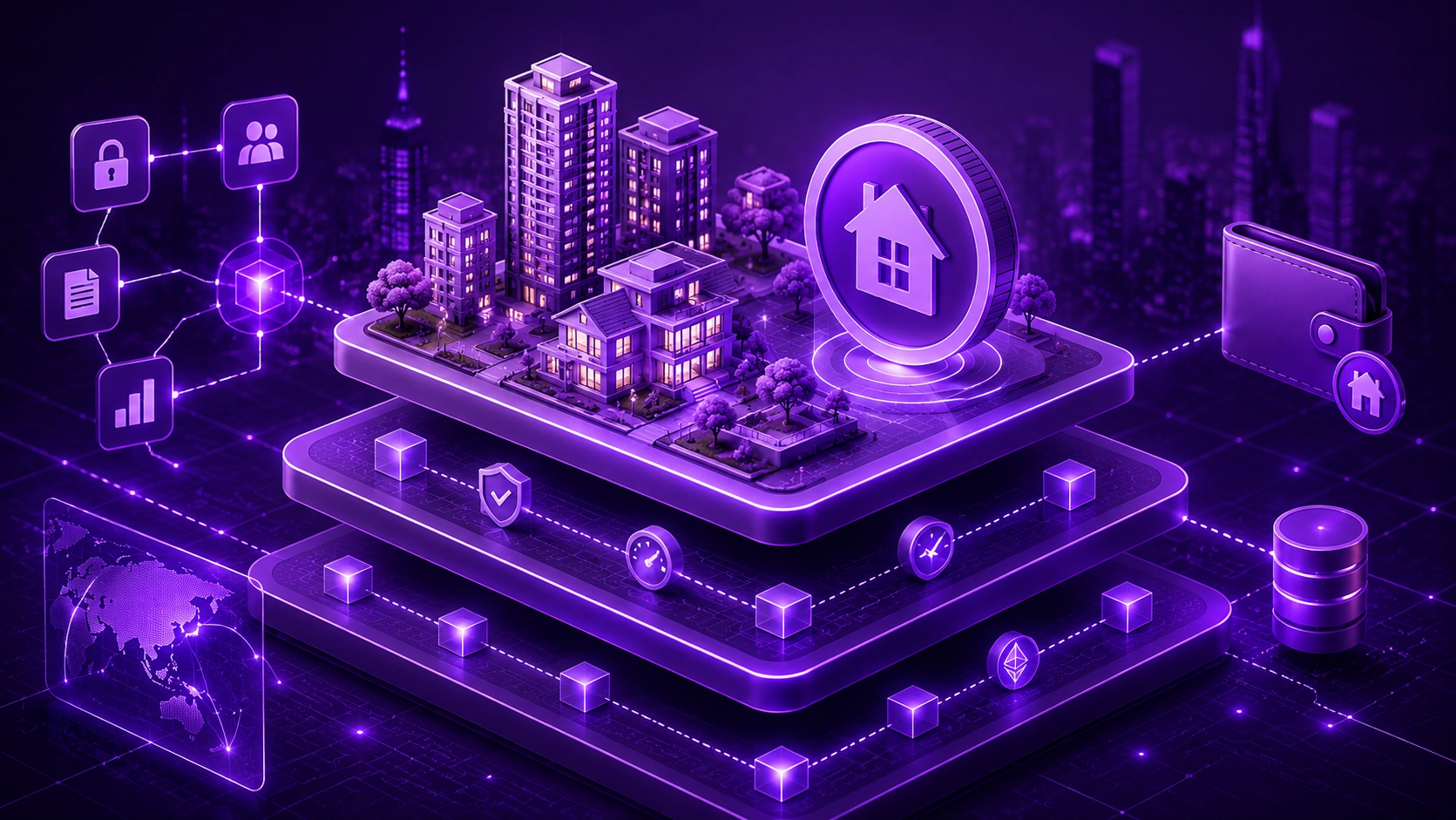
Over our eight-plus years of building and advising on blockchain-powered investment platforms, few topics have demanded as much architectural precision as Real Estate Tokenization. A platform that works flawlessly with 500 investors and 10 properties will encounter critical performance degradation when it scales to 50,000 investors and 1,000 properties unless scalability has been engineered into the foundational architecture.
Key Takeaways
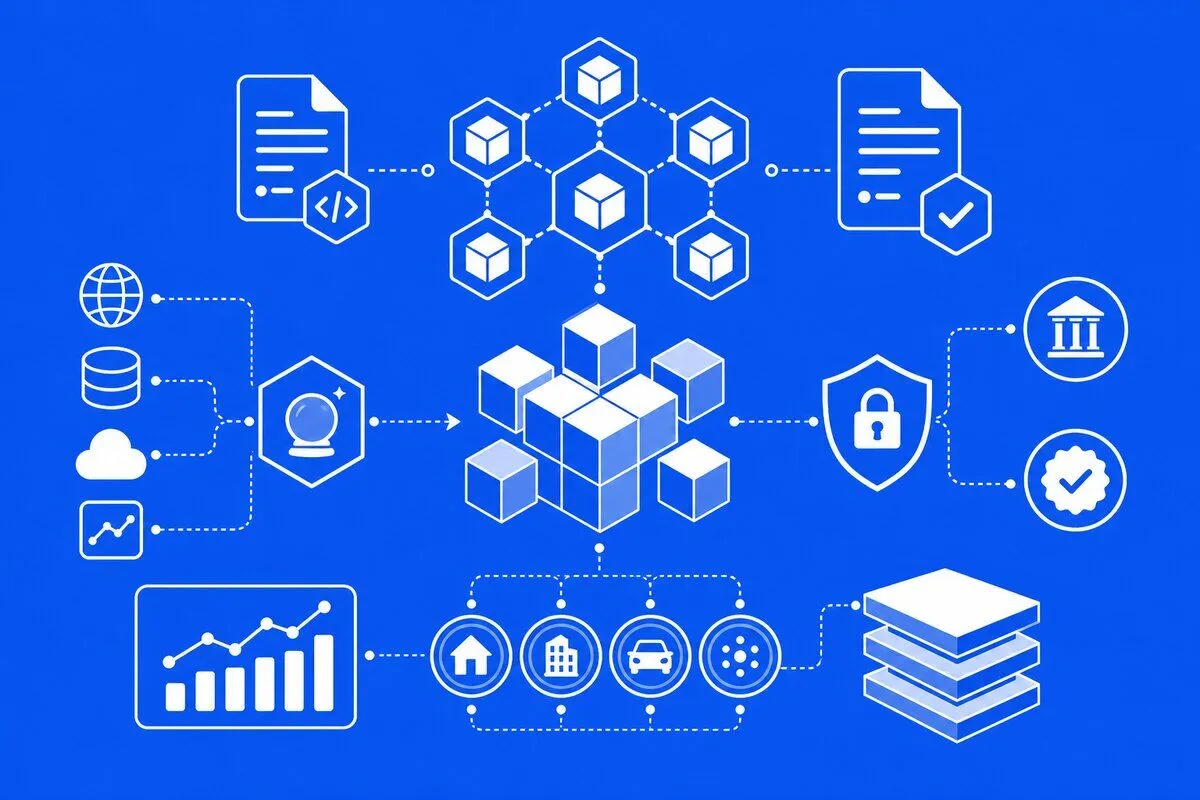
- ✓ Real estate tokenization architecture is a multi-layer technical system combining blockchain, smart contracts, APIs, compliance engines, and user-facing interfaces into one platform.
- ✓ Dubai’s Land Department has already tokenized over $5 million in real estate on the XRP Ledger, signaling government-level validation of the architecture model.
- ✓ Smart contract architecture in real estate automates dividend distribution, investor KYC, and compliance enforcement, removing manual intermediary steps from the transaction flow.
- ✓ Scalable tokenization platforms in India and Singapore use microservices, Layer-2 chains, and distributed databases to handle peak trading volumes without performance loss.
- ✓ Multi-chain integration in tokenization platforms connects investor liquidity pools across Ethereum, Polygon, XRP Ledger, and Solana, reducing single-chain dependency risks significantly.
- ✓ Blockchain real estate solutions are projected to grow the tokenized property market to $4 trillion by 2035, according to Deloitte, at a CAGR of 27% annually worldwide.
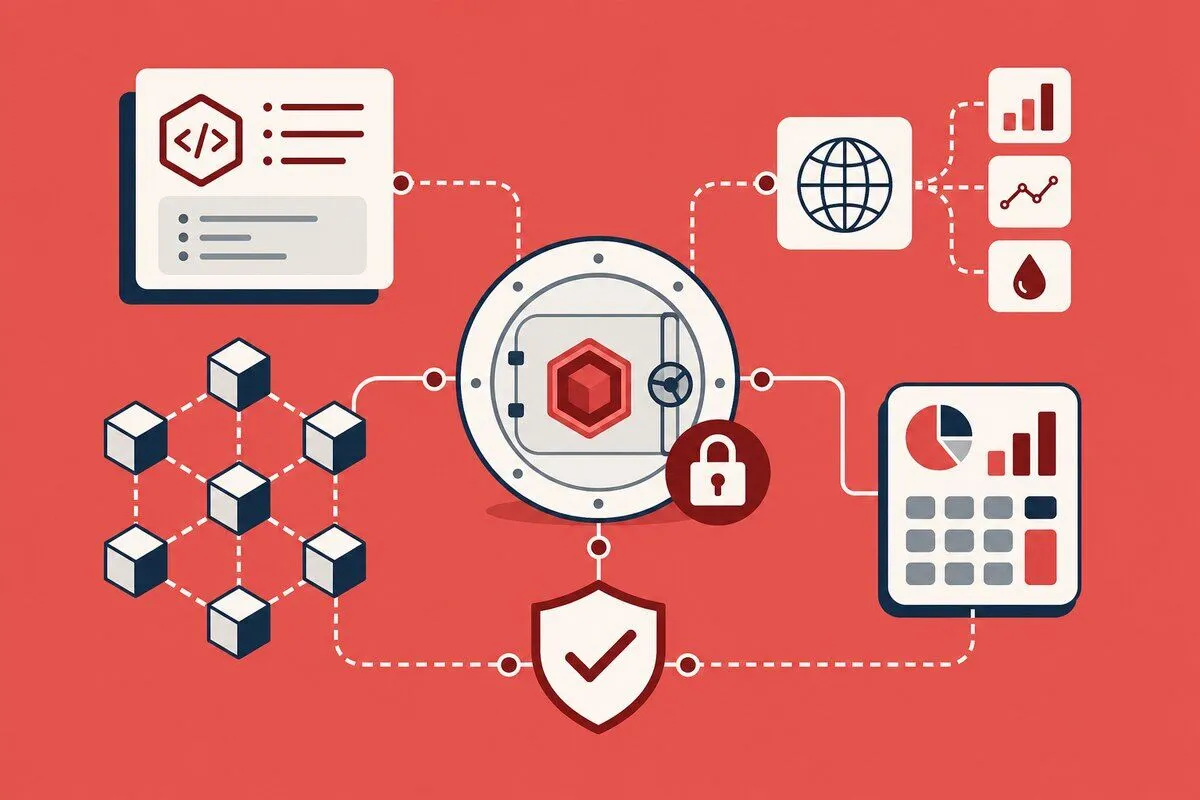
- ✓ Security framework in real estate tokenization architecture must include smart contract audits, MPC custody, RBAC controls, and encrypted data pipelines to protect investor assets.
- ✓ AI and data analytics layers in tokenization architecture enable automated property valuations, risk scoring, fraud detection, and personalized investor portfolio recommendations at scale.
- ✓ The compliance and regulatory layer in tokenized real estate systems must align with VARA in UAE, SEBI frameworks in India, and MAS guidelines in Singapore simultaneously.
- ✓ Frontend architecture for tokenization platforms must deliver mobile-first responsive investor dashboards, real-time portfolio tracking, and seamless Web3 wallet connectivity for global users.
Introduction to Real Estate Tokenization Architecture
Over our eight-plus years of building and advising on blockchain-powered investment platforms, few topics have demanded as much architectural precision as Real Estate Tokenization. The architecture that powers a modern property tokenization platform is not simply a blockchain with a user interface bolted onto it. It is a complex, multi-layered system where legal structures, cryptographic protocols, compliance engines, scalable cloud backends, and investor-facing interfaces must all operate in synchronized harmony. Getting any one layer wrong can expose the platform to security vulnerabilities, regulatory non-compliance, or poor investor experience, all of which are fatal in a market moving at the pace of 2026.
Real estate tokenization architecture refers to the complete technical and structural blueprint governing how physical property assets are converted into digital tokens, how those tokens are issued and managed on-chain, how investors interact with them, and how the platform ensures ongoing regulatory compliance across multiple jurisdictions. In markets like India, Singapore, and the UAE, where regulatory frameworks are rapidly evolving and investor expectations are rising simultaneously, the quality of this architecture determines whether a platform survives or scales.
This guide delivers an expert-level breakdown of every critical layer in a next-generation real estate tokenization platform. From blockchain selection and smart contract design to security frameworks, multi-chain integration, AI-powered analytics, and future-ready compliance systems, this is the definitive architectural reference for builders, investors, and decision-makers operating in the tokenized property space in 2026 and beyond.
Key Components of Real Estate Tokenization Architecture
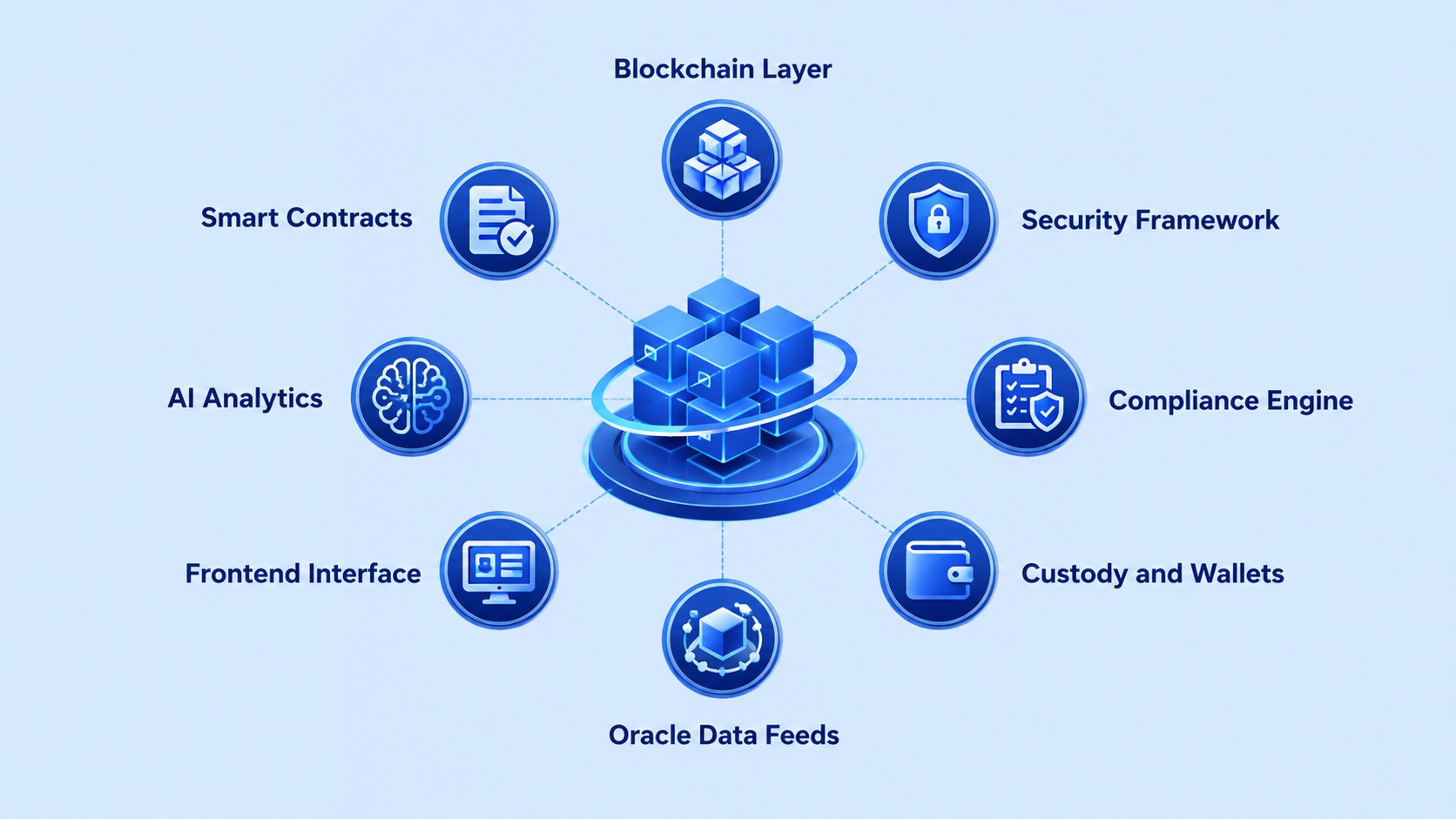
A production-grade real estate tokenization architecture is composed of eight distinct but deeply interconnected components. Each component serves a specific function within the overall system, and each must be designed with the other layers in mind. Platforms that treat these components as isolated modules invariably encounter integration failures, security gaps, or compliance breakdowns during live operation. Our experience across projects in India, Singapore, and the UAE has consistently confirmed that modular but coherently designed systems outperform siloed builds at every scale milestone.
The core components of real estate tokenization architecture include the blockchain layer, smart contract modules, a tokenization backend infrastructure, a compliance and KYC engine, a user-facing frontend application, a custody and wallet management system, an oracle and data feed layer, and an AI-powered analytics module. Together, these components define whether a tokenization platform infrastructure can handle real-world investor volumes while maintaining legal integrity and operational security.
Understanding how each component interacts with the others is the foundation of building a scalable tokenization platform that can serve institutional and retail investors alike across Singapore, India, UAE, and international markets simultaneously.
Blockchain Layer in Real Estate Tokenization Platforms
The blockchain layer is the immutable foundation on which all tokenized real estate assets exist and transact. Selecting the right blockchain for a property tokenization platform is one of the most consequential architectural decisions a team can make. It affects transaction costs, settlement speed, developer tooling, regulatory acceptance, and long-term scalability. There is no universal answer, and the optimal choice depends on the specific market geography, investor profile, and compliance requirements of the platform.
Ethereum remains the industry standard for blockchain real estate solutions due to its established smart contract ecosystem, broad developer community, and deep DeFi liquidity. Platforms targeting institutional investors who demand maximum security and auditability consistently default to Ethereum mainnet. However, gas fees during periods of network congestion can be prohibitive for platforms serving retail investors in India who may be transacting smaller fractional amounts.
For platforms requiring lower-cost, high-throughput transaction processing, Polygon, Solana, and XRP Ledger have emerged as strong alternatives. Dubai’s Land Department chose the XRP Ledger for its real estate tokenization pilot precisely because of its fast settlement, low fees, and alignment with Ripple’s regulatory relationships in the UAE. Singapore-based platforms are increasingly evaluating Hyperledger Fabric for private permissioned blockchain deployments that align with MAS regulatory preferences.
In blockchain architecture for real estate, the platform must also decide between public, private, and hybrid blockchain deployments. Public blockchains offer transparency and composability with the broader DeFi ecosystem. Private blockchains offer regulatory control but sacrifice decentralization. Hybrid architectures, where token issuance is on a permissioned chain and secondary trading occurs on a public chain, represent the most sophisticated and increasingly adopted approach in advanced markets.[1]
Smart Contract Design and Automation in Tokenized Real Estate
Smart contract architecture in real estate tokenization platforms is where the operational power of blockchain-based property investment is realized. Smart contracts are self-executing programs deployed on the blockchain that automatically enforce the rules governing token issuance, ownership transfers, dividend distribution, compliance restrictions, and investor rights. When designed correctly, they eliminate entire categories of manual processes that currently slow traditional real estate transactions by months.
A real estate tokenization platform typically deploys several specialized smart contract modules. The token issuance contract governs the creation and initial allocation of property tokens. The transfer restriction contract enforces regulatory rules such as investor accreditation requirements and jurisdiction-based trading restrictions. The revenue distribution contract automates rental income payouts to token holders at defined intervals. The governance contract, where applicable, enables token holder voting on property management decisions.
Standards matter enormously in smart contract architecture real estate platforms. ERC-20 tokens offer maximum liquidity composability. ERC-1400 and ERC-3643 standards were specifically designed for security tokens and embed compliance rules directly into the token logic, making them the preferred choice for regulated platforms serving markets like India, UAE, and Singapore. Zoniqx’s ERC-7518 standard, gaining traction in 2026, enables dynamic compliance enforcement across multiple regulatory jurisdictions simultaneously.
Smart contract security is non-negotiable. Every contract deployed on a live tokenization platform must undergo formal verification and independent third-party auditing before going live. Bugs in smart contracts are immutable by default, meaning errors in production can permanently lock investor funds or create exploitable vulnerabilities. Upgradeability patterns using proxy contracts should be implemented carefully to allow future improvements without sacrificing security integrity.
Frontend and User Interface Architecture for Token Platforms
The frontend and user interface architecture of a digital real estate assets platform is the layer that determines how investors perceive and trust the system. Even the most technically sophisticated blockchain real estate solutions will fail commercially if the investor experience is confusing, slow, or unresponsive. In markets like India where mobile-first usage dominates and in the UAE where high-net-worth investors expect private banking-grade digital experiences, frontend architecture must be built to the highest standards of usability and performance.
A modern real estate tokenization platform frontend is built using component-based frameworks such as React, Next.js, or Vue.js, deployed on globally distributed CDN infrastructure to minimize latency for users across India, Singapore, UAE, and international markets simultaneously. The interface must support multiple languages, right-to-left text rendering for Arabic-speaking UAE investors, and localized currency display for INR, AED, SGD, and USD contexts.
Web3 wallet integration is a critical frontend architectural requirement. The platform must support seamless connection to MetaMask, WalletConnect, Ledger hardware wallets, and custodial wallet options for investors who prefer not to manage private keys. Progressive onboarding flows that introduce blockchain concepts gradually, without overwhelming new investors with technical jargon, are essential for driving retail adoption in India’s rapidly growing digital investor market.
Investor dashboards must display real-time portfolio valuations, rental income accruals, token transaction history, secondary market order books, and property performance analytics. These data-heavy interfaces require efficient state management, WebSocket connections for live data feeds, and carefully optimized rendering to maintain sub-two-second load times on mobile devices with variable connection quality, a technical constraint particularly relevant for the Indian market.
Backend Infrastructure for Real Estate Tokenization Systems
The tokenization backend infrastructure is the operational engine that orchestrates all activities between the blockchain layer and the frontend investor interface. It handles API management, investor onboarding workflows, document storage, property data management, payment processing, regulatory reporting, and communication with external services including legal databases, property registries, and payment gateways. The quality of this backend layer determines whether a tokenization platform infrastructure can sustain enterprise-grade transaction volumes.
Modern tokenization backend infrastructure follows a microservices architecture where each functional domain, investor management, token lifecycle management, payment processing, compliance reporting, and notification services, operates as an independently deployable service. This architectural pattern allows teams to scale individual services based on demand without rebuilding the entire system. A platform experiencing high investor onboarding activity can scale the KYC microservice independently without affecting trading engine performance.
Database architecture within the tokenization backend must serve dual purposes. Blockchain data provides the authoritative, immutable record of token ownership and transactions. However, for performance-sensitive queries such as portfolio dashboard loads and market data aggregation, relational databases like PostgreSQL and search-optimized stores like Elasticsearch serve as off-chain mirrors that deliver sub-millisecond query responses. The system must maintain strict consistency between these off-chain data stores and the on-chain state through robust event listener services.
Payment infrastructure within the decentralized real estate systems backend must support both fiat and crypto payment rails. Integration with SWIFT for institutional wires, local payment systems like UPI for Indian investors, bank transfer gateways for UAE and Singapore markets, and stablecoin acceptance on-chain provides the payment flexibility that global platforms require. Each payment channel requires separate compliance and fraud detection pipelines tailored to its specific risk profile.
Security Framework in Real Estate Tokenization Architecture
Security is the most critical non-negotiable dimension of any real estate tokenization architecture. A platform handling millions of dollars in digital real estate assets from investors across India, UAE, Singapore, and internationally is a high-value target for cyberattacks, social engineering, and smart contract exploits. The security framework must be designed from the ground up as a layered defense system, not added as an afterthought after the platform architecture is already defined.
Smart contract security begins at the code level with formal verification techniques that mathematically prove contract behavior against defined specifications. Independent audits by specialized firms such as CertiK, OpenZeppelin, or Hacken provide external validation that smart contract logic cannot be exploited. Platforms should maintain bug bounty programs that incentivize the broader security research community to identify vulnerabilities before malicious actors do.
Custody security for tokenized real estate assets employs multi-party computation (MPC) wallets that distribute private key management across multiple parties, eliminating single points of failure. Hardware security modules (HSMs) provide additional protection for key material in institutional custody deployments. Role-based access control (RBAC) systems ensure that platform administrators, compliance officers, investors, and property managers each operate within strictly defined permission boundaries that cannot be overridden without multi-signature approval.
Infrastructure security encompasses encrypted data transmission via TLS 1.3, end-to-end encryption for sensitive investor documents, distributed denial-of-service protection, and comprehensive intrusion detection systems. Penetration testing on a quarterly basis, combined with continuous security monitoring using SIEM tools, provides the real-time threat visibility necessary to respond to emerging attack vectors before they impact the platform or its investors.
Multi-Layer Security Framework
Scalability and Performance Optimization Strategies
Building scalable tokenization platforms requires architectural decisions that anticipate growth from day one. A platform that works flawlessly with 500 investors and 10 properties will encounter critical performance degradation when it scales to 50,000 investors and 1,000 properties unless scalability has been engineered into the foundational architecture. From our experience delivering platforms for rapidly growing markets in India and the UAE, we approach scalability as an architectural design constraint rather than a future optimization task.
On the blockchain layer, Layer-2 scaling solutions are essential for platforms expecting high transaction volumes. Polygon’s proof-of-stake network, Optimism’s rollup architecture, and zkSync’s zero-knowledge proof system each offer different performance and security trade-offs. For Indian platforms expecting millions of retail micro-transactions, a Layer-2 chain offers 99% reduction in gas costs alongside throughput exceeding 1,000 transactions per second, enabling participation economics that would be impossible on Ethereum mainnet.
On the backend infrastructure layer, horizontal scaling through containerization using Kubernetes allows the platform to automatically provision additional service instances during peak demand periods such as new property listing launches or secondary market trading surges. Auto-scaling policies based on CPU utilization, memory consumption, and queue depth metrics ensure the platform maintains consistent response times regardless of investor activity volumes across different time zones.
Caching strategies using Redis distributed caches for frequently accessed data such as property listings, token prices, and investor portfolio summaries reduce database load dramatically. Content delivery networks distribute static assets globally, ensuring that investors in Mumbai, Dubai, and Singapore experience identical page load performance. Database read replicas further distribute query load across geographically distributed nodes, maintaining performance as data volumes grow with the platform’s property portfolio.
Multi-Chain and Cross-Chain Integration in Tokenization
The future of web3 real estate architecture is unequivocally multi-chain. As the blockchain ecosystem has matured in 2026, investors and platforms are no longer willing to accept the limitations of operating on a single chain. Multi-chain integration in a real estate tokenization platform means the system can issue tokens on one blockchain, enable secondary trading on another, accept payments in stablecoins across multiple chains, and read compliance data from cross-chain identity registries.
Cross-chain bridges and interoperability protocols such as Chainlink CCIP, LayerZero, and Axelar Network enable tokenized real estate assets to move between blockchain ecosystems without losing their compliance attributes or ownership records. Swift’s collaboration with Chainlink to test cross-network transfer of tokenized assets, involving institutions like BNY Mellon, BNP Paribas, and Citi, signals that cross-chain infrastructure is rapidly maturing toward institutional-grade reliability.
For platforms serving investors across India, Singapore, and UAE simultaneously, multi-chain architecture provides a strategic advantage. Indian investors may prefer platforms operating on chains with lower regulatory sensitivity, while UAE-based institutional investors may require XRP Ledger integration that aligns with Dubai Land Department’s official tokenization infrastructure. Singapore’s MAS-regulated platforms may favor Ethereum-based deployments that align with existing digital securities frameworks.
Implementing multi-chain architecture requires a chain-agnostic abstraction layer in the platform backend that translates blockchain-specific transaction formats into a unified internal representation. This abstraction layer is what allows a single investor dashboard to display token holdings across Ethereum, Polygon, and XRP Ledger seamlessly, without requiring investors to understand the underlying technical differences between these networks.
Compliance and Regulatory Layer in Tokenized Real Estate Systems
The compliance and regulatory layer is arguably the most complex component of any real estate tokenization architecture in 2026. As the platform serves investors from multiple jurisdictions, each governed by distinct securities laws, anti-money laundering requirements, investor accreditation rules, and data privacy regulations, the compliance engine must be capable of dynamically applying the correct regulatory ruleset to every investor interaction in real time. Building this layer incorrectly creates existential regulatory risk for the platform.
KYC and AML processes must be automated through integration with identity verification providers such as Onfido, Jumio, or Sumsub, which support Aadhaar-based verification for Indian investors, Emirates ID verification for UAE participants, and MyInfo digital identity for Singapore-based users. Biometric liveness detection, document authenticity checks, and PEP (politically exposed person) screening must all execute within the investor onboarding flow without creating unacceptable friction.
The compliance engine must interface directly with smart contracts to enforce transfer restrictions in real time. When a UAE investor attempts to transfer tokens to a non-accredited wallet address, the smart contract’s compliance module must query the on-chain whitelist registry and reject the transaction automatically. This on-chain compliance enforcement is what distinguishes a properly architected tokenization platform from one that relies solely on manual review processes.
| Market | Regulatory Body | Key Framework | Identity Verification | Token Standard |
|---|---|---|---|---|
| India | SEBI | Digital Securities Guidelines | Aadhaar eKYC | ERC-3643 / ERC-1400 |
| UAE (Dubai) | VARA / DLD | Virtual Asset Regulations | Emirates ID | XRP Ledger Native |
| Singapore | MAS | Digital Token Offering Framework | MyInfo / Singpass | ERC-3643 / Permissioned |
| USA | SEC | Regulation D / Regulation A+ | SSN / Accreditation Check | ERC-1400 / tZERO ATS |
| UK | FCA | Digital Securities Sandbox | Open Banking / eID | ERC-3643 / Permissioned |
Role of AI and Data Analytics in Tokenization Architecture

Artificial intelligence and advanced data analytics are becoming embedded components of next-generation real estate tokenization architecture rather than optional add-ons. In 2026, the platforms that lead their markets in India, Singapore, and UAE are differentiating on the quality of their data intelligence layers. AI capabilities that automate property valuation, detect fraudulent investor behavior, personalize investment recommendations, and predict secondary market liquidity are becoming table-stakes expectations for institutional-grade tokenization platform infrastructure.
Automated valuation models (AVMs) powered by machine learning analyze comparable property sales, rental yield data, location quality scores, infrastructure proximity, and macroeconomic indicators to generate real-time property valuations that update token prices on the platform. In markets like India where property price data is historically opaque and fragmented, AI-driven AVMs provide a significant improvement over manual appraisal processes and deliver greater confidence to both issuers and investors.
On the investor side, AI-powered recommendation engines analyze portfolio composition, risk tolerance profiles, historical investment behavior, and market conditions to surface property investment opportunities that align with individual investor goals. For platforms serving retail investors in India where financial literacy is improving rapidly but investment guidance remains scarce, personalized AI-driven recommendations serve an important educational and commercial function simultaneously.
KYC fraud detection using behavioral biometrics and anomaly detection models identifies suspicious investor onboarding patterns before they reach the compliance review queue. Transaction monitoring AI continuously evaluates wallet behavior patterns against known money laundering typologies, generating risk scores that prioritize compliance team attention toward the highest-risk activities rather than requiring manual review of every transaction across the platform.
Automated Valuation Models
ML-powered real-time property valuations using comparable sales, yield data, and macroeconomic signals.
Fraud Detection Engine
Behavioral biometrics and anomaly detection that identifies fraudulent onboarding and suspicious transaction patterns.
Personalized Recommendations
AI engines that match investors with properties based on risk profile, income goals, and historical behavior.
Liquidity Prediction Models
Predictive models that forecast secondary market depth and trading volumes to help investors time entry and exit.
Future Trends in Real Estate Tokenization Architecture for 2026 and Beyond
The future trajectory of real estate tokenization architecture is being shaped by five converging technological and market forces that our team is actively tracking across projects in India, UAE, Singapore, and international markets. Understanding these trends is essential for any team architecting a property tokenization platform that must remain competitive and compliant not just in 2026 but through the decade ahead.
The first major architectural trend is the integration of decentralized identity (DID) systems into tokenization platform compliance layers. Rather than each platform maintaining its own KYC database, emerging standards like W3C’s DID specification allow investors to carry verified identity credentials across multiple tokenization platforms without repeated onboarding. This dramatically reduces friction for investors participating in multiple property markets across India, UAE, and Singapore simultaneously.
The second major trend is the emergence of AI-token hybrid systems where artificial intelligence models autonomously manage aspects of property portfolio rebalancing, rental income optimization, and maintenance fund allocation based on on-chain data. Propy’s 2026 roadmap includes AI-token hybrids for automated fractionalization, a signal that leading platforms are already moving in this architectural direction.
Third, zero-knowledge proof technology is being integrated into tokenization compliance layers to enable privacy-preserving regulatory verification. An investor can prove they meet accreditation requirements to a smart contract without revealing their specific income or net worth data. This architectural innovation resolves the long-standing tension between blockchain transparency and investor data privacy requirements under GDPR, India’s DPDP Act, and UAE data protection regulations.
Fourth, the tokenization of property cash flows rather than property equity is an emerging architectural model. Instead of representing ownership shares, tokens represent rights to specific revenue streams such as lease payments, parking revenues, or utility cost savings. This model simplifies legal structures and opens participation to a broader class of investors who prefer fixed-income style digital real estate assets rather than equity exposure.
Fifth, government-to-platform integration is deepening across key markets. Dubai’s integration of the XRP Ledger with the Dubai Land Registry, and India’s exploration of blockchain-based property registration pilots in states like Maharashtra and Telangana, point toward a future where tokenization platform architecture directly interfaces with sovereign property registries. Platforms that architect this government integration capability today will hold decisive competitive advantages in the tokenized real estate markets of 2027 and beyond.
Architecture Evolution Timeline: 2026 to 2030
2026
Multi-chain integration, AI-powered compliance, yield-bearing tokenized properties, Dubai and Singapore government registry connections.
2027
Decentralized identity integration, zero-knowledge compliance proofs, cross-border token interoperability at institutional scale.
2028
AI-autonomous portfolio management, cash flow tokenization at scale, India national property registry blockchain integration.
2030
$4 trillion tokenized real estate market, fully interoperable global token standards, mainstream retail investor participation across all major economies.
Building the Architecture That Defines the Future of Property Investment
Real estate tokenization architecture in 2026 is not a single technology choice. It is a coordinated system of decisions spanning blockchain selection, smart contract engineering, security frameworks, compliance automation, scalable infrastructure, AI analytics, and multi-chain interoperability. Each layer reinforces the others, and weakness in any single layer compromises the entire platform’s ability to serve investors, satisfy regulators, and scale commercially.
For platforms targeting the high-growth markets of India, UAE, and Singapore, architectural excellence is a competitive necessity. The tokenized real estate market is projected to reach $4 trillion by 2035. The platforms that capture meaningful market share in this expansion will be those whose architectural foundations were designed with institutional quality, regulatory intelligence, and retail accessibility from their very first line of code.
Our team brings eight-plus years of specialized experience building blockchain real estate solutions for demanding regulatory environments and high-growth investor markets. The architectural patterns, security frameworks, and compliance systems described in this guide reflect hard-won practical knowledge from live platform deployments, not theoretical frameworks. If you are building or evaluating a real estate tokenization platform, the architecture decisions you make today will determine your competitive position for the decade ahead.
Build Your Real Estate Tokenization Platform Today
Our expert architects have designed tokenization platforms for India, UAE, and Singapore markets. Let us help you build a compliant, scalable solution.
Frequently Asked Questions
Q1.1. What is real estate tokenization architecture and why does it matter?
Real estate tokenization architecture is the complete technical framework that powers a property tokenization platform. It covers blockchain layers, smart contracts, backend infrastructure, compliance systems, and user interfaces, all working together to convert physical real estate assets into tradable digital tokens.
Q2.2. Which blockchain is best for a real estate tokenization platform?
Ethereum remains the most widely used blockchain for tokenized real estate assets due to its mature smart contract ecosystem and developer base. However, platforms in Singapore, UAE, and India increasingly explore XRP Ledger, Polygon, and Hyperledger for regulatory alignment, lower fees, and faster settlement speeds.
Q3.3. How do smart contracts work in real estate tokenization systems?
Smart contracts in smart contract architecture real estate platforms automate investor onboarding, dividend distribution, compliance checks, and token transfers. They replace manual intermediary steps with programmable, self-executing code, reducing transaction timelines from months to minutes and lowering operational costs significantly.
Q4.4. Is real estate tokenization legal in India and UAE?
Yes, both India and UAE are actively building regulatory frameworks for digital real estate assets. Dubai’s Land Department has already launched tokenized property pilots on the XRP Ledger, while India’s SEBI is developing guidelines for digital securities and tokenized asset platforms.
Q5.5. What is the difference between a tokenization platform and a regular real estate marketplace?
A property tokenization platform operates on blockchain infrastructure, issuing digital tokens that represent fractional ownership of real estate assets. Unlike traditional marketplaces, it enables 24/7 secondary trading, automated compliance, instant settlement, and global investor access without traditional intermediary constraints.
Q6.6. How secure is real estate tokenization architecture against hacking?
A well-designed security framework in real estate tokenization architecture includes multi-signature wallets, multi-party computation custody, smart contract audits, role-based access controls, and encrypted data layers. Platforms built by experienced teams following security-first principles are significantly more resilient than traditional property record systems.
Q7.7. What does scalable tokenization platform infrastructure look like?
Scalable tokenization platform infrastructure uses microservices architecture, load-balanced APIs, distributed databases, and Layer-2 blockchain solutions. This allows the platform to handle thousands of simultaneous transactions during peak trading periods without performance degradation, essential for platforms serving India, UAE, and Singapore investors.
Q8.8. How does AI fit into real estate tokenization architecture?
AI is integrated into tokenization backend infrastructure for automated property valuations, risk scoring, KYC fraud detection, market analytics, and investor recommendation engines. Platforms using AI layers can process large volumes of investor data and property information faster and more accurately than purely manual systems.
Q9.9. What is multi-chain integration in a real estate tokenization platform?
Multi-chain integration means the platform can issue, manage, and trade tokenized real estate assets across multiple blockchain networks simultaneously. This improves liquidity by connecting investor pools across different ecosystems, reduces single-chain dependency risk, and enables cross-border transactions between investors in India, UAE, Singapore, and the USA.
Q10.10. How long does it take to build a real estate tokenization platform?
Building a production-ready real estate tokenization platform typically takes six to twelve months depending on complexity, regulatory requirements, and the number of blockchain integrations required. Platforms targeting regulated markets like UAE or Singapore require additional compliance engineering time to meet local digital securities laws.
Explore Services
Related Services
Reviewed by

Aman Vaths
Founder of Nadcab Labs
Aman Vaths is the Founder & CTO of Nadcab Labs, a global digital engineering company delivering enterprise-grade solutions across AI, Web3, Blockchain, Big Data, Cloud, Cybersecurity, and Modern Application Development. With deep technical leadership and product innovation experience, Aman has positioned Nadcab Labs as one of the most advanced engineering companies driving the next era of intelligent, secure, and scalable software systems. Under his leadership, Nadcab Labs has built 2,000+ global projects across sectors including fintech, banking, healthcare, real estate, logistics, gaming, manufacturing, and next-generation DePIN networks. Aman’s strength lies in architecting high-performance systems, end-to-end platform engineering, and designing enterprise solutions that operate at global scale.