Ai Overview
The volume of institutional capital moving toward RWA Tokenization in the first quarter of 2026 has exceeded the cumulative total of the previous three years combined. This geographic compression of investment access, delivered through a compliant digital infrastructure, is generating excitement that no previous iteration of Web3 technology has managed to sustain at institutional level.
Key Takeaways
- 01
RWA Tokenization is converting physical assets like real estate and bonds into blockchain tokens, enabling fractional global investment with full legal ownership rights attached to each token.
- 02
Global RWA Tokenization assets under management are projected to exceed four trillion dollars by 2030, with real estate, infrastructure, and sovereign bonds leading adoption across Asia and the Middle East.
- 03
Dubai Land Department has completed Phase 2 of its government-backed RWA Tokenization program, making UAE the most advanced government-led tokenization market globally in 2026.
- 04
Indian investors can access global RWA Tokenization platforms through the Liberalised Remittance Scheme, investing up to two hundred fifty thousand dollars annually in foreign tokenized assets legally.
- 05
Smart contracts in RWA Tokenization automatically distribute rental income and asset proceeds to token holders proportionally, eliminating fund administrators and reducing distribution timelines from weeks to seconds.
- 06
Institutional adoption of RWA Tokenization accelerated in early 2026 as major banks and sovereign wealth funds began allocating capital to on-chain asset platforms with regulated custody arrangements in Singapore and Abu Dhabi.
- 07
RWA Tokenization platforms require SPV legal structures, independently audited smart contracts, and licensed secondary markets to meet the compliance standards that institutional investors now demand before committing capital.
- 08
Singapore MAS regulatory framework for tokenized securities provides the clearest compliance pathway for RWA Tokenization platforms targeting Asian investor markets in 2026, with licensing timelines of four to six months.
- 09
Secondary market liquidity for RWA tokens is growing rapidly on licensed exchanges in Switzerland, Singapore, and Abu Dhabi, providing genuine exit pathways that distinguish serious platforms from token issuance portals.
- 10
SEBI is expected to publish a formal regulatory framework for RWA Tokenization in India by 2027, creating institutional clarity that will unlock significant domestic and NRI capital flows into tokenized Indian assets.
The conversation around blockchain technology has shifted decisively in 2026. The speculative energy that once dominated Web3 discussions has given way to a more grounded and consequential debate about how physical assets worth hundreds of trillions of dollars can be brought on-chain through RWA Tokenization to unlock liquidity, democratize access, and create investment instruments that combine the yield characteristics of real assets with the efficiency of digital infrastructure. Across Singapore, Dubai, India, and the United Kingdom, the market is moving from pilot programs and whitepapers to live platforms with real investor capital and real asset income flowing through smart contracts every month.
With over eight years of experience advising on blockchain-based asset structuring across Asia, the Middle East, and Europe, our firm has watched this market mature from a theoretical concept into an operating infrastructure that is already generating measurable returns for investors in Dubai, Singapore, and Indian tier-one cities. What follows is our most comprehensive analysis of why RWA Tokenization is dominating global financial conversations in April 2026 and what that means for investors, asset managers, and property owners across the world.
The Rising Buzz Around RWA Tokenization in 2026
The volume of institutional capital moving toward RWA Tokenization in the first quarter of 2026 has exceeded the cumulative total of the previous three years combined. This is not a narrative driven by retail speculation. It is being driven by some of the most conservative capital allocators in the world, including pension funds in the Netherlands and Canada, sovereign wealth vehicles in Abu Dhabi and Singapore, and insurance companies in Japan and Germany, all of whom have concluded that the regulatory infrastructure for on-chain real-world assets has reached sufficient maturity for meaningful allocation.
The buzz is also being amplified by the scale of what is now possible. A single tokenization platform can simultaneously serve an NRI investor in Bengaluru holding fractional stakes in a Dubai commercial property, a family office in Singapore with exposure to a Mumbai logistics warehouse, and a retail investor in London accessing US multifamily residential yields. This geographic compression of investment access, delivered through a compliant digital infrastructure, is generating excitement that no previous iteration of Web3 technology has managed to sustain at institutional level.
The cities driving the most active platform activity in April 2026 are Dubai, Singapore, and Mumbai. Each brings a distinct regulatory posture and investor base to the market. Dubai offers government registry integration through the Dubai Land Department program. Singapore provides the most mature securities token regulatory framework under MAS. India’s market, while still awaiting formal SEBI guidance, is generating substantial organic demand through SPV-based platforms serving NRI investors who want India exposure without direct property ownership complexity.
What Is Driving the Sudden Growth of Tokenized Real-World Assets
Three structural forces are driving the acceleration of RWA Tokenization growth simultaneously, and their convergence in 2026 is creating a compounding effect that is bringing capital into the market faster than any single factor could achieve independently. The first force is regulatory maturity. The United States SEC, UK FCA, UAE SCA, and Singapore MAS have all moved from consultation phases to active framework publication for tokenized real-world assets. This regulatory clarity is the single most important precondition for institutional capital, and its arrival across multiple major markets simultaneously is removing the compliance uncertainty that held large allocators on the sidelines for years.
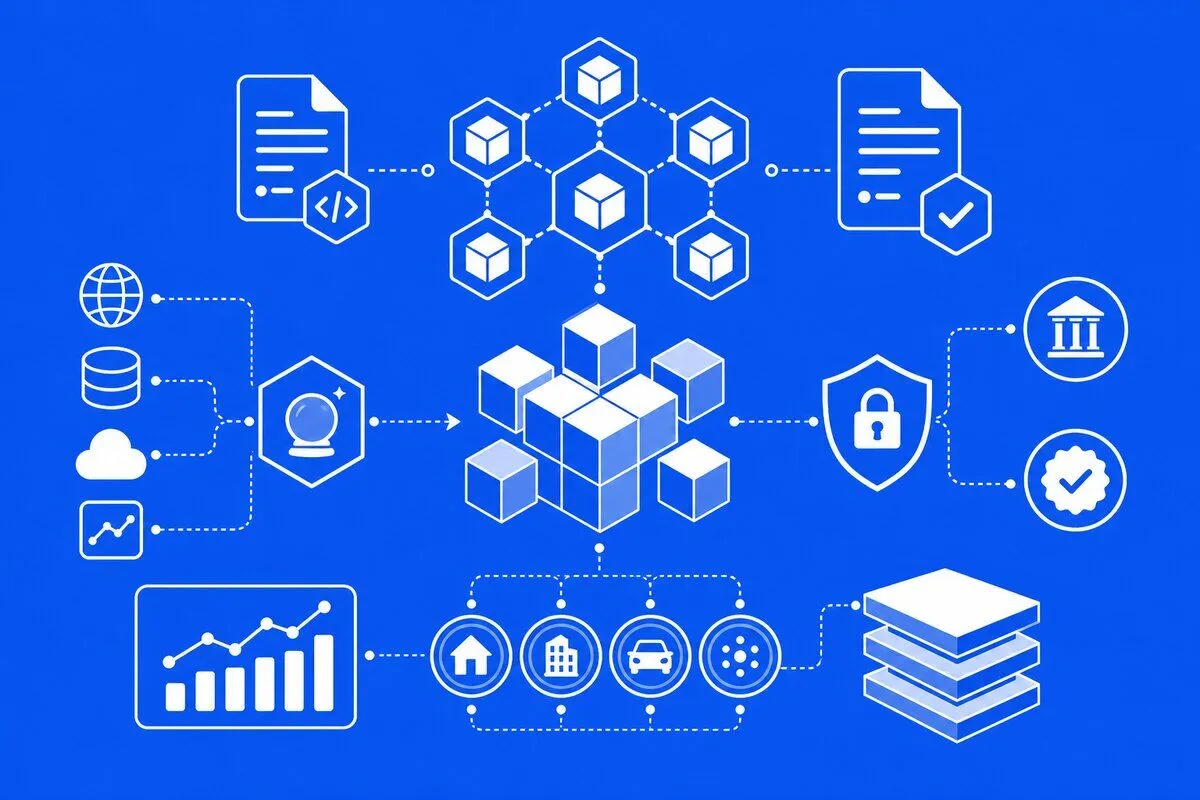
The second force is technological infrastructure maturity. Institutional-grade digital asset custodians including major global banks now offer regulated custody services for RWA tokens. Licensed secondary trading venues in Switzerland, Singapore, and Abu Dhabi provide genuine exit liquidity. Oracle networks that feed verified real-world data into smart contracts have achieved the reliability standards that financial applications require. The technical stack that serious RWA Tokenization platforms need to operate at institutional grade is now fully assembled for the first time.
The third force is investor demand from markets that were previously excluded from traditional real estate and asset investment. Indian investors, NRI communities in Dubai and Singapore, and retail investors across Southeast Asia represent hundreds of millions of people with genuine appetite for yield-generating asset exposure who have been structurally excluded by minimum investment thresholds, geographic restrictions, and legal complexity. RWA Tokenization removes all three barriers simultaneously, creating a demand pool of unprecedented scale that is driving platform activity across every major tokenization market.
Why Investors Are Shifting Toward RWA in Uncertain Markets
Global economic uncertainty has historically driven capital toward tangible assets. Real estate, commodities, and infrastructure have all functioned as inflation hedges and portfolio stabilizers during periods of market volatility. The innovation that RWA Tokenization brings to this dynamic is the ability to access the stability characteristics of real assets without the illiquidity penalty that has always accompanied them. An investor who previously had to choose between the safety of real estate and the liquidity of equities can now access both simultaneously through a tokenized property position that can be exited on a secondary market in minutes.[1]
In India, where currency depreciation concerns have historically driven domestic investors toward gold and property, RWA Tokenization is offering a third option: dollar-denominated or dirham-denominated asset exposure through tokenized positions in Dubai and US markets, accessible through the Liberalised Remittance Scheme without the legal complexity of direct foreign property ownership. This specific use case is generating substantial organic demand from Indian high-net-worth individuals and NRI communities simultaneously.
In Singapore, where interest rates on cash deposits have begun declining again in early 2026, family offices and accredited investors are actively rotating from cash-heavy portfolios into yield-generating RWA positions. The rental income yields of 6 to 9 percent available through tokenized real estate in Dubai and Indian growth corridors represent a compelling premium over deposit rates, and the transparency of on-chain income distribution is making the comparison to traditional alternatives increasingly favourable for sophisticated allocators who previously had no accessible route to these yields.
Role of Blockchain in Transforming Traditional Asset Ownership
Blockchain technology contributes four specific capabilities to asset ownership that no traditional financial infrastructure can replicate. The first is programmable ownership. Ownership rights encoded in a smart contract execute automatically according to predefined rules without requiring human intermediaries to interpret or implement them. Rental income flows to token holders proportionally when it arrives. Transfer restrictions apply automatically to maintain regulatory compliance. Voting rights on asset management decisions are weighted according to token holdings without requiring a shareholder meeting or proxy vote administration.
The second capability is immutable record-keeping. Every ownership transfer, income distribution, and governance decision is permanently recorded on the blockchain with a timestamp and transaction identifier that cannot be altered, deleted, or disputed. This creates an audit trail of unprecedented completeness for real asset ownership that significantly reduces the fraud risk, record-keeping errors, and title disputes that create costly litigation in traditional property markets from Mumbai to Dubai.
The third capability is borderless transferability. A token representing ownership in a Singapore commercial property can be sold by a holder in London to a buyer in Mumbai in the time it takes to confirm a blockchain transaction, without requiring any of the international wire transfers, correspondent banking relationships, or legal document exchange that a conventional property transfer would involve. The fourth capability is fractional divisibility, which allows assets worth millions of dollars to be split into ownership units accessible to investors at almost any capital level, permanently removing the wealth threshold that has historically excluded the majority of investors from direct asset participation.
How Tokenized Real Estate Is Gaining Massive Attention
Of all the asset classes being explored through RWA Tokenization, real estate is generating by far the greatest investor attention and platform activity. This is not coincidental. Real estate combines three characteristics that make it particularly well-suited to tokenization: predictable recurring income through rental payments, an established global valuation methodology that investors understand and trust, and universal demand as a fundamental human need that creates floor occupancy rates even during economic downturns.
The specific markets attracting the most tokenized real estate investment in 2026 are Dubai, Hyderabad, Singapore, and select US Sun Belt cities. Dubai’s appeal is the combination of high gross rental yields of 6 to 8 percent, zero capital gains tax, government registry integration through the Dubai Land Department tokenization program, and a growing population of global professionals driving sustained rental demand. Hyderabad and Bengaluru in India are attracting tokenization activity through IT corridor residential and commercial assets that offer yields of 7 to 9 percent with strong capital appreciation trajectories driven by technology sector employment growth.
The attention is also being driven by the entry of recognizable names from the traditional real estate industry into the tokenization space. When established property fund managers, major hotel groups, and institutional logistics operators begin tokenizing assets that their conventional investor bases previously accessed through closed-end funds with ten-year lock-up periods, the signal to the broader market is unambiguous. RWA Tokenization has crossed from experimental to operational across the asset classes that matter most to serious allocators globally.
Institutional Interest in RWA Tokenization Explained
Institutional interest in RWA Tokenization is being driven by operational efficiency at a scale that retail investor discussions rarely capture. A pension fund managing a real estate portfolio across twelve countries currently employs dozens of administrators to track ownership records, process income distributions, manage currency conversions, coordinate legal documentation across jurisdictions, and produce quarterly investor reports. The same portfolio managed through a tokenization infrastructure requires a fraction of that administrative overhead, with smart contracts handling distribution calculations automatically and blockchain records replacing manual ledger maintenance entirely.
The efficiency gain compounds at portfolio scale. For a fund managing five billion dollars of real assets, reducing administrative overhead by even thirty percent represents annual savings that significantly improve net returns to investors without changing the underlying asset performance at all. This is the institutional case for RWA Tokenization that gets relatively little coverage in mainstream financial media but is generating serious interest in the investment operations teams of major allocators in Singapore, Abu Dhabi, and London.
The arrival of regulated digital asset custodians from established financial institutions has been the final prerequisite for institutional commitment. Several global custodian banks now offer tokenized real-world asset custody services that integrate with existing prime brokerage relationships, portfolio accounting systems, and regulatory reporting infrastructure. This compatibility with existing institutional operating frameworks removes the last significant barrier that was keeping the largest allocators from making meaningful commitments to RWA Tokenization platforms.
RWA Tokenization vs Traditional Investment Models
The structural differences between RWA Tokenization and traditional investment models are significant across every dimension that matters to investors. The following comparison captures the key distinctions that are driving allocation decisions in 2026.
| Investment Factor | RWA Tokenization | Traditional REIT | Direct Property |
|---|---|---|---|
| Entry Amount | From Rs 10,000 | Stock exchange minimum | Crores to millions |
| Liquidity | 24/7 secondary market | Exchange hours only | Months to exit |
| Income Distribution | Automated smart contract | Quarterly dividend | Manual rent collection |
| Transparency | Full on-chain visibility | Quarterly disclosures | Private records only |
| Global Access | Borderless by design | Exchange jurisdiction | Country specific laws |
| Asset Specificity | Specific identified asset | Pooled portfolio | Single asset full |
The comparison makes clear that RWA Tokenization occupies a structurally superior position across the majority of factors that matter to modern investors. The only area where traditional models currently hold an advantage is regulatory establishment, and that advantage is narrowing rapidly as tokenization frameworks are formalized across major markets.
Impact of Global Economic Trends on RWA Adoption
The macroeconomic environment of 2026 is creating conditions that are structurally favourable for RWA Tokenization adoption across every major investor market. Declining interest rates in developed economies are reducing the appeal of cash deposits and government bonds, pushing yield-seeking capital toward alternative asset classes. Real estate tokenization platforms offering 6 to 9 percent gross yields through on-chain income distribution are attracting allocations from investors who previously held cash or short-duration fixed income as their primary defensive position.
Currency diversification is a second macroeconomic driver. Investors in India and Southeast Asia who are concerned about domestic currency depreciation are using RWA Tokenization platforms to gain exposure to dollar-denominated and dirham-denominated assets through legally compliant remittance channels. The ability to hold fractional stakes in Dubai commercial properties while resident in Mumbai, receiving income in stablecoins convertible to multiple currencies, represents a currency risk management tool that has no equivalent in the traditional investment product universe available to Indian retail investors.
The globalization of talent and the growth of digital nomad and expatriate communities across Singapore, Dubai, and the UAE is creating a new category of investor who naturally thinks in terms of multi-market asset exposure and who finds the borderless nature of RWA Tokenization platforms intuitively attractive. These investors, many of them technology professionals with above-average financial sophistication, are becoming the core early-adopter base for tokenized asset platforms and are driving the product feedback loops that are rapidly improving platform quality and compliance depth across the market.
Challenges and Risks in RWA Tokenization Growth
Alongside the significant opportunities, RWA Tokenization presents specific risks that investors and platform operators must understand clearly before committing capital or launching offerings.
Regulatory Reclassification
Regulatory frameworks for RWA tokens are still forming. Reclassification of token structures by regulators in India, the US, or UAE could force platform restructuring and affect existing investor positions without prior warning.
Smart Contract Vulnerability
Unaudited or poorly written smart contracts managing income distributions can contain exploitable vulnerabilities. Platforms without minimum two independent audits from specialist security firms represent unacceptable technical risk for any investor.
Secondary Market Illiquidity
Many RWA Tokenization platforms claim secondary market liquidity but have not established relationships with licensed trading venues. Investors in these platforms face effective illiquidity despite the theoretical transferability of their tokens on-chain.
Platform Concentration Risk
If the SPV structure does not create genuine legal isolation between the platform operator and the underlying assets, platform insolvency could affect investor positions in the underlying property regardless of the asset’s own financial health.
| Risk Category | Severity | Mitigation Approach |
|---|---|---|
| Regulatory Change | High | Choose platforms with proactive regulatory engagement and legal opinion letters |
| Smart Contract Bug | High | Require two independent security audits with public disclosure of findings |
| Illiquidity | Medium | Verify licensed secondary market partnerships before investing |
| Platform Failure | Medium | Confirm SPV isolation and independent qualified custodian arrangements |
| Tax Complexity | Low to Medium | Obtain jurisdiction-specific tax advice before committing capital to any platform |
What the Future Holds for RWA Tokenization Beyond 2026

The trajectory of RWA Tokenization beyond 2026 points toward a fundamental restructuring of how the world’s major asset classes are owned, traded, and managed. By 2027, India is widely expected to have a formal SEBI framework for tokenized securities that will create the same institutional clarity for domestic tokenized assets that the 2019 REIT regulations created for listed real estate investment trusts. When that framework arrives, the domestic capital waiting on the sidelines will enter the market rapidly, and the platforms that have built compliant infrastructure in advance will be positioned to capture disproportionate share of that flow.
Beyond real estate, the next wave of RWA Tokenization is expanding into infrastructure assets including toll roads, renewable energy plants, and water treatment facilities. These assets generate highly predictable long-term cash flows that are ideal for smart contract-based distribution, and their capital intensity has historically restricted participation to the largest sovereign wealth funds and infrastructure specialists. Tokenization will open these assets to a much broader investor base, creating new yield options for retail and semi-institutional investors in India, Singapore, and the UAE who currently have no access to infrastructure investment at any meaningful allocation level.
The longer-term vision that the most sophisticated participants in the RWA Tokenization market are working toward is a fully interoperable global asset ownership layer where tokens representing real estate in Dubai, infrastructure in India, commodities in Singapore, and private credit in the UK can all be held in a single compliant digital wallet, traded against each other on regulated exchanges, and used as collateral for borrowing in ways that traditional asset ownership structures make practically impossible. This vision is not a distant future state. The technical components exist today. The regulatory frameworks are being assembled. The institutional capital is beginning to commit. The question for investors and asset owners in 2026 is not whether RWA Tokenization will transform the global asset market. It is whether they will be positioned to benefit when it does.
Start Your RWA Tokenization Journey Today
Our specialists help investors across India, UAE, and Singapore access compliant tokenized real-world asset platforms with full legal and tax support.
Frequently Asked Questions
Q1.1. What does RWA tokenization actually mean in simple terms?
RWA tokenization stands for Real-World Asset tokenization. It is the process of converting ownership of physical or traditional financial assets such as real estate, bonds, commodities, and private equity into blockchain-based digital tokens. Each token represents a legally enforceable ownership stake in the underlying asset, making it tradeable, divisible, and accessible globally.
Q2.2. Why is RWA tokenization suddenly trending so much in 2026?
RWA tokenization gained massive momentum in 2026 because several converging factors reached critical mass simultaneously. Major banks including BlackRock and JPMorgan launched tokenized fund products. Regulators in UAE, Singapore, and India formalised frameworks. Institutional investors facing volatile traditional markets discovered tokenized assets offer stable, real-backed returns with superior liquidity. The combination pushed RWA from niche to mainstream conversation in Web3 and traditional finance circles.
Q3.3. Is RWA tokenization safe for regular investors in India?
For Indian investors, the safest pathway for RWA tokenization is through platforms operating within GIFT City’s IFSCA regulatory framework. These platforms are subject to regulatory oversight, must maintain proper legal structures, and use audited smart contracts. Outside this perimeter, the regulatory landscape is still evolving, and investors should exercise significant caution with platforms that lack a clear regulatory licence.
Q4.4. What types of real-world assets can be tokenized?
A very broad range of real-world assets can be tokenized. The most common categories include real estate, private credit and bonds, commodities including gold and oil, private equity and venture capital funds, infrastructure projects, art and collectibles, and intellectual property royalties. The common requirement is that the asset has clear legal ownership that can be transferred into a Special Purpose Vehicle and represented by blockchain tokens.
Q5.5. How does RWA tokenization make money for investors?
RWA tokenization generates investor returns through several mechanisms depending on the asset type. Real estate tokens distribute rental income. Bond tokens pay interest. Commodity tokens appreciate with the underlying asset price. Some platforms also allow tokenized assets to be used as DeFi collateral, enabling additional yield generation. The specific return mechanism is defined in the token’s offering documentation and enforced through smart contracts.
Q6.6. What is the minimum investment for RWA tokenization?
One of the most significant advantages of RWA tokenization is the dramatically reduced minimum investment threshold. Traditional private credit funds require minimum investments of USD 100,000 to USD 1 million. Real estate direct investment requires millions. RWA tokenization platforms typically allow entry from USD 100 to USD 1,000, with some retail-focused platforms in India and UAE enabling even smaller positions.
Q7.7. Which institutions are investing in RWA tokenization in 2026?
The institutional adoption of RWA tokenization in 2026 is substantial and growing. BlackRock’s BUIDL fund is among the most prominent tokenized treasury products. Franklin Templeton’s tokenized money market fund operates on public blockchains. In Asia, DBS Bank in Singapore and several UAE-based financial institutions are offering tokenized bond and real estate products. GIFT City in India is hosting the first wave of regulated institutional RWA tokenization platforms for the Indian market.
Q8.8. How is RWA tokenization different from cryptocurrency investing?
RWA tokenization is fundamentally different from cryptocurrency investing. Cryptocurrencies derive their value from demand, speculation, and network utility without physical backing. RWA tokens are backed by real-world assets with intrinsic value independent of market sentiment. A real estate token backed by a generating commercial building continues to have value because the building continues to exist and generate rental income regardless of crypto market conditions.
Q9.9. What blockchain networks are used for RWA tokenization?
The most commonly used blockchain networks for RWA tokenization in 2026 are Ethereum for institutional-grade security tokens, Polygon for cost-efficient retail platforms, and XRP Ledger for cross-border settlement applications in India and UAE. Solana is gaining traction for secondary market trading platforms. The choice depends on the specific requirements of the asset type, investor profile, and regulatory jurisdiction of the tokenization project.
Q10.10. What are the biggest risks of RWA tokenization that investors should know?
The primary risks include regulatory uncertainty outside established frameworks like IFSCA and DFSA, smart contract vulnerabilities from unaudited code, secondary market liquidity constraints that can make exiting positions difficult, platform insolvency risk if the tokenization company is not financially stable, and valuation risk if the underlying real-world asset declines in value. These risks are manageable with proper due diligence but require informed assessment before investment.
Explore Services
Related Services
Reviewed by

Aman Vaths
Founder of Nadcab Labs
Aman Vaths is the Founder & CTO of Nadcab Labs, a global digital engineering company delivering enterprise-grade solutions across AI, Web3, Blockchain, Big Data, Cloud, Cybersecurity, and Modern Application Development. With deep technical leadership and product innovation experience, Aman has positioned Nadcab Labs as one of the most advanced engineering companies driving the next era of intelligent, secure, and scalable software systems. Under his leadership, Nadcab Labs has built 2,000+ global projects across sectors including fintech, banking, healthcare, real estate, logistics, gaming, manufacturing, and next-generation DePIN networks. Aman’s strength lies in architecting high-performance systems, end-to-end platform engineering, and designing enterprise solutions that operate at global scale.