Ai Overview
A stablecoin is a type of cryptocurrency that is designed to keep a stable price. While Bitcoin and Ethereum can swing 10% or more in a single day, a stablecoin like USDT (Tether) or USDC (Circle) aims to always be worth exactly $1. Returns on stablecoin yield farming typically range from 3% to 10% APY, which is significantly higher than what most traditional savings accounts offer. Sending money internationally through banks can take days and cost up to 10% in fees.
Key Takeaways
- ✔ Stablecoins are cryptocurrencies designed to maintain a constant value, typically pegged 1:1 to the US dollar or other fiat currencies.
- ✔ They act as the primary medium of exchange, collateral, and unit of account across DeFi protocols.
- ✔ Stablecoins represent over 75% of all DeFi liquidity, making them the most used asset class in decentralized finance.
- ✔ The total stablecoin market cap surpassed $300 billion in 2025, with growth accelerating across payments, trading, and lending.
- ✔ There are four main types: fiat collateralized, crypto collateralized, algorithmic, and commodity backed stablecoins.
- ✔ DeFi lending and borrowing platforms rely heavily on stablecoins because they eliminate volatility risk from loan calculations.
- ✔ Stablecoins enable instant, low cost cross border payments, settling in seconds compared to days through traditional banking.
- ✔ The US passed the GENIUS Act in 2025, creating the first federal regulatory framework specifically for stablecoins.
- ✔ Major institutions like PayPal, BlackRock, and JPMorgan have entered the stablecoin space, signaling mainstream adoption.
- ✔ Blockchain development companies like Nadcab Labs help startups and enterprises integrate stablecoin infrastructure into their DeFi products and payment platforms.
If you have ever tried to use cryptocurrency for everyday transactions, you have probably noticed one big problem: prices change dramatically within hours. One day your token is worth $100, the next it could be $70. This is where stablecoins step in, and their role in DeFi (Decentralized Finance) has become absolutely foundational.
Stablecoins in DeFi serve as the calm in the storm. They are digital currencies designed to hold a steady value, usually pegged to the US dollar, and they power almost everything in the decentralized finance world, from lending and borrowing to trading and cross border payments.
In this comprehensive guide, we will break down what stablecoins are, how they work, why they are essential for DeFi, the different types available, and how they are reshaping global finance. Whether you are a complete beginner, an early crypto investor, or a startup founder exploring Web3, this article will give you a clear understanding of why stablecoins are called the backbone of decentralized finance.
What Are Stablecoins? A Simple Explanation
A stablecoin is a type of cryptocurrency that is designed to keep a stable price. While Bitcoin and Ethereum can swing 10% or more in a single day, a stablecoin like USDT (Tether) or USDC (Circle) aims to always be worth exactly $1.00.
Think of stablecoins as digital dollars. They live on the blockchain, so you can send them instantly to anyone in the world, use them in smart contracts, and trade them on decentralized exchanges. But unlike volatile cryptocurrencies, they do not fluctuate in value.
Everyday Analogy
Imagine you are at an amusement park. To ride anything, you need to exchange your money for park tokens. These tokens have a fixed value inside the park. No matter what happens to the stock market or the economy outside, one park token always equals one ride. Stablecoins work the same way in the crypto ecosystem. They are the reliable tokens that keep the system running smoothly while everything else fluctuates.
Types of Stablecoins Explained
Not all stablecoins are built the same way. Understanding the different types helps you make better decisions about which ones to use in DeFi.
Backed 1:1 by real US dollars or equivalent reserves held in bank accounts. For every token issued, one dollar sits in a vault.
Examples: USDT, USDC, BUSD, PYUSD
Backed by other cryptocurrencies locked in smart contracts. Over collateralized to absorb price swings in the backing asset.
Examples: DAI, sUSD, LUSD
Uses algorithms and smart contracts to automatically manage supply and demand. No direct collateral backs these coins.
Examples: FRAX, UST (failed), AMPL
Pegged to real world commodities like gold, silver, or oil. Each token represents ownership of a fixed amount of the underlying commodity.
Examples: PAXG (Gold), XAUT (Gold)
Stablecoin Types Comparison
| Type | Backing | Stability | Decentralization | Risk Level |
|---|---|---|---|---|
| Fiat Collateralized | USD in bank reserves | Very High | Low (centralized issuer) | Low |
| Crypto Collateralized | ETH, BTC in smart contracts | High | High (on chain) | Medium |
| Algorithmic | Supply/demand algorithms | Variable | Very High | High |
| Commodity Backed | Gold, silver, oil | High | Low to Medium | Low to Medium |
Why Are Stablecoins Essential in DeFi?
Decentralized finance aims to recreate traditional financial services like banking, lending, insurance, and trading on the blockchain without middlemen. But there is a fundamental problem: most cryptocurrencies are wildly volatile. You cannot build a reliable lending system if the value of the money being lent changes by 20% overnight.
Stablecoins solve this by providing a dependable unit of value. They act as the monetary base layer for everything that happens in DeFi. Without them, the entire ecosystem would be like trying to build a house on quicksand.
How Stablecoins Power the DeFi Ecosystem
7 Key Role of Stablecoins in DeFi
Stablecoins are not just another token. They serve multiple critical functions that keep the entire DeFi ecosystem operational. Let us walk through each one.
Liquidity Provision for DEXs and Protocols
Decentralized exchanges (DEXs) like Uniswap, Curve, and SushiSwap need deep liquidity pools to function. Stablecoins form the backbone of these pools. Pairs like ETH/USDC, BTC/USDT, and DAI/USDC are among the most traded on every major DEX.
Without stablecoins, traders would have to swap one volatile asset for another, making pricing unpredictable and risky. Stablecoins provide the stable counterpart that makes efficient price discovery possible. According to Chainlink, stablecoins act as the base liquidity layer of DeFi, used as base pairs on DEXs to enable efficient trading.
Lending and Borrowing
DeFi lending is one of the biggest use cases for stablecoins. Platforms like Aave, Compound, and MakerDAO allow users to deposit stablecoins and earn interest, or borrow stablecoins by providing crypto collateral.
The beauty of using stablecoins for lending is predictability. If you lend 1,000 USDC at 5% APY, you know you will earn approximately 50 USDC at the end of the year. If you lent 1,000 worth of ETH instead, the return could be drastically more or less depending on the market. Stablecoins remove that guesswork.
DeFi Lending with Stablecoins
Yield Farming and Staking
Yield farming involves providing liquidity to DeFi protocols in exchange for rewards. Stablecoins are the preferred asset for conservative yield farmers because they eliminate the impermanent loss risk that comes with volatile token pairs.
Platforms like Curve Finance specialize entirely in stablecoin trading pools. By depositing stablecoins into these pools, users earn trading fees plus additional incentive tokens. Returns on stablecoin yield farming typically range from 3% to 10% APY, which is significantly higher than what most traditional savings accounts offer.
Safe Haven During Market Volatility
When the crypto market starts crashing, traders do not always want to sell their crypto for fiat and leave the ecosystem entirely. Instead, they convert their assets into stablecoins. This lets them preserve value while staying on chain, ready to buy back in when prices recover.
Think of stablecoins as the “parking lot” of crypto. When the ride gets too bumpy, you pull into the lot (stablecoins), wait for the road to clear, and then continue your journey. This hedging mechanism is essential for active traders and portfolio managers in DeFi.
Cross Border Payments and Remittances
Sending money internationally through banks can take days and cost up to 10% in fees. Stablecoins settle in seconds and cost just a few cents, regardless of the amount or destination. This makes them ideal for remittances, especially in emerging markets where banking infrastructure is limited.
A worker in the United States can send 500 USDC to their family in the Philippines in under a minute, with the recipient converting it to local currency through a local exchange or spending it directly via a crypto card. No bank wires, no SWIFT fees, no multi day waiting periods.
Collateral for Synthetic Assets and Derivatives
Advanced DeFi protocols allow users to create synthetic versions of real world assets like stocks, commodities, or indexes. Stablecoins serve as the collateral that backs these synthetic assets. For example, you could lock USDC as collateral to mint a synthetic token that tracks the price of gold or the S&P 500.
On Ramp and Off Ramp Between Fiat and Crypto
Stablecoins serve as the bridge between the traditional financial world and the crypto ecosystem. They are the first asset most new users buy when entering DeFi, and the last asset they convert back to when exiting. This on ramp and off ramp function is critical for mainstream adoption because it gives users a familiar, dollar denominated entry point into an unfamiliar world.
Top Stablecoins Used in DeFi Today
| Stablecoin | Issuer | Type | Peg | Key DeFi Use |
|---|---|---|---|---|
| USDT | Tether | Fiat Backed | USD | Trading pairs, liquidity |
| USDC | Circle | Fiat Backed | USD | Lending, payments, institutional |
| DAI | MakerDAO | Crypto Backed | USD | Decentralized lending, governance |
| FRAX | Frax Finance | Hybrid Algorithmic | USD | Yield optimization, liquidity |
| PYUSD | PayPal | Fiat Backed | USD | Mainstream adoption, payments |
Stablecoins vs Traditional Banking: Side by Side
- ❌ Open during business hours only
- ❌ International transfers take 2 to 5 days
- ❌ Fees range from $15 to $50 per transfer
- ❌ Requires identity verification and paperwork
- ❌ Savings accounts earn 0.01% to 0.5% APY
- ❌ Limited access in underbanked regions
- ✅ Available 24/7, 365 days a year
- ✅ Transfers settle in seconds globally
- ✅ Fees are cents, not dollars
- ✅ Accessible with just a crypto wallet
- ✅ DeFi yields range from 3% to 10% APY
- ✅ Global access with internet connection
The Evolving Regulatory Landscape for Stablecoins
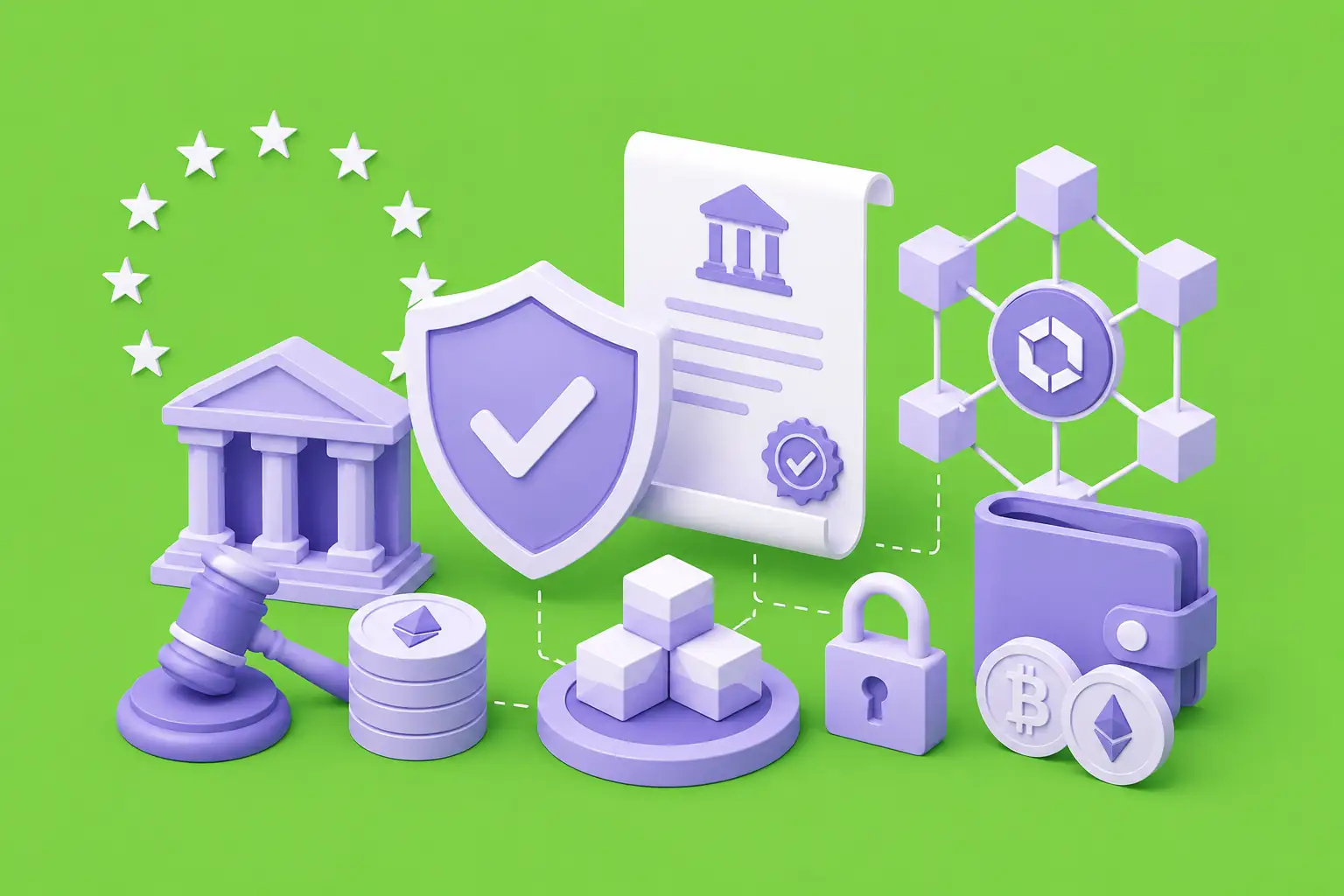
One of the most significant developments for stablecoins in 2025 was the passage of the GENIUS Act in the United States. This legislation created the first comprehensive federal framework specifically for stablecoin regulation, establishing clear rules around reserves, disclosures, consumer protections, and issuer oversight.
In Europe, the Markets in Crypto Assets (MiCA) regulation has been in effect since mid 2024, imposing requirements on stablecoin issuers to hold reserves in European banks and maintain transparency. These regulatory developments are bringing much needed clarity and legitimacy to the stablecoin space.
For businesses and developers, this means that building products around stablecoins is becoming safer and more predictable from a compliance perspective. According to Binance Academy, the growing regulatory clarity around stablecoins is one of the key factors driving institutional adoption and mainstream use.
Industry Insight: The combination of regulatory clarity and institutional interest has turned stablecoins from a niche crypto tool into regulated financial infrastructure. Companies like Nadcab Labs help businesses navigate these regulatory requirements while building compliant stablecoin integration and DeFi solutions.
Risks and Challenges of Stablecoins in DeFi
While stablecoins offer tremendous benefits, they are not risk free. Understanding the potential downsides is critical for anyone participating in DeFi.
- ▸ De pegging Risk: In rare situations, a stablecoin can lose its peg. The collapse of UST (TerraUSD) in 2022 demonstrated how an algorithmic stablecoin can fail catastrophically, wiping out billions in value.
- ▸ Centralization Concerns: Fiat backed stablecoins like USDT and USDC are controlled by centralized companies. These issuers can freeze accounts, blacklist addresses, and are subject to government pressure.
- ▸ Reserve Transparency: Not all stablecoin issuers fully disclose what backs their tokens. Investors must verify that reserves are regularly audited and genuinely match the circulating supply.
- ▸ Smart Contract Vulnerabilities: When stablecoins are used in DeFi protocols, they inherit the risk of smart contract bugs or exploits. A vulnerability in a lending protocol could result in loss of deposited stablecoins.
- ▸ Regulatory Seizure Risk: Since fiat backed stablecoins depend on banking relationships, regulators can potentially freeze or seize the underlying reserves.
- ▸ Over Reliance on USD: The overwhelming majority of stablecoins are pegged to the US dollar, creating systemic dependency on a single currency and US monetary policy.
Risk Severity Guide
How Stablecoins Are Reshaping Global Finance
Stablecoins are no longer just tools for crypto traders. They are becoming genuine financial infrastructure that bridges traditional finance and the decentralized world.
- ▸ Institutional Adoption: Major companies including PayPal (PYUSD), BlackRock (USDTB), and Ripple (RLUSD) have launched their own stablecoins, validating the concept at the highest levels of finance.
- ▸ Payment Integration: Platforms like Shopify and Stripe now support crypto based payments, with stablecoins at the center of this shift. Crypto debit cards allow users to spend stablecoins anywhere traditional cards are accepted.
- ▸ Real World Asset Tokenization: Stablecoins are the settlement currency for tokenized real estate, equities, and commodities. As asset tokenization grows toward $16.1 trillion by 2030, stablecoins will handle an increasing volume of value transfer.
- ▸ Financial Inclusion: In regions with unstable local currencies or limited banking access, stablecoins offer a lifeline. Anyone with a smartphone and internet connection can hold dollar denominated value and access global financial services.
- ▸ Treasury Management: Businesses are using stablecoins for treasury operations, holding operating funds in yield bearing stablecoin vaults to earn interest on idle capital.
Why Startups and Enterprises Should Pay Attention
For startups building in the Web3 space, stablecoin integration is no longer optional. It is foundational. Whether you are building a payment gateway, a lending protocol, a tokenized asset platform, or a decentralized marketplace, stablecoins will be at the center of your user experience.
Enterprises exploring blockchain adoption also benefit from stablecoins. They provide a familiar, dollar denominated interface that reduces the perceived complexity of blockchain for end users and compliance teams.
Organizations like Nadcab Labs specialize in helping businesses integrate stablecoin infrastructure into their products. From smart contract development and DeFi protocol architecture to compliance aligned token systems and cross chain payment integrations, their team provides the technical depth and industry experience needed to build reliable stablecoin powered solutions.
Stablecoins at the Center of DeFi
Lending
DEX Trading
STABLECOINS
Yield Farming
Payments
Stablecoins connect and power every major DeFi vertical
The Future of Stablecoins in DeFi
The trajectory of stablecoins points clearly upward. Here are the trends shaping their future.
- ▸ Multi Trillion Dollar Market: Industry analysts project the stablecoin market to reach multiple trillions of dollars by 2030, as adoption accelerates across payments, settlements, and institutional finance.
- ▸ Yield Bearing Stablecoins: A new category of stablecoins that automatically generate yield for holders is emerging. These tokens combine price stability with passive income, attracting both retail and institutional interest.
- ▸ Multi Currency Stablecoins: While the market is currently dominated by USD pegged coins, stablecoins pegged to euros, yen, rupees, and other currencies are expected to grow significantly.
- ▸ Convergence with CBDCs: Central Bank Digital Currencies (CBDCs) and private stablecoins will likely coexist and interact, creating a complex but powerful digital monetary ecosystem.
- ▸ Native Multi Chain Infrastructure: Stablecoins like USDC are already becoming chain agnostic, moving seamlessly across Ethereum, Solana, Polygon, and other networks without traditional bridges.
- ▸ Mainstream Payment Integration: As more merchants, platforms, and fintech companies integrate stablecoin payments, the line between traditional money and digital dollars will continue to blur.
Build Stablecoin Powered DeFi Solutions with Nadcab Labs
From stablecoin smart contract development and DeFi protocol architecture to cross chain payment integrations and compliance consulting, Nadcab Labs provides end to end blockchain development services trusted by startups and enterprises worldwide. Build your next generation financial product on a foundation of stability and security.
Final Thoughts
The role of stablecoins in DeFi cannot be overstated. They are the foundation that makes decentralized lending, borrowing, trading, yield farming, payments, and virtually every other DeFi activity possible. Without the price stability that stablecoins provide, DeFi would remain a playground for speculation rather than a legitimate alternative to traditional finance.
With a market cap exceeding $300 billion, growing institutional adoption from companies like PayPal and BlackRock, and new regulatory frameworks like the GENIUS Act providing clarity, stablecoins have firmly established themselves as the monetary base layer of the on chain economy.
For beginners, understanding stablecoins is the first step to understanding DeFi. For builders and enterprises, integrating stablecoins is the key to creating products that are accessible, reliable, and globally scalable. And for the financial system as a whole, stablecoins in DeFi represent a bridge between the world we know and the decentralized future that is rapidly taking shape.
If you are ready to build, integrate, or optimize stablecoin infrastructure for your platform, partnering with an experienced blockchain development team like Nadcab Labs ensures your solution is technically sound, compliance ready, and built for long term success.
Frequently Asked Questions
Q1.Can I earn interest on stablecoins without using DeFi?
Yes. Many centralized exchanges like Coinbase, Binance, and Kraken offer savings or staking products for stablecoins. You deposit your stablecoins and earn interest, similar to a savings account. The returns are typically lower than what DeFi protocols offer, but the process is simpler and does not require interacting with smart contracts directly.
Q2.Are stablecoins insured like bank deposits?
No. Unlike traditional bank deposits that may be covered by insurance programs like FDIC in the US, stablecoins are not government insured. However, regulated issuers like Circle maintain transparent reserves and undergo regular audits. Some DeFi insurance protocols like Nexus Mutual offer coverage against smart contract failures, but this is not the same as deposit insurance.
Q3.What happens if a stablecoin issuer goes bankrupt?
If a centralized stablecoin issuer goes bankrupt, holders may face difficulty redeeming their tokens for fiat currency. The reserves backing the stablecoin would likely be subject to bankruptcy proceedings. This is why it is important to use stablecoins from well capitalized, transparent, and regulated issuers. Decentralized stablecoins like DAI mitigate this risk by being backed by on chain collateral rather than a single company.
Q4.Can stablecoins be used for everyday purchases?
Yes, and this is becoming increasingly common. Crypto debit cards from providers like Visa and Mastercard partnered platforms allow users to spend stablecoins at any merchant that accepts card payments. The card automatically converts stablecoins to local currency at the point of sale. Platforms like Shopify and Stripe also support direct stablecoin payments at checkout.
Q5.How is DAI different from USDC if they are both worth $1?
The key difference is how they maintain their peg. USDC is backed by real US dollars held in regulated bank accounts by Circle. DAI is backed by cryptocurrency collateral locked in smart contracts on the MakerDAO protocol. USDC relies on a centralized company; DAI relies on decentralized code. This means DAI is more censorship resistant but carries additional smart contract risk.
Q6.Do I need to pay taxes on stablecoin transactions?
Tax treatment varies by country, but in most jurisdictions, simply holding stablecoins is not a taxable event. However, earning interest or yield on stablecoins through DeFi protocols is generally considered taxable income. Converting stablecoins to other cryptocurrencies may also trigger capital gains calculations. Consult a crypto tax professional for guidance specific to your jurisdiction.
Q7.Why did UST (TerraUSD) crash and what lesson does it teach?
UST was an algorithmic stablecoin that relied on a mint and burn mechanism with its sister token LUNA to maintain its dollar peg. When a massive sell off triggered a death spiral in May 2022, both UST and LUNA lost virtually all their value. The key lesson is that algorithmic stablecoins without adequate collateral backing carry significantly higher risk than fiat or crypto collateralized alternatives. Always examine the stability mechanism before trusting a stablecoin.
Q8.Can I create my own stablecoin for my business?
Technically, yes. Businesses can issue their own stablecoins for internal use cases like loyalty programs, closed loop payment systems, or ecosystem specific tokens. However, creating a publicly traded stablecoin pegged to fiat currency requires significant legal compliance, reserve management infrastructure, and regulatory approval. Working with a blockchain development firm like Nadcab Labs can help you design and deploy a compliant token solution tailored to your needs.
Q9.Are stablecoins affected by inflation?
Dollar pegged stablecoins maintain their value relative to the US dollar, but they are still subject to the purchasing power erosion of the dollar itself. If US inflation is 5% per year, holding USDC for a year means your money buys 5% less in real terms. However, earning yield on stablecoins through DeFi (typically 3% to 10% APY) can partially or fully offset inflation.
Q10.Which stablecoin is the safest to hold in DeFi?
There is no single “safest” stablecoin as each carries different types of risk. USDC is widely considered one of the more trustworthy fiat backed options due to Circle’s transparency, regular audits, and regulatory compliance. DAI offers decentralization benefits without relying on a single issuer. The best approach is to diversify across multiple stablecoins and only use them on well audited DeFi protocols.
Explore Services
Related Services
Reviewed by

Aman Vaths
Founder of Nadcab Labs
Aman Vaths is the Founder & CTO of Nadcab Labs, a global digital engineering company delivering enterprise-grade solutions across AI, Web3, Blockchain, Big Data, Cloud, Cybersecurity, and Modern Application Development. With deep technical leadership and product innovation experience, Aman has positioned Nadcab Labs as one of the most advanced engineering companies driving the next era of intelligent, secure, and scalable software systems. Under his leadership, Nadcab Labs has built 2,000+ global projects across sectors including fintech, banking, healthcare, real estate, logistics, gaming, manufacturing, and next-generation DePIN networks. Aman’s strength lies in architecting high-performance systems, end-to-end platform engineering, and designing enterprise solutions that operate at global scale.