Ai Overview
Traditionally, buying, selling, or managing assets often involved multiple intermediaries, including lawyers, brokers, custodians, and clearinghouses. Properties in New York, London, Dubai, and Toronto have all been tokenized through dApp platforms, enabling retail investors to gain exposure to institutional-quality assets with ticket sizes starting from as low as $100.
Key Takeaways
- ✦Real world asset tokenization on dApps converts ownership of physical assets into blockchain-based tokens, enabling borderless, fractional investment opportunities.
- ✦Smart contracts automate compliance, dividend distribution, and ownership transfer rules in RWA dApps without requiring centralized intermediaries.
- ✦RWA DeFi integration bridges traditional finance and blockchain, enabling yield generation, lending, and liquidity on previously illiquid assets like real estate and bonds.
- ✦Investors in the USA, UK, UAE, and Canada can access high-value asset classes through RWA tokenization dApps with as little as a few hundred dollars.
- ✦Blockchain networks like Ethereum, Polygon, and Avalanche provide the infrastructure backbone that makes scalable RWA dApp deployment possible.
- ✦Legal compliance, KYC/AML verification, and jurisdiction-specific token standards are non-negotiable requirements for credible real world asset dApp projects.
- ✦Decentralized oracles like Chainlink are essential for feeding accurate, tamper-resistant off-chain asset data into RWA smart contracts on dApps.
- ✦Fractional ownership enabled by RWA tokens in decentralized applications democratizes access to asset classes historically restricted to institutional investors.
- ✦Key risks in RWA blockchain tokenization include regulatory uncertainty, oracle manipulation, custodian counterparty risk, and legal enforceability of on-chain ownership.
- ✦The global RWA tokenization market is projected to exceed $16 trillion by 2030, signaling a profound structural shift in how the world’s assets are owned and traded.
Introduction to Real World Asset Tokenization on dApps
Over the past eight years of building blockchain solutions for clients across regions such as the United States, the United Kingdom, the United Arab Emirates, and Canada, one trend has consistently stood out: the rise of real world asset tokenization on dApps. Traditionally, buying, selling, or managing assets often involved multiple intermediaries, including lawyers, brokers, custodians, and clearinghouses. Today, many of these processes can be streamlined through audited smart contracts operating on blockchain networks, making transactions faster, more transparent, and more accessible.
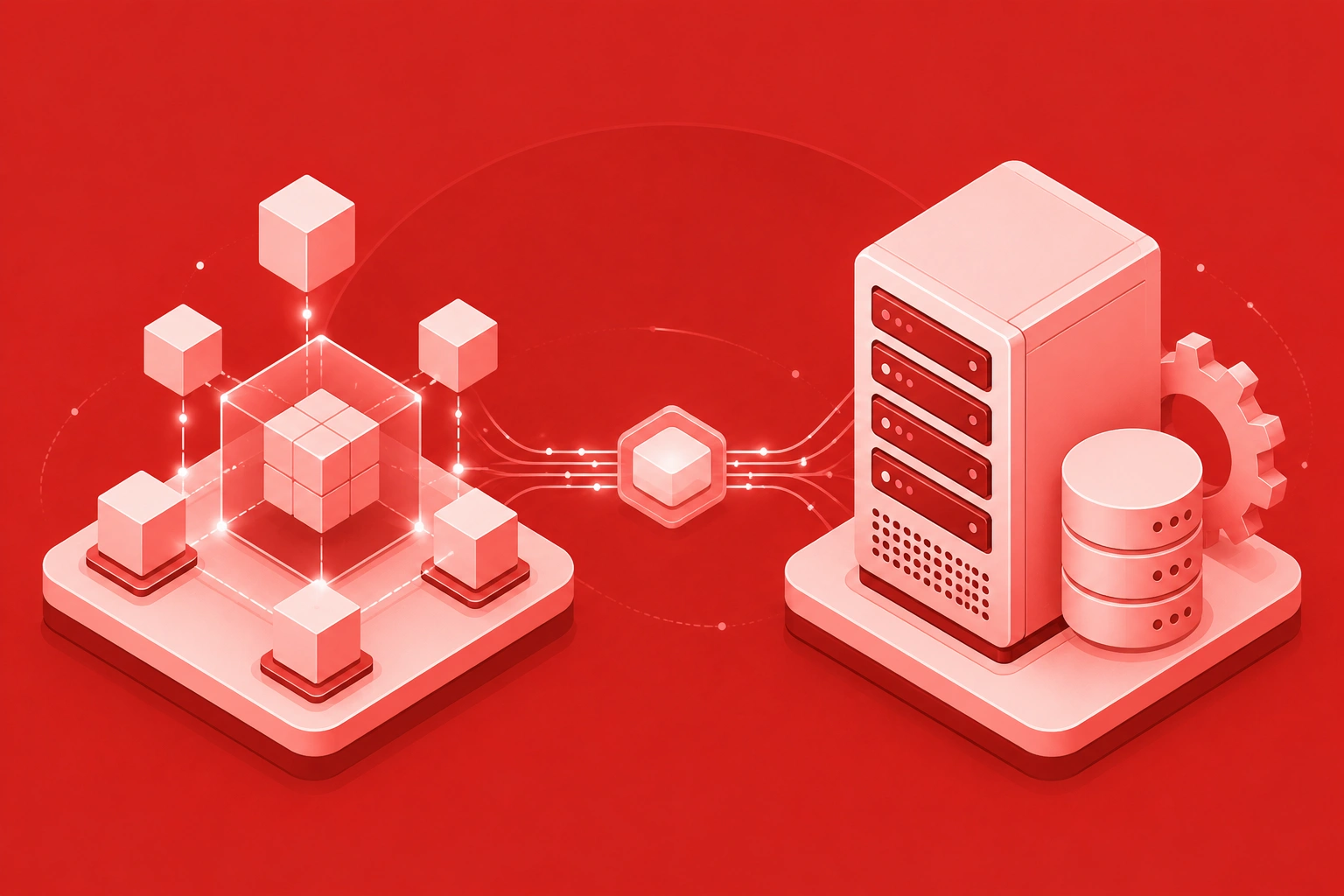
At its core, real world asset tokenization on dApps is the process of representing ownership of tangible or traditional financial assets as digital tokens on a blockchain network. These tokens are issued and managed through decentralized applications that provide the user interface, compliance logic, and market infrastructure needed to buy, sell, and hold tokenized positions. From Manhattan commercial real estate to London government bonds, from Dubai luxury apartments to Canadian timberlands, the universe of tokenizable assets is vast and growing rapidly.
This guide is written for founders, investors, and enterprise teams who want a thorough, technically grounded understanding of how RWA dApps blockchain ecosystems are structured, what makes them work, and what risks demand attention before capital is committed.
What Are Real World Assets (RWAs) in Blockchain?
In blockchain terminology, real world assets (RWAs) are any assets that originate outside the native crypto economy but are brought on-chain through tokenization. These include physical assets like real estate, gold, oil, and agricultural commodities, as well as financial instruments like bonds, equities, invoices, and insurance policies. The distinguishing characteristic of an RWA is that its value is derived from something that exists in the legal and physical world, not from blockchain-native economics.
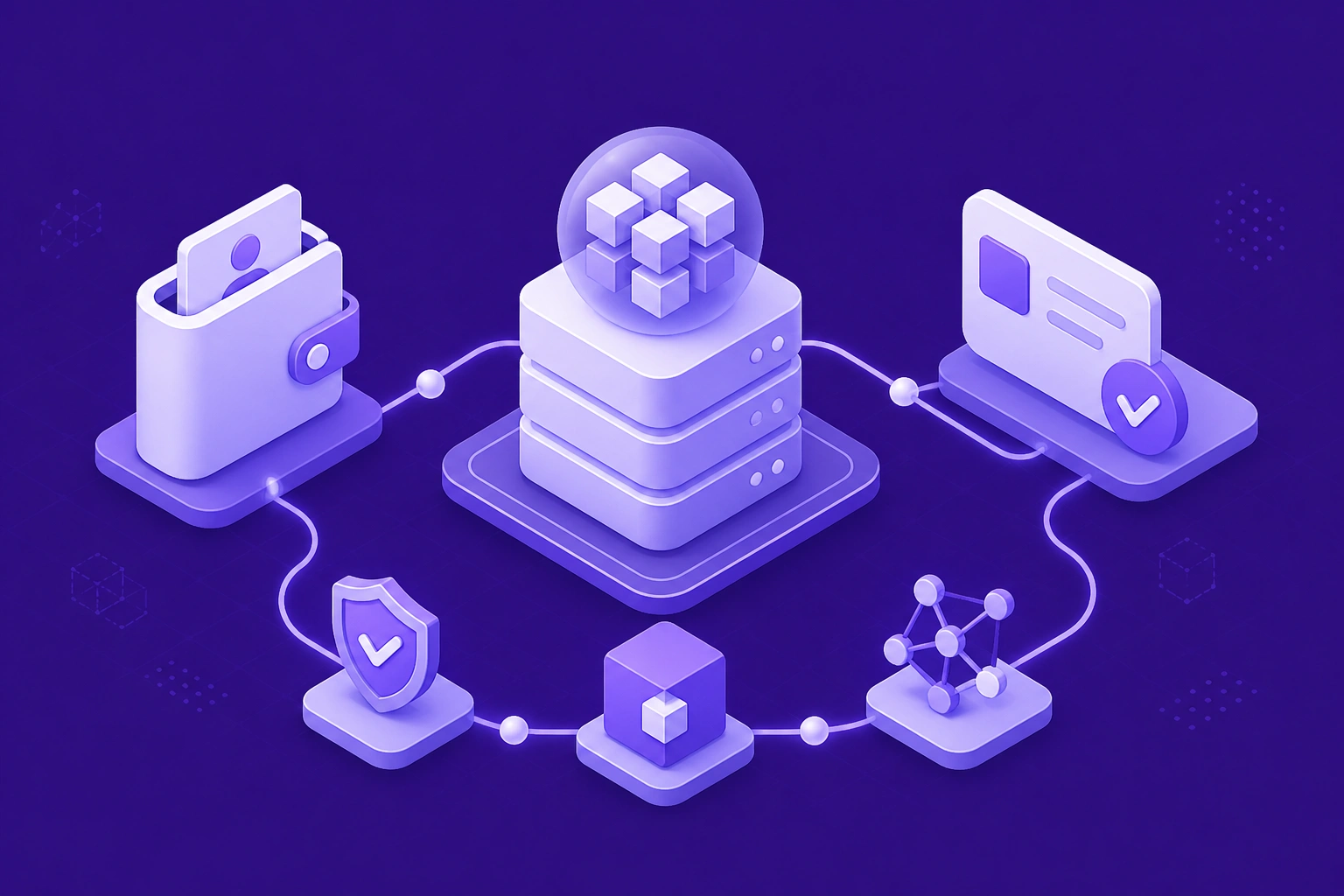
For RWA DeFi integration to function correctly, there must be a trusted, legally enforceable bridge between the on-chain token and the off-chain asset. This bridge typically involves three components: a regulated custodian who holds the underlying asset, a legal structure (often an SPV or trust) that defines token holder rights, and an oracle network that brings real-time valuation data on-chain. Without all three, the token is merely a digital certificate with no real claim on the underlying value.
Real Estate
Residential, commercial, and industrial properties worldwide
Bonds & Credit
Government bonds, corporate debt, and private credit instruments
Commodities
Gold, silver, oil, and agricultural produce
Art & Collectibles
Fine art, rare collectibles, and luxury items
Although the concept of RWA tokenization appears straightforward, its implementation requires coordination between legal and technical frameworks. In most cases, the token represents a legally enforceable claim, such as equity in an SPV, a beneficial interest in a trust, or a structured debt obligation. Smart contracts automate the execution of these rights. For example, rental income generated by a tokenized property can be distributed automatically to token holders based on their ownership share. Similarly, when a tokenized bond reaches maturity, the smart contract can trigger redemption and distribute the proceeds to investors.
How dApps Enable Real World Asset Tokenization?
Decentralized applications are the operational layer that makes real world asset tokenization accessible to end users. Without a dApp, investors would need to interact directly with smart contracts through technical interfaces; a barrier that eliminates most of the target market. RWA dApp blockchain solutions provide the investor dashboard, identity verification workflow, token issuance portal, and secondary trading interface that transform a smart contract stack into a usable financial product.
A well-architected real world asset dApp handles several distinct functional layers simultaneously. The front end presents asset listings, due diligence documents, and performance data in an investor-friendly format. The middleware layer orchestrates communication between the user interface, the blockchain, the compliance service, and external data providers. The smart contract layer enforces all business logic on-chain. Finally, the data layer stores off-chain documentation, audit trails, and legal records that support the on-chain token’s validity.
For a deeper architectural breakdown, read our guide on Decentralized Apps – Architecture, Use Cases, Development Process & Best Practices.
Asset Onboarding Portal
Asset originators submit documentation, valuations, and legal structures for review before token issuance begins on the dApp platform.
Investor KYC/AML Gateway
Identity verification integrated directly into the dApp ensures only eligible investors access regulated tokenized assets per jurisdiction-specific rules.
Token Distribution Engine
Smart contract-driven issuance automatically allocates tokens to verified investors upon payment confirmation, without manual processing.
Yield Distribution Module
Rental income, interest payments, and dividends are distributed on-chain automatically to token holders based on their proportional stake.
The Role of Smart Contracts in RWA Tokenization on dApps
Smart contracts act as the immutable rulebooks that govern every action within an RWA tokenization dApp. Unlike traditional financial agreements that require manual enforcement by intermediaries, smart contracts execute automatically when predefined conditions are met. In the context of real world asset tokenization on dApps, this means ownership transfers, income distributions, redemptions, and compliance checks can occur automatically without the constant involvement of lawyers, brokers, or custodians.
The choice of token standards also plays a crucial role. ERC-20 tokens are the simplest option but lack built-in compliance mechanisms. More advanced standards such as ERC-1400 and ERC-3643 (T-REX protocol) introduce permissioned transfer logic, allowing smart contracts to verify whether a buyer has completed KYC checks and meets investor eligibility requirements before approving a transaction. In regulated markets like the United States, where accredited investor rules apply, or the UAE, where VARA-specific compliance requirements exist, these compliant token standards form an essential legal and technical foundation for RWA tokenization platforms.[1]
Smart contracts deployed for RWA tokenization should always undergo at minimum two independent security audits by recognized firms before going live. A single unpatched vulnerability in a contract managing $10 million in tokenized assets can result in total loss of investor funds with no recourse pathway. This is not a theoretical risk- it has happened repeatedly across the DeFi ecosystem.
Types of Real World Assets Being Tokenized Today
The scope of real world asset tokenization on dApps has expanded dramatically. While early RWA dApp blockchain experiments focused on real estate, the asset class landscape now spans virtually every category of investable value. Each asset type presents unique tokenization challenges around valuation frequency, liquidity profiles, legal structures, and regulatory classifications that must be carefully matched to the right technical architecture.
Real Estate Tokenization dApps
Real estate is the largest and most mature segment of real world asset tokenization. Properties in New York, London, Dubai, and Toronto have all been tokenized through dApp platforms, enabling retail investors to gain exposure to institutional-quality assets with ticket sizes starting from as low as $100. A tokenized real estate dApp typically structures each property through a Special Purpose Vehicle. The SPV issues tokens that represent equity or beneficial interest in the property, and the dApp automates rental income distribution, property management reporting, and eventual asset liquidation proceeds.
Leading platforms like RealT, Lofty AI, and the DIFC-backed initiatives in Dubai illustrate how real world asset dApp solutions are already operating at scale. Dubai’s VARA framework and the UK’s FCA sandbox have both created pathways for compliant real estate tokenization, making the UAE and the United Kingdom two of the most active markets for this technology globally.
Real Estate Tokenization Testing Lifecycle
Unit Testing
Each smart contract component is tested independently for transfer restrictions, yield calculations, and access controls.
Integration Testing
Contracts are tested alongside oracle feeds and KYC modules to verify end-to-end compliance workflows function correctly.
Security Audit
Third-party auditors review for reentrancy attacks, integer overflow, and access control vulnerabilities before mainnet deployment.
Testnet Simulation
Full system runs on a testnet with mock investors, simulated asset income, and stress-test transaction volumes.
Regulatory Review
Legal counsel in the target jurisdiction confirms the dApp and token structure align with applicable securities and property laws.
Mainnet Launch
Live deployment with phased investor onboarding, real-time monitoring dashboards, and emergency pause mechanisms active.
How dApps Enable Fractional Ownership of High-Value Assets?
One of the most transformative capabilities of real world asset tokenization on dApps is fractional ownership. Historically, a $50 million commercial office tower in central London or a $20 million beachfront villa in Dubai could only be acquired by institutions or ultra-high-net-worth individuals. Through RWA tokenization, that same asset can be divided into one million tokens priced at $50 each, allowing a teacher in Toronto or a software engineer in Austin to hold a proportional interest alongside pension funds.
The dApp handles the fractional ownership experience through several integrated features. A token portfolio dashboard shows each investor their holdings, accrued income, and current asset valuation. Income distribution is automatic when the underlying asset generates cash flow, the smart contract splits it proportionally across all token holders and deposits it in their connected wallets. Transfer mechanics allow investors to sell their fractional position on a secondary market integrated within the dApp, providing liquidity that has never existed before for these asset classes.
A Dubai-based commercial property valued at AED 18 million was tokenized through an ADGM-regulated dApp platform in 2023. Over 400 individual investors from the USA, UK, UAE, and Canada collectively funded the acquisition through token purchases ranging from $500 to $250,000. All rental income is distributed quarterly in USDC directly to investor wallets without any property management intermediary touching investor funds.
Ethereum
Dominant for institutional RWA. Widest tooling, highest security, and recognized by USA/UK regulators. High gas costs remain a challenge for retail-sized positions.
Polygon
Low-cost Ethereum Layer 2 with strong EVM compatibility. Preferred for retail-facing RWA dApps and emerging market platforms targeting UAE and Canadian retail investors.
Avalanche
Subnet architecture enables permissioned RWA chains with custom compliance logic. Heavily used by institutional tokenization projects and bank-backed platforms.
Stellar / Algorand
Purpose-built for financial assets with native compliance features. Active in government bond tokenization and CBDC pilots globally.
Key Benefits of Real World Asset Tokenization on dApps
The benefits of real world asset tokenization on dApps extend across the entire value chain from asset originators who gain access to new capital pools, to investors who gain access to previously inaccessible asset classes, to the financial system broadly which gains efficiency and transparency. Having worked on RWA projects across multiple jurisdictions over the past eight years, we can categorically state that the efficiency gains are not marginal they are structural.
Beyond operational principles, the core investor benefits of RWA tokens in decentralized applications include 24/7 global market access, programmable income distributions, transparent on-chain audit trails, reduced settlement times from T+2 to near-instant, and the elimination of geographic barriers that have historically kept cross-border asset investment expensive and complex. For institutional participants in Canada and the UK, the reduction in administrative overhead and reconciliation costs alone can justify the transition from traditional custody to tokenized formats.
Challenges and Risks of RWA Tokenization
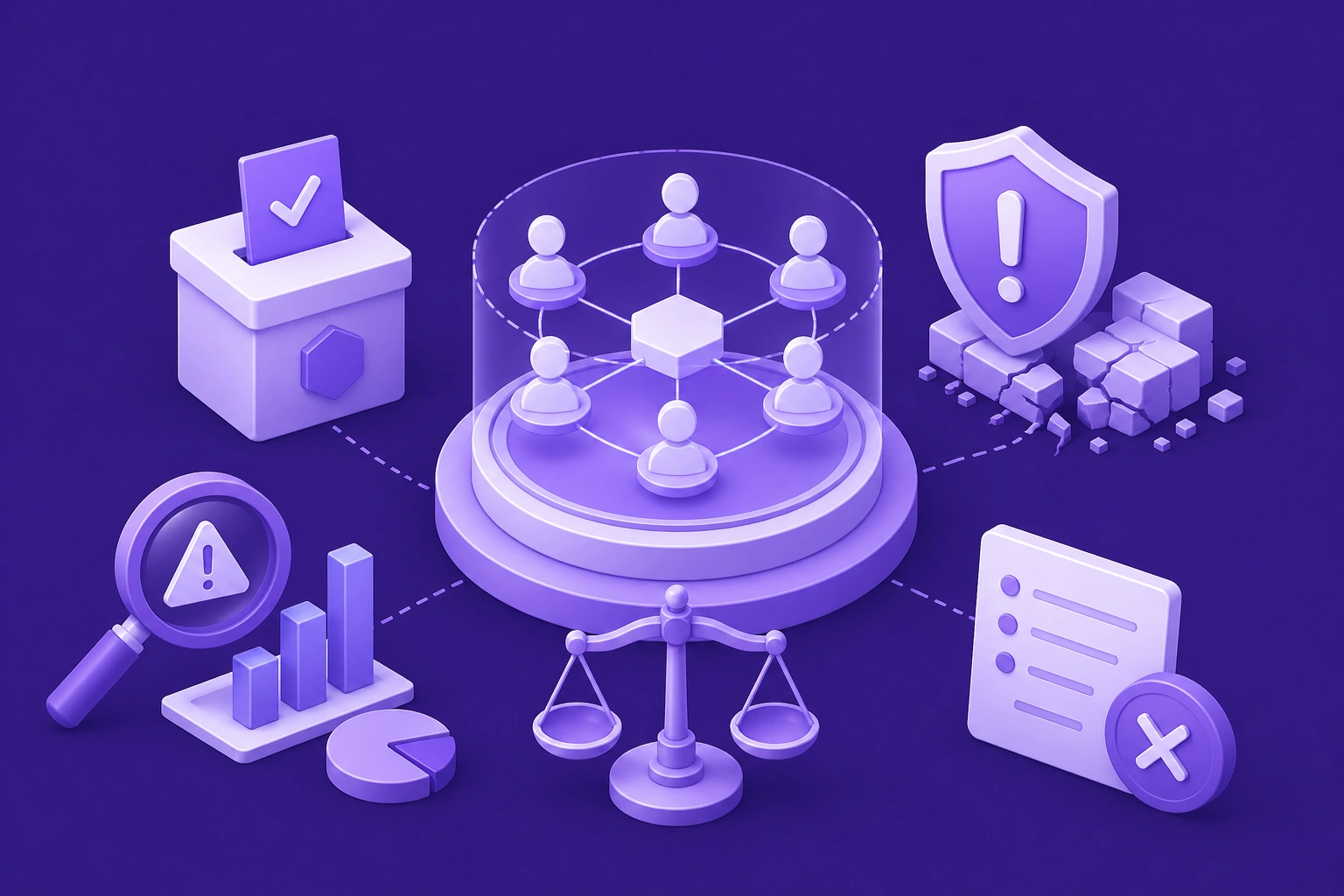
No honest discussion of RWA dApp blockchain technology is complete without a thorough examination of its risks. The sector has produced genuine breakthroughs, but it has also produced failures rooted in poor legal structuring, inadequate smart contract security, oracle manipulation, and regulatory non-compliance. Understanding these risks is essential for any team building or investing in real world asset tokenization on dApps.[1]
RWA dApp Architecture Model Selection Criteria
Selecting the right technical architecture for a real world asset dApp is not a one-size-fits-all decision. The appropriate model depends on the asset class, investor base, regulatory jurisdiction, transaction volume, and required compliance depth. Based on our experience across USA, UK, UAE, and Canada deployments, we have identified three primary architecture models that serve different use case profiles.
Permissioned Chain Model
Best for institutional-grade assets requiring strict KYC enforcement and regulatory reporting. Uses permissioned networks like Avalanche subnets or Hyperledger Fabric with enterprise controls.
Hybrid L1/L2 Model
Ideal for retail-facing RWA dApps targeting wide investor bases. Settlement on Ethereum mainnet for security; user interactions via Polygon or Arbitrum for cost efficiency.
Purpose-Built Chain Model
Designed for high-frequency, low-value RWA transactions like fractional bond trading. Custom blockchain or appchain with native compliance features and sub-cent transaction fees.
Compliance and Governance Checklist for RWA dApps
Regulatory compliance is the single most important non-technical determinant of whether an RWA tokenization project succeeds or collapses. This checklist synthesizes requirements drawn from our experience across major markets and should serve as a minimum standard, not a ceiling for any serious RWA dApp project.
✓
✓
✓
✓
✓
✓
Difference Between RWA and DeFi dApps
Understanding the difference between RWA and DeFi dApps is critical for architects, investors, and regulators navigating this space. While both categories operate on blockchain infrastructure using smart contracts, they serve fundamentally different purposes and face entirely different risk and compliance profiles. Pure DeFi dApps operate exclusively within the crypto-native ecosystem their value flows, governance tokens, and yield mechanisms all reference other crypto assets. RWA dApps, by contrast, are anchored in the physical and legal world and must satisfy requirements that have no analog in pure DeFi.
RWA dApps
- Asset value derived from physical/financial world
- Mandatory legal structure and custodian
- KYC/AML compliance non-negotiable
- Off-chain oracle data dependency
- Securities regulation often applies
- Lower volatility, yield from real cash flows
Pure DeFi dApps
- Value from crypto-native tokenomics
- No physical custodian required
- Permissionless access typical
- On-chain data only (DEX prices, etc.)
- Regulatory classification still evolving
- Higher volatility, yield from protocol incentives
Ready to Build Your RWA Tokenization dApp?
Our blockchain team has delivered compliant, production-grade RWA dApps for clients across the USA, UK, UAE, and Canada. Let’s build yours.
Frequently Asked Questions
Q1.What is Real World Asset Tokenization on dApps?
Real World Asset Tokenization on dApps refers to the process of converting ownership rights of physical or traditional financial assets such as real estate, commodities, bonds, or art into digital tokens that exist on a blockchain. Decentralized applications (dApps) serve as the user-facing interface that facilitates minting, trading, and managing these tokens, making traditionally illiquid assets accessible to a global pool of investors without intermediaries.
Q2.How do real world assets work on blockchain?
Real world assets work on blockchain by anchoring legal ownership documents, valuations, and compliance data to smart contracts. When an asset is tokenized, a digital representation is created on-chain and linked to verified off-chain data via oracles. This allows investors in the USA, UK, UAE, and Canada to hold, trade, or earn yield on fractional shares of high-value assets while the smart contract enforces rules around transfers, dividends, and redemptions automatically.
Q3.What is the difference between RWA and DeFi dApps?
RWA dApps bridge traditional finance with blockchain by representing real-world value on-chain, while standard DeFi dApps typically deal with purely crypto-native assets like ETH or stablecoins. RWA DeFi integration adds a layer of legal compliance, asset custody, and off-chain data verification that pure DeFi protocols do not require. In essence, RWA dApps are DeFi platforms with an added compliance and real-world legal framework layer.
Q4.What types of real world assets can be tokenized?
A wide variety of real world assets can be tokenized including real estate, commercial properties, private equity funds, government and corporate bonds, commodities like gold and oil, fine art, infrastructure projects, and even intellectual property royalties. In markets like the UAE and the UK, real estate tokenization has gained regulatory traction, while in North America, tokenized treasury bonds and private credit instruments have seen institutional adoption through RWA dApp platforms.
Q5.What role do smart contracts play in RWA tokenization?
Smart contracts are the backbone of RWA tokenization on dApps. They automate the enforcement of ownership rules, dividend distributions, transfer restrictions, and compliance checks without requiring a centralized authority. When a token representing a property or bond changes hands, the smart contract verifies eligibility, updates the ledger, and executes payment all in a trustless environment. This removes the need for brokers, clearinghouses, and manual settlement processes that add cost and friction.
Q6.Is real world asset tokenization legal and regulated?
The regulatory landscape for RWA tokenization varies by jurisdiction. In the USA, the SEC oversees tokenized securities under existing securities law. The UK’s FCA has issued guidance on tokenized assets, and the UAE’s VARA and ADGM have created favorable regulatory sandboxes. Canada is also progressing with CSA guidance. Most serious RWA dApp platforms build KYC/AML compliance directly into their smart contracts or through permissioned token standards like ERC-3643 to satisfy these regulations.
Q7.What blockchain networks are best for RWA tokenization dApps?
Ethereum remains the most widely used blockchain for RWA tokenization due to its mature smart contract ecosystem, wide institutional familiarity, and robust token standards. However, Polygon, Avalanche, and Stellar are increasingly used for their lower transaction costs and faster settlement times. Emerging Layer 2 networks like Arbitrum and Base are also gaining traction for RWA dApps targeting retail investors who need affordable on-chain interactions with tokenized real world assets.
Explore Services
Related Services
Reviewed by

Aman Vaths
Founder of Nadcab Labs
Aman Vaths is the Founder & CTO of Nadcab Labs, a global digital engineering company delivering enterprise-grade solutions across AI, Web3, Blockchain, Big Data, Cloud, Cybersecurity, and Modern Application Development. With deep technical leadership and product innovation experience, Aman has positioned Nadcab Labs as one of the most advanced engineering companies driving the next era of intelligent, secure, and scalable software systems. Under his leadership, Nadcab Labs has built 2,000+ global projects across sectors including fintech, banking, healthcare, real estate, logistics, gaming, manufacturing, and next-generation DePIN networks. Aman’s strength lies in architecting high-performance systems, end-to-end platform engineering, and designing enterprise solutions that operate at global scale.