Ai Overview
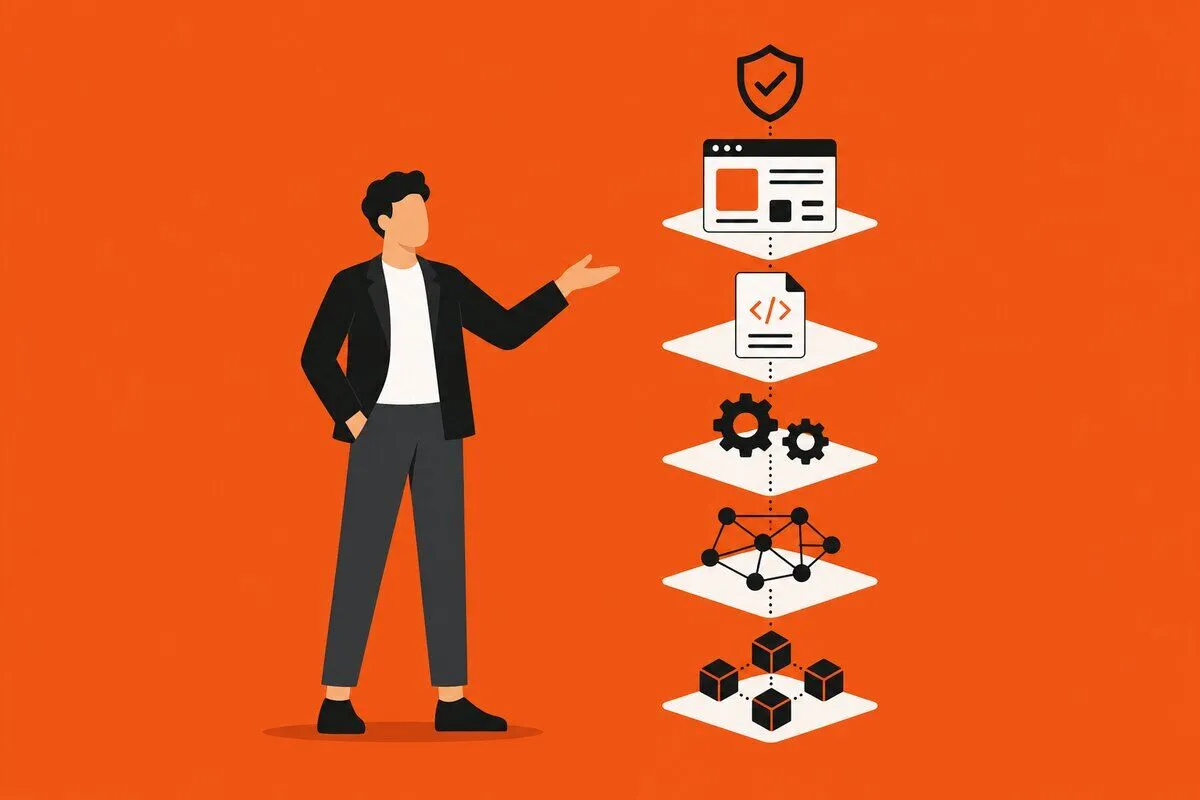
The infrastructure supporting Web3 privacy credentials rests on two interconnected technical standards: Decentralized Identifiers (DIDs) and Verifiable Credentials (VCs). The global decentralized identity market size was valued at USD 1,153 million in 2024. Looking forward, IMARC Group estimates the market to reach USD 89,628 Million by 2033, exhibiting a CAGR of 62.
Key Takeaways
- The average cost of a data breach reached $4.45 million in 2023, the highest recorded in almost two decades, with personal identifiable information being a primary target of these breaches.
[1] - The W3C published Verifiable Credentials 2.0 as an official standard, establishing the technical foundation for expressing, exchanging, and verifying digital credentials with enhanced privacy protections.
[2] - The zero-knowledge proof market was valued at $1.28 billion in 2024 and is projected to reach $7.59 billion by 2033, reflecting the growing adoption of privacy preserving cryptographic technologies.
[3] - The global decentralized identity market was valued at USD 1,153 million in 2024 and is expected to reach USD 89,628 million by 2033, growing at a compound annual growth rate of 62.2%.
[4] - Soulbound Tokens were formally proposed in May 2022 by Ethereum cofounder Vitalik Buterin, lawyer Puja Ohlhaver, and economist E. Glen Weyl as non-transferable credentials for digital identity and reputation.
[5] - The European Union’s eIDAS 2.0 regulation entered into force on May 20, 2024, requiring all EU member states to offer European Digital Identity Wallets to citizens by the end of 2026.
[6] - Enterprises using reusable KYC credentials through decentralized identity systems have achieved up to 60% reduction in recurring verification costs while maintaining regulatory compliance.
[7] - The Binance Account Bound (BAB) token became one of the first large-scale implementations of soulbound tokens, serving as on-chain proof that users have completed KYC verification.
[8] - Over 150 different DID methods now exist in the decentralized identity ecosystem, though interoperability efforts continue through organizations like the Decentralized Identity Foundation.
[9] - AWS is now implementing post-quantum digital signatures using ML-DSA combined with decentralized identity frameworks to provide quantum-resistant credential verification capabilities.
[10]
The internet has undergone significant transformations since its inception, evolving from static web pages in the Web1 era to the interactive but centralized platforms of Web2. Today, we stand at the threshold of Web3, a decentralized version of the internet that promises to fundamentally reshape how we manage and verify our digital identities. At the heart of this transformation lies a powerful concept known as privacy-preserving credentials in Web3.
Traditional digital identity systems have created a troubling paradox. Every time you log into a website, complete a Know Your Customer (KYC) process, or verify your age online, you surrender personal information to centralized databases controlled by corporations or governments. These repositories have become prime targets for malicious actors. In 2023, it was reported that the average cost of a data breach rose to $4.45 million, the highest in almost two decades, with a significant portion of these breaches involving the compromise of personal identifiable information (PII) stored in centralized databases. Web5 This staggering figure underscores why a new approach to identity verification has become not just desirable but essential.
Privacy-preserving credentials represent a revolutionary approach to digital identity that allows individuals to prove specific attributes about themselves without exposing unnecessary personal data. Rather than handing over your passport to verify your nationality or sharing your birth certificate to prove your age, these credentials enable you to demonstrate the required attribute while keeping everything else confidential. This shift from “prove everything” to “prove only what’s needed” forms the foundation of user data privacy in Web3.
Understanding the Foundation: Decentralized Identity and Verifiable Credentials
The infrastructure supporting Web3 privacy credentials rests on two interconnected technical standards: Decentralized Identifiers (DIDs) and Verifiable Credentials (VCs). The W3C has published Verifiable Credentials 2.0 as a W3C Standard, making the expression, exchange, and verification of digital credentials easier and more secure. W3C This milestone represents years of collaborative effort among technologists, policymakers, and privacy advocates.
Decentralized Identifiers Explained
W3C describes DID as being “A new type of identifier that enables verifiable, decentralized digital identity.” Dock Labs. Unlike traditional identifiers such as email addresses or social security numbers that are issued and controlled by centralized authorities, DIDs are created and managed by the individuals themselves. Think of a DID as a unique digital address that you own completely, independent of any government registry or corporate database.
A Decentralized Identifier (DID) is a unique digital identifier that represents a person, organization, or device without relying on a central authority like a government, IDP, or tech company. DIDs allow individuals and organizations to create and control their own identifiers, making it possible to manage identity privately, securely, and independently.
The technical architecture of DIDs involves cryptographic key pairs. When you create a DID, you generate a public key (visible to others for verification purposes) and a private key (kept secret and used to prove ownership). This cryptographic foundation ensures that only you can control actions associated with your identifier, and anyone can verify that actions truly originated from you.
Verifiable Credentials: Digital Proofs That Travel With You
Verifiable credentials (VCs) are digital credentials that follow the relevant World Wide Web Consortium open standards. They can represent information found in physical credentials, such as a passport or license, as well as new things that have no physical equivalent, such as ownership of a bank account. They have numerous advantages over physical credentials, most notably that they’re digitally signed, which makes them tamper-resistant and instantaneously verifiable.
The verifiable credentials Web3 ecosystem operates on a trust triangle involving three key participants. Issuers are organizations with the authority to issue credentials, such as universities granting diplomas, governments issuing identity documents, or employers providing employment verification. Holders are individuals or entities who receive and store these credentials in their digital wallets. Verifiers are parties who need to confirm that a holder possesses certain attributes or qualifications.
The W3C Verifiable Credentials Data Model forms the foundational structure of VCs. It defines how credentials are formatted and the roles of the Issuer, Holder and Verifier in managing and interacting with credentials. Gs1 This standardization ensures that a credential issued by one organization can be understood and verified by any other organization following the same standards, regardless of their technical infrastructure.
What Are Anonymous Credentials and Why They Matter in Web3?
The Cryptographic Mechanisms Enabling Privacy
Privacy-preserving identity solutions rely on sophisticated cryptographic techniques that allow verification without exposure. These mechanisms transform the way we think about proving claims about ourselves.
Zero Knowledge Proofs: Proving Without Revealing
Zero-Knowledge Proofs (ZKPs) are cryptographic techniques that allow one party to prove to another that a statement is true without revealing any specific information about the statement itself. In the context of Web3, ZKPs enable users to validate transactions or data without disclosing the actual data, ensuring privacy while maintaining security.
Consider a practical example. You want to enter a bar that requires patrons to be at least 21 years old. In traditional systems, you would show your driver’s license, revealing not just your age but also your full name, address, photograph, and date of birth. With zero-knowledge proofs, you can prove mathematically that you were born more than 21 years ago without revealing your actual birthdate or any other information.
The zero-knowledge proof market, valued at $1.28 billion in 2024, is expected to reach $7.59 billion by 2033. Rumblefish. This explosive growth reflects the increasing recognition of ZKPs as essential infrastructure for privacy-preserving applications across multiple industries.
Types of Zero-Knowledge Proof Systems
The blockchain industry has developed several ZKP implementations, each with distinct characteristics:
zk-SNARKs (Zero-Knowledge Succinct Non-Interactive Arguments of Knowledge) produce small proof sizes and offer fast verification times, making them suitable for blockchain applications where efficiency matters. Projects like Zcash pioneered their use for private transactions.
zk-STARKs (Zero-Knowledge Scalable Transparent Arguments of Knowledge) eliminate the need for a trusted setup ceremony required by SNARKs, offering improved security assumptions at the cost of larger proof sizes.
Layer-1 blockchains utilize ZKPs to obscure critical transaction details, such as the identities of parties involved and the transaction amounts. This concealment is achieved through advanced cryptographic techniques, including zk-SNARKs or zk-STARKs, that validate transactions without revealing their underlying data.
Selective Disclosure: Sharing Only What’s Necessary
Selective disclosure is a privacy-preserving technique that enables individuals to disclose specific information for a given interaction while keeping all other personal data confidential.
This concept aligns with the principle of data minimization, which states that organizations should only collect and process the minimum amount of personal data necessary for a specific purpose. Selective disclosure is the ability of an individual to granularly decide what information to share.
This Data Minimization practice helps organizations stay compliant with data regulations, especially with systems that provide advanced privacy-preserving technology like Selective Disclosure (user chooses which parts of their data they want to reveal) and Zero-Knowledge Proof technology (confirming a claim without revealing the actual details of the claim).
For instance, when applying for a job, you might need to prove you hold a bachelor’s degree without revealing your exact GPA, the specific courses you took, or when you graduated. Selective disclosure enables this precise control over information sharing.
Homomorphic Encryption: Computing on Encrypted Data
Homomorphic Encryption allows computations to be performed on encrypted data without decrypting it. This enables secure data processing and analysis while maintaining the privacy of the underlying information.
This technology has profound implications for scenarios where data needs to be processed by third parties. Medical researchers could analyze encrypted patient records to identify disease patterns without ever seeing individual patient information. Financial institutions could verify income levels without accessing actual salary figures.
Self-Sovereign Identity: The Philosophy Behind the Technology
Self-sovereign identity (SSI) is an approach to digital identity that gives individuals control over the information they use to prove who they are to websites, services, and applications across the web. This philosophical framework underpins the entire privacy-preserving credentials movement.
Core Principles of Self-Sovereign Identity
The SSI model fundamentally reimagines the relationship between individuals and their identity data. Self-Sovereign Identity (SSI) is a model that gives individuals full ownership and control of their digital identities without relying on a third party.
Several key principles define authentic self-sovereign identity systems:
- Existence requires that users must have an independent existence beyond any digital system, with their identity serving as a representation rather than a replacement of their physical being.
- Control ensures that users must ultimately control their identities, always being able to refer to, update, or even hide credentials without requiring permission from third parties.
- Access guarantees that users must always have access to their own data, without gatekeepers who can restrict or deny access.
- Transparency demands that the systems and algorithms governing identity must operate transparently, with open-source code that can be audited and verified.
- Persistence means that identities must be long-lived, ideally lasting as long as the user wishes, though this doesn’t preclude the user’s right to delete their own identity.
- Portability requires that identity information must not be held by any single third party, ensuring that users can transport their identity wherever they go.
The Trust Triangle in Practice
There are three main participants in the SSI system: Holder (Someone who creates their decentralized identifier with a digital wallet app and receives Verifiable Credentials), Issuer (Party with the authority to issue Verifiable Credentials), and Verifier (Party checking the credential).
This tripartite structure creates a network of trust that operates without requiring any participant to blindly trust another. The issuer’s digital signature on a credential vouches for its authenticity. The blockchain or other decentralized registry ensures this signature cannot be forged. The verifier can check the credential’s validity without contacting the issuer, and the holder maintains complete control over when and how their credentials are shared.
Web3 Authentication Methods: Moving Beyond Passwords
Traditional authentication methods have proven inadequate for the demands of modern digital life. Password databases get breached, two-factor authentication can be circumvented through SIM swapping attacks, and biometric data, once stolen, cannot be changed. Web3 authentication methods offer fundamentally stronger alternatives.
Blockchain-Based Authentication
Blockchain, Decentralized Identifiers (DIDs), Verifiable Credentials, and a Web3 wallet are essential to Web3 authentication that preserves user privacy.
When you authenticate using Web3 methods, you prove ownership of a private key associated with your DID. This proof is cryptographic and unforgeable. Unlike passwords that can be guessed, phished, or stolen from database breaches, cryptographic keys offer mathematical certainty about the authenticating party’s identity.
Web3 authentication offers a convenient and secure way to verify users and access data with consent, which can help organizations comply with important data regulations like GDPR.
Digital Wallet Infrastructure
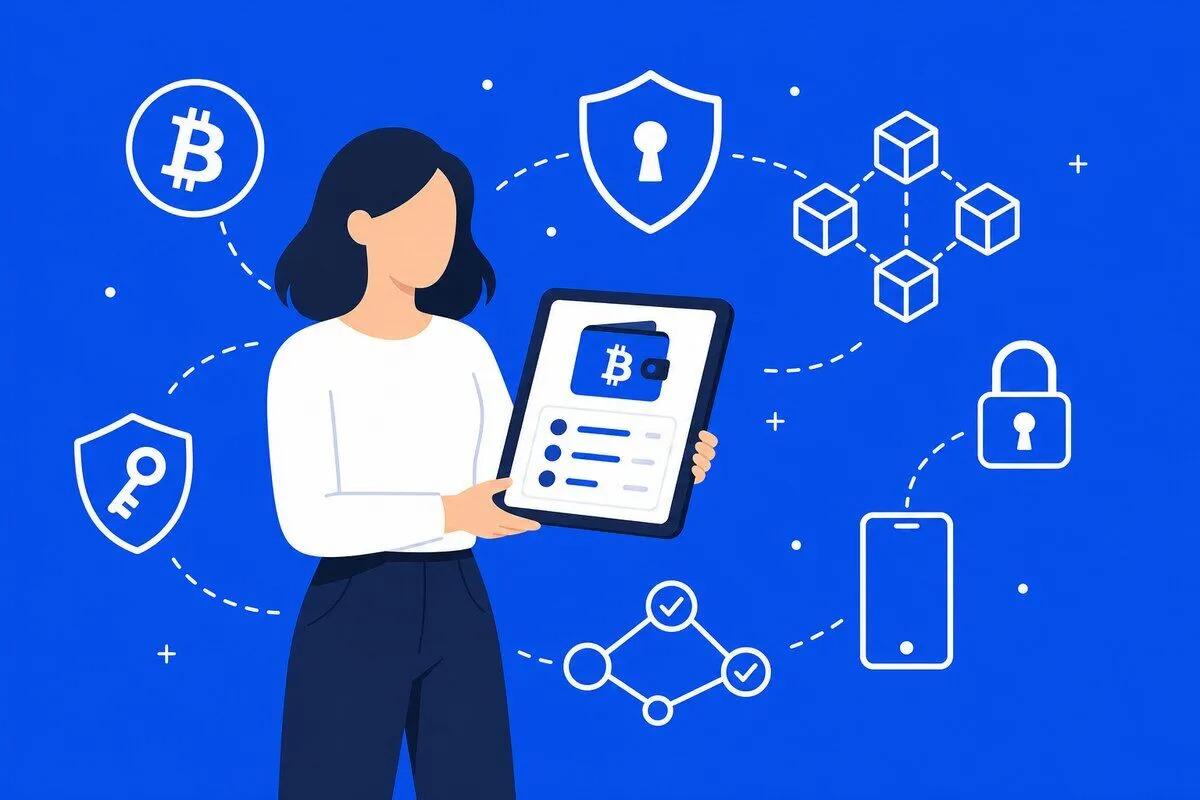
Digital wallets serve as the user interface for managing decentralized identity credentials. These applications, running on smartphones or computers, store private keys and credentials locally on the user’s device rather than on remote servers.
Decide which data to share using privacy-preserving techniques like Selective Disclosure and Zero-Knowledge Proofs.
Modern identity wallets allow users to:
- Receive and store credentials from multiple issuers in a unified interface.
- Present credentials to verifiers with granular control over what information to share.
- Manage multiple DIDs for different contexts, keeping personal and professional identities separate.
- Back up credentials using secure mechanisms that don’t compromise privacy.
Soulbound Tokens: Non-Transferable Identity on the Blockchain
Soulbound Tokens (SBT) is a concept proposed in May 2022 by Ethereum cofounder Vitalik Buterin, lawyer Puja Ohlhaver, and E. Glen Weyl, an economist and social technologist.
These tokens represent a unique category of digital assets designed specifically for identity and reputation purposes. A Soulbound Token (SBT) is a non-transferable token that binds to a specific account or “soul.” The core concept is that once minted, the token’s ownership remains fixed to the receiving address, making it unsuitable for trading, arbitrage, or speculation.
Distinguishing SBTs from Traditional NFTs
While regular NFTs can be bought, sold, and transferred between wallets, soulbound tokens remain permanently attached to the wallet that received them. Unlike NFTs, SBTs stay locked to a user’s identity and are non-transferable. This locks in secure proof of attributes, achievements, and credentials.
This non-transferability addresses a fundamental challenge in digital credentials: preventing someone from selling or transferring achievements they didn’t personally earn. Your university degree, professional certifications, and reputation should remain yours and yours alone.
Practical Applications of Soulbound Tokens
For example, someone could have a “Credentials Soul” for their work history and a “Medical Soul” for their health records. Souls and SBTs would allow people to build a verifiable, digital Web3 reputation based on their past actions and experiences.
The potential use cases span numerous domains:
- Educational Credentials could be issued as SBTs by universities, making diploma fraud essentially impossible since the credentials cannot be purchased or transferred from someone who legitimately earned them.
- Professional Certifications from industry bodies could take the form of SBTs, providing instant verification of someone’s qualifications without requiring phone calls or emails to issuing organizations.
- Employment History verified through SBTs could eliminate resume fraud, as employers would issue tokens confirming actual employment periods and roles.
- Community Reputation earned through contributions to DAOs, open-source projects, or online communities could be represented as non-transferable tokens, creating genuine reputation systems resistant to manipulation.
- The Binance Account Bound (BAB) token is a large-scale SBT that serves as an on-chain proof that a user has completed KYC (Know Your Customer) verification. This real-world implementation demonstrates how SBTs can bridge traditional compliance requirements with Web3 infrastructure.
Market Growth and Industry Adoption
The decentralized identity market is experiencing extraordinary growth as organizations recognize both the security benefits and the user experience improvements offered by these technologies.
The global decentralized identity market size was valued at USD 1,153 million in 2024. Looking forward, IMARC Group estimates the market to reach USD 89,628 Million by 2033, exhibiting a CAGR of 62.2% during 2025-2033.
This remarkable growth trajectory reflects several converging factors:
- Increasing Data Breach Costs continue pushing organizations toward decentralized solutions that eliminate central points of failure.
- Regulatory Pressure from frameworks like GDPR, which mandates data minimization and user consent, naturally aligns with privacy-preserving credential architectures.
- User Demand for greater control over personal data has intensified as awareness of surveillance capitalism grows.
- Technological Maturity has reached a point where these solutions can be deployed at scale with acceptable performance characteristics.
Comparing Traditional vs. Privacy-Preserving Identity Approaches
| Aspect | Traditional Identity Systems | Privacy-Preserving Credentials | Key Benefit |
|---|---|---|---|
| Data Storage | Centralized databases controlled by corporations | Decentralized storage in user-controlled wallets | Eliminates single points of failure and reduces breach risk |
| User Control | Limited or no control over how data is used | Complete user sovereignty over credential sharing | Users decide exactly what information to reveal and when |
| Verification Speed | Manual processes requiring days or weeks | Instant cryptographic verification | Dramatically reduces onboarding time and costs |
| Fraud Prevention | Documents can be forged or manipulated | Cryptographic signatures make forgery mathematically impossible | Eliminates credential fraud and impersonation |
| Interoperability | Siloed systems that don’t communicate | W3C standards enable cross-platform recognition | Credentials issued once can be verified anywhere |
| Privacy Preservation | All-or-nothing disclosure requirements | Selective disclosure and zero-knowledge proofs | Share minimum necessary information only |
The European Digital Identity Framework: A Regulatory Catalyst
- The European Digital Identity (EUDI) Regulation will revolutionise digital identity in the EU by enabling the creation of a universal, trustworthy, and secure European digital identity wallet.
- The European Union has positioned itself at the forefront of digital identity regulation, creating a framework that other jurisdictions are watching closely.
- It was published in the Official Journal of the European Union in April 2024 and started a gradual entry into force on May 20, 2024.
- The EU Digital Identity Wallet (EUDI Wallet) is a mobile identity wallet defined in European Union law to let people and businesses prove who they are online and share verified attributes across the EU.
- The regulation mandates that by 31-12-2026, all EU member states are required to have systems in place to provide at least one European Digital Identity Wallet to any resident who requests one.
Key Features of the EUDI Wallet
The European Digital Identity Wallet incorporates several privacy-preserving principles:
Member States will be mandated to offer citizens and businesses digital wallets, which can link their national digital identities with proof of other personal attributes like driving licenses, diplomas, and bank accounts. The aim is to provide Europeans with full control over their data while accessing online services, eliminating unnecessary data sharing.
The regulation mandates strong security standards and “privacy by design,” meaning users decide which data to share and can keep track of it.
This regulatory framework creates a powerful incentive for organizations across the EU to adopt privacy-preserving credential technologies, establishing patterns that will likely influence digital identity policy worldwide.
Industry Applications and Real-World Use Cases
Privacy-preserving credentials in Web3 are finding applications across numerous industries, each leveraging the technology to solve specific challenges.
Healthcare: Protecting Patient Privacy
The healthcare sector handles some of the most sensitive personal information, making it an ideal candidate for decentralized identity solutions. In the Web3 healthcare open environment, there is an urgent need for healthcare users to be able to manage their personal data autonomously.
Medical professionals can use privacy-preserving credentials to prove their licenses and qualifications when moving between institutions without requiring lengthy verification processes. Doctors, lawyers, engineers, and other professionals can prove their credentials and licenses instantly, eliminating verification delays when moving between organizations or jurisdictions. Medium
Patients benefit from portable health records that they control, sharing relevant information with healthcare providers on a need-to-know basis while maintaining the confidentiality of unrelated medical history.
Financial Services: Streamlining Compliance
The financial industry faces stringent Know Your Customer (KYC) and Anti-Money Laundering (AML) requirements that traditionally involve extensive data collection and verification processes.
Streamline Know Your Customer (KYC) and Anti-Money Laundering (AML) processes for financial services and regulated industries by reusing verified identity credentials. Medium
Enterprises now issue reusable KYC credentials that cut recurring verification costs up to 60% while safeguarding personal data via zero-knowledge proof schemes. Mordor Intelligence
This reusability transforms the customer experience. Rather than submitting identity documents to every financial institution, customers can present a verified credential that confirms they’ve passed KYC checks without revealing the underlying documents or data.
Education: Eliminating Credential Fraud
Blockcerts is a prominent example of a Web3 initiative in education. This open-standard system utilizes blockchain technology to issue, store, and verify educational credentials. Codezeros
Educational institutions worldwide lose credibility when diploma fraud goes undetected. Privacy-preserving credentials enable:
- Instant verification of academic achievements without contacting the issuing institution
- Portability of credentials across borders and jurisdictions
- Selective disclosure of specific achievements without revealing entire academic histories
- Lifetime ownership of credentials that cannot be revoked or altered by the issuing institution
Supply Chain Management: Ensuring Authenticity
Web3 identity facilitates transparent and auditable supply chains, empowering stakeholders to validate the authenticity and provenance of goods and products.
Companies can verify supplier credentials, certifications, and compliance status without accessing confidential business information. This enables trust in business relationships while respecting the privacy of proprietary data.
Technical Implementation: Building Privacy-Preserving Systems
For developers and organizations looking to implement decentralized identity credentials, understanding the technical stack is essential.
Core Components of a Privacy-Preserving Credential System
DID Registries serve as the decentralized equivalent of domain name servers, allowing DIDs to be resolved to their associated DID documents. These registries can be implemented on various blockchain networks or alternative decentralized systems.
Credential Wallets provide the user interface for managing private keys and credentials. Modern implementations often run as mobile applications, browser extensions, or cloud-based services with appropriate security measures.
Issuer Services handle the creation and signing of credentials. These typically integrate with existing enterprise systems to pull verified data and transform it into standards-compliant verifiable credentials.
Verifier Services receive credential presentations and validate them cryptographically. These services confirm that credentials were issued by trusted parties, haven’t been tampered with, and haven’t been revoked.
Key Technologies Powering Privacy-Preserving Credentials
| Technology | Function | Privacy Benefit | Example Applications |
|---|---|---|---|
| Zero-Knowledge Proofs | Prove statements without revealing underlying data | Complete data confidentiality during verification | Age verification, credit score checks, identity proofs |
| Selective Disclosure | Share specific credential attributes independently | Minimizes data exposure to only the necessary information | Employment verification, academic credentials |
| Homomorphic Encryption | Compute on encrypted data without decryption | Data remains encrypted throughout processing | Medical research, financial analysis |
| BBS+ Signatures | Create derived proofs from signed credentials | Enable unlinkable presentations, preventing tracking | Anonymous credentials, privacy-preserving authentication |
| Decentralized Identifiers | Create self-controlled, unique identifiers | Eliminates dependence on central identity providers | Universal login, cross-platform identity |
| Ring Signatures | Sign on behalf of a group without revealing the individual | Provides anonymity within verified group membership | Anonymous voting, whistleblower systems |
Challenges and Considerations
Despite their promise, privacy-preserving credentials face several challenges that must be addressed for widespread adoption.
User Experience and Key Management
The cryptographic nature of these systems introduces complexity for ordinary users. Private keys must be securely stored and backed up. Losing access to private keys can mean losing access to credentials and potentially one’s entire digital identity.
Solutions are emerging, including social recovery mechanisms where trusted contacts can help recover access, secure cloud backup options, and hardware security modules that simplify key management while maintaining security.
Interoperability Across Systems
The existence of over 150 DID methods can make interoperability challenging, but many of these methods (e.g., did: web, did: ion) adhere closely to W3C’s standard requirements. Gs1
While W3C standards provide a foundation for interoperability, implementation differences between platforms can create friction. Organizations like the Decentralized Identity Foundation (DIF) work to promote compatibility and develop shared protocols.
Regulatory Compliance and Legal Recognition
Many jurisdictions have not yet updated their legal frameworks to recognize digital credentials issued through decentralized systems. Organizations implementing these technologies must navigate a complex landscape where privacy-preserving approaches may conflict with requirements for centralized data retention.
The EU’s leadership with eIDAS 2.0 provides a model for other jurisdictions, but global harmonization remains a distant goal.
Privacy Versus Accountability
Some critics argue that privacy-preserving systems could enable bad actors to hide behind anonymous credentials. Finding the right balance between individual privacy and societal needs for accountability requires careful design and potentially regulatory oversight.
Emerging solutions include privacy-preserving approaches that still allow for revocation when misuse is proven and systems that provide anonymity for regular use but enable identity disclosure through judicial processes.
The Future of Privacy-Preserving Credentials
The trajectory of privacy-preserving credentials points toward increasingly sophisticated capabilities and broader adoption.
Integration with Artificial Intelligence
The integration of artificial intelligence (AI) and machine learning (ML) is also anticipated to play a crucial role in the evolution of Anonymous Credentials. nadcab.com
AI systems could enhance credential verification, detect fraudulent attempts, and improve user experience through intelligent automation while respecting privacy constraints.
Convergence with IoT and Machine Identity
As the Internet of Things expands, devices will need secure, privacy-preserving methods to identify themselves and authenticate their interactions. The same principles underlying human identity credentials can extend to machine identity, creating unified frameworks for human-machine trust.
Quantum-Resistant Cryptography
The eventual emergence of quantum computers threatens current cryptographic methods. Research into quantum-resistant signature schemes and encryption algorithms will be essential to ensure the long-term security of privacy-preserving credential systems.
Verifiable Data & Identity
Using post-quantum digital signatures (ML-DSA) and decentralized identity frameworks, AWS helps enable organizations to issue, verify, and manage credentials and data with quantum-resistant assurance.
AWS Mainstream Consumer Adoption
As user experience improves and regulatory frameworks solidify, privacy-preserving credentials will likely become standard features of everyday digital interactions. The distinction between “Web3” and mainstream technology will blur as these capabilities become expected rather than exceptional.
Ready to implement privacy-preserving identity solutions for your platform?
Our expert team delivers end-to-end Web3 identity development services tailored to your requirements.
Start Your Web3 Identity Project Now
Final Thoughts
Privacy-preserving credentials in Web3 represent far more than a technical innovation. They embody a fundamental shift in how we conceive of digital identity, moving from a model where individuals surrender personal data to centralized authorities toward one where people maintain sovereignty over their own information. The combination of decentralized identifiers, verifiable credentials, zero-knowledge proofs, and selective disclosure creates a toolkit capable of solving long-standing problems in digital trust while respecting individual privacy.
The path forward will require continued collaboration among technologists, policymakers, and civil society. Standards must evolve to address emerging requirements while maintaining the core principles of user control and privacy by design. Organizations must invest in implementing these technologies thoughtfully, recognizing that the transition from legacy systems takes time and careful planning. Most importantly, individuals must understand their rights and responsibilities in this new paradigm, becoming active participants rather than passive subjects in the management of their digital identities. As adoption accelerates and the technology matures, privacy-preserving credentials will become the foundation upon which the trustworthy digital interactions of tomorrow are built.
Frequently Asked Questions
Q1.What exactly are privacy-preserving credentials in Web3?
Privacy-preserving credentials are digital proofs that allow you to verify specific information about yourself without exposing unnecessary personal data. Unlike traditional identity systems, where you must share entire documents like passports or birth certificates, these credentials enable you to prove only what’s needed for a particular interaction. For example, you can prove you’re over 21 years old without revealing your actual birthdate, name, or address. These credentials use advanced cryptographic techniques like zero-knowledge proofs and selective disclosure, combined with blockchain technology, to create tamper-proof verifications that you control completely.
Q2.How do zero-knowledge proofs protect my privacy during verification?
Zero-knowledge proofs are cryptographic methods that allow one party to prove a statement is true without revealing any underlying information. When applied to identity verification, they enable you to demonstrate facts about yourself mathematically without disclosing the actual data. For instance, you could prove your income exceeds a certain threshold for a loan application without revealing your exact salary, or prove you hold a valid professional license without exposing your full credentials. The verifier gains mathematical certainty about the claim’s validity while learning nothing beyond what you chose to prove.
Q3.What is the difference between verifiable credentials and soulbound tokens?
Verifiable credentials are digital documents signed cryptographically by trusted issuers that can be stored in your digital wallet and presented to verifiers when needed. They follow W3C standards and can represent anything from diplomas to professional certifications. Soulbound tokens, on the other hand, are non-transferable blockchain tokens permanently attached to a specific wallet address. While verifiable credentials focus on portable, shareable proofs of attributes, soulbound tokens emphasize permanent, non-tradeable records of achievements, memberships, or credentials. The key distinction is transferability: verifiable credentials can be shared selectively, while soulbound tokens remain forever linked to their original recipient.
Q4.How does the EU Digital Identity Wallet relate to Web3 privacy credentials?
The European Union’s Digital Identity Wallet, mandated under the eIDAS 2.0 regulation that entered into force in May 2024, incorporates many principles from Web3 privacy credentials. By the end of 2026, all EU member states must offer digital wallets allowing citizens to store and share verified attributes like driver’s licenses, diplomas, and bank account information. The regulation emphasizes user control, selective disclosure, and privacy by design, meaning users decide what data to share and can track who accessed their information. While the EU wallet operates within a regulated government framework rather than fully decentralized blockchain systems, it validates the core concepts of privacy-preserving credentials for mainstream adoption.
Q5.Can businesses benefit from implementing privacy-preserving credential systems?
Yes, businesses gain significant advantages from privacy-preserving credentials. Financial institutions can streamline Know Your Customer processes by accepting reusable verified credentials rather than collecting and storing sensitive documents for every customer, with some organizations reporting up to 60% reduction in verification costs. Healthcare providers can verify professional licenses instantly without lengthy background check delays. Educational institutions can issue fraud-proof digital diplomas that employers verify in seconds rather than weeks. Perhaps most importantly, by minimizing the personal data they collect and store, businesses reduce their liability exposure from data breaches and simplify compliance with privacy regulations like GDPR that mandate data minimization.
Q6.What challenges must be overcome for widespread adoption of Web3 privacy credentials?
Several challenges remain before privacy-preserving credentials achieve mainstream adoption. User experience presents a significant hurdle, as managing cryptographic keys requires careful backup procedures and losing private keys can mean losing access to credentials entirely. Interoperability between different systems and platforms needs improvement, as over 150 different DID methods currently exist with varying levels of compatibility. Regulatory frameworks in many jurisdictions haven’t yet been updated to recognize decentralized credentials as legally valid. Additionally, finding the right balance between individual privacy and societal needs for accountability requires careful consideration, as some worry that excessive anonymity could enable bad actors. Solutions are emerging for each challenge, but coordinated effort across technology, policy, and education sectors remains necessary.
Explore Services
Related Services
Reviewed by

Aman Vaths
Founder of Nadcab Labs
Aman Vaths is the Founder & CTO of Nadcab Labs, a global digital engineering company delivering enterprise-grade solutions across AI, Web3, Blockchain, Big Data, Cloud, Cybersecurity, and Modern Application Development. With deep technical leadership and product innovation experience, Aman has positioned Nadcab Labs as one of the most advanced engineering companies driving the next era of intelligent, secure, and scalable software systems. Under his leadership, Nadcab Labs has built 2,000+ global projects across sectors including fintech, banking, healthcare, real estate, logistics, gaming, manufacturing, and next-generation DePIN networks. Aman’s strength lies in architecting high-performance systems, end-to-end platform engineering, and designing enterprise solutions that operate at global scale.