Ai Overview
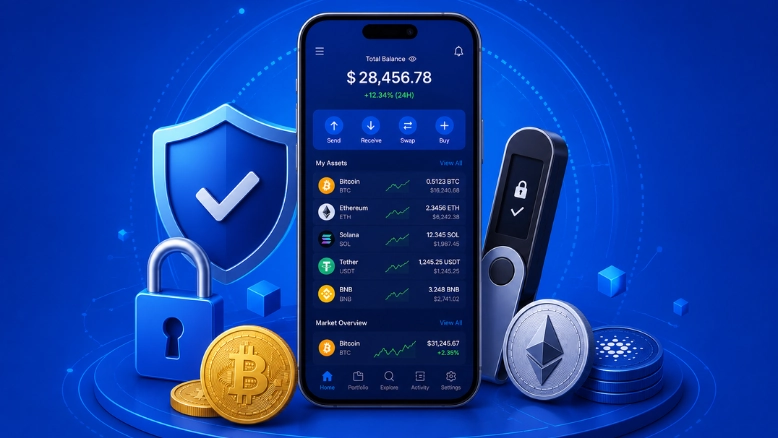
An AI-Integrated Crypto Wallet on Aptos represents a sophisticated fusion of traditional wallet functionality with machine learning capabilities. The throughput capabilities of Aptos exceed 160,000 transactions per second under optimal conditions, with sub-second finality. For broader accessibility, secure enclaves available in modern processors offer reasonable protection with lower cost.
Key Takeaways
- An AI-Integrated Crypto Wallet on Aptos combines artificial intelligence with blockchain technology to deliver smarter transaction management, enhanced security, and personalized user experiences that traditional wallets cannot match.
- Aptos blockchain offers high throughput (160,000+ TPS), low latency, and the Move programming language making it ideal for building next-generation AI-Integrated Crypto Wallet on Aptos solutions.
- Core AI features for an AI-Integrated Crypto Wallet on Aptos include transaction risk analysis, behavioral anomaly detection, smart gas optimization, and portfolio intelligence that adapts to user behavior.
- Security architecture for any AI-Integrated Crypto Wallet on Aptos must address both traditional wallet vulnerabilities and AI-specific risks like model manipulation and data poisoning.
- Successful deployment of an AI-Integrated Crypto Wallet on Aptos requires rigorous smart contract audits, AI accuracy testing, and a continuous improvement strategy post-launch.
The cryptocurrency landscape has undergone a remarkable transformation since its inception. What began as simple key storage mechanisms have evolved into sophisticated financial instruments capable of managing complex portfolios, executing automated strategies, and interfacing with decentralized applications. In 2026, we stand at the convergence of two revolutionary technologies: artificial intelligence and blockchain. Building an AI-Integrated Crypto Wallet on Aptos represents not just a technical achievement but a fundamental shift in how users interact with their digital assets. The concept of an AI-Integrated Crypto Wallet on Aptos brings together machine learning capabilities with blockchain’s security to create something truly revolutionary.
Throughout our 8+ years of blockchain development experience, we have witnessed countless wallet innovations come and go. However, the integration of AI into crypto wallets marks a paradigm shift that promises to redefine user expectations. The Aptos blockchain, with its exceptional performance characteristics and developer-friendly environment, provides the perfect foundation for this next generation of wallet technology.
This comprehensive guide walks you through every aspect of creating an AI-Integrated Crypto Wallet on Aptos from foundational architecture decisions to advanced AI feature implementation. Whether you are a seasoned blockchain developer or a founder exploring this space, you will find actionable insights drawn from real-world development experiences.
Understanding AI-Integrated Crypto Wallet on Aptos Technology
An AI-Integrated Crypto Wallet on Aptos represents a sophisticated fusion of traditional wallet functionality with machine learning capabilities. Unlike conventional wallets that simply store private keys and broadcast transactions, AI-integrated wallets actively analyze user behavior, predict potential risks, optimize transaction parameters, and provide intelligent recommendations all while maintaining the security standards expected from financial applications. When developing an AI-Integrated Crypto Wallet on Aptos, these intelligent features become the core differentiator in a competitive market.
The distinction between traditional wallets, smart wallets, and AI wallets becomes clearer when examining their operational capabilities. Traditional wallets function as passive storage containers, requiring manual intervention for every action. Smart wallets introduced programmable logic through smart contracts, enabling automated actions based on predefined rules. AI wallets take this evolution further by incorporating adaptive intelligence that learns and improves over time.
Wallet Type Comparison
| Feature | Traditional Wallet | Smart Wallet | AI-Integrated Wallet |
|---|---|---|---|
| Transaction Execution | Manual | Rule-Based Automation | Intelligent Automation |
| Security Analysis | None | Static Rules | Dynamic Risk Assessment |
| Gas Optimization | User Configured | Preset Levels | Predictive Optimization |
| User Experience | Technical Interface | Simplified Actions | Conversational AI Assistance |
| Portfolio Management | Manual Tracking | Basic Analytics | AI-Driven Insights |
Real-world applications of AI-integrated wallets span multiple domains. Security-focused implementations of AI-Integrated Crypto Wallet on Aptos use machine learning to detect unusual transaction patterns, potentially preventing unauthorized access before damage occurs. User experience applications leverage natural language processing to allow users to interact with their wallets through conversational interfaces. Portfolio intelligence features in an AI-Integrated Crypto Wallet on Aptos analyze market conditions and user preferences to provide personalized asset management recommendations.
Why Choose Aptos Blockchain for AI Wallet Development
Selecting the right blockchain platform is crucial when building an AI-Integrated Crypto Wallet on Aptos. The Aptos blockchain distinguishes itself through several characteristics that make it exceptionally well-suited for AI-powered applications. Having deployed numerous AI-Integrated Crypto Wallet on Aptos projects across various development phases, we can confidently state that Aptos offers a unique combination of performance, security, and developer experience unmatched by other platforms.
The throughput capabilities of Aptos exceed 160,000 transactions per second under optimal conditions, with sub-second finality. For AI-Integrated Crypto Wallet on Aptos implementations, this performance translates to real-time responsiveness—essential when AI systems need to analyze transactions and provide immediate feedback. Traditional blockchains with longer confirmation times create friction that undermines the seamless experience an AI-Integrated Crypto Wallet on Aptos promises to deliver.
The Move programming language, developed specifically for blockchain applications, introduces a resource-oriented model that prevents entire categories of vulnerabilities. Resources in Move cannot be copied or implicitly discarded, eliminating double-spending bugs at the language level. When building an AI-Integrated Crypto Wallet on Aptos, this safety guarantee extends to the smart contract layer, reducing the attack surface significantly.
Developer Insight: From our experience building AI-Integrated Crypto Wallet on Aptos solutions on multiple chains, Move’s linear type system catches bugs during compilation that would otherwise require extensive testing to discover on EVM-based platforms. This translates to faster development cycles and more secure AI-Integrated Crypto Wallet on Aptos deployments.
Core Architecture of an AI-Integrated Crypto Wallet on Aptos
Architecting an AI-Integrated Crypto Wallet on Aptos requires careful consideration of multiple layers, each with distinct responsibilities and security requirements. The architecture must accommodate real-time AI processing while maintaining the immutability and trustlessness that blockchain applications demand. Every component of your AI-Integrated Crypto Wallet on Aptos should be designed with scalability and security as primary considerations.
The wallet frontend layer encompasses both web and mobile interfaces. Modern users expect seamless experiences across devices, necessitating responsive design principles and platform-specific optimizations. React Native or Flutter frameworks enable code sharing while delivering native performance. The frontend communicates with both the AI orchestration layer and blockchain interaction layer, presenting unified interfaces regardless of the underlying complexity.
The backend and AI orchestration layer serves as the intelligent core of the system. This layer hosts machine learning models, processes transaction data, generates predictions, and coordinates between user requests and blockchain operations. Microservices architecture proves effective here, allowing individual AI components to scale independently based on demand.
Architecture Layer Responsibilities
| Layer | Components | Key Functions |
|---|---|---|
| Frontend Layer | Web App, Mobile App, Browser Extension | User Interface, Input Handling, Display |
| AI Orchestration Layer | ML Models, NLP Engine, Analytics Service | Risk Analysis, Predictions, Recommendations |
| Blockchain Interaction Layer | Aptos SDK, Transaction Builder, Node Connection | Transaction Signing, State Queries, Event Monitoring |
| Security Layer | Key Manager, Encryption Module, MPC Service | Key Protection, Signing Operations, Access Control |
The Aptos blockchain interaction layer handles all communication with the network. This includes transaction construction, signature coordination, state queries, and event monitoring. The Aptos TypeScript SDK provides comprehensive tools for these operations, though production implementations often require custom abstractions to handle edge cases and optimize performance.
Secure key management represents perhaps the most critical architectural decision. Private keys must never be exposed to AI processing components or transmitted over networks. Hardware security modules, secure enclaves, or multi-party computation schemes provide the necessary isolation. When designing an AI-Integrated Crypto Wallet on Aptos, treat key management architecture as foundational—retrofitting security is significantly more difficult than building it correctly from the start.
Build My Crypto Wallet Now!
Turn your dream into reality with a powerful, secure crypto wallet built just for you. Start building now and watch your idea come alive!
Key AI Features to Build into a Crypto Wallet
The intelligence layer of an AI-Integrated Crypto Wallet on Aptos determines its competitive differentiation. Features must deliver tangible value while operating within the constraints of blockchain environments. Based on our extensive development experience building AI-Integrated Crypto Wallet on Aptos solutions, the following capabilities represent the most impactful AI integrations for modern wallet development.
AI-Powered Transaction Risk Analysis: Every transaction submitted through the wallet undergoes real-time analysis. Machine learning models evaluate recipient addresses against known fraud databases, analyze smart contract interactions for potential exploits, and assess transaction parameters against historical patterns. High-risk transactions trigger warnings with explanatory context, allowing users to make informed decisions.
Smart Gas Fee Prediction and Optimization: Network conditions fluctuate continuously, making gas optimization a perpetual challenge. AI models trained on historical transaction data predict optimal gas prices for different priority levels. The system learns user preferences—some prioritize speed, others cost savings—and automatically adjusts recommendations accordingly.
Behavioral Anomaly Detection: By establishing baseline patterns for each user, the AI can identify anomalous activity that might indicate account compromise. Unusual transaction amounts, new recipient addresses, or activity at unexpected times trigger additional verification steps. This proactive security layer operates continuously without requiring user configuration.
Portfolio Intelligence and Asset Recommendations: Advanced AI-Integrated Crypto Wallets on Aptos provide portfolio analysis that goes beyond simple balance tracking. Models analyze asset correlations, assess risk exposure, and generate personalized recommendations based on stated goals and observed behavior. These insights transform Tron wallets from passive storage into active financial management tools.
Designing the Wallet User Experience
User experience design for AI-integrated wallets presents unique challenges. The interface must communicate AI capabilities without overwhelming users, provide transparency into AI decision-making, and maintain simplicity despite increased functionality. When building an AI-Integrated Crypto Wallet on Aptos, our design philosophy emphasizes progressive disclosure—basic users see streamlined interfaces while advanced users can access detailed AI insights. This approach ensures your AI-Integrated Crypto Wallet on Aptos appeals to both novice and experienced cryptocurrency users.
AI-driven onboarding transforms the typically intimidating wallet setup process. Natural language interfaces in an AI-Integrated Crypto Wallet on Aptos guide users through security configurations, explaining concepts in accessible terms. Instead of presenting technical options, the AI-Integrated Crypto Wallet on Aptos asks about user goals and preferences, then configures the wallet accordingly. This approach dramatically reduces abandonment rates during onboarding.
The conversational interface paradigm represents a significant departure from traditional wallet designs. Users can interact with their AI-Integrated Crypto Wallet on Aptos using natural language commands: “Send 10 APT to my brother” or “What’s the safest way to swap my tokens?” The AI interprets intent, handles technical complexity, and requests confirmation before executing actions.
UX Principle: Every AI recommendation should include a brief explanation of the reasoning. Users who understand why the AI suggests something develop trust faster and make better decisions when the AI’s confidence is low.
Smart Contract Development on Aptos Using Move Language
Smart contracts form the on-chain backbone of any AI-Integrated Crypto Wallet on Aptos. The Move language introduces concepts that differ significantly from Solidity, requiring developers to adjust their mental models. Resources, abilities, and the module system work together to create provably secure contract logic essential for every AI-Integrated Crypto Wallet on Aptos implementation.
Wallet-related Move modules typically handle account management, permission delegation, and automated execution triggers. Account abstraction patterns allow wallets to define custom authentication logic, enabling features like multi-signature requirements, spending limits, and time-locked transactions. These on-chain rules complement off-chain AI processing, creating a defense-in-depth security model.
Consider a module implementing AI-suggested spending limits. The contract stores user-defined limits and tracks spending within time windows. When AI analysis suggests tightening limits due to detected risks, users can approve updates through the wallet interface. The contract enforces these limits regardless of frontend compromise.[1]
module wallet::spending_limits {
    use std::signer;
    use aptos_framework::timestamp;

    struct SpendingLimit has key {
        daily_limit: u64,
        spent_today: u64,
        last_reset: u64,
    }

    public entry fun initialize_limit(account: &signer, limit: u64) {
        let addr = signer::address_of(account);
        move_to(account, SpendingLimit {
            daily_limit: limit,
            spent_today: 0,
            last_reset: timestamp::now_seconds(),
        });
    }

    public fun check_and_update_limit(addr: address, amount: u64): bool
    acquires SpendingLimit {
        let limit = borrow_global_mut<SpendingLimit>(addr);
        let now = timestamp::now_seconds();

        // Reset daily counter if new day
        if (now - limit.last_reset > 86400) {
            limit.spent_today = 0;
            limit.last_reset = now;
        };

        if (limit.spent_today + amount <= limit.daily_limit) {
            limit.spent_today = limit.spent_today + amount;
            true
        } else {
            false
        }
    }
}
This example demonstrates how on-chain logic enforces boundaries while allowing flexibility. The AI layer can recommend limit adjustments, but the blockchain guarantees enforcement regardless of AI availability or compromise.
Integrating AI Models into the Wallet Backend
The integration between AI systems and wallet backends requires careful architectural decisions. The choice between traditional machine learning models and large language models depends on specific feature requirements. Our experience building AI-Integrated Crypto Wallet on Aptos solutions has revealed that hybrid approaches often deliver the best results for complex wallet functionality.
Traditional ML models excel at quantitative tasks: fraud detection, price prediction, and anomaly identification. These models process structured data efficiently and provide deterministic outputs suitable for automated decision-making. Random forests, gradient boosting, and neural networks form the foundation of most production risk assessment systems.
Large language models enable natural language interfaces and complex reasoning tasks. When users ask questions about their portfolio or request explanations for AI recommendations, LLMs generate human-readable responses. However, LLMs require additional safeguards to prevent prompt injection attacks that might manipulate wallet behavior.
AI Model Selection Guide
| Use Case | Recommended Model Type | Key Considerations |
|---|---|---|
| Transaction Risk Scoring | Gradient Boosting / Neural Network | Low latency, interpretable features |
| Gas Price Prediction | Time Series Models (LSTM) | Sequential data patterns |
| Natural Language Interface | Large Language Model | Prompt security, output validation |
| Behavioral Anomaly Detection | Isolation Forest / Autoencoder | Unsupervised learning for new patterns |
| Portfolio Optimization | Reinforcement Learning | Dynamic strategy adaptation |
Off-chain AI processing with on-chain validation creates a secure architecture. AI models analyze data and generate recommendations off-chain, where computational resources are abundant. Critical actions require on-chain confirmation through smart contracts that verify basic sanity checks. This pattern leverages AI capabilities while maintaining blockchain security guarantees.
Secure API communication between AI services and wallet components demands encryption, authentication, and rate limiting. API keys should rotate regularly, and all communications must use TLS. Consider implementing request signing to prevent replay attacks and ensure message integrity.
Security Considerations for AI-Integrated Wallets
Security architecture for an AI-Integrated Crypto Wallet on Aptos must address both traditional cryptocurrency vulnerabilities and emerging AI-specific threats. The attack surface expands with AI integration, requiring comprehensive threat modeling and defense strategies. Building a secure AI-Integrated Crypto Wallet on Aptos demands expertise across multiple security domains and continuous vigilance against evolving threats.
Private key protection remains paramount. Keys should never exist in plaintext memory longer than necessary for signing operations. Hardware security modules (HSMs) provide the strongest protection, storing keys in tamper-resistant hardware. For broader accessibility, secure enclaves available in modern processors offer reasonable protection with lower cost.
AI model manipulation represents a new threat category. Adversaries might attempt to poison training data, causing models to misclassify malicious transactions as safe. Regular model retraining with verified data, anomaly detection on model inputs, and human review of edge cases mitigate these risks. Some implementations maintain multiple models trained on different data sources, requiring consensus before taking action.
Multi-party computation (MPC) protocols enable distributed key management without single points of failure. Key shares distributed across multiple servers or devices reconstruct only during signing operations, never existing as complete keys. This approach prevents both external attackers and insider threats from accessing user funds.
AI Wallet Development Lifecycle
Complete Development Lifecycle for AI-Integrated Crypto Wallet on Aptos
Requirements & Planning
Architecture Design
Smart Contract Dev
AI Model Training
Backend Integration
Frontend Development
Security Audits
Testnet Deployment
Mainnet Launch
Compliance and Privacy Challenges
Building an AI-Integrated Crypto Wallet on Aptos requires navigating complex regulatory landscapes while respecting user privacy expectations. The tension between AI personalization and privacy preservation demands thoughtful architectural decisions and transparent communication with users. Every AI-Integrated Crypto Wallet on Aptos must balance powerful features with regulatory compliance across multiple jurisdictions.
User data handling policies must clearly articulate what information the AI processes, how long it’s retained, and who can access it. GDPR, CCPA, and emerging AI regulations impose specific requirements around data minimization, purpose limitation, and user rights. Implementing privacy-by-design principles from the start proves far easier than retrofitting compliance.
Regulatory considerations vary significantly by jurisdiction. Some regions treat AI-driven financial recommendations as regulated advice, requiring specific licenses. Others focus on cryptocurrency aspects, imposing KYC/AML requirements that conflict with blockchain’s pseudonymous nature. Legal counsel familiar with both AI and cryptocurrency regulations proves invaluable during planning phases.
Balancing personalization with privacy preservation remains an ongoing challenge. Federated learning techniques allow models to improve from user data without centralizing sensitive information. Differential privacy adds mathematical guarantees against re-identification. These approaches enable the benefits of AI personalization while minimizing privacy risks.
Testing and Performance Optimization
Comprehensive testing ensures that your AI-Integrated Crypto Wallet on Aptos performs reliably under real-world conditions. Testing encompasses smart contract security, AI model accuracy, and system performance under load. When launching an AI-Integrated Crypto Wallet on Aptos, cutting corners on testing leads to costly incidents post-launch and damages user trust irreparably.
Smart contract audits on Aptos should engage firms with specific Move language expertise. The resource-oriented programming model introduces unique vulnerability patterns that generic auditors might miss. Formal verification tools available for Move provide mathematical proofs of contract correctness for critical logic paths.
AI accuracy testing evaluates model performance across diverse scenarios. False positive rates matter significantly for security features—too many false alarms train users to ignore warnings. Backtesting against historical data establishes baseline performance, while ongoing monitoring catches model drift as blockchain conditions evolve.
Testing Framework Overview
| Testing Type | Focus Areas | Tools & Methods |
|---|---|---|
| Smart Contract Audit | Logic flaws, access control, overflow | Move Prover, Manual Review |
| AI Model Validation | Accuracy, false positives, bias | Cross-validation, A/B Testing |
| Integration Testing | API communication, data flow | End-to-end test suites |
| Load Testing | Throughput, latency, scaling | Locust, k6, Custom simulators |
| Security Penetration | Vulnerabilities, attack vectors | Red team exercises |
Load testing simulates high-volume transaction periods. Cryptocurrency markets experience extreme volatility events where transaction volumes spike dramatically. Your AI-Integrated Crypto Wallet on Aptos must maintain responsiveness when users most need it—during market chaos when decisions matter most.
Deployment and Mainnet Launch Strategy
Transitioning from testnet to mainnet requires methodical preparation and risk management. A phased rollout approach limits exposure while gathering real-world performance data. Our experience deploying complex AI-Integrated Crypto Wallet on Aptos applications has refined this process significantly, enabling smoother launches with fewer post-deployment issues.
Wallet deployment on Aptos mainnet begins with smart contract deployment and verification. Publishing source code and verification proofs builds community trust. Initial launch should limit functionality—perhaps disabling advanced AI features until baseline stability is confirmed. Feature flags enable gradual capability expansion without redeployment.
Monitoring AI behavior post-launch proves crucial. Real user interactions differ from test scenarios in unpredictable ways. Comprehensive logging, alerting thresholds, and rapid response procedures ensure quick identification and resolution of issues. Dashboard visualizations help teams understand AI decision patterns and identify concerning trends.
Bug bounty programs incentivize security researchers to find vulnerabilities before malicious actors do. Programs should cover both smart contract and AI components, with clear scope definitions and fair reward structures. Many critical vulnerabilities in production systems were discovered through bug bounties rather than internal testing.
Monetization Models for AI-Integrated Crypto Wallets
Sustainable business models ensure continued development and support for your AI-Integrated Crypto Wallet on Aptos. Several monetization approaches have proven effective in the market, each with distinct trade-offs regarding user acquisition and revenue potential. Choosing the right model for your AI-Integrated Crypto Wallet on Aptos depends on target market and competitive positioning.
Freemium models offer basic wallet functionality at no cost while reserving advanced AI features for paying subscribers. This approach maximizes user acquisition while monetizing power users who derive significant value from AI-Integrated Crypto Wallet on Aptos capabilities. Conversion optimization focuses on demonstrating the AI value proposition during the free tier experience of any AI-Integrated Crypto Wallet on Aptos implementation.
Transaction-based revenue models charge small fees on transactions processed through the AI-Integrated Crypto Wallet on Aptos. This aligns incentives—the wallet earns more when users transact more—but faces competitive pressure from fee-free alternatives. Bundling transaction fees with value-added services like optimal execution or MEV protection in your AI-Integrated Crypto Wallet on Aptos justifies premium pricing.
Enterprise integrations offer substantial revenue opportunities for AI-Integrated Crypto Wallet on Aptos developers. DeFi protocols, exchanges, and institutional players seek wallet solutions that integrate with their platforms. White-label licensing allows other organizations to deploy customized versions of your AI-Integrated Crypto Wallet on Aptos under their branding, creating recurring revenue streams.
Future Trends: AI and Aptos Wallets Beyond 2026
The trajectory of AI-integrated wallets points toward increasingly autonomous and intelligent systems. Understanding emerging trends helps position current development efforts for long-term relevance. Developers building AI-Integrated Crypto Wallet on Aptos solutions today should anticipate these innovations and design architectures that can evolve. The innovations appearing on the horizon promise to further transform how users interact with blockchain technology through their AI-Integrated Crypto Wallet on Aptos.
Autonomous wallet agents represent the next evolution of AI-Integrated Crypto Wallet on Aptos technology. These AI systems actively manage portfolios, execute strategies, and respond to market conditions without human intervention. Users define goals and risk parameters for their AI-Integrated Crypto Wallet on Aptos; the agent handles everything else. This shift demands exceptional reliability and transparency in AI decision-making within every AI-Integrated Crypto Wallet on Aptos implementation.
AI-driven DAO treasury wallets extend AI-Integrated Crypto Wallet on Aptos concepts to organizational finance. Decentralized autonomous organizations manage significant treasuries that could benefit from AI optimization provided by an AI-Integrated Crypto Wallet on Aptos solution. Governance tokens might grant holders input on AI strategy parameters, creating new forms of collective financial management.
Self-learning wallets with advanced account abstraction represent the convergence of multiple technological threads in AI-Integrated Crypto Wallet on Aptos development. Wallets that improve through interaction, adapting to individual user patterns while benefiting from aggregated learning across the user base. Account abstraction on Aptos enables the flexible authentication and authorization models these advanced AI-Integrated Crypto Wallet on Aptos systems require.
Conclusion: Building the Next Generation of Crypto Wallets
Creating an AI-Integrated Crypto Wallet on Aptos represents a significant technical and strategic undertaking. The combination of Aptos blockchain capabilities with sophisticated AI creates opportunities for wallet experiences that were simply impossible just a few years ago. Success in building an AI-Integrated Crypto Wallet on Aptos requires expertise across multiple domains blockchain development, machine learning, security engineering, and user experience design.
The strategic advantages of combining AI with Aptos are substantial. High transaction throughput enables real-time AI responsiveness. The Move language provides security guarantees that complement AI-driven risk management. The growing Aptos ecosystem offers integration opportunities with DeFi protocols, NFT marketplaces, and other applications.
For founders and developers embarking on this journey, we offer these key takeaways: Start with robust security architecture—it’s the foundation everything else builds upon. Design AI features that solve real problems users face today rather than imagined future needs. Plan for continuous improvement because both AI models and blockchain technology evolve rapidly. Build teams with diverse expertise or partner with experienced development firms who can fill capability gaps.
The future of cryptocurrency wallets is intelligent, adaptive, and user-centric. Those who build AI-Integrated Crypto Wallet on Aptos today position themselves at the forefront of this transformation. The technical challenges of creating an AI-Integrated Crypto Wallet on Aptos are significant, but the potential to reshape how millions of people interact with digital assets makes the effort worthwhile.
As the blockchain industry matures and AI capabilities advance, the integration of these technologies will become standard rather than exceptional. Early movers who establish robust, user-friendly AI wallet solutions will capture market share and mindshare that proves difficult for later entrants to displace. The time to build is now.
Quick Reference Summary for AI-Integrated Crypto Wallet on Aptos
What: AI-Integrated Crypto Wallet on Aptos combines blockchain wallet functionality with artificial intelligence for smarter, safer, and more personalized asset management.
Why Aptos: High throughput (160K+ TPS), Move language security, sub-second finality, and active developer ecosystem make Aptos ideal for AI-Integrated Crypto Wallet on Aptos development.
Core AI Features: Transaction risk analysis, gas optimization, behavioral anomaly detection, and portfolio intelligence are essential for any AI-Integrated Crypto Wallet on Aptos.
Security Priority: Hardware security modules, MPC protocols, AI model protection, and comprehensive audits are mandatory for AI-Integrated Crypto Wallet on Aptos security.
Success Factors: Strong architecture, rigorous testing, phased deployment, and continuous improvement based on real-world feedback ensure AI-Integrated Crypto Wallet on Aptos success.
Frequently Asked Questions
Q1.What is an AI-integrated crypto wallet on Aptos?
An AI-integrated crypto wallet on Aptos combines blockchain wallet functionality with AI features like smart insights, fraud detection, and automated transaction assistance.
Q2.Why is Aptos suitable for AI-powered crypto wallets?
Aptos offers high throughput, low latency, and the Move programming language, making it ideal for secure and scalable AI-enabled wallet applications.
Q3.What AI features can be added to a crypto wallet?
AI features include transaction risk analysis, portfolio insights, gas fee optimization, fraud detection, and conversational AI assistants.
Q4.Is AI processing done on-chain or off-chain?
Most AI processing is done off-chain for performance reasons, while critical validations and transactions are securely executed on the Aptos blockchain.
Q5.Which programming language is used for wallet smart contracts on Aptos?
Aptos smart contracts are written in the Move programming language, designed for asset safety and resource-oriented security.
Q6.How secure is an AI-integrated crypto wallet?
Security depends on private key management, secure signing, audited Move contracts, and protecting AI APIs from manipulation or data leaks.
Q7.Can AI-integrated wallets support DeFi on Aptos?
Yes, they can integrate with Aptos-based DeFi protocols, offering AI-driven yield analysis, risk scoring, and automated DeFi interactions.
Q8.What compliance challenges exist for AI crypto wallets?
Challenges include user data privacy, AI transparency, and meeting global crypto regulations while maintaining non-custodial control.
Q9.How can AI improve user experience in crypto wallets?
AI simplifies onboarding, explains transactions in natural language, predicts user intent, and reduces errors for non-technical users.
Q10.Are AI-integrated wallets the future of Web3?
Yes, AI-powered wallets are expected to become standard by 2026, enabling autonomous finance, smarter security, and mass adoption.
Explore Services
Related Services
Reviewed by

Aman Vaths
Founder of Nadcab Labs
Aman Vaths is the Founder & CTO of Nadcab Labs, a global digital engineering company delivering enterprise-grade solutions across AI, Web3, Blockchain, Big Data, Cloud, Cybersecurity, and Modern Application Development. With deep technical leadership and product innovation experience, Aman has positioned Nadcab Labs as one of the most advanced engineering companies driving the next era of intelligent, secure, and scalable software systems. Under his leadership, Nadcab Labs has built 2,000+ global projects across sectors including fintech, banking, healthcare, real estate, logistics, gaming, manufacturing, and next-generation DePIN networks. Aman’s strength lies in architecting high-performance systems, end-to-end platform engineering, and designing enterprise solutions that operate at global scale.