Ai Overview
Traditional certificate verification presents structural challenges that make the process inefficient, unreliable, and vulnerable to exploitation. APJ Abdul Kalam Technical University (AKTU) in Lucknow implemented blockchain technology during its 2025 convocation, awarding approximately 50,000 degrees using a decentralized, tamper-proof system.
Key Takeaways
- The global blockchain in education market was valued at approximately 0.35 billion USD in 2024 and is projected to reach 9.39 billion USD by 2033, growing at a CAGR of 43.94 percent.
- Blockchain credential verification eliminates fake degrees and credential fraud by creating tamper-proof, cryptographically signed digital certificates that employers can instantly authenticate.
- MIT, the University of Nicosia, and Malta’s national education system have already implemented blockchain-based digital diploma programs, demonstrating real-world viability.
- Smart contracts automate certificate issuance, revocation, and skill verification, reducing administrative overhead and manual processing by up to 40 percent.
- Blockchain enables lifelong learning portfolios where students maintain verifiable records of all credentials, micro-certifications, and skills across institutions and borders.
- Approximately 91.3 percent of educational startups focused on higher education are adopting blockchain technology for secure document management and credential verification.
- Decentralized storage of academic records ensures that certificates remain accessible and verifiable even if the issuing institution closes or changes its policies.
- Integration of AI with blockchain is enabling automated skill matching, personalized learning pathways, and intelligent credential analysis for career development.
Education is rapidly moving towards digital platforms, making certificate verification one of the most pressing challenges facing institutions, employers, and students worldwide. Fake degrees, credential fraud, and lengthy verification processes have created a trust deficit that traditional systems cannot resolve. Blockchain technology offers a transformative solution by providing secure, transparent, and tamper-proof verification of educational certificates, fundamentally changing how academic credentials are issued, stored, and authenticated across the globe.
The traditional approach to verifying educational documents involves contacting issuing institutions, waiting for manual confirmation, and conducting time-consuming background checks. This outdated process delays job placements, academic admissions, and international mobility. With global education spending projected to reach 7.5 trillion USD by 2025 and the blockchain in education market growing at over 43 percent annually, the convergence of blockchain’s core features with educational infrastructure represents a paradigm shift in how we secure and verify academic achievements.
This comprehensive guide explores how blockchain in education is addressing credential fraud, enabling instant verification, and building the foundation for a globally recognized, secure certification ecosystem. Drawing on real-world implementations from leading institutions and our extensive experience in developing blockchain systems, we provide actionable insights for educational institutions, government agencies, and businesses ready to embrace this revolution.
The Challenges of Traditional Certificate Verification
Traditional certificate verification presents structural challenges that make the process inefficient, unreliable, and vulnerable to exploitation. Understanding these pain points clarifies why blockchain credential verification is becoming essential for the education sector.
Fake Certificates and Credential Fraud
One of the most damaging issues in education is the prevalence of counterfeit degrees. Individuals present fake certificates that appear authentic, making it extremely difficult for employers and institutions to verify their legitimacy. Global counterfeiting of academic credentials has grown into a multi-billion dollar problem, undermining the value of genuine qualifications and eroding trust across the entire hiring ecosystem. Without a reliable system for blockchain security and verification, institutions remain exposed to sophisticated fraud operations.
Time-Consuming Verification Processes
The conventional verification workflow requires multiple steps including contacting issuing institutions, waiting for manual responses, and cross-checking physical records. This lengthy process significantly delays job placements and academic admissions. Even in 2025, many institutions still rely on postal mail, phone calls, and fax systems to send and receive transcripts, creating bottlenecks that frustrate all stakeholders involved.
Vulnerable Centralized Databases
Centralized databases used by educational institutions to store certificates are inherently vulnerable to cyberattacks, increasing the risk of unauthorized access, data breaches, and manipulation of academic records. When a single point of failure controls all credential data, the entire system becomes a target. This contrasts sharply with blockchain’s decentralized architecture where data is distributed across multiple nodes, making unauthorized modifications virtually impossible.
Lost or Damaged Physical Certificates
Paper-based academic records deteriorate over time and can be lost to natural disasters, institutional closures, or simple negligence. When physical certificates are damaged or lost, the reissuance process is complex, expensive, and sometimes impossible if the issuing institution no longer exists. This creates permanent gaps in individuals’ educational records that can severely impact career progression and further academic pursuits.
Global Recognition and Cross-Border Challenges
Different countries maintain varying verification standards and accreditation frameworks, making it extremely difficult for students and professionals to prove their qualifications internationally. A degree earned in India may require weeks of authentication before being recognized in Europe or the United States. This lack of standardized verification directly impacts the interoperability needed for a truly global education ecosystem.
| Challenge | Traditional Approach | Blockchain Solution | Impact |
|---|---|---|---|
| Credential Fraud | Manual stamps, signatures, phone verification | Cryptographically signed, immutable records | Near-complete fraud elimination |
| Verification Speed | Days to weeks of manual checks | Instant digital verification | Seconds instead of weeks |
| Data Security | Centralized databases, single point of failure | Decentralized, encrypted storage across nodes | Eliminates data breach risk |
| Record Permanence | Paper records, prone to loss and damage | Permanent, tamper-proof digital records | Lifelong accessible credentials |
| Global Recognition | Varying standards, apostille requirements | Standardized, universally verifiable format | Seamless cross-border verification |
| Administrative Burden | Manual processing, extensive paperwork | Automated smart contract workflows | 40 percent cost reduction |
How Blockchain Transforms Certificate Verification
Blockchain technology fundamentally reimagines how educational certificates are created, stored, and verified. By leveraging the core principles of decentralization, immutability, and cryptographic hashing, blockchain creates a certificate verification system that is inherently trustworthy, globally accessible, and resistant to tampering.
Decentralization for Enhanced Security
Blockchain operates on a peer-to-peer network where data is stored across multiple nodes rather than a single centralized server. This means that educational certificates are not controlled by any single entity. Even if one node is compromised, the certificate data remains intact and accessible through other nodes in the network. This decentralized approach to secure educational documents with blockchain provides a level of resilience that centralized databases simply cannot offer.
Immutability for Fraud Prevention
Once a certificate is recorded on the blockchain through block validation, it cannot be altered, deleted, or forged. Each certificate entry is protected by cryptographic signatures and linked to previous entries in the chain, creating an unbreakable sequence of verified records. This immutable ledger guarantees that the certificate you verify today is exactly the same as the one issued years ago, eliminating any possibility of post-issuance tampering.
Instant and Hassle-Free Verification
Employers and institutions can verify credentials instantly by accessing the blockchain network. Cryptographically signed digital certificates eliminate the need for intermediaries, phone calls to registrars, or weeks-long waiting periods. The entire e-certificate blockchain verification process can be completed in seconds by uploading a digital file or pasting a verification link into a portal, making the process seamless for recruiters, admissions officers, and government agencies conducting background checks.
Secure Data Storage with Cryptographic Hashing
Blockchain uses cryptographic hash functions to store certificate data securely. Each certificate generates a unique hash, which serves as a digital fingerprint. Only authorized entities such as employers, universities, or government agencies can access and verify the complete credential details. The actual certificate information does not reside on the blockchain itself. Instead, a timestamped transaction hash confirms that the issuing institution created the digital record, ensuring both privacy and verifiability.
Smart Contracts for Automated Credential Management
Blockchain enables smart contracts that automate the entire credential lifecycle, from issuance to revocation. When a student completes a program and meets all graduation requirements, a smart contract can automatically issue the digital certificate without manual intervention. If a credential needs to be revoked due to academic misconduct, the smart contract handles that process transparently. This automation reduces administrative overhead and ensures consistent, error-free credential management.
Permanent and Accessible Education Records
Blockchain ensures that students have lifelong access to their verified academic records through decentralized storage networks. These records remain intact and retrievable even if an educational institution closes, merges, or changes its policies. This permanence is particularly valuable for refugees and disaster victims whose original institutions may no longer exist, giving them the ability to prove their qualifications in any country at any time.
How Blockchain Education Credential Verification Works
Step 1: Issuance
Institution creates a digital certificate and records its hash on the blockchain
Step 2: Signing
Certificate is cryptographically signed using the institution’s private key
Step 3: Ownership
Student receives credential in their digital wallet with full ownership control
Step 4: Verification
Employers instantly verify authenticity via blockchain portal in seconds
Top Use Cases of Blockchain in Education
Blockchain applications in education extend far beyond simple certificate verification. The technology is reshaping how academic institutions operate, how students learn, and how employers evaluate candidates. Here are the most impactful blockchain use cases transforming the education sector.
1. Digital Degree and Certificate Verification
The most immediate application of blockchain in education is the issuance of digital blockchain verified certificates. Instead of paper diplomas that can be forged, institutions issue cryptographically signed digital credentials stored on a distributed ledger. There is no middleman required to verify academic records such as certificates, diplomas, or transcripts. Blockchain education credentials verification can be accomplished with a few clicks, making the process accessible to anyone with internet access, anywhere in the world.
2. Skill Verification System Using Blockchain
Beyond traditional degrees, blockchain enables granular skill verification through digital badges and micro-credentials. When students complete specific courses, workshops, or competency assessments, they earn verifiable digital badges stored on the blockchain. This skill verification system using blockchain allows learners to maintain a comprehensive, tamper-proof portfolio of their capabilities that goes beyond what a single diploma can communicate. Employers benefit from this detailed view of a candidate’s competencies, enabling better skill-to-role matching across industries.
3. Secure Student Records Management
Universities worldwide are recognizing that blockchain is the ideal instrument for storing, tracking, and managing students’ academic records securely. By leveraging private key and public key cryptography, students gain complete control over their records because the data is not stored on university servers alone but distributed across the blockchain network. This learner-centric approach enhances security, smooths administrative processes, and drastically increases accessibility to academic records.
4. E-Transcript Automation and Verification
Producing and verifying transcripts has historically been one of the most labor-intensive tasks for academic institutions. Each entry must be manually cross-checked for accuracy, generating mountains of paperwork. Blockchain-based e-transcript systems can eliminate this burden by providing tamper-resistant storage of grades and academic credits. Distributed ledger solutions easily catch fraudulent claims of unearned academic credits while giving recruiters a simplified verification process that saves significant time and money.
5. Blockchain for Academic Certificate Verification in India and Globally
Countries like India, where credential fraud is particularly prevalent due to the scale of the education system, are actively exploring blockchain for academic certificate verification. The Dr. APJ Abdul Kalam Technical University (AKTU) in Lucknow implemented blockchain technology during its 2025 convocation, awarding approximately 50,000 degrees using a decentralized, tamper-proof system. This initiative streamlined the storage and authentication of academic records, benefiting students, institutions, and employers across the country. Such implementations demonstrate how blockchain academic credentials can scale to serve millions.
6. Copyright Protection for Research and Educational Content
Plagiarism remains a severe problem in academia, where years of research effort can be compromised when work is stolen or copied. Blockchain-based solutions regulate how copyrighted content is distributed online by securely storing authorship data in an immutable ledger. Once saved, the data cannot be manually altered, and the chain tracks exactly how content is used. This makes it feasible to track online usage, establish proof of ownership, and protect intellectual property rights across the academic ecosystem.
7. Automated Learning Platforms via Smart Contracts
Teachers and institutions can create digital agreements with students using blockchain smart contracts that outline requirements, instructions, deadlines, and grading criteria. These smart contracts help with course management and lead to personalized learning pathways. The decentralized governance and secured data empower students to take a self-sufficient approach to education. Automated learning platforms through blockchain increase efficiency, flexibility, and create a more inclusive educational experience for learners worldwide.
8. Cross-Border Payment and Fee Management
International students often face complex currency conversion processes and high intermediary fees when paying tuition. Blockchain-based cross-border payment systems enable near-instant fee transactions without currency conversion delays or excessive charges. Educational institutions can also use DeFi solutions for lending, borrowing, and managing financial assets, providing students with new options for funding their education. Several universities including the University of Nicosia and King’s College in New York already accept cryptocurrency payments.
9. Decentralized Identity for Student Authentication
Blockchain-powered identity management systems create secure, self-sovereign digital identities for students. Rather than relying on centralized databases that are vulnerable to breaches, students control their own identity credentials. This approach ensures seamless authentication across institutions, prevents identity fraud in examination processes, and enables secure verification of government-issued certificates. The question of how blockchain enhances the verification of government-issued certificates is answered through this decentralized identity framework.
10. Scholarship and Research Fund Distribution
Blockchain and smart contracts can automate the distribution of scholarships and research grants, releasing funds automatically when predefined conditions are met, such as enrollment confirmation or maintaining a required GPA. Every transaction is documented on a transparent ledger, allowing students to track their funding in real time. This reduces anxiety and ensures donors and sponsors have confidence their contributions are used as intended, minimizing the risk of mismanagement or fraud in educational financing.
| Use Case | Key Technology | Stakeholders | Primary Benefit |
|---|---|---|---|
| Degree Verification | Cryptographic signing, distributed ledger | Universities, Employers, Students | Instant, tamper-proof authentication |
| Skill Verification | Digital badges, micro-credentials | Learners, Training Providers, HR Teams | Granular competency tracking |
| Student Records | Permissioned blockchain, encryption | Institutions, Students, Registrars | Learner-centric data ownership |
| E-Transcripts | Smart contracts, automated workflows | Schools, Transfer Students, Employers | Eliminates manual processing |
| Copyright Protection | Immutable content registration | Researchers, Publishers, Educators | Provable authorship and ownership |
| Cross-Border Payments | Cryptocurrency, DeFi protocols | International Students, Universities | Fast, low-cost fee transfers |
| Decentralized Identity | Self-sovereign identity, zero-knowledge proofs | Students, Government, Examiners | Fraud-proof authentication |
| Scholarship Distribution | Smart contracts, transparent ledger | Donors, Students, Institutions | Automated, transparent funding |
Real-World Implementations of Blockchain in Education
Blockchain credential verification is not a theoretical concept. Leading universities, governments, and technology companies have already deployed operational blockchain-based education systems that serve as models for global adoption.
MIT Digital Diplomas (Blockcerts)
The Massachusetts Institute of Technology became one of the first universities globally to issue blockchain-based digital diplomas through the Blockcerts Wallet application. The system uses Bitcoin’s blockchain to create recipient-owned virtual credentials that graduates can share with employers and institutions instantly. MIT’s Registrar developed this in partnership with Learning Machine, creating an open-source standard that has since been adopted by institutions including Southern New Hampshire University and East Coast Polytechnic Institute University. The MIT Digital Credentials Consortium has grown into an international network of universities developing shared standards for digital academic credentials.
University of Nicosia Blockchain Certificates
The University of Nicosia in Cyprus was a pioneer in using blockchain for academic certification. The university issues blockchain-verified certificates for all its programs, ensuring complete transparency and trust. As one of the earliest institutions to accept cryptocurrency payments and offer blockchain-focused degree programs, the University of Nicosia has established itself as a leading blockchain credentials website for university credentialing that other institutions benchmark against.
AKTU India: Blockchain at Scale
Dr. APJ Abdul Kalam Technical University (AKTU) in Lucknow, India, implemented blockchain technology during its September 2025 convocation, awarding approximately 50,000 degrees to engineering and management graduates using a decentralized, tamper-proof system. This large-scale deployment demonstrates that blockchain academic credentials in India can work at the volume needed to serve the country’s massive higher education system, streamlining credential authentication for students, institutions, and employers.
Malta’s National Blockchain Education System
The Government of Malta has implemented blockchain-based certification across its national education system, ensuring that all degrees and qualifications are verifiable and immutable. As the first country to create a comprehensive national framework for blockchain-verified educational credentials, Malta has established a model for how governments can systematically adopt this technology to protect the integrity of their entire education ecosystem.
Harvard and UC Berkeley Initiatives
Harvard University and UC Berkeley are actively exploring blockchain solutions for academic records and secure credential issuance. Harvard’s involvement in blockchain research, along with its exploration of digital credential systems, underscores how even the most established institutions recognize the need for modernized verification infrastructure. These initiatives signal to the broader higher education community that blockchain adoption is a strategic priority rather than an experimental curiosity.
Global Blockchain Education Adoption Highlights
50,000+
Blockchain degrees issued by AKTU India (2025)
91.3%
Higher ed startups adopting blockchain
40%
Increase in blockchain credential adoption (3 years)
$9.39B
Projected market size by 2033
Key Benefits of Blockchain in Education
Implementing blockchain in education delivers measurable benefits of blockchain technology across multiple dimensions of academic operations. These advantages compound over time as more institutions join the ecosystem.
Elimination of Credential Fraud
Blockchain’s immutable nature makes it virtually impossible to create, alter, or forge academic credentials. Every college certificate issued on the blockchain carries a unique cryptographic signature that can be verified against the distributed ledger. This eliminates the multi-billion dollar credential fraud industry and restores trust in academic qualifications across all sectors.
Student Data Ownership and Privacy
Blockchain shifts control of academic data from institutions to students. Through secure blockchain identity systems, learners have complete ownership of their credentials and can choose exactly who to share them with, when, and for how long. This self-sovereign approach to blockchain identification eliminates the need to rely on third parties for credential access and protects student privacy in compliance with data protection regulations.
Reduced Administrative Costs
By automating verification, issuance, and record-keeping processes, blockchain significantly reduces the administrative burden on educational institutions. Schools require less office space, fewer staff members for records management, and less storage infrastructure. Blockchain technology reportedly reduces operational costs by approximately 5 percent while eliminating the expensive manual processes that traditionally consume institutional resources.
Global Portability and Standardization
Blockchain enables standardized credential formats that are recognized globally, eliminating the complex apostille and authentication processes currently required for international credential recognition. Students moving between countries can have their qualifications verified instantly, regardless of where they were earned. This portability is especially valuable for professionals seeking international career opportunities and institutions evaluating transfer credits from foreign universities.
Lifelong Learning Portfolios
Blockchain creates the infrastructure for decentralized learning portfolios where students maintain verifiable records of all their skills, courses, and certifications throughout their lifetime. These portfolios encompass formal degrees, micro-credentials, professional development certificates, and competency badges. Employers can access a comprehensive, verified view of a candidate’s entire learning journey rather than relying solely on a traditional degree from a single institution.
📊 Blockchain Education Benefits by the Numbers
43.94%
Annual market growth rate (CAGR)
5%
Operational cost reduction for institutions
Seconds
Verification time vs weeks traditionally
40%
North America market share in 2025
How a Certificate Verification System Using Blockchain Works
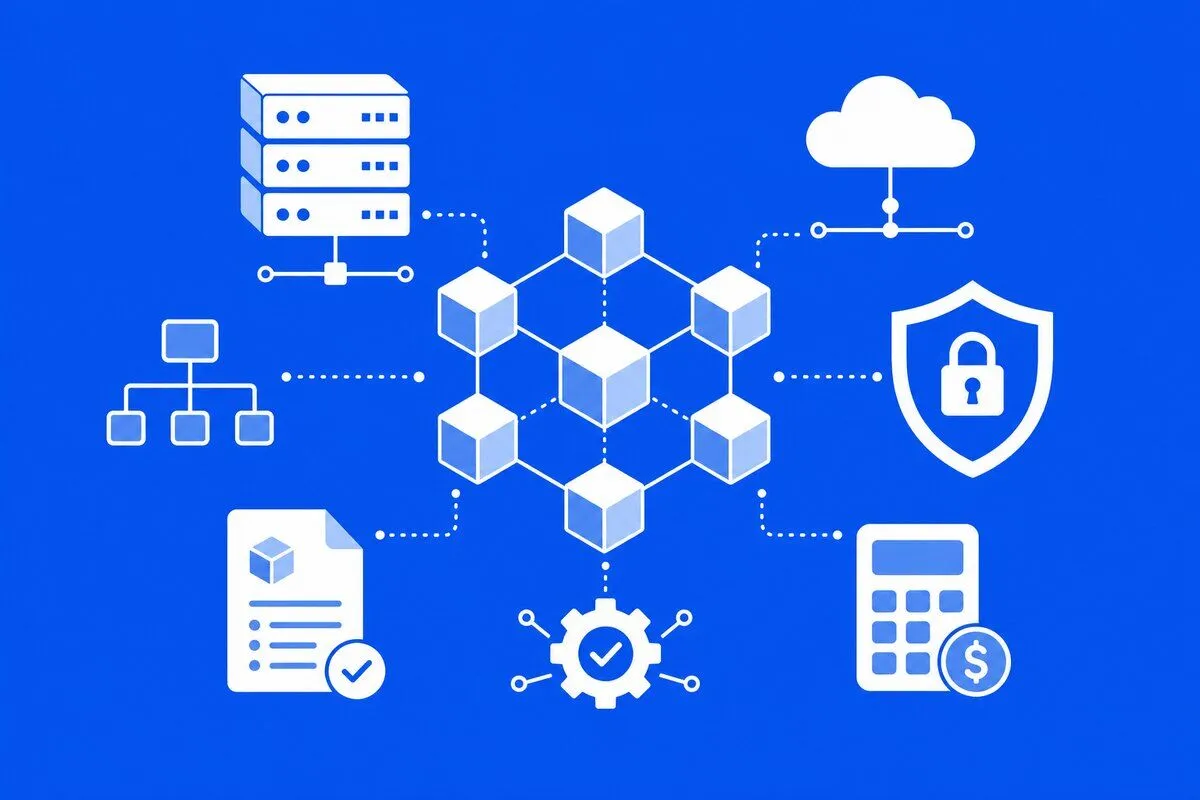
Understanding the technical architecture behind a blockchain-based certificate verification system helps institutions make informed implementation decisions. The technology combines several components of blockchain to create robust education infrastructure.
Choosing the Right Blockchain Platform
Different types of blockchain offer varying characteristics for educational applications. Public blockchains like Ethereum provide maximum transparency and are ideal for credentials that need to be universally verifiable. Permissioned blockchains like Hyperledger Fabric offer controlled access for institutional consortiums where data privacy is critical. Hybrid approaches combine public verifiability with private data management, which is often the best fit for education.
Cryptographic Signing and Hashing
Each digital certificate is signed using ECDSA (Elliptic Curve Digital Signature Algorithm) or similar elliptic curve cryptography. The issuing institution uses its private key to sign the certificate, and anyone with the institution’s public key can verify that the signature is authentic. A one-way hash of the certificate data is then recorded on the blockchain. This hash acts as a digital fingerprint, and any alteration to the certificate, no matter how minor, would produce a completely different hash, immediately flagging tampering.
Consensus and Validation Mechanisms
Education blockchain networks use consensus algorithms appropriate for institutional use cases. While public blockchains may use Proof of Work, enterprise education systems typically employ more efficient mechanisms like Byzantine Fault Tolerance or Delegated Proof of Stake. These consensus approaches ensure fast transaction finality while maintaining the security needed for official academic records.
Integration with Existing Education Systems
A successful blockchain certificate verification system must integrate with existing student information systems, learning management platforms, and registrar databases through RPC interfaces and APIs. When a student completes their program, data flows from the institution’s existing systems to the blockchain network. Verification confirmations from the blockchain flow back to update institutional records. This bidirectional integration ensures blockchain enhances existing workflows rather than requiring parallel systems.
Blockchain Certificate Verification Architecture
Institution Systems
SIS, LMS, Registrar DB
Integration Layer
APIs, Middleware, RPC
Smart Contracts
Issuance, Revocation Logic
Blockchain Network
Distributed Ledger, Consensus
Read Also: Zero Knowledge Proofs in Blockchain →
The Future of Blockchain in Education
Blockchain technology is poised to fundamentally transform how academic credentials are issued, stored, and verified. Several emerging trends are shaping the next generation of blockchain-powered education systems.
AI-Powered Credential Analysis
Artificial intelligence combined with blockchain is enabling automated skill analysis and intelligent candidate matching. AI algorithms can analyze blockchain-verified credentials to match candidates with job opportunities based on verified competencies rather than self-reported claims. This integration creates a more efficient talent marketplace where skills are authenticated and career pathways are optimized through data-driven insights.
IoT Integration for Examination Security
The integration of Internet of Things (IoT) devices with blockchain is enhancing examination security and preventing identity fraud during assessment processes. Biometric verification systems connected to blockchain can confirm student identity during online examinations, while IoT-enabled proctoring devices create tamper-proof records of examination conditions. This combination addresses one of the most persistent challenges in online education: ensuring that the person taking the exam is the person claiming the credential.
Decentralized Autonomous Universities
The concept of open source universities built on blockchain is gaining traction. These Web3 applications envision educational platforms where governance is decentralized, curriculum decisions are made collectively, and credentials are issued automatically through smart contracts. While still in early stages, this vision represents a fundamental reimagining of how educational institutions are structured and how they deliver value to students.
Tokenized Learning Incentives
Blockchain enables the creation of tokenized incentive systems where students earn digital tokens for completing courses, achieving milestones, or participating in academic activities. These tokens can be exchanged for rewards such as tuition discounts, access to exclusive resources, or premium educational content. This gamification approach increases student engagement while creating verifiable records of participation and achievement on the blockchain.
Blockchain Background Check Integration
Companies specializing in background verification are increasingly integrating blockchain-based credential checks into their platforms. Solutions like Transcrypts are pioneering blockchain background check systems that can verify educational credentials in real time, eliminating the lengthy manual verification processes that currently delay hiring. As these platforms mature, blockchain credential verification will become the standard for employment screening rather than the exception.
Challenges and Considerations for Blockchain Adoption in Education
While blockchain offers significant advantages for education, institutions must navigate certain blockchain adoption challenges to achieve successful implementation.
Scalability Concerns
Educational institutions generate enormous volumes of data as student populations and certification programs expand. Blockchain systems must handle this increasing load without compromising transaction speed or verification times. Blockchain scalability solutions including sharding, Layer 2 architecture, and state channels are being developed to address these throughput limitations for large-scale educational deployments.
High Implementation Costs
The upfront cost of setting up a blockchain system can be substantial for educational institutions, particularly those in developing regions with limited budgets. Costs include infrastructure development, software licensing, skilled personnel, and ongoing maintenance. However, the long-term savings from automated processes, reduced fraud, and eliminated manual verification typically justify the initial investment. Blockchain as a Service (BaaS) platforms are helping lower the barrier to entry for smaller institutions.
Legacy System Integration
Many educational institutions operate on mature student information systems and administrative platforms not originally designed for blockchain integration. Connecting these legacy systems requires middleware development, data mapping, and process redesign. Smaller institutions without dedicated IT teams may find this technical challenge particularly daunting, though the availability of standardized APIs and integration frameworks is simplifying this process over time.
Governance and Standardization
Multi-institutional blockchain networks require governance frameworks that all participants accept. Decisions about network rules, data standards, credential formats, and dispute resolution must be made collectively. The absence of universal standards for blockchain education credentials remains a challenge, though organizations like MIT’s Digital Credentials Consortium are working to establish common protocols and interoperability standards.
Awareness and Institutional Resistance
Despite blockchain’s proven capabilities, many educational institutions remain hesitant to adopt the technology due to unfamiliarity, resistance to change, or concerns about cryptocurrency volatility. It is important to distinguish between blockchain as a distributed ledger technology and the speculative cryptocurrency markets. Education-focused blockchain implementations use the underlying technology for record-keeping and verification, independent of any cryptocurrency’s market performance. Targeted awareness programs and pilot projects demonstrating tangible benefits are essential for driving broader institutional adoption.
Ready to Secure Your Educational Credentials with Blockchain?
Transform how your institution issues, stores, and verifies academic certificates. From smart contract-powered credential management to enterprise-grade verification systems, our blockchain experts help you build a secure, tamper-proof education ecosystem that students and employers can trust.
Final Thoughts
Blockchain technology is fundamentally transforming the future of education certificate verification by addressing the trust deficits, fraud vulnerabilities, and operational inefficiencies that have long plagued academic credentialing. With the blockchain in education market projected to grow from 0.35 billion USD to over 9 billion USD by 2033, the technology’s trajectory is clear and accelerating. Institutions that act now to implement blockchain-based credential systems position themselves at the forefront of a global shift toward secure, transparent academic verification.
The impact goes far beyond fraud elimination. Smart contracts are automating credential issuance and management, eliminating manual administrative processes that consumed institutional resources. Decentralized storage ensures that academic records remain accessible for a lifetime, regardless of institutional changes. Digital blockchain verified certificates enable instant cross-border recognition, empowering students and professionals to prove their qualifications anywhere in the world.
Real-world implementations from MIT, the University of Nicosia, AKTU India, and Malta’s national system demonstrate that blockchain credential verification is not theoretical but operational. As AI integration, IoT-enhanced security, and tokenized learning incentives continue to mature, the education ecosystem will become increasingly intelligent, secure, and accessible.
While challenges around scalability, cost, and institutional adoption exist, the path forward is well-defined. Educational institutions, governments, and businesses must collaborate to build a blockchain-based credential verification ecosystem that enhances credibility, efficiency, and global accessibility. The future of blockchain in education is here, and it is leading the way to a smarter, more secure academic world where every credential is instantly verifiable, permanently stored, and universally trusted.
Explore Services
Related Services
Reviewed by

Aman Vaths
Founder of Nadcab Labs
Aman Vaths is the Founder & CTO of Nadcab Labs, a global digital engineering company delivering enterprise-grade solutions across AI, Web3, Blockchain, Big Data, Cloud, Cybersecurity, and Modern Application Development. With deep technical leadership and product innovation experience, Aman has positioned Nadcab Labs as one of the most advanced engineering companies driving the next era of intelligent, secure, and scalable software systems. Under his leadership, Nadcab Labs has built 2,000+ global projects across sectors including fintech, banking, healthcare, real estate, logistics, gaming, manufacturing, and next-generation DePIN networks. Aman’s strength lies in architecting high-performance systems, end-to-end platform engineering, and designing enterprise solutions that operate at global scale.