Ai Overview
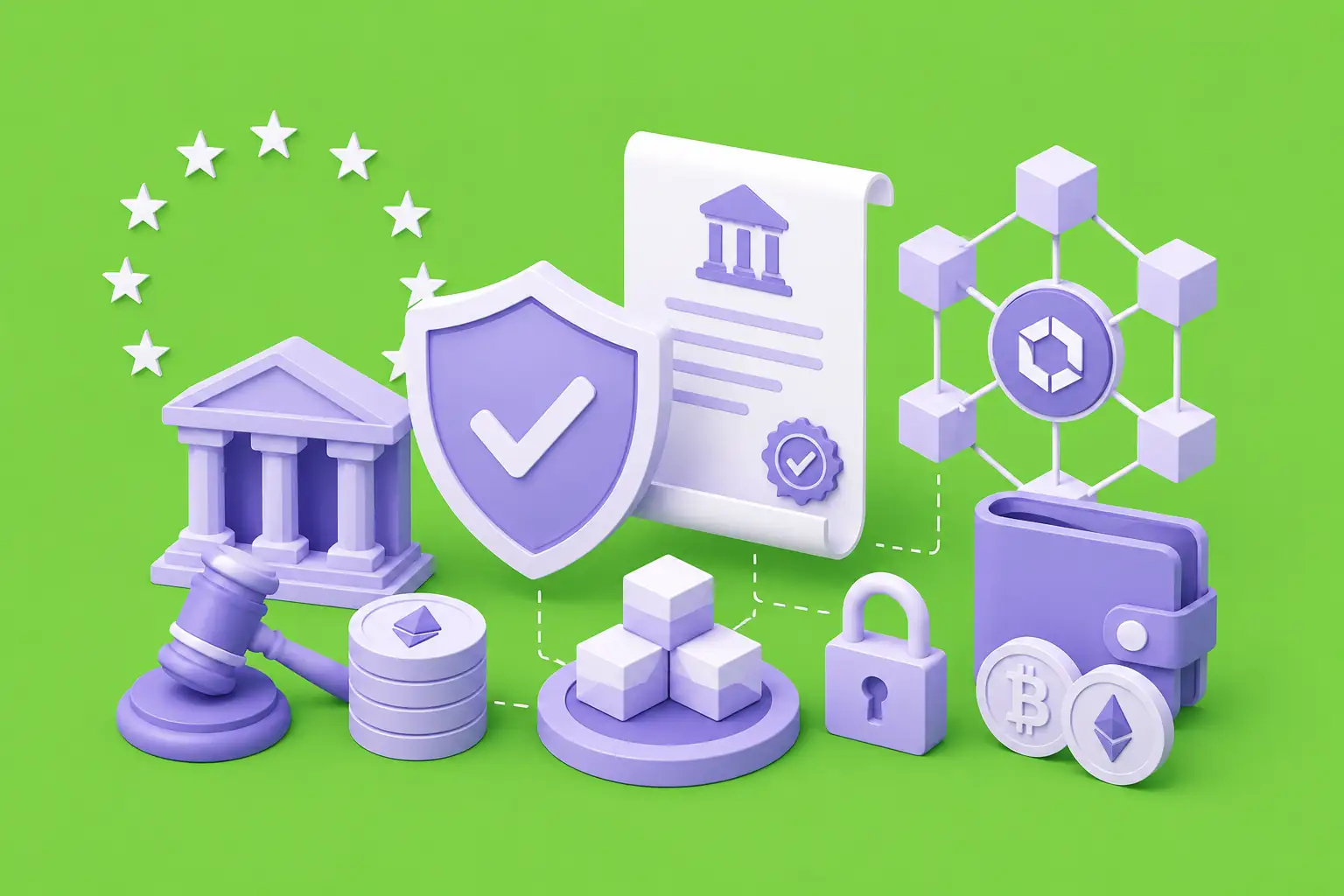
DeFi regulations are rules and guidelines created by government agencies and financial authorities to oversee how decentralized finance platforms operate. Think of them like the rulebook for traditional banking, but adapted for blockchain and cryptocurrency. Just as your bank must follow rules set by the central bank to protect your money, DeFi platforms increasingly need to follow regulations to protect users.
Key Takeaways
- DeFi regulations are rules created by governments and financial authorities to oversee decentralized finance platforms and protect users from fraud and financial risks.
- Major regions like the USA, European Union, and Asia have different regulatory approaches, ranging from strict oversight to more flexible frameworks.
- KYC (Know Your Customer) and AML (Anti Money Laundering) requirements are becoming standard in compliant DeFi platforms worldwide.
- Startups and DeFi platforms face compliance challenges including jurisdictional uncertainty and technical implementation complexity.
- Regulations can increase trust and adoption but may also reduce the decentralized nature of blockchain networks.
- The European Union’s MiCA regulation is one of the most comprehensive crypto regulatory frameworks globally.
- Compliance costs and technical requirements are shaping how new blockchain solutions are built and deployed.
- DeFi regulations continue to evolve, with new proposals and frameworks emerging regularly across different countries.
- Staying informed about regulations helps investors make better decisions and protects them from regulatory risks.
- Blockchain solution providers are integrating compliance features directly into DeFi platforms to ensure seamless regulatory adherence.
The world of decentralized finance, or DeFi, has revolutionized how people access financial services. Instead of relying on traditional banks and financial institutions, DeFi allows users to lend, borrow, trade, and invest using blockchain networks. However, this rapid growth hasn’t gone unnoticed by governments and regulatory bodies worldwide.
If you’re new to crypto or just starting to understand blockchain, you might wonder: what exactly are DeFi regulations? Why do they matter? And how will they affect you as an investor, entrepreneur, or user?
In this comprehensive guide, we’ll break down everything you need to know about DeFi regulations in simple, everyday language. Whether you’re a crypto investor looking to protect your assets or a startup wanting to build compliant blockchain solutions, this article will give you the knowledge you need to navigate the regulatory landscape.
What Are DeFi Regulations?
DeFi regulations are rules and guidelines created by government agencies and financial authorities to oversee how decentralized finance platforms operate. Think of them like the rulebook for traditional banking, but adapted for blockchain and cryptocurrency.
Just as your bank must follow rules set by the central bank to protect your money, DeFi platforms increasingly need to follow regulations to protect users. These rules cover everything from how platforms verify user identity to how they prevent illegal activities.
Here’s a simple way to understand it:
- Traditional Finance: Banks operate under strict government supervision. They report transactions, verify customer identity, and follow compliance rules.
- DeFi (Unregulated): Early DeFi platforms operated with minimal oversight, allowing faster innovation but also creating risks.
- DeFi (Regulated): Modern platforms are adopting compliance measures to balance innovation with user protection.
DeFi regulations exist because governments recognize that financial services, even when delivered through blockchain, need oversight to protect people and maintain financial stability.
Why Is Regulation Important in DeFi?
You might be thinking: “Isn’t DeFi supposed to be decentralized and free from government control?” That’s a fair question. However, even in decentralized systems, regulations serve important purposes.
1. Protecting Users from Fraud
Imagine you’re buying something expensive online. You want assurance that the seller is legitimate and your payment is safe. Similarly, DeFi regulations help ensure that platforms aren’t scams designed to steal your money. Without oversight, bad actors can create fake platforms that disappear with user funds.
2. Preventing Money Laundering and Illegal Activities
Criminals can exploit unregulated financial systems to hide illegal money. Regulations like KYC (Know Your Customer) and AML (Anti Money Laundering) help prevent criminals from using DeFi to launder money or finance illegal activities.
3. Building Trust and Mainstream Adoption
Large institutions, pension funds, and everyday investors are hesitant to use unregulated platforms. Clear regulations give people confidence that their investments are protected, encouraging broader adoption of DeFi technologies.
4. Ensuring Market Stability
When financial systems grow large enough, their failures can impact the entire economy. Regulations help prevent systemic risks that could harm not just crypto investors but the broader financial system.
5. Creating a Level Playing Field
Regulations ensure that all DeFi platforms follow the same basic rules, creating fair competition. Without regulations, platforms with fewer ethics could undercut legitimate ones.
Global Overview of DeFi Regulations
Regulation isn’t a global one-size-fits-all solution. Different countries and regions have adopted different approaches based on their economic priorities and risk assessments.
United States Approach
In the USA, DeFi regulation is fragmented across multiple agencies:
- SEC (Securities and Exchange Commission): Oversees crypto tokens that function like securities.
- CFTC (Commodity Futures Trading Commission): Regulates crypto derivatives and futures.
- FinCEN (Financial Crimes Enforcement Network): Enforces AML and KYC requirements.
- State Level Regulators: Individual states have their own money transmitter laws.
This multi-agency approach means that a single DeFi platform might need to comply with rules from several different regulators, making it complex but comprehensive.
European Union: MiCA Regulation
The EU has taken a more unified approach with the Markets in Crypto Assets Regulation (MiCA), which came into effect in 2023. MiCA is one of the most comprehensive crypto regulatory frameworks globally.
MiCA covers:
- Stablecoin regulation and issuance requirements
- Crypto asset service providers (exchanges, wallets, custodians)
- Consumer protection and transparency requirements
- Environmental sustainability considerations for proof-of-work systems
The EU’s approach is seen as a model for other regions because it balances innovation with consumer protection.
Asia’s Diverse Approaches
Asian countries have taken varied approaches:
- Singapore: Has a clear framework with the Payment Services Act (PSA) regulating crypto exchanges and payment providers.
- Japan: Treats crypto as an asset category with strict exchange regulations following the 2018 hack.
- Hong Kong: Regulates crypto trading platforms and virtual asset service providers.
- South Korea: Has comprehensive regulations including real-name account requirements for exchanges.
- India: Has taken a cautious approach with ongoing discussions about crypto regulation.
DeFi Regulation Comparison by Region
| Region | Primary Regulator | Key Framework | Approach |
|---|---|---|---|
| United States | SEC, CFTC, FinCEN | Securities & Commodities Laws | Multi-agency, fragmented |
| European Union | ESMA, National Regulators | MiCA (Markets in Crypto Assets) | Unified, comprehensive |
| Singapore | MAS (Monetary Authority) | Payment Services Act (PSA) | Clear and progressive |
| Japan | FSA (Financial Services Agency) | Payment Services Act (PSA) | Strict and cautious |
| Hong Kong | SFC (Securities & Futures Commission) | Virtual Asset Regulation | Progressive with oversight |
How DeFi Regulations Work: A Step by Step Process
Understanding the regulatory process helps clarify how rules are created and implemented. Here’s a simplified step by step breakdown:
Step 1: Issue Identification
Regulators identify problems in the DeFi space, such as fraud cases, money laundering incidents, or platform collapses that harm users.
Step 2: Regulatory Assessment
Government agencies study the issue, consulting with experts, blockchain developers, and industry leaders to understand the scope and impact.
Step 3: Policy Discussion
Policymakers debate what rules should be implemented, balancing innovation with consumer protection.
Step 4: Draft Regulation
Legal teams draft detailed rules that platforms and businesses must follow.
Step 5: Public Consultation
The industry, businesses, and public are invited to comment on the proposed rules and suggest improvements.
Step 6: Final Approval
Government bodies review feedback and approve the final regulation, sometimes with modifications.
Step 7: Implementation & Enforcement
Platforms must comply with new rules, and regulators monitor and enforce compliance through inspections and penalties.
KYC and AML: The Cornerstone of DeFi Compliance
Two terms you’ll hear frequently in DeFi regulations are KYC and AML. Let’s break them down in simple terms.
What is KYC (Know Your Customer)?
KYC refers to the process where financial platforms verify the identity of their users. When you open a bank account, the bank asks for your ID, proof of address, and other information. This is KYC.
In DeFi, KYC means platforms collecting user information such as:
- Full legal name
- Government issued identification (passport, driver’s license)
- Proof of address (utility bill, lease agreement)
- Source of funds documentation
- Phone number and email address
What is AML (Anti Money Laundering)?
AML refers to policies and procedures designed to prevent criminals from hiding illegally obtained money in the financial system. Criminals often try to make illegal money appear legitimate by moving it through multiple platforms and transactions (a process called money laundering).
DeFi platforms with AML compliance:
- Monitor large transactions for suspicious patterns
- Report unusual activity to financial authorities
- Maintain detailed transaction records
- Block accounts linked to known criminal activities
KYC and AML in Action: A Real World Example
Imagine you want to deposit 500,000 dollars into a DeFi platform. Without KYC/AML:
- The platform accepts your money with no questions asked.
- Criminals could use this to hide money from drug trafficking, corruption, or terrorism.
- Regular users lose trust in the platform.
With KYC/AML compliance:
- The platform asks for your ID and proof of where the money came from.
- If the source is suspicious, the platform can refuse or report it.
- Users feel safer knowing the platform screens for criminal activity.
Key Challenges in Regulating DeFi
Regulating DeFi is complex because it operates differently from traditional finance. Here are the major challenges regulators and platforms face:
1. Jurisdictional Uncertainty
DeFi is global. A platform can be accessed by people in any country, but it might be operated from another. Which country’s rules apply? The USA? The EU? The country of the user? This confusion creates legal challenges.
2. Decentralization Makes Enforcement Difficult
Traditional platforms have clear owners and managers who regulators can hold accountable. Many DeFi platforms are decentralized with no single entity in control. Regulators struggle to determine who to hold responsible for violations.
3. Technical Complexity
DeFi protocols are complex and constantly evolving. Regulators may not fully understand how they work, making it difficult to create appropriate rules. By the time a rule is created, the technology may have already evolved.
4. Speed of Innovation
New DeFi products and services emerge almost daily. Regulators operate slowly, taking months or years to create rules. This creates a gap where new innovations exist in a regulatory gray zone.
5. User Privacy vs Transparency
One of blockchain’s appeals is privacy. However, effective regulation requires transparency and monitoring. Balancing these competing interests is challenging.
6. Compliance Costs for Startups
Implementing KYC, AML, and other compliance measures is expensive. Large companies can afford compliance teams and lawyers. Small startups struggle with these costs, potentially leading to consolidation around larger players.
7. Cross Border Enforcement
Enforcing regulations across different countries is difficult. A platform banned in the USA might still operate from Europe, continuing to serve US users illegally.
How DeFi Regulations Affect Startups and Businesses
If you’re considering launching a DeFi startup or blockchain business, regulations will significantly impact your strategy.
Increased Compliance Costs
Your startup will need to invest in compliance infrastructure, including technology for identity verification, transaction monitoring, and audit trails. You’ll likely need to hire compliance officers and legal experts, which increases operational costs.
Longer Time to Market
Before launching, you must ensure your product meets regulatory requirements across all jurisdictions where you operate. This legal review process can add months to your development timeline.
Geographic Limitations
Some jurisdictions have strict restrictions on DeFi services. You might need to block users from certain countries or build region specific versions of your platform.
Licensing Requirements
Depending on your services, you might need a money transmitter license, securities license, or other regulatory approvals before operating legally.
The Silver Lining: Competitive Advantage
While compliance is costly, it can also be a competitive advantage. Users trust compliant platforms more than unregulated ones. Investors prefer funding compliant startups. By being regulatory-forward, you position your business for long-term success and institutional adoption.
This is where solutions providers like Nadcab Labs come in, helping startups and enterprises integrate compliance features directly into their blockchain platforms from the ground up, reducing complexity and accelerating time to market.
The Benefits of DeFi Regulation
While regulations impose costs and constraints, they bring significant benefits too.
Increased User Trust
When platforms are regulated and compliant, users feel safer. They know that if something goes wrong, there are protections and mechanisms for recourse. This trust translates into higher adoption rates.
Institutional Investment
Banks, pension funds, and insurance companies avoid unregulated systems. Clear regulatory frameworks allow these major institutions to enter the DeFi space, bringing significant capital and legitimacy.
Reduced Fraud and Scams
Regulations with enforcement mechanisms reduce the number of scams and fraudulent projects. Users are less likely to lose money to fake platforms.
Mainstreaming of Crypto
As regulations become clear, more traditional finance companies enter the crypto space. This accelerates mainstream adoption and integration of blockchain technology into everyday financial services.
Legal Clarity for Businesses
Clear regulations eliminate guesswork. Entrepreneurs know exactly what’s required to operate legally, reducing legal uncertainty and risk.
Consumer Protection Standards
Regulations establish minimum standards for consumer protection, including insurance schemes and dispute resolution mechanisms, similar to traditional banking.
Risks and Limitations of Regulation
It’s important to note that regulations come with tradeoffs. Understanding these helps provide a balanced view:
Reduced Decentralization
DeFi’s core appeal is decentralization and removal of middlemen. KYC and AML requirements introduce intermediaries and centralization, potentially reducing the benefits of decentralized systems.
Privacy Concerns
KYC requirements collect personal data. Users must trust platforms with sensitive information, introducing privacy risks that blockchain was designed to eliminate.
Innovation Slowdown
Heavy regulations can slow innovation as entrepreneurs spend resources on compliance rather than development. This could benefit established players over startups.
Regulatory Arbitrage
Strict regulations in one jurisdiction might just push activity to less regulated areas. This doesn’t solve problems, just relocates them.
Unequal Global Impact
Developing countries with fewer resources struggle to implement complex regulations, creating a gap where DeFi remains largely unregulated in some regions while heavily restricted in others.
Future Trends in DeFi Regulation
The regulatory landscape is constantly evolving. Here are emerging trends shaping the future:
1. Stablecoin Regulation Becoming Central
Stablecoins (cryptocurrencies pegged to real world currencies like the US dollar) are increasingly becoming the focus of regulation. Many jurisdictions are creating specific rules for stablecoin issuance and operations.
2. Environmental Sustainability Requirements
Regulators are increasingly considering the environmental impact of blockchain systems. Future regulations may include energy efficiency requirements or carbon offset mandates.
3. Privacy Enhancing Technology (PET) Integration
The tension between privacy and compliance is being addressed through Privacy Enhancing Technologies that allow identity verification without compromising user privacy. This is an area seeing significant innovation.
4. Cross Border Regulatory Coordination
Countries are increasingly coordinating through organizations like the Financial Action Task Force (FATF) to create more harmonized global standards, reducing regulatory arbitrage.
5. Smart Contract Regulation
As smart contracts become more prevalent in financial services, regulators are developing frameworks to govern their operation and hold developers accountable for code.
6. Decentralized Governance and Regulations
DeFi protocols that use decentralized governance models (where community members vote on changes) are prompting new regulatory questions about how to oversee governance decisions.
DeFi Platform Compliance Checklist Flowchart
Does Your Platform Need Compliance?
Where will your platform operate?
Understand SEC, MiCA, or local rules
Implement KYC/AML systems, monitoring, reporting
Establish compliance officer, policies, procedures
MSB license, securities license, or crypto license
Ensure ongoing compliance as regulations change
Ready to Launch a Compliant DeFi Platform?
Navigating DeFi regulations can be complex, but you don’t have to do it alone. Whether you’re a startup building your first blockchain application or an enterprise integrating DeFi into your services, compliance is essential for long-term success and user trust.
At Nadcab Labs, we specialize in building secure and compliant blockchain solutions. Our team of experts combines deep regulatory knowledge with technical excellence to help you create DeFi platforms that meet global compliance standards while maintaining innovation and user experience.
Let us help you build DeFi solutions that are both innovative and compliant. Contact Nadcab Labs today to discuss your project and get expert guidance on regulatory requirements for your blockchain initiative.
The Future of DeFi is Compliant
DeFi regulations are no longer coming, they’re here. Understanding how DeFi regulations work, their importance, and how to navigate them is crucial for anyone involved in the crypto and blockchain space.
Whether you’re an investor evaluating DeFi platforms, a startup building blockchain solutions, or simply someone curious about the future of finance, the principles outlined in this guide will help you make informed decisions and understand the regulatory environment shaping the industry.
The key takeaway is this: DeFi regulations are not the enemy of innovation. Rather, they are a mechanism to build trust, enable mainstream adoption, and create a sustainable financial system that benefits users and businesses alike.
As regulations continue to evolve across the USA, Europe, Asia, and beyond, the platforms and projects that adapt quickly and prioritize compliance will emerge as market leaders. They will attract institutional investment, mainstream users, and the best talent in the industry.
The future of DeFi belongs to platforms that balance innovation with responsibility, decentralization with user protection, and speed to market with regulatory prudence. By understanding DeFi regulations and embracing compliance, you’re not limiting yourself, you’re positioning yourself for success in the emerging compliant DeFi ecosystem.
Frequently Asked Questions
Q1.Can I be held liable for using an unregulated DeFi platform?
Using an unregulated platform is generally not illegal, but you face higher risks. If the platform commits fraud or loses your funds due to negligence, you have limited legal recourse. Many jurisdictions are moving to hold users accountable if they knowingly engage with platforms violating local laws. It’s safest to use platforms compliant with your country’s regulations.
Q2.Do I need to pay taxes on DeFi earnings?
Yes, in most countries including the USA and EU, DeFi earnings are subject to taxation. Income from lending or yield farming is typically taxed as ordinary income, while capital gains from selling crypto are taxed as capital gains. You should maintain detailed transaction records and consult a tax professional to ensure compliance with your local tax laws.
Q3.What happens if I get hacked on a regulated DeFi platform?
Regulatory protections vary by jurisdiction. Unlike bank deposits which often have FDIC insurance, most regulated DeFi platforms do not currently offer deposit insurance. However, some jurisdictions are developing consumer protection schemes. Always use platforms with strong security practices and check what protections they offer in your region.
Q4.Are stablecoins more regulated than other cryptocurrencies?
Yes, stablecoins are receiving significantly more regulatory attention because they’re used for payments and payments carry systemic financial risk. The EU’s MiCA and proposed US legislation specifically target stablecoins with strict issuance and reserve requirements. Other cryptocurrencies face different regulatory frameworks depending on whether they’re classified as securities or commodities.
Q5.How do regulators identify anonymous DeFi users?
While blockchain transactions are pseudonymous, regulated platforms require KYC verification, connecting wallets to real identities. Regulators use blockchain analytics tools to track transaction flows and can subpoena exchanges and custodians for user information. Using unregulated platforms doesn’t guarantee anonymity as law enforcement has increasing capabilities to trace crypto movements.
Q6.Can decentralized protocols themselves be regulated?
This is a complex issue. True decentralized protocols with no central entity are difficult to regulate directly. However, regulators focus on regulated entities that interact with protocols, such as exchanges and custodians. Some jurisdictions propose holding protocol developers or governance token holders responsible. The legal status of decentralized protocols is still evolving.
Q7.What are the penalties for non-compliance with DeFi regulations?
Penalties vary by jurisdiction and violation severity. They can include fines ranging from thousands to millions of dollars, license revocation, criminal charges for executives, and platform shutdown. For example, the SEC has fined crypto platforms for operating as unregistered securities exchanges. Compliance is far less expensive than regulatory penalties.
Q8.Will regulation make DeFi less decentralized?
Possibly. As KYC/AML requirements are integrated into DeFi platforms, some degree of centralization is introduced. However, this doesn’t necessarily eliminate decentralization entirely. Many platforms are exploring decentralized KYC solutions and privacy-preserving verification methods that balance compliance with decentralization principles.
Q9.How often do DeFi regulations change?
Regulations change frequently as governments respond to new developments and risks. New proposals emerge regularly, and existing rules are updated. DeFi professionals should subscribe to regulatory updates, join industry associations, and consult legal experts regularly. Staying informed about regulatory changes is essential for compliance.
Q10.Are DeFi regulations the same in all countries?
No, DeFi regulations vary significantly across countries. What’s legal in Singapore might be illegal in China. The USA, EU, and Asia have different approaches. Some countries are crypto-friendly with clear frameworks, while others are restrictive. Global platforms must navigate multiple regulatory regimes simultaneously, which is why compliance strategy must be jurisdiction-specific.
Explore Services
Related Services
Reviewed by

Aman Vaths
Founder of Nadcab Labs
Aman Vaths is the Founder & CTO of Nadcab Labs, a global digital engineering company delivering enterprise-grade solutions across AI, Web3, Blockchain, Big Data, Cloud, Cybersecurity, and Modern Application Development. With deep technical leadership and product innovation experience, Aman has positioned Nadcab Labs as one of the most advanced engineering companies driving the next era of intelligent, secure, and scalable software systems. Under his leadership, Nadcab Labs has built 2,000+ global projects across sectors including fintech, banking, healthcare, real estate, logistics, gaming, manufacturing, and next-generation DePIN networks. Aman’s strength lies in architecting high-performance systems, end-to-end platform engineering, and designing enterprise solutions that operate at global scale.