Ai Overview
Global supply chains have never been more complex or more vulnerable. Early enterprise adopters in the Canadian automotive sector and UAE logistics hubs are reporting administrative cost reductions of 40 to 60 percent after deploying mature blockchain for supply chain management platforms. After eight-plus years working with enterprises across four continents, we have identified the use cases where decentralized supply chain applications consistently deliver the highest return on investment.
Key Takeaways
- 01. DApps in supply chain eliminate data silos by creating a single shared ledger accessible to all authorized parties simultaneously.
- 02. Smart contracts in supply chain automate payments, approvals, and compliance checks without requiring costly intermediaries or manual oversight.
- 03. Blockchain supply chain solutions reduce product counterfeiting losses, a critical issue costing global brands billions annually across luxury and pharmaceutical sectors.
- 04. Decentralized supply chain applications provide real-time traceability from raw material sourcing through manufacturing, transit, and last-mile delivery to end consumers.
- 05. Blockchain for supply chain management dramatically reduces dispute resolution time by providing immutable, timestamped records all parties can verify independently.
- 06. Companies in USA, UK, UAE, and Canada are deploying DApps to meet increasingly strict regulatory requirements around product provenance and ethical sourcing compliance.
- 07. How DApps are used in logistics includes automating freight settlements, verifying carrier credentials, and processing customs documentation without human intervention.
- 08. Successful DApps in supply chain require multi-stakeholder governance models, ensuring no single company unilaterally controls shared network data or protocol rules.
- 09. IoT integration with decentralized applications creates fully automated, sensor-driven supply chains where physical events trigger on-chain smart contract executions automatically.
- 10. The global blockchain supply chain market is projected to exceed $9.6 billion by 2030, signaling massive enterprise adoption momentum across every major industry vertical.
What Are DApps in Supply Chain?
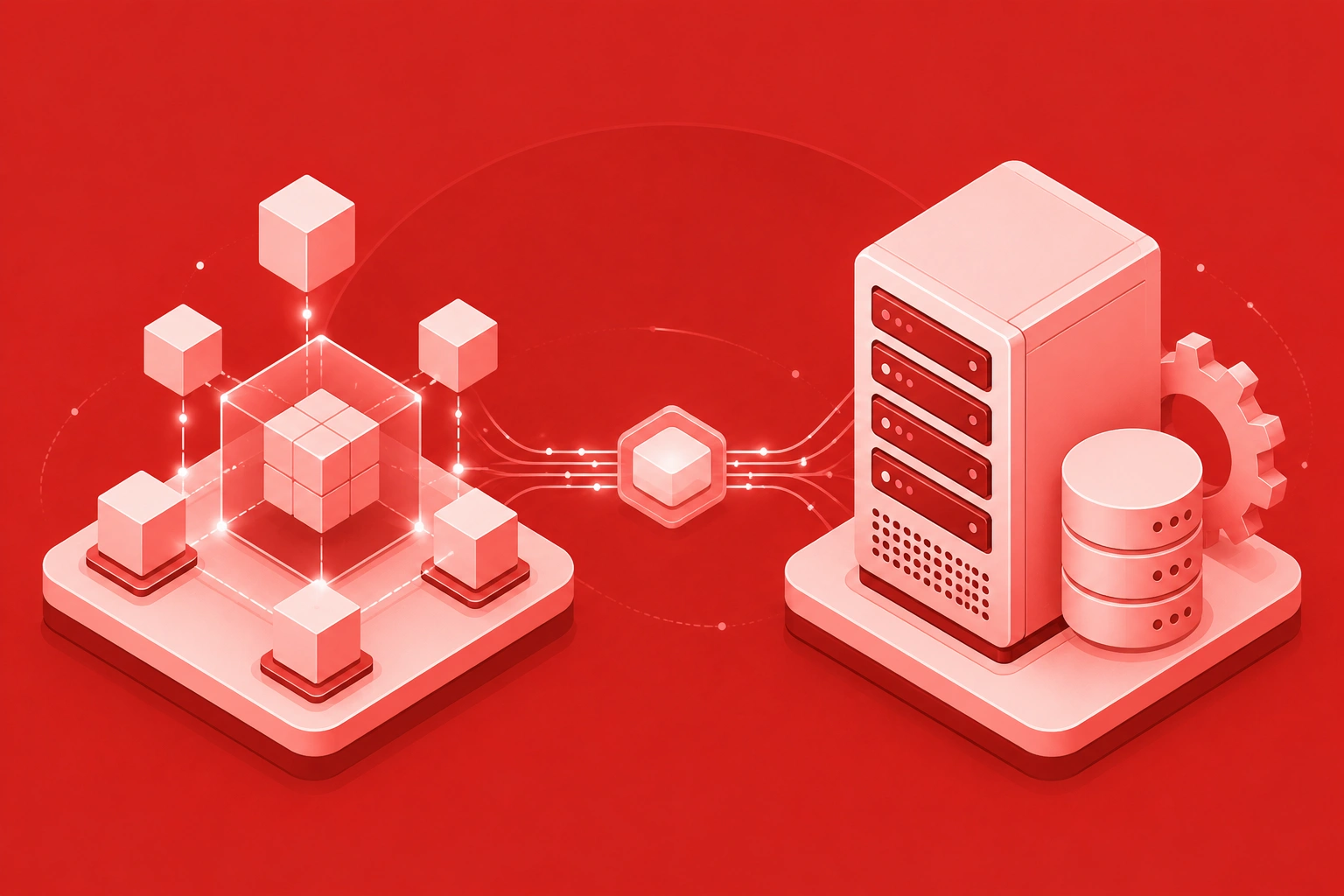
DApps, or decentralized applications, are software programs that run on a blockchain or peer-to-peer network rather than being hosted on a single company’s server. Unlike conventional enterprise software where one organization controls the database, a DApp’s logic and data live across hundreds or thousands of nodes simultaneously, making unilateral data manipulation practically impossible. When applied to supply chain management, this architecture solves one of the sector’s oldest problems: the fundamental lack of trust between parties who share data but have competing commercial interests.
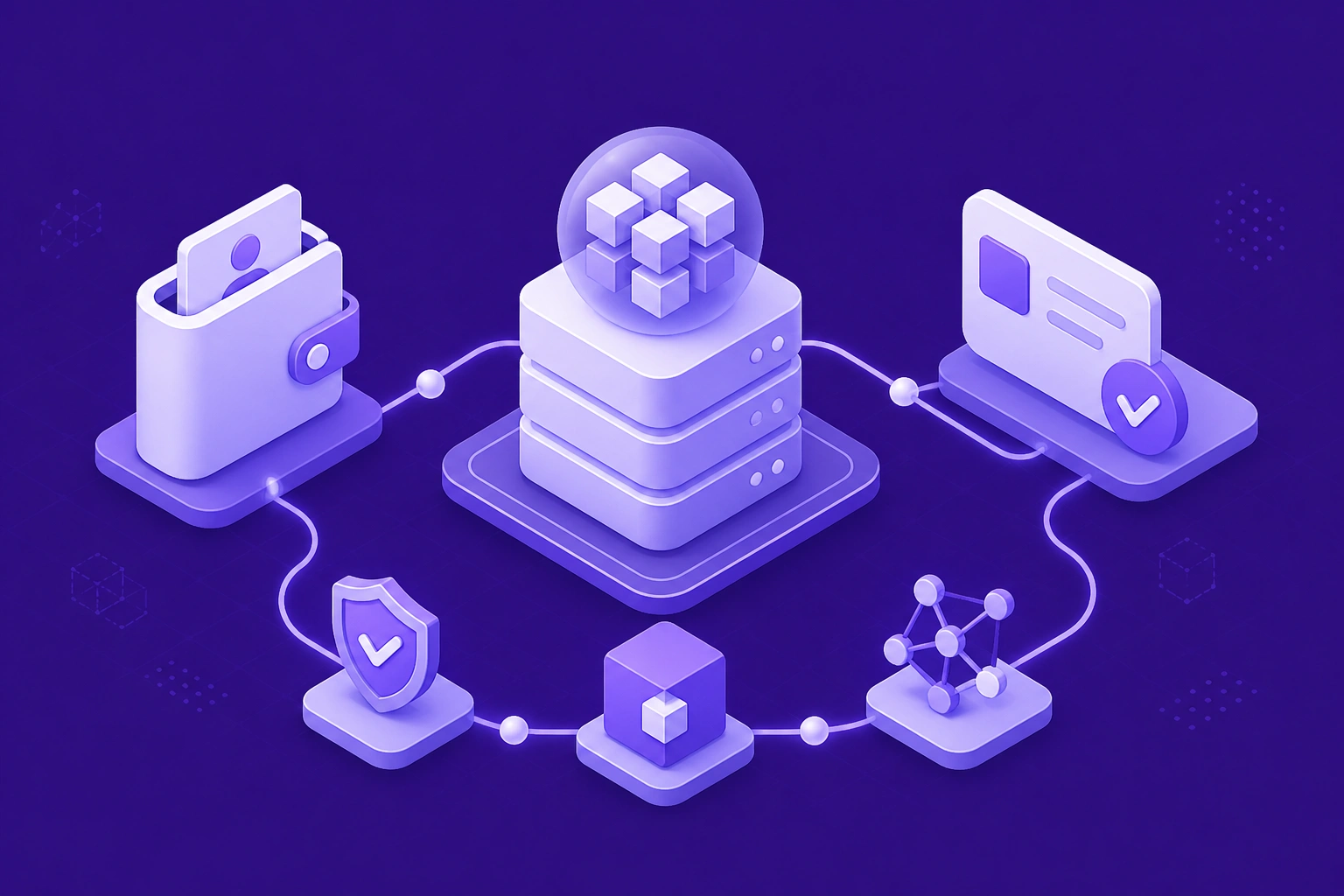
DApps in supply chain typically combine three core components: a blockchain ledger for immutable record storage, smart contracts for automated business logic execution, and a front-end interface that procurement managers, logistics coordinators, and compliance officers use daily. These layers work together to create a system where a product’s entire journey, from the farm, factory, or mine where it originates through every hand it passes through until it reaches the end consumer, is recorded, verifiable, and permanent. For industries such as pharmaceuticals, luxury goods, food and beverages, and electronics, where provenance and authenticity carry enormous commercial and regulatory weight, this capability is genuinely transformative.
Real-World Example: Walmart’s Food Safety Initiative
Walmart partnered with IBM Food Trust, a blockchain supply chain solution built on Hyperledger Fabric, to trace mangoes in the USA and pork in China. Before the DApp, tracing a food item from store shelf to farm took approximately 6 days, 18 hours, and 26 minutes. After deployment, the same trace was completed in 2.2 seconds. This represents one of the most cited examples of how DApps in supply chain produce immediate, measurable operational improvements.[1]
How Do Decentralized Applications Work in Supply Chain?
Understanding how decentralized supply chain applications actually function requires looking at each technical layer and how it maps to a real business process. At the foundation sits the blockchain network itself, which may be a public chain like Ethereum, a permissioned enterprise chain like Hyperledger Fabric or Quorum, or a hybrid architecture. Each participant in the supply chain network, whether that is a raw material supplier in Canada, a manufacturer in the UAE, a freight carrier in Europe, or a retailer in the UK, maintains a node that holds a copy of the shared ledger. When any participant records a transaction, such as confirming a shipment departure, logging a quality inspection result, or issuing a purchase order, that data is cryptographically signed and broadcast to all nodes for validation.
Smart contracts in supply chain are the critical automation engine in this architecture. These are coded agreements that execute automatically when predefined conditions are satisfied. A payment smart contract, for instance, can be programmed to release funds to a supplier automatically once IoT sensors confirm a refrigerated shipment maintained the required temperature throughout transit and a delivery confirmation is recorded. No accounts payable team approval needed. No invoice dispute possible. The contract executes exactly as coded, every single time, without exception or human override.
Why Are DApps in Supply Chain Gaining Such Rapid Adoption?
Several converging forces are driving enterprise adoption of DApps in supply chain faster than almost any previous technology wave. Regulatory pressure is intensifying globally: the USA’s Drug Supply Chain Security Act, the UK’s Modern Slavery Act, the EU’s Corporate Sustainability Due Diligence Directive, and UAE free zone compliance frameworks are all demanding higher levels of provenance documentation than traditional systems can deliver. Simultaneously, consumer expectations for transparency have reached an inflection point where brand trust increasingly depends on a company’s ability to prove, not merely claim, ethical and sustainable sourcing practices.
Beyond compliance and consumer pressure, the pure economics of blockchain supply chain solutions are increasingly compelling. Traditional supply chain management involves enormous amounts of administrative overhead: purchase order matching, invoice reconciliation, letter of credit processing, customs documentation, and audit preparation all require significant human resources. Smart contracts in supply chain automate many of these processes end-to-end, allowing organizations to redeploy skilled staff away from routine data reconciliation toward genuinely value-adding activities. Early enterprise adopters in the Canadian automotive sector and UAE logistics hubs are reporting administrative cost reductions of 40 to 60 percent after deploying mature blockchain for supply chain management platforms.
Top Real-World Use Cases of DApps in Supply Chain
After eight-plus years working with enterprises across four continents, we have identified the use cases where decentralized supply chain applications consistently deliver the highest return on investment. Each use case below reflects actual production deployments, not theoretical pilots, and demonstrates the measurable business outcomes that are driving accelerating enterprise adoption of blockchain for supply chain management globally.
DApp Supply Chain Use Cases at a Glance
Product Provenance Tracking
Every product receives a unique on-chain identity at creation. Each custody transfer, quality check, and location update is permanently recorded, making full provenance verification instant and irrefutable for regulators, auditors, and consumers.
Automated Trade Finance
Smart contracts replace letters of credit with programmable payment instruments that release funds automatically upon verified delivery milestones. UK and UAE trading companies have slashed trade finance processing from weeks to hours.
Cold Chain Integrity
IoT temperature sensors write readings directly to blockchain at configurable intervals. If a deviation from required parameters is detected, a smart contract immediately triggers alerts, documents the breach, and adjusts insurance or liability records automatically.
Anti-Counterfeiting
Each product unit is assigned an on-chain digital twin at the point of manufacture. Consumers, retailers, and customs authorities can scan a QR code to instantly verify authenticity against the immutable blockchain record, making duplication economically unviable.
Supplier Compliance Management
DApps enable continuous, automated supplier compliance monitoring across certifications, labor standards, environmental metrics, and financial health indicators. Non-compliant suppliers trigger automatic purchase order restrictions, reducing regulatory and reputational risk exposure.
Cross-Border Customs Automation
DApps pre-populate customs documentation from verified blockchain records, dramatically reducing clearance times at ports in Dubai, Toronto, London, and New York. Smart contract integration with customs authority systems enables pre-clearance before vessels arrive.
Key Features That Make DApps in Supply Chain Successful
Not all decentralized supply chain applications deliver on their promise. Having built and deployed DApps for supply chain clients in the USA, UK, Canada, and UAE, our team has identified the specific architectural and functional features that separate genuinely successful implementations from costly pilot projects that never reach production scale. The following features are non-negotiable in any enterprise-grade blockchain supply chain solution that aims to create lasting operational value.
How DApps Are Used in Logistics Across Key Industries?
Understanding how DApps are used in logistics requires examining specific industry deployments. The blockchain supply chain solutions delivering the greatest impact are those tailored to an industry’s unique regulatory environment, product characteristics, and stakeholder complexity. Below we examine five industries where decentralized supply chain applications are producing documented, repeatable business results.
Pharmaceutical Industry: Drug Authentication and Cold Chain
Major pharmaceutical manufacturers in the USA and UK are deploying DApps to comply with serialization mandates under the Drug Supply Chain Security Act and Falsified Medicines Directive respectively. Each drug unit receives an on-chain identity from the manufacturing line. Distributors, pharmacies, and hospitals scan products to verify authenticity against the blockchain record in real time. Companies using these decentralized supply chain applications report counterfeit interception rates increasing by over 90 percent compared to traditional track-and-trace systems, while cold chain violations have been reduced by more than 70 percent through IoT-integrated smart contract monitoring.
Food and Beverage: Farm-to-Shelf Traceability
Canadian and UAE food retailers are leveraging blockchain for supply chain management to provide complete farm-to-shelf traceability for premium and certified products. Organic certification status, pesticide application records, harvesting dates, processing facility certifications, and cold storage conditions are all recorded on-chain. During a recall event, the affected product batch can be identified and isolated within minutes rather than the days or weeks required by conventional paper-based systems. Leading UK supermarket chains have reported consumer trust scores improving measurably when blockchain provenance data is displayed at point of sale.
Luxury Goods: Brand Protection and Resale Authentication
The luxury goods industry loses an estimated $30 billion annually to counterfeiting globally. Luxury brands headquartered in the UK and distributed heavily in UAE premium markets are deploying DApps that assign each product a non-fungible digital twin at the point of manufacture. This token travels with the physical product, recording every ownership transfer and repair service on-chain. Resale platforms can verify authenticity instantly, increasing consumer confidence and commanding price premiums. LVMH’s Aura blockchain consortium represents perhaps the most cited example of how DApps in supply chain can transform brand integrity at industry scale.
In the automotive sector, DApps are enabling tier-one manufacturers across the USA and Canada to verify conflict mineral compliance and emissions component certifications across deeply complex, multi-tier supplier networks. A single vehicle contains components from hundreds of suppliers across dozens of countries. Blockchain for supply chain management creates the single, shared record that allows an OEM to prove regulatory compliance for every component in every vehicle it ships, without relying on supplier self-reporting that is vulnerable to manipulation. This use case is becoming increasingly critical as USA and Canadian regulators impose stricter supply chain disclosure requirements on public companies.
Explore the Full DApp Architecture
Architecture Best Practices
Understand how successful decentralized applications are architected for enterprise supply chain environments, including scalability patterns, security models, and integration frameworks.
Challenges Faced When Implementing Blockchain Supply Chain Solutions
Our experience building and deploying DApps across supply chain projects in the USA, UK, UAE, and Canada leaves us with a clear-eyed view of the real obstacles enterprises encounter. Honest assessment of these challenges is essential for building realistic expectations and designing implementation strategies that deliver lasting value rather than impressive-sounding pilot results that never scale to production.
Compliance and Governance Checklist for DApps in Supply Chain
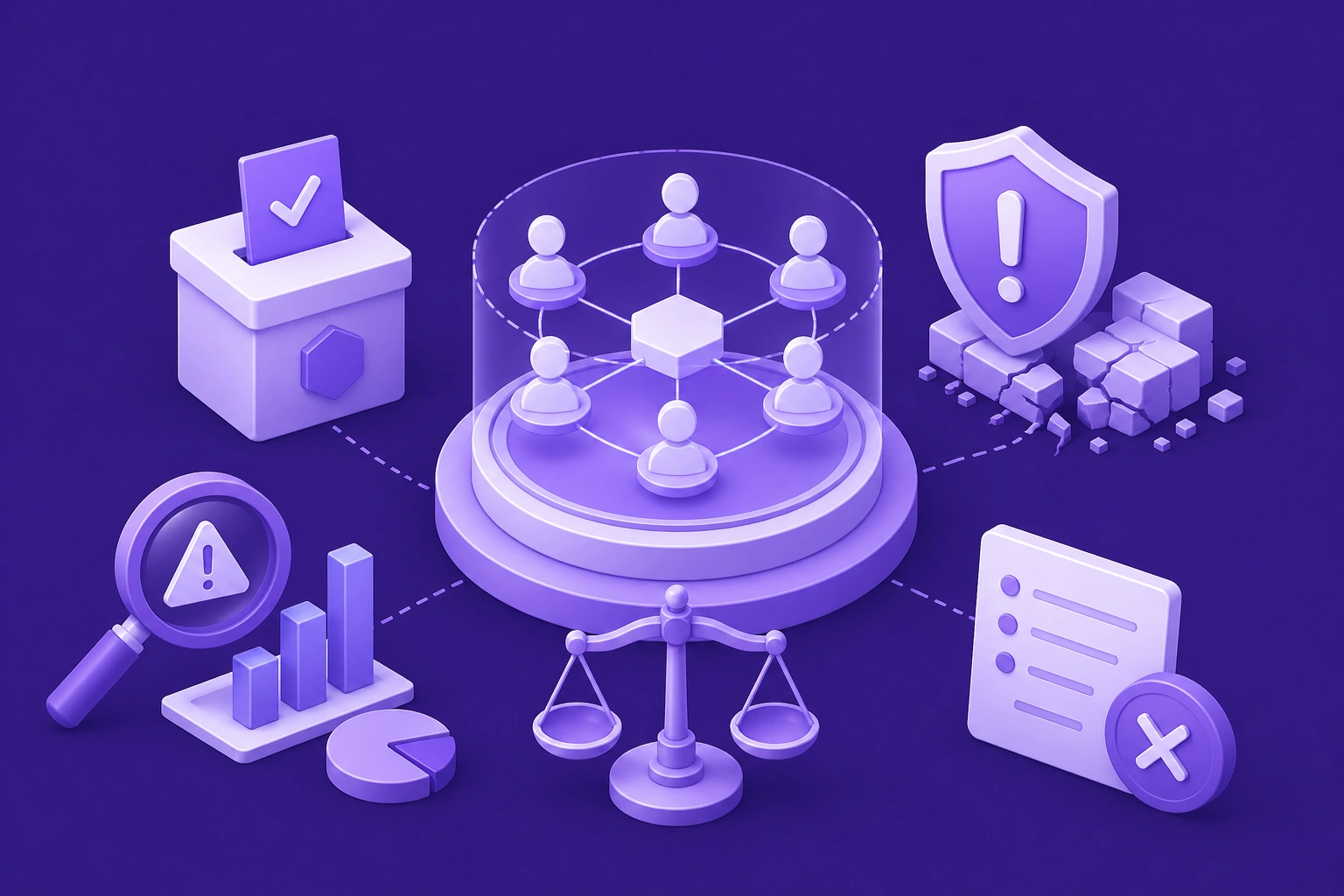
Governance is the foundation upon which sustainable decentralized supply chain applications are built. Enterprises in regulated markets, particularly pharmaceutical and food companies in the USA, UK, and Canada, must ensure their blockchain supply chain solutions meet both technical and legal compliance standards before going live. The following checklist reflects the governance framework our team applies to every enterprise DApp deployment.[2]
| Governance Area | Requirement | Priority | Markets |
|---|---|---|---|
| Smart Contract Audit | Independent security audit by certified firm before production launch | Critical | All |
| Data Privacy Architecture | GDPR/CCPA/PIPEDA compliant off-chain PII storage with on-chain hashed references | Critical | UK, USA, Canada |
| Consortium Agreement | Legal framework governing data ownership, protocol updates, and dispute resolution | High | All |
| Access Control Policy | Role-based permissions defining which participants can read, write, or validate records | High | All |
| Oracle Redundancy | Minimum three independent oracle sources per critical data feed with anomaly detection | High | All |
| Regulatory Sandbox Filing | Engagement with relevant financial and trade regulators before launch for novel use cases | Medium | UAE, UK |
| Disaster Recovery Plan | Documented failover procedures ensuring operational continuity if nodes go offline | Medium | All |
How to Select the Right Blockchain Platform for Your Supply Chain DApp?
Platform selection is among the most consequential early decisions in any blockchain supply chain project. The wrong choice can limit scalability, create compliance conflicts, or result in unacceptable transaction costs that make the DApp economically unviable at production volumes. Based on deployments across multiple industries and markets, we apply a three-criteria evaluation framework that consistently leads to well-matched platform choices.
Platform Selection Criteria: 3-Step Framework
Throughput and Latency Requirements
Map your expected daily transaction volume against platform throughput benchmarks. High-frequency logistics operations requiring thousands of transactions per second demand Hyperledger Fabric or layer-2 solutions. Lower-volume, high-value use cases like trade finance may suit public Ethereum networks with acceptable economics.
Privacy and Permissioning Model
Assess whether your use case requires fully private transaction data, partially public verification, or fully public transparency. Industries with strong data privacy regulations like pharmaceuticals in the UK and financial services in Canada typically require permissioned networks where participant identity is known and verified.
Ecosystem and Interoperability
Consider whether existing trading partners and industry consortia in your sector already operate on a specific platform. Joining an established network provides immediate network effects and pre-built integrations. UAE free zone authorities, UK port systems, and USA customs agencies are progressively adopting specific blockchain standards that your platform choice should align with.
The Future of DApps in Supply Chain
The trajectory of DApps in supply chain is moving from single-enterprise pilots toward multi-industry, cross-border digital trade infrastructure. Several converging technology and regulatory trends will dramatically accelerate the maturity and adoption of blockchain supply chain solutions over the next five years, reshaping competitive dynamics in logistics, manufacturing, and retail globally.
AI and Blockchain Convergence
Artificial intelligence integrated with decentralized supply chain applications will enable predictive disruption alerts, autonomous re-routing decisions, and dynamic smart contract parameter adjustments based on real-time supply chain risk scores. The combination of AI’s predictive capability with blockchain’s immutable audit trail creates unprecedented operational intelligence.
Central Bank Digital Currencies in Trade
As central banks in the UK, UAE, Canada, and USA progress CBDC programs, the settlement layer for smart contract-based trade finance will shift from stablecoins to sovereign digital currencies. This will accelerate automated payment execution in supply chain DApps, dramatically reducing the foreign exchange risk that currently complicates international trade financing.
Cross-Chain Interoperability Protocols
Today, a company on Hyperledger Fabric cannot natively transact with a partner on Ethereum. Emerging cross-chain interoperability protocols like Polkadot, Cosmos, and specialized supply chain bridges will enable seamless multi-network supply chain DApp ecosystems, breaking down the current island effect that limits network scale and value creation across industry consortia.
Sustainability Accounting on Chain
Mandatory Scope 3 emissions reporting requirements in the UK, EU, and soon Canada and the USA are creating urgent demand for blockchain-based carbon accounting systems. DApps that automatically track, aggregate, and verify emissions data at each supply chain node will become essential compliance infrastructure for publicly listed companies across every major sector.
Building a Business Case for DApps in Supply Chain
After more than eight years designing, building, and scaling blockchain supply chain solutions for enterprises across the USA, UK, UAE, and Canada, the clearest lesson we can share is this: the organizations that succeed with DApps in supply chain are not necessarily those with the largest technology budgets or the most sophisticated IT teams. They are the organizations with the most precisely defined problem statements, the strongest stakeholder alignment across their trading partner networks, and the most disciplined approach to measuring and communicating value to both internal sponsors and external supply chain partners.
The business case for blockchain for supply chain management is now firmly established across multiple industries. Documented ROI from product traceability, trade finance automation, anti-counterfeiting, and compliance management is generating internal advocacy within organizations that had previously been skeptical of distributed ledger technology. The question for supply chain leaders in 2025 and beyond is no longer whether to adopt DApps, but which use cases to prioritize first and how to build the consortium of trading partners needed to generate genuine network effects.
Industry Principle: Start Narrow, Scale Fast
The most successful DApp in supply chain deployments we have overseen share a common execution pattern: they begin with a single, high-pain, high-value use case involving three to five committed trading partners, prove measurable ROI within the first 12 months, and use that documented success to accelerate onboarding of additional network participants and expand to adjacent use cases. Attempting to solve every supply chain problem simultaneously with a single DApp launch is the most common cause of over-budget, under-delivered blockchain projects. Disciplined scoping is a competitive advantage.
Final Thoughts
DApps in supply chain have moved decisively beyond the experimental stage. Across pharmaceutical distribution, food traceability, luxury brand protection, automotive compliance, and cross-border trade finance, blockchain supply chain solutions are generating documented, repeatable business value for enterprises willing to make the governance and organizational commitments that successful DApp networks require. Smart contracts in supply chain are automating processes that previously required expensive manual intervention at every custody transfer, compliance verification, and settlement event in the product journey.
The competitive pressure to adopt is intensifying from multiple directions simultaneously: regulators demanding supply chain transparency, consumers expecting provenance proof, trading partners requiring digital document formats, and investors scrutinizing Scope 3 emissions disclosures. Organizations in the USA, UK, UAE, and Canada that build their blockchain supply chain capabilities now will accumulate the network relationships, governance experience, and operational data that create durable competitive advantages as decentralized supply chain applications become standard infrastructure across global trade over the next decade.
How DApps are used in logistics will continue evolving rapidly as AI, IoT, CBDC, and cross-chain interoperability technologies mature. The organizations that position themselves as early infrastructure builders in this ecosystem, rather than late-adopting followers, will define the rules, standards, and network dynamics that shape the next generation of global supply chain management. The time for action is unambiguously now.
Ready to Build Your Supply Chain DApp?
Transform your supply chain with blockchain-powered DApps. Reduce costs, eliminate fraud, and achieve real-time visibility across every tier of your network.
Frequently Asked Questions
Q1.What are DApps in supply chain management?
DApps in supply chain are decentralized applications built on blockchain networks that automate, verify, and record every transaction across a product’s journey from raw material sourcing to final delivery. Unlike traditional software, these applications run on distributed ledgers without a central authority controlling the data. Businesses in the USA, UK, UAE, and Canada are adopting DApps to improve transparency, reduce fraud, and eliminate inefficiencies in complex global logistics networks.
Q2.How do smart contracts in supply chain work?
Smart contracts in supply chain are self-executing programs stored on a blockchain that automatically trigger actions when pre-set conditions are met. For example, a smart contract can automatically release payment to a supplier once a shipment is confirmed delivered and verified. This removes the need for manual approvals, banks as intermediaries, or third-party auditors. Companies using smart contracts report faster settlement cycles, reduced paperwork, and significantly lower operational costs across procurement and logistics workflows.
Q3.What is the difference between blockchain and DApps in supply chain?
Blockchain is the underlying distributed ledger technology that records immutable transaction data, while DApps are the user-facing applications built on top of that blockchain infrastructure. Think of blockchain as the database engine and DApps as the software applications that interact with it. In supply chain contexts, blockchain provides the tamper-proof data layer, and DApps deliver the interface, logic, and automation layer that procurement teams, logistics managers, and compliance officers actually use daily.
Q4.What are the real-world benefits of blockchain supply chain solutions?
Blockchain supply chain solutions deliver measurable benefits including end-to-end product traceability, real-time shipment visibility, automated compliance verification, and fraud prevention. In food supply chains, companies have reduced contamination investigation times from days to seconds. In pharmaceutical logistics, blockchain ensures cold-chain integrity. UK and UAE manufacturers report reduced counterfeiting losses, while Canadian and US retailers use blockchain to prove ethical sourcing claims to consumers and regulatory bodies.
Q5.How are DApps used in logistics operations?
DApps are used in logistics for tracking shipment status in real time, managing carrier contracts through smart contracts, automating customs documentation, verifying driver credentials, and coordinating multi-party freight settlements. Decentralized supply chain applications replace fragmented legacy systems with a single source of truth accessible to all authorized parties simultaneously. This dramatically cuts communication delays, disputes between freight forwarders and shippers, and costly reconciliation processes that traditionally consume significant operational resources.
Q6.Which industries benefit most from decentralized supply chain applications?
Industries with complex, multi-tier supply chains benefit most, including pharmaceutical manufacturing, food and beverage, automotive, luxury goods, electronics, and retail. The pharmaceutical sector uses DApps for drug authentication and cold-chain monitoring. Luxury brands in the UK and UAE deploy blockchain to verify product authenticity. Food retailers across North America use DApps to trace farm-to-shelf journeys. Any industry where provenance, compliance, and multi-party coordination are critical stands to gain significant efficiency and trust improvements.
Q7.What challenges do companies face when implementing DApps for supply chain?
Common challenges include legacy system integration complexity, resistance to change from established trading partners, regulatory uncertainty across different jurisdictions, scalability limitations of certain blockchain networks, and the need for industry-wide standards adoption. Organizations in the USA and Canada also face data privacy concerns when sharing sensitive supplier information on shared ledgers. Successful implementation requires phased rollout strategies, clear governance frameworks, and choosing blockchain platforms that balance transparency with appropriate data access controls for all supply chain participants.
Explore Services
Related Services
Reviewed by

Aman Vaths
Founder of Nadcab Labs
Aman Vaths is the Founder & CTO of Nadcab Labs, a global digital engineering company delivering enterprise-grade solutions across AI, Web3, Blockchain, Big Data, Cloud, Cybersecurity, and Modern Application Development. With deep technical leadership and product innovation experience, Aman has positioned Nadcab Labs as one of the most advanced engineering companies driving the next era of intelligent, secure, and scalable software systems. Under his leadership, Nadcab Labs has built 2,000+ global projects across sectors including fintech, banking, healthcare, real estate, logistics, gaming, manufacturing, and next-generation DePIN networks. Aman’s strength lies in architecting high-performance systems, end-to-end platform engineering, and designing enterprise solutions that operate at global scale.