Ai Overview
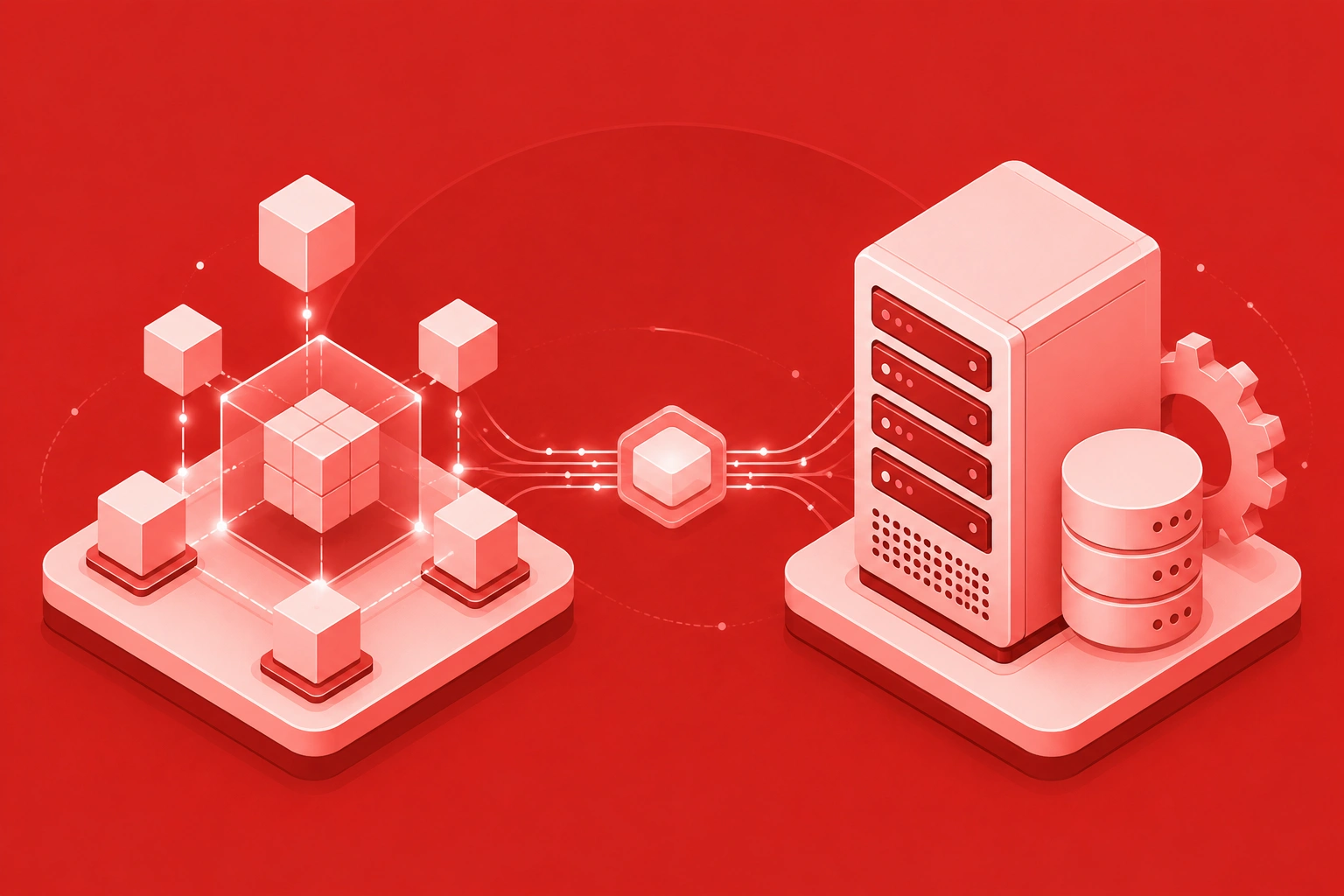
The blockchain landscape has matured from a single-chain environment into a rich, multi-network ecosystem. They can leverage the unique strengths of different blockchains, using Ethereum for security and settlement, Solana for high-throughput transactions, and Arbitrum for low-cost execution. For teams building real products for users in competitive markets, these advantages translate directly into growth, retention, and revenue outcomes.
Introduction to Cross-Chain Interoperability in DApps
The blockchain landscape has matured from a single-chain environment into a rich, multi-network ecosystem. Ethereum, BNB Chain, Solana, Avalanche, Polkadot, and dozens of other networks each host thriving communities, protocols, and assets. However, this growth has created an unintended consequence: deep fragmentation. Assets locked on one chain cannot easily interact with protocols on another, users are forced to manage multiple wallets, and liquidity is scattered across isolated silos.
This is where cross-chain interoperability in DApps becomes transformative. With over eight years of experience building blockchain solutions for clients in the USA, UK, UAE, and Canada, we have witnessed firsthand how the inability to communicate across chains slows adoption, limits innovation, and constrains the true potential of decentralized applications. Cross-chain interoperability is no longer optional; it is the architectural foundation upon which the next generation of Web3 infrastructure must be built.
This blog delivers a comprehensive breakdown of how cross-chain interoperability works, why it matters for DApp builders and enterprises, the technologies powering it, its most impactful use cases, and where the space is heading in the near future.
Key Takeaways
- Cross-chain interoperability in DApps allows decentralized applications to function across multiple blockchain networks, eliminating ecosystem fragmentation and expanding user accessibility significantly.
- Multi-chain DApps unlock access to pooled liquidity from multiple protocols, dramatically improving capital efficiency for DeFi platforms operating in the USA, UK, and UAE markets.
- Protocols such as Polkadot, Cosmos IBC, LayerZero, and Chainlink CCIP are the primary technical enablers of reliable cross-chain blockchain solutions today.
- Security remains the most critical challenge in cross-chain DApps, with bridge exploits historically accounting for over 50% of all DeFi-related losses globally.
- Cross-chain NFTs and gaming applications are among the fastest-growing segments, with assets now moving fluidly between Ethereum, Solana, and Polygon ecosystems.
- Web3 interoperability is foundational to the next generation of decentralized infrastructure, enabling composable protocols that can leverage strengths from different blockchain networks.
- Businesses in Canada and the UAE are increasingly adopting cross-chain protocols to build enterprise-grade blockchain solutions that require regulatory compliance across jurisdictions.
- Atomic swaps and hash time-locked contracts (HTLCs) remain the most trustless mechanisms for direct peer-to-peer cross-chain asset transfers without intermediaries.
- Future trends indicate that AI-assisted routing, zero-knowledge proofs, and modular blockchain architectures will further accelerate cross-chain DApp adoption through 2026 and beyond.
- Agencies with deep Web3 expertise are essential partners for building secure, scalable cross-chain DApps that meet the technical and compliance demands of global markets.
What Is Cross-Chain Interoperability?
Cross-chain interoperability is the technical capability that allows separate blockchain networks to communicate with each other, exchange data, and transfer assets without relying on centralized intermediaries. In a traditional web context, APIs allow different platforms to talk to each other. In Web3, cross-chain protocols serve a similar purpose but in a trust-minimized, decentralized manner.[1]
At its core, blockchain interoperability addresses a straightforward problem: blockchains were designed to be self-contained systems. Each network maintains its own state, its own consensus mechanism, and its own transaction validity rules. Cross-chain blockchain solutions create bridges, relay systems, or messaging layers that translate and verify information between these independent systems, enabling a DApp built on Ethereum to interact with a liquidity pool on Avalanche or a user identity stored on Polkadot.
Industry Perspective
From our work with enterprise clients across the UK and UAE, the demand for cross-chain DApps has grown by over 300% in the past three years. Clients no longer ask whether they should build multi-chain; they ask which chains to prioritize first.
The concept of Web3 interoperability also encompasses cross-chain governance, cross-chain identity, and composable DeFi protocols that draw from multiple blockchain environments. It is a broad and rapidly evolving field with significant technical and business implications for teams building production-grade decentralized systems.
Why Cross-Chain Interoperability Matters for DApp Development?
For DApp builders, operating on a single blockchain is increasingly a competitive disadvantage. Users in the USA expect their preferred DeFi platform to support the tokens they already hold, regardless of the network those tokens exist on. Users in the UAE’s growing crypto market want seamless asset movement between chains without navigating complex manual bridging processes. For teams building in Canada’s emerging Web3 sector, cross-chain interoperability directly affects how large a user base they can realistically serve at launch.
Beyond user experience, cross-chain DApps have structural advantages. They can aggregate liquidity from multiple networks, reducing slippage and improving capital efficiency. They can leverage the unique strengths of different blockchains, using Ethereum for security and settlement, Solana for high-throughput transactions, and Arbitrum for low-cost execution. This architectural flexibility enables DApps to compete more effectively and adapt as the blockchain landscape continues to evolve.
From a business perspective, cross-chain blockchain solutions also reduce the risk of building on any single network. Should gas fees on one chain spike or a network experience downtime, a well-architected cross-chain DApp can route transactions to alternative networks, maintaining uptime and user trust even under adverse conditions.
How Cross-Chain Interoperability Works?
Understanding how cross-chain interoperability works requires looking at the underlying mechanisms that make trustless communication between chains possible. There is no single universal approach; different protocols use different architectures depending on their security model, target chains, and performance requirements.
How a Cross-Chain Transaction Flows
Step 01 – Initiation on Source Chain
User initiates a transaction on the origin blockchain, locking assets in a smart contract or bridge contract controlled by the cross-chain protocol.
Step 02 – Message Verification
A relayer, validator network, or oracle observes the source chain event and cryptographically verifies the transaction’s validity and finality.
Step 03 – Cross-Chain Message Transmission
The verified message is transmitted to the destination chain via the cross-chain messaging protocol, encoded in the target chain’s format.
Step 04 – Execution on Destination Chain
The destination chain smart contract receives and executes the instruction, minting wrapped tokens or triggering the corresponding DApp action.
Step 05 – Confirmation and Settlement
Both chains confirm the finalized transaction, and the user receives assets or data on the destination network with the original position settled.
Step 06 – State Synchronization
Advanced cross-chain DApps synchronize their state across both chains, updating liquidity positions, user balances, and protocol parameters accordingly.
The most commonly used mechanisms include lock-and-mint bridges (where assets are locked on the source chain and representative tokens are minted on the destination), burn-and-release models, and atomic swaps using hash time-locked contracts. More sophisticated cross-chain protocols utilize light client proofs or zero-knowledge proofs to verify state transitions without relying on trusted third parties, significantly improving the security profile of cross-chain interactions.
Key Technologies Enabling Cross-Chain DApps
Several foundational technologies power the cross-chain DApps ecosystem today. Each brings a distinct technical approach to solving blockchain interoperability, and understanding their differences is critical for teams making architectural decisions.
Beyond protocol-level infrastructure, cross-chain DApps rely on oracle networks to feed off-chain and cross-chain data into smart contracts reliably. Decentralized validator sets and multi-party computation (MPC) schemes are used to secure bridge operations without single points of failure. Zero-knowledge proofs are emerging as a particularly promising technology for cross-chain verification, enabling one chain to prove the validity of a state transition to another without revealing underlying transaction data, a critical property for privacy-preserving cross-chain DApps.[2]
Benefits of Cross-Chain Interoperability in DApps
The benefits of cross-chain interoperability in DApps extend far beyond technical convenience. For teams building real products for users in competitive markets, these advantages translate directly into growth, retention, and revenue outcomes.
Broader Market Reach
Cross-chain DApps can serve users across all major blockchain networks simultaneously, giving projects access to tens of millions of additional wallets from day one of launch.
Composable Architecture
Multi-chain DApps can combine the unique strengths of different protocols, using one chain for settlement security and another for execution speed, resulting in optimized user experiences.
Resilience and Redundancy
Cross-chain protocols allow DApps to maintain uptime even during chain-specific congestion, outages, or governance crises by routing operations through alternative networks automatically.
From an enterprise perspective, particularly in the UAE and UK markets where large organizations are piloting blockchain solutions, cross-chain interoperability reduces the risk of vendor lock-in. Organizations are not forced to commit permanently to a single network’s future roadmap, token economics, or governance decisions. They can architect systems that remain portable across chains as the technology landscape evolves over time.
Expanded User Reach Across Multiple Blockchains
One of the most immediate benefits of building cross-chain DApps is the dramatic expansion of the addressable user base. Ethereum alone has tens of millions of active wallets, but the combined user base across all major blockchain networks is orders of magnitude larger. A DApp that requires users to hold assets on a specific chain is, by definition, excluding everyone who holds assets on other networks.
Cross-chain interoperability removes this barrier. A DeFi protocol built on Ethereum but accessible through cross-chain protocols can attract users holding SOL on Solana, MATIC on Polygon, or AVAX on Avalanche without requiring them to manually bridge assets through a separate interface. For DApp projects in the USA and Canada where user acquisition costs are high, this is a material competitive advantage that directly impacts growth metrics.
Single-Chain vs. Cross-Chain DApp: User Reach Comparison
Improved Liquidity and Asset Transfer
Liquidity is the lifeblood of DeFi. Fragmented liquidity across isolated chains results in higher slippage, worse execution prices, and reduced capital efficiency for users and protocols alike. Cross-chain blockchain solutions directly address this problem by enabling liquidity aggregation across networks. When a DApp can draw from liquidity pools on Ethereum, Arbitrum, Optimism, and BNB Chain simultaneously, it can offer users significantly better trade execution regardless of which chain they initiate from.
Cross-chain asset transfer mechanisms also enable users to move capital to wherever yields are highest without friction, creating more efficient market conditions across the entire Web3 ecosystem. For institutional participants in the UK and USA who are increasingly entering DeFi, this liquidity depth is a prerequisite for deploying meaningful capital without causing market disruption through large single-chain transactions.
Real-World Example
THORChain enables native asset swaps between Bitcoin, Ethereum, Binance Smart Chain, and Cosmos-based chains without wrapped tokens. Users in the USA and UK can swap BTC directly for ETH without any custodian, demonstrating the power of genuine cross-chain asset transfer at scale.
The introduction of cross-chain liquidity protocols has also enabled new financial primitives, including cross-chain lending (where collateral on one chain backs a loan on another), cross-chain yield aggregation, and multi-chain portfolio management tools. These capabilities are transforming how sophisticated users and institutions manage blockchain-based assets across the global financial landscape.
Enhanced Scalability and Performance
Scalability has been one of the most persistent challenges in blockchain. No single network can currently serve all use cases optimally. Ethereum provides unmatched security but struggles with throughput at peak demand. Solana offers exceptional speed but has experienced notable downtime events. Avalanche enables subnet-based customization but has a smaller DeFi ecosystem.
Cross-chain DApps solve this by allowing protocols to distribute workloads intelligently across networks. High-frequency, low-value transactions can be routed to low-cost execution layers, while large settlements can be finalized on high-security chains. This architectural pattern, often called a modular blockchain approach, is increasingly being adopted by top-tier DApp projects backed by leading investors in the USA and UK’s venture capital ecosystems.
Transaction Speed
Route transactions to the fastest available chain, reducing confirmation times from minutes to seconds.
Cost Optimization
Direct users to the lowest-fee network at any given time, reducing gas costs by 80-95% on many transaction types.
Load Distribution
Spread protocol demand across chains to prevent congestion and maintain consistent user experience at scale.
Fault Tolerance
Continue operating through single-chain outages by rerouting critical operations to alternative networks automatically.
Popular Use Cases of Cross-Chain DApps
The use cases of cross-chain DApps span virtually every vertical in the Web3 space. As cross-chain protocols have matured, teams across the globe have found creative ways to leverage blockchain interoperability to build products that were simply not possible in a single-chain environment. Below we examine the most significant and proven use cases shaping the market today.
Cross-Chain DApp Use Cases at a Glance
| Use Case | Chains Involved | Key Benefit |
|---|---|---|
| Cross-Chain DeFi | ETH, BSC, Solana, Avalanche | Unified liquidity pools |
| Multi-Chain NFTs | ETH, Polygon, Solana, Flow | Cross-ecosystem asset portability |
| Cross-Chain Gaming | ImmutableX, Ronin, Polygon | In-game asset interoperability |
| Cross-Chain Identity | Ethereum, Polkadot, Solana | Universal decentralized identity |
| Supply Chain Tracking | Enterprise chains + Public | End-to-end provenance visibility |
Cross-Chain DeFi Platforms
Cross-chain DeFi represents one of the most mature and widely adopted applications of blockchain interoperability. Protocols that once operated exclusively on Ethereum have expanded to multiple chains to capture liquidity, reduce costs, and serve a broader user base. Platforms like Stargate Finance, Synapse Protocol, and deBridge enable users to seamlessly move stablecoins and other assets across chains, fueling cross-chain lending, borrowing, and yield farming strategies that span the entire DeFi ecosystem.
For institutional players in the UK and USA entering DeFi, cross-chain interoperability is not a feature but a requirement. These participants hold assets across multiple custody solutions and blockchain networks and need DeFi protocols that can interact with their holdings regardless of where they reside. Multi-chain DApps that support cross-chain collateral, cross-chain yield, and chain-agnostic interfaces are seeing significantly higher adoption among this demographic.
Real-World Example
Aave V3’s Portal feature allows approved bridges to move aToken liquidity across networks, enabling users in the UAE to supply collateral on Polygon and borrow against it on Ethereum, a genuine cross-chain DeFi experience at production scale serving real markets.
The aggregation of cross-chain liquidity has also enabled more sophisticated DeFi primitives. Cross-chain yield optimizers can automatically identify the highest yield opportunities across 10+ blockchain networks and rebalance positions without manual user intervention. Cross-chain options and derivatives platforms allow traders to express views on assets regardless of the chain those assets natively live on, creating deeper, more liquid derivatives markets for the benefit of all participants.
Cross-Chain NFTs and Gaming Applications
The NFT and blockchain gaming sectors have been among the earliest and most enthusiastic adopters of cross-chain interoperability. NFTs represent unique digital assets, and the ability to move these assets across blockchain ecosystems is a powerful value proposition for collectors and gamers alike. A rare in-game item minted on ImmutableX can be transferred to Ethereum for listing on OpenSea, or an Ethereum-based NFT can be displayed and utilized in a Polygon-based metaverse application.
Cross-chain NFT standards are evolving rapidly. Projects like LayerZero’s Omnichain Fungible Token (OFT) and Non-Fungible Token (ONFT) standards are establishing new infrastructure layers that make cross-chain NFTs as straightforward to build as single-chain equivalents. For gaming studios in Canada and the UK exploring blockchain-based game economies, these standards reduce the technical barrier significantly while opening up substantially larger player markets.
Cross-Chain NFT Transfer Journey
NFT created on source chain
NFT locked in bridge contract
Cross-chain message verified
Equivalent NFT on destination chain
NFT active in new ecosystem
Blockchain gaming applications benefit particularly from cross-chain interoperability because game economies require interoperability with broader NFT marketplaces, DeFi protocols for in-game yield, and stablecoin payment systems that may exist on different networks than the game itself. Studios building on dedicated gaming chains like Ronin or ImmutableX increasingly rely on cross-chain bridges to connect their in-game economies to the broader crypto ecosystem, enabling players to cash out, trade, and invest in-game assets through the most favorable available protocols.
Challenges in Cross-Chain Interoperability
Despite its transformative potential, cross-chain interoperability in DApps comes with significant technical and operational challenges. Understanding these challenges is essential for any team planning to build or integrate cross-chain protocols into their product architecture. Ignoring them is not an option for teams building with real user funds at stake in competitive markets.
⚠ Security Risk Principle
Every additional chain integrated increases the attack surface of a cross-chain DApp. Security audits must cover all bridge contracts, relayer logic, and oracle systems independently.
⚠ Standardization Gap
No universal cross-chain messaging standard exists today. Teams must evaluate protocol-specific formats and accept that migration may be required as standards evolve over the next two to five years.
⚠ Latency Considerations
Cross-chain transactions inherently take longer than single-chain ones due to finality requirements on each network. UX patterns must account for minutes-long confirmation windows in user-facing interfaces.
⚠ Liquidity Fragmentation Risk
Poorly designed cross-chain protocols can fragment liquidity further rather than aggregating it, leading to worse user outcomes than a well-optimized single-chain implementation.
Regulatory complexity adds another dimension to these challenges, especially for teams operating in multiple jurisdictions simultaneously. A cross-chain DApp serving users in the USA, UK, UAE, and Canada must navigate different regulatory frameworks for digital asset transfers, KYC requirements, and cross-border financial services. Building compliance into the architecture from day one is significantly easier than retrofitting it after the fact, which is why experienced guidance is so valuable when architecting cross-chain systems.
Security Considerations for Cross-Chain DApps
Security is arguably the most critical consideration in cross-chain DApp design. Bridge protocols have been the target of some of the largest hacks in blockchain history, with billions of dollars lost through exploits targeting bridge contracts, validator networks, and relayer systems. Teams building cross-chain DApps must approach security with the same rigor applied to financial infrastructure in traditional markets.
Cross-Chain DApp Security Checklist
Beyond technical safeguards, cross-chain DApp teams should consider on-chain insurance protocols that allow users to purchase coverage against bridge failures, providing a financial safety net for users and reducing protocol liability. Bug bounty programs with meaningful rewards are also essential for incentivizing white-hat security researchers to proactively identify vulnerabilities before malicious actors can exploit them. For enterprise clients in the UAE and UK, third-party security certifications are increasingly required before any cross-chain protocol can be approved for integration into corporate blockchain systems.
Future Trends in Cross-Chain DApp Building
The trajectory of cross-chain interoperability in DApps points toward a dramatically more connected, efficient, and user-friendly Web3 landscape over the next three to five years. Several converging trends are shaping what the next generation of cross-chain DApps will look like and how they will function in practice across global markets.
Zero-knowledge proof technology is perhaps the most exciting near-term advancement. ZK-powered bridges can verify the validity of a transaction on one chain and prove it to another without exposing transaction details, combining security with privacy in a manner that unlocks entirely new use cases for regulated industries in the USA, UAE, and beyond. AI-assisted chain routing is also emerging, where intelligent systems analyze gas costs, liquidity depth, and confirmation times across dozens of networks in real time to route user transactions optimally without requiring any manual input from the end user.
Modular blockchain architectures, where execution, settlement, data availability, and consensus are handled by specialized layers rather than a monolithic chain, will also accelerate cross-chain interoperability by making it a native property of the protocol stack rather than an add-on solution. Projects like Celestia, EigenLayer, and various rollup frameworks are already building toward this vision, and the implications for cross-chain DApps are profound and far-reaching for teams planning long-term architectural roadmaps.
Cross-Chain Protocol Selection Criteria
Security Model Evaluation
Assess whether the protocol uses optimistic verification, ZK proofs, or a validator set. Understand the trust assumptions, identify potential attack vectors, and review historical security incidents or audit reports before making a selection decision.
Supported Chain Coverage
Verify that the protocol supports all chains your target users are currently active on. Consider both current and future chain support roadmaps, and evaluate the protocol’s track record of adding new chain integrations at the pace your product roadmap requires.
Fee Structure and Latency
Analyze the full cost of cross-chain operations including relayer fees, gas on both chains, and protocol fees. Benchmark confirmation times under normal and peak network conditions to ensure the user experience meets your product’s performance standards.
Final Thoughts
Cross-chain interoperability in DApps is no longer a forward-looking aspiration; it is a present-day requirement for building competitive, scalable, and resilient decentralized products. The blockchain landscape is inherently multi-chain, and protocols that embrace this reality position themselves to serve dramatically larger user bases, access deeper liquidity pools, and deliver superior user experiences compared to their single-chain counterparts.
Across the USA, UK, UAE, and Canada, the demand for cross-chain blockchain solutions is accelerating. Enterprises are exploring multi-chain architectures for supply chain, identity, and financial services applications. DeFi protocols are aggregating cross-chain liquidity to compete on execution quality. Gaming studios are building economies that span multiple networks. NFT projects are enabling collectors to move and use their assets across ecosystems.
With eight years of hands-on experience building blockchain solutions for clients across these markets, our team understands the technical, security, and strategic dimensions of cross-chain DApp architecture at depth. The opportunities are substantial, but so are the risks for teams that approach cross-chain interoperability without proper planning, security rigor, and protocol expertise. The teams that get this right in the next two to three years will build the foundational infrastructure of the next era of Web3.
Ready to Build a Cross-Chain DApp?
Partner with our team of Web3 experts to architect secure, scalable cross-chain DApps built for global markets.
Frequently Asked Questions
Q1.What is cross-chain interoperability in DApps?
Cross-chain interoperability in DApps refers to the ability of decentralized applications to communicate, share data, and transfer assets across multiple blockchain networks seamlessly. Instead of being confined to a single blockchain ecosystem, interoperable DApps can interact with Ethereum, Solana, BNB Chain, and other networks simultaneously. This capability is foundational for building a truly connected Web3 ecosystem where users and protocols are not siloed within one chain’s limitations.
Q2.Why is cross-chain interoperability important for blockchain?
Cross-chain interoperability is critical because it eliminates the fragmentation that currently limits blockchain adoption. Without it, assets, users, and liquidity remain locked in isolated ecosystems. For markets like the USA, UK, UAE, and Canada where enterprise blockchain adoption is accelerating, interoperability enables businesses to leverage the strengths of multiple chains, reduces operational redundancy, and opens up significantly larger user bases for DApp builders and protocol architects operating in competitive environments.
Q3.How does cross-chain communication work technically?
Cross-chain communication typically works through bridge protocols, relay chains, or messaging layers that verify and transmit data between blockchains. Technologies like atomic swaps, hash time-locked contracts (HTLCs), and cross-chain messaging protocols enable trustless asset transfers. Some solutions use validator networks or oracle-based systems to confirm transactions on one chain and trigger corresponding actions on another, ensuring that cross-chain DApps can operate without requiring a central intermediary or custodian.
Q4.What are the main use cases of cross-chain DApps?
The most prominent use cases of cross-chain DApps include decentralized finance (DeFi) platforms that aggregate liquidity from multiple blockchains, cross-chain NFT marketplaces that allow digital assets to move between ecosystems, multi-chain gaming applications, and blockchain interoperability-powered supply chain systems. Cross-chain DApps are also increasingly used for governance protocols where voting occurs across chains, as well as identity solutions that allow credentials to be verified universally across different blockchain networks.
Q5.What are the biggest challenges in cross-chain interoperability?
The primary challenges include security vulnerabilities in bridge protocols (which have been responsible for several high-profile exploits), lack of standardization across blockchain messaging formats, latency issues during cross-chain transactions, and the complexity of maintaining consistent state across multiple networks. Regulatory uncertainty in markets like the UAE and Canada also poses compliance challenges. Additionally, user experience friction, higher gas costs for multi-chain transactions, and the risk of liquidity fragmentation remain significant barriers to widespread adoption.
Q6.Which protocols are leading in cross-chain interoperability?
Several protocols have emerged as leaders in the cross-chain interoperability space. Polkadot’s relay chain model, Cosmos with its Inter-Blockchain Communication (IBC) protocol, LayerZero’s omnichain messaging framework, Chainlink’s Cross-Chain Interoperability Protocol (CCIP), and Wormhole are among the most widely adopted solutions. Each takes a different technical approach, and the right choice for a DApp depends on factors such as the target chains, security requirements, transaction throughput needs, and the specific assets or data being transferred.
Q7.Is cross-chain interoperability safe for DeFi applications?
Cross-chain interoperability in DeFi carries inherent risks, particularly around bridge security. Historical breaches have demonstrated that bridge contracts can be vulnerable to smart contract exploits, validator collusion, and oracle manipulation. However, newer protocols are implementing stronger security models, including decentralized validator sets, formal verification of smart contracts, and multi-signature mechanisms. When proper audits, insurance mechanisms, and phased rollouts are applied, cross-chain DeFi platforms can operate at acceptable risk levels comparable to single-chain alternatives.
Explore Services
Related Services
Reviewed by

Aman Vaths
Founder of Nadcab Labs
Aman Vaths is the Founder & CTO of Nadcab Labs, a global digital engineering company delivering enterprise-grade solutions across AI, Web3, Blockchain, Big Data, Cloud, Cybersecurity, and Modern Application Development. With deep technical leadership and product innovation experience, Aman has positioned Nadcab Labs as one of the most advanced engineering companies driving the next era of intelligent, secure, and scalable software systems. Under his leadership, Nadcab Labs has built 2,000+ global projects across sectors including fintech, banking, healthcare, real estate, logistics, gaming, manufacturing, and next-generation DePIN networks. Aman’s strength lies in architecting high-performance systems, end-to-end platform engineering, and designing enterprise solutions that operate at global scale.