Ai Overview
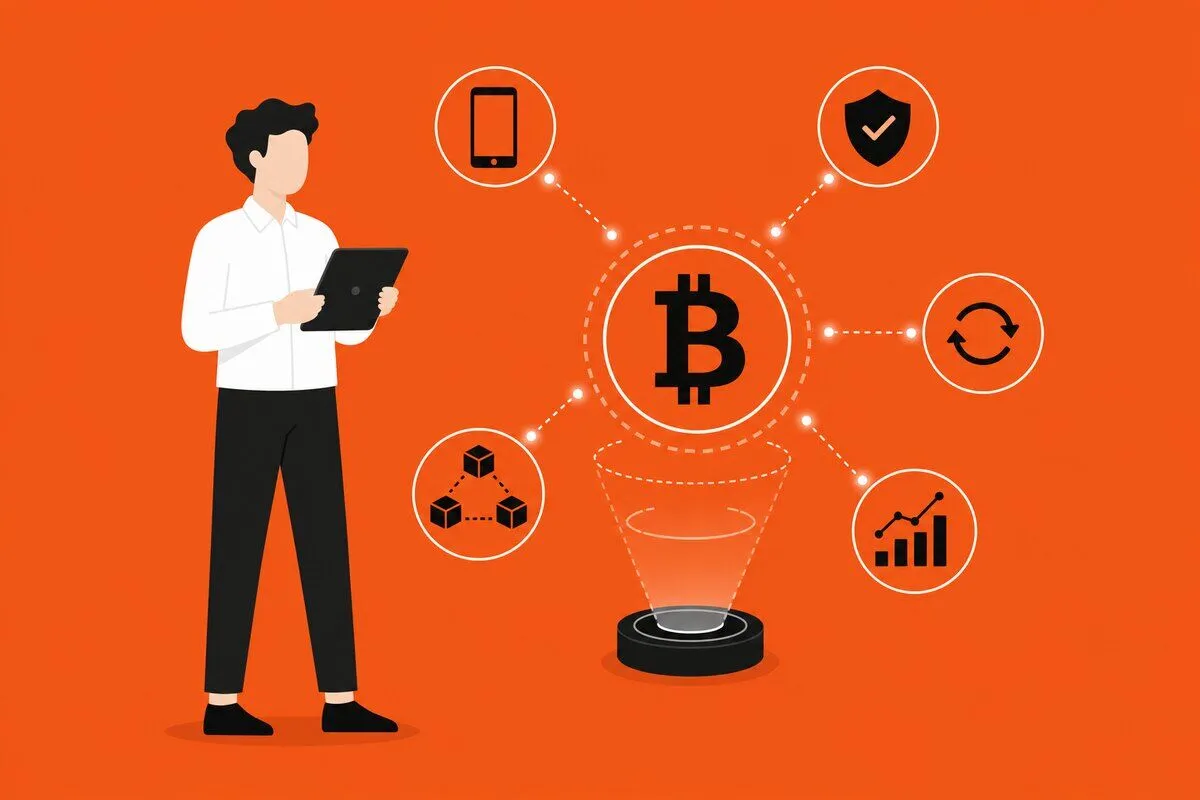
The Bitcoin mainnet represents the culmination of over a decade and a half of continuous operation — a production-grade blockchain network that has processed over 1. 07 zettahashes per second (ZH/s), supported by approximately 24,000+ reachable full nodes distributed across the globe (Source: Bitcoin Wiki Statistics, December 2025).
Key Takeaways
- Mainnet is Production: Bitcoin mainnet is the live network where real economic value transfers occur, secured by over 1.07 ZH/s of hashpower and 24,000+ distributed nodes globally.
- Transaction Lifecycle: Every Bitcoin transaction follows a defined path: creation → signing → broadcasting → validation → mempool → block inclusion → confirmation, with each step secured by cryptography.
- Private Key Authority: Private keys provide ultimate control over funds through digital signatures (ECDSA or Schnorr), enabling trustless verification without revealing secret data.
- SegWit Adoption: Over 80% of Bitcoin transactions now use Native SegWit format, providing improved efficiency, lower fees, and enhanced security compared to legacy transaction types.
- Fee Market Dynamics: Transaction fees follow supply and demand, ranging from $0.30-$0.62 during normal periods to $90+ during extreme congestion, requiring strategic timing for cost optimization.
- Confirmation Security: Multiple confirmations provide exponentially increasing security — 6 confirmations (60 minutes) is the industry standard for high-value transaction finality.
- Immutability Record: Bitcoin mainnet has processed over 1.2 billion transactions since 2009 without successful protocol-level double-spending, demonstrating unparalleled security and reliability.
Introduction to the Bitcoin Mainnet
The Bitcoin mainnet represents the culmination of over a decade and a half of continuous operation — a production-grade blockchain network that has processed over 1.2 billion cumulative transactions since its genesis block in January 2009 (Source: Bitcoin Wiki, December 2025). For organizations and individuals seeking to understand how value truly moves across this revolutionary network, comprehending the mainnet’s inner workings is essential. With our team’s 8+ years of hands-on experience in blockchain infrastructure deployment and transaction analysis, we have observed firsthand how the Bitcoin mainnet has evolved from an experimental protocol into global financial infrastructure.
Unlike test networks (testnets) used for experimentation, the Bitcoin mainnet is where real economic value exists. Every satoshi transacted on mainnet carries genuine monetary worth, secured by the largest computing network humanity has ever assembled. As of late 2025, the network operates with a hashrate exceeding 1.07 zettahashes per second (ZH/s), supported by approximately 24,000+ reachable full nodes distributed across the globe (Source: Bitcoin Wiki Statistics, December 2025). This infrastructure ensures that Bitcoin transactions achieve a level of security and immutability unmatched by any other financial system.
This comprehensive guide will walk you through the complete lifecycle of a Bitcoin transaction on mainnet — from initial creation through final confirmation — providing the technical depth and practical insights that professionals require.
What Is Bitcoin Mainnet and Why It Matters
Bitcoin mainnet is the primary, live blockchain network where all genuine Bitcoin transactions occur. The term “mainnet” distinguishes this production environment from alternative networks such as testnet (for deployment testing), signet (for controlled testing), and regtest (for local deployment). When users, exchanges, or institutions transfer Bitcoin with real economic value, they are operating exclusively on the mainnet.
The significance of mainnet extends beyond mere terminology. Every block added to the mainnet represents irreversible history — a permanent record secured by proof-of-work and distributed across tens of thousands of independent nodes. This immutability forms the foundation of Bitcoin’s value proposition as a trustless, censorship-resistant monetary network.
Expert Perspective: “In our deployment work with institutional clients, we emphasize that mainnet transactions are final. Unlike traditional banking systems where transactions can be reversed or disputed, a confirmed Bitcoin mainnet transaction cannot be undone without controlling a majority of the network’s hashpower — a practical impossibility given current network security. This finality is both a feature and a responsibility that users must understand.”
As of December 2024, the Bitcoin mainnet supported approximately 53.16 million unique addresses, with roughly 515,000 daily transactions processed on average (Source: IntoTheBlock via Bitcoinist, January 2025). These figures demonstrate the network’s robust adoption and continuous utilization for value transfer globally.
Creating a Bitcoin Transaction on Mainnet
Every Bitcoin transaction begins with a user’s intent to transfer value. The creation process involves assembling specific data elements that define the transaction’s parameters: inputs (the source of funds), outputs (the destinations), and the transaction amount. Modern wallet software abstracts much of this complexity, but understanding the underlying mechanics is crucial for professionals working with Bitcoin infrastructure.
A transaction input references a previous transaction output (UTXO — Unspent Transaction Output) that the sender controls. The sender must prove ownership of this UTXO through cryptographic signatures. Transaction outputs specify the recipient addresses and amounts. Any difference between total inputs and outputs becomes the transaction fee, paid to miners for including the transaction in a block.
Components of a Bitcoin Mainnet Transaction
| Component | Description | Purpose |
|---|---|---|
| Version | Transaction format version number | Enables protocol upgrades |
| Inputs | References to previous UTXOs | Source of funds being spent |
| Outputs | Recipient addresses and amounts | Destination of funds |
| Locktime | Block height or timestamp | Time-based spending conditions |
| Witness Data | Signatures (SegWit transactions) | Proves authorization to spend |
Transaction size directly impacts the fee required for timely confirmation. SegWit (Segregated Witness) transactions, which separate signature data from the main transaction, are more space-efficient. As of 2025, over 80% of Bitcoin transactions utilize the Native SegWit format, demonstrating widespread adoption of this efficiency improvement (Source: PocketOption Research, July 2025).
Role of Private Keys and Digital Signatures
At the heart of every Bitcoin transaction lies cryptographic proof of ownership. Private keys — 256-bit random numbers — serve as the ultimate authority over funds. From each private key, a corresponding public key is mathematically derived, and from that public key, a Bitcoin address is generated. This one-way mathematical relationship ensures that while anyone can send funds to an address, only the holder of the corresponding private key can spend them.
When creating a transaction, the wallet software uses the private key to generate a digital signature. This signature proves that the transaction was authorized by the legitimate owner without revealing the private key itself. The signature is unique to both the private key and the specific transaction data, making it impossible to forge or reuse.
Digital Signature Workflow
Transaction Created
User defines inputs, outputs, and amounts
Hash Generated
Transaction data hashed using SHA-256
Signature Applied
Private key signs the hash (ECDSA/Schnorr)
Verification Ready
Anyone can verify using the public key
Bitcoin traditionally used ECDSA (Elliptic Curve Digital Signature Algorithm). However, the Taproot upgrade, activated in November 2021 at block 709,632, introduced Schnorr signatures. Schnorr signatures enable signature aggregation, allowing multiple signatures to be combined into one, enhancing both privacy and efficiency. As of 2025, approximately 55% of Bitcoin nodes support Taproot, with adoption continuing to grow (Source: PocketOption Research, July 2025).
Transaction Broadcasting to the Bitcoin Network
Once signed, a transaction must be broadcast to the Bitcoin network for processing. The wallet software connects to one or more Bitcoin nodes and transmits the raw transaction data. From these initial nodes, the transaction propagates across the network through a gossip protocol — each node that receives a valid transaction relays it to its connected peers.
This peer-to-peer propagation ensures rapid distribution. Within seconds, a properly constructed transaction typically reaches the majority of nodes worldwide. The decentralized nature of this broadcasting mechanism means no single entity can prevent a valid transaction from reaching miners — a critical feature for censorship resistance.
Our deployment experience has shown that transaction propagation typically completes within 2-5 seconds across the global network of 24,000+ nodes. However, network congestion, node connectivity, or non-standard transaction structures can occasionally delay propagation.
How Nodes Validate Bitcoin Transactions
Before accepting and relaying a transaction, each node performs rigorous validation. This process ensures that only legitimate transactions propagate through the network, protecting against fraud and maintaining consensus. Node validation represents the first line of defense in Bitcoin’s security model.
Validation checks include: verifying that referenced inputs exist and are unspent, confirming that digital signatures are valid, ensuring transaction format compliance with protocol rules, and checking that input values equal or exceed output values (with the difference becoming fees). Nodes also enforce standardness rules that, while not consensus-critical, help maintain network efficiency.
Node Validation Checklist
| Validation Check | Type | Failure Result |
|---|---|---|
| Syntax and data structure | Consensus | Transaction rejected |
| Input UTXO existence | Consensus | Transaction rejected |
| Digital signature validity | Consensus | Transaction rejected |
| Input ≥ Output values | Consensus | Transaction rejected |
| No double-spend attempt | Consensus | Transaction rejected |
| Minimum fee rate (standardness) | Policy | Not relayed (may still be mined) |
The Mempool and Transaction Queuing
Transactions that pass validation enter the mempool (memory pool) — a waiting area where unconfirmed transactions reside until miners include them in a block. Each node maintains its own mempool, though they typically contain similar transactions due to network propagation. The mempool functions as Bitcoin’s transaction queue, organizing pending payments by fee rate.
Mempool dynamics directly impact user experience. During periods of high demand, the mempool grows as transactions accumulate faster than blocks can process them. Users competing for limited block space bid higher fees, creating a fee market. Conversely, during quiet periods, even low-fee transactions confirm quickly. In 2025, the network has experienced periods of “near-free” blocks with average fees dropping to 1 sat/vByte during quieter times (Source: 99Bitcoins, November 2025).
Mempool Example Scenario
Consider a user sending 0.5 BTC during a network congestion event. With the mempool containing 150,000 pending transactions totaling 300 MB of data, the user’s transaction at 5 sat/vB may wait several hours. By monitoring mempool.space and increasing the fee to 25 sat/vB, the transaction moves toward the front of the queue. Our team has observed that strategic fee timing — waiting for weekend or off-peak hours — can reduce costs by 50-70% without sacrificing confirmation speed.
As of early 2025, the typical monthly average transaction fee has settled around $0.62 USD, with the median at approximately $0.30 (Source: 99Bitcoins/Blockchair, 2026). However, fee spikes during congestion events have reached $8-$12 per transaction in April 2025 (Source: SQ Magazine, September 2025).
How Miners Include Transactions in a Block
Miners are the network participants who construct new blocks and compete to add them to the blockchain. They select transactions from their mempool, typically prioritizing those with the highest fee rates to maximize revenue. A miner assembles a candidate block, including selected transactions plus a special “coinbase” transaction that creates new bitcoins as their block reward.
The mining process involves repeatedly hashing the block header with different nonce values until finding a hash below the current difficulty target. This proof-of-work requires enormous computational effort — the network’s 1.07+ ZH/s hashrate represents trillions of hash calculations per second globally. When a miner finds a valid hash, they broadcast the block to the network.
Following the April 2024 halving, miners receive 3.125 BTC per block as the base reward, plus all transaction fees from included transactions. This economic model incentivizes miners to include high-fee transactions while maintaining network security through computational investment.
Block Confirmation and Network Consensus
When a miner broadcasts a newly discovered block, nodes across the network validate it against consensus rules. Valid blocks are added to each node’s local copy of the blockchain. The transactions contained within that block are now considered to have one confirmation — their first inclusion in the permanent record.
Consensus emerges naturally through the longest-chain rule: nodes always consider the chain with the most accumulated proof-of-work as the valid chain. This mechanism ensures that even if temporary disagreements occur (two miners finding blocks simultaneously), the network converges on a single history as subsequent blocks are added.
Technical Note: “Our infrastructure monitoring shows that block propagation across the global node network typically completes within 10-15 seconds for compact block relay. This rapid propagation minimizes the window for chain splits and ensures miners quickly build on the latest block, maintaining network efficiency.”
Finality and Multiple Block Confirmations
While a single confirmation indicates block inclusion, Bitcoin’s security model recommends waiting for multiple confirmations before considering a transaction final. Each subsequent block added to the chain increases the computational cost required to reverse the transaction, making reorganization attacks exponentially more difficult.
The industry standard of 6 confirmations (approximately 60 minutes) provides statistical certainty exceeding 99.99% against reversal for most transaction values. However, confirmation requirements should scale with transaction risk and value.
Confirmation Guidelines by Transaction Value
Small (<$1,000)
Confirmations: 1-2
Wait Time: 10-20 minutes
Low reversal risk
Medium ($1K-$100K)
Confirmations: 3-6
Wait Time: 30-60 minutes
Standard security
Large ($100K+)
Confirmations: 6+
Wait Time: 60+ minutes
Maximum assurance
Transaction Fees and Miner Incentives
Transaction fees serve dual purposes in the Bitcoin ecosystem: they compensate miners for including transactions and create a fee market that naturally prioritizes time-sensitive transfers. As block rewards diminish through halving events, fees become increasingly important for network security sustainability.
Fee dynamics on mainnet follow supply and demand principles. Block space is limited (approximately 1-4 MB per block depending on transaction types), while transaction demand varies. The April 2024 halving demonstrated this relationship dramatically — on April 20, 2024, the average fee spiked to $91.89, a 2,645% increase from $3.35 the previous month, as users competed for block space during heightened network activity (Source: 99Bitcoins, November 2025).
Bitcoin Transaction Fee Comparison (2024-2025)
| Period | Average Fee (USD) | Network Condition | Monthly Total Fees |
|---|---|---|---|
| March 2024 | $3.35 | Normal | ~$50M |
| April 2024 (Halving) | $91.89 (peak) | Extreme Congestion | ~$439M |
| Q4 2024 | $2-5 | Moderate | ~$300M |
| 2025 Average | $0.62 | Low Activity | ~$239M |
Sources: 99Bitcoins, SQ Magazine, Blockchair (2024-2025)
Currently, approximately 99.3% of miner revenue comes from block rewards, with fees comprising the remainder (Source: Bitcoin Wiki, December 2025). However, as rewards continue halving every four years, transaction fees will become the dominant revenue source, fundamentally changing network economics.
Security and Immutability of Mainnet Transactions
Bitcoin mainnet achieves security through the combined efforts of proof-of-work mining, distributed validation, and cryptographic verification. The network’s 1.07+ ZH/s hashrate means that attacking the network would require controlling over 500 exahashes per second — a computational and economic impossibility given current hardware availability and energy costs.
Immutability emerges from the blockchain’s chained structure. Each block contains the hash of the previous block, creating a tamper-evident record. Altering any historical transaction would change its block’s hash, invalidating all subsequent blocks. An attacker would need to re-mine every block from the alteration point while outpacing the honest network — a task that becomes exponentially harder with each confirmation.
The distributed nature of full nodes (24,000+ globally) ensures that no single entity can rewrite history. Each node independently verifies the entire blockchain, rejecting any invalid modifications. This decentralized validation creates what our team refers to as “social immutability” — even if technically possible, any successful attack would be immediately visible and rejected by the economic majority.
Security Milestone: “Bitcoin’s mainnet has operated continuously since January 3, 2009, processing over 1.2 billion transactions without a single instance of successful double-spending at the protocol level. This 16+ year track record of unbroken security represents the longest-running demonstration of blockchain immutability in existence.”
Frequently Asked Questions
Q1.What is the difference between Bitcoin mainnet and testnet?
Mainnet is Bitcoin’s production network where real BTC with economic value is transferred. Testnet uses worthless test coins for deployment and experimentation without financial risk. Mainnet transactions are permanent and secured by the full network hashrate, while testnet can be reset and has minimal security.
Q2.How long does a Bitcoin mainnet transaction take to confirm?
The first confirmation typically takes approximately 10 minutes (one block). However, actual time varies based on fee rate and network congestion. Low-fee transactions during busy periods may take hours. For practical finality, most services wait for 3-6 confirmations (30-60 minutes).
Q3.Can a Bitcoin mainnet transaction be reversed or cancelled?
Once confirmed in a block, Bitcoin transactions cannot be reversed at the protocol level. Before confirmation, a transaction can potentially be replaced using Replace-By-Fee (RBF) if the sender enabled this option. The irreversibility of confirmed transactions is a core feature, not a limitation.
Q4.What determines Bitcoin transaction fees on mainnet?
Fees are determined by transaction size (in virtual bytes) multiplied by the fee rate (satoshis per vByte). Users choose their fee rate based on desired confirmation speed. During high demand, higher fees are needed for quick confirmation. Typical 2025 fees average $0.62 but can spike above $90 during congestion.
Q5.What happens if I send Bitcoin to the wrong address on mainnet?
Transactions sent to valid Bitcoin addresses cannot be recovered without the recipient’s cooperation. If sent to an invalid address, the transaction will fail validation and never confirm. Always verify addresses carefully before sending — mainnet transactions are irreversible.
Q6.How many transactions can Bitcoin mainnet process per day?
Bitcoin mainnet processes approximately 500,000-550,000 transactions daily at current capacity, though this varies based on transaction types and sizes. The network is designed for approximately 144 blocks per day, with each block holding 1-4 MB of transaction data. Layer-2 solutions like Lightning Network extend capacity significantly.
Q7.What is the mempool and why is my transaction stuck there?
The mempool is a waiting area for unconfirmed transactions. Transactions get “stuck” when their fee rate is too low compared to competing transactions. Miners prioritize higher-fee transactions. Solutions include waiting for mempool to clear, using RBF to increase fees, or Child-Pays-For-Parent (CPFP) transactions.
Q8.What are SegWit and Taproot, and should I use them?
SegWit (Segregated Witness) and Taproot are Bitcoin protocol upgrades that improve efficiency, reduce fees, and enhance privacy. SegWit addresses (starting with “bc1q”) are now standard, used in 80%+ of transactions. Taproot addresses (starting with “bc1p”) offer additional benefits for complex transactions. Both are recommended.
Q9.How do I verify my Bitcoin mainnet transaction?
Use any block explorer (mempool.space, blockstream.info, blockchain.com) to verify transactions by entering your transaction ID (TXID) or address. These tools show transaction status, confirmation count, fee paid, and block inclusion. Running your own full node provides the highest verification assurance.
Q10.Is the Bitcoin mainnet secure enough for large transactions?
The Bitcoin mainnet is the most secure blockchain network in existence, protected by over 1 ZH/s of hashpower. For large transactions, wait for 6+ confirmations (60+ minutes) for maximum security. The network has processed over $1 trillion in transaction value without protocol-level security failures since 2009.
Explore Services
Related Services
Reviewed by

Aman Vaths
Founder of Nadcab Labs
Aman Vaths is the Founder & CTO of Nadcab Labs, a global digital engineering company delivering enterprise-grade solutions across AI, Web3, Blockchain, Big Data, Cloud, Cybersecurity, and Modern Application Development. With deep technical leadership and product innovation experience, Aman has positioned Nadcab Labs as one of the most advanced engineering companies driving the next era of intelligent, secure, and scalable software systems. Under his leadership, Nadcab Labs has built 2,000+ global projects across sectors including fintech, banking, healthcare, real estate, logistics, gaming, manufacturing, and next-generation DePIN networks. Aman’s strength lies in architecting high-performance systems, end-to-end platform engineering, and designing enterprise solutions that operate at global scale.