Ai Overview
Web3 applications represent the next evolution of internet services, built on decentralized infrastructure that distributes control across network participants rather than concentrating it within corporate entities. Understanding what are web3 applications requires grasping how blockchain technology fundamentally changes the relationship between users and platforms. Organizations across the USA and UK utilize Aragon’s frameworks for everything from investment clubs to nonprofit governance.
Key Takeaways
- The best web3 applications leverage blockchain technology to deliver trustless, transparent, and user-controlled digital experiences across multiple industries globally.
- Top web3 applications in DeFi including Uniswap, Aave, and MakerDAO have collectively processed over $500 billion in transaction volume since inception.
- Web3 use cases span decentralized finance, digital ownership, gaming, identity management, and community governance with real-world adoption accelerating rapidly.
- The web3 ecosystem encompasses infrastructure providers, protocol layers, and consumer applications working together to create the decentralized web.
- Enterprises across the USA, UK, UAE, and Canada are increasingly adopting blockchain-based applications to enhance operational transparency and efficiency.
- Web3 technology enables true digital ownership through NFTs, allowing creators and users to control their assets without intermediary dependencies.
- DAOs represent revolutionary governance models where communities collectively manage resources and make decisions through transparent voting mechanisms.
- Layer 2 scaling solutions and cross-chain bridges are addressing scalability challenges, making web3 applications more accessible to mainstream users.
- The benefits of web3 applications include censorship resistance, reduced fees, programmable money, and elimination of single points of failure.
- The future of web3 applications points toward mass adoption as user interfaces improve and regulatory frameworks provide clearer operational guidelines.
Why Web3 Applications Matter in the Decentralized Web?
The decentralized web represents a fundamental reimagining of digital power structures, shifting control from platform operators to users and communities. The benefits of web3 applications extend beyond technical improvements to address systemic issues with current internet architecture including data exploitation, censorship vulnerability, and value extraction by intermediaries. These concerns resonate particularly strongly with privacy-conscious users and enterprises across the UK and Canada seeking alternatives to surveillance capitalism.
Top web3 applications demonstrate tangible improvements over centralized predecessors. DeFi protocols offer higher yields and lower fees than traditional banking, NFT marketplaces enable direct creator-to-collector relationships without gallery commissions, and decentralized social networks resist arbitrary account suspensions. According to Electric Capital’s research, the number of monthly active blockchain builders continues growing despite market fluctuations, indicating sustained commitment to building this alternative infrastructure.[1]
Financial inclusion represents another compelling value proposition, particularly for underbanked populations worldwide. Blockchain-based applications require only internet access and a digital wallet, eliminating documentation barriers that exclude billions from traditional financial services. This accessibility drives adoption in emerging markets while attracting regulatory attention in established financial centers across the USA and UAE.
Types of Web3 Applications Across Different Industries
Financial Applications
- Decentralized exchanges (DEXs)
- Lending and borrowing protocols
- Yield optimization platforms
- Stablecoin ecosystems
Creative and Media
- NFT marketplaces
- Music streaming platforms
- Creator tokenization tools
- Decentralized publishing
Infrastructure Tools
- Decentralized storage networks
- Oracle services
- Cross-chain bridges
- Identity protocols
Web3 use cases continue expanding as entrepreneurs identify new problems solvable through decentralized architectures. Gaming represents explosive growth potential, social networks challenge incumbent platforms, and supply chain applications bring transparency to global commerce. This diversity demonstrates the versatility of blockchain-based applications across virtually every industry vertical.
Blockchain gaming introduces true ownership of in-game assets, enabling players to trade, sell, or utilize items across compatible ecosystems. This represents a paradigm shift from traditional gaming where purchases remain locked within proprietary platforms. The play-to-earn model, while facing sustainability questions, demonstrated that web3 technology can create new economic opportunities for participants globally, including regions where traditional employment options remain limited.
Best Web3 Applications for DAOs and Community Governance
Decentralized Autonomous Organizations represent revolutionary governance models where communities collectively manage resources, make decisions, and coordinate activities through transparent on-chain mechanisms. Snapshot provides gasless voting infrastructure utilized by thousands of DAOs, enabling token holders to participate in governance without transaction fees. This accessibility democratizes participation beyond wealthy stakeholders who could otherwise dominate costly on-chain voting.
Aragon offers comprehensive DAO tooling including treasury management, permission systems, and dispute resolution mechanisms. Organizations across the USA and UK utilize Aragon’s frameworks for everything from investment clubs to nonprofit governance. The platform demonstrates how web3 technology enables coordination at scale without traditional hierarchical structures, reducing administrative overhead while increasing stakeholder engagement.
Major protocol DAOs including Uniswap DAO, Aave DAO, and MakerDAO govern billions in assets through community proposals and token-weighted voting. These organizations demonstrate that decentralized governance can effectively manage complex technical and financial decisions, though challenges around voter participation and plutocratic influence continue sparking innovation in governance mechanism design.
Best Web3 Applications in Web3 Infrastructure and Tooling
Chainlink: The dominant oracle network providing tamper-proof data feeds connecting smart contracts with real-world information across hundreds of protocols.
The Graph: Indexing protocol enabling efficient data queries from blockchain networks, powering analytics and application interfaces across the ecosystem.
Alchemy: Node infrastructure provider simplifying blockchain access for builders, supporting millions of weekly API requests across major networks.
IPFS/Filecoin: Decentralized storage solutions providing censorship-resistant file storage and retrieval for web3 applications globally.
LayerZero: Cross-chain messaging protocol enabling seamless communication between different blockchain networks for unified user experiences.
Safe (Gnosis Safe): Multi-signature wallet infrastructure securing over $100 billion in assets for individuals, DAOs, and institutions worldwide.
Scalability Challenges Faced by Web3 Applications
Scalability remains the primary technical barrier limiting mainstream adoption of web3 technology. Ethereum’s base layer processes approximately 15 transactions per second compared to Visa’s 65,000, creating congestion during high-demand periods that spike transaction fees to prohibitive levels. This limitation directly impacts user experience and restricts use cases requiring high-frequency, low-value transactions.
Layer 2 solutions including Arbitrum, Optimism, and zkSync address these constraints by processing transactions off-chain while inheriting security from underlying Layer 1 networks. These rollup technologies have collectively reduced transaction costs by orders of magnitude, enabling applications previously uneconomical on mainnet. The future of web3 applications increasingly involves multi-chain architectures leveraging specialized networks for different use cases.
Alternative Layer 1 networks including Solana, Avalanche, and newer entrants like Sui and Aptos take different architectural approaches prioritizing throughput over maximum decentralization. This diversity provides options for applications with varying requirements, though fragmented liquidity and user experience complexity across chains present ongoing challenges the ecosystem continues addressing.
How Businesses Are Adopting Web3 Applications?
Enterprise DeFi
- Treasury management solutions
- Institutional lending platforms
- Compliant stablecoin integration
- Cross-border payment rails
Brand Engagement
- Loyalty token programs
- NFT-based memberships
- Digital collectible campaigns
- Community reward systems
Supply Chain
- Product authenticity tracking
- Transparent sourcing records
- Automated compliance logs
- Multi-party coordination
Enterprise adoption of web3 solutions accelerates as businesses recognize operational efficiencies and customer engagement opportunities. Major brands including Nike, Starbucks, and Reddit have launched successful NFT programs, while financial institutions explore DeFi integration for improved capital efficiency. Organizations across the USA, UK, UAE, and Canada are building dedicated web3 teams to capitalize on emerging opportunities.
Future Trends Shaping Web3 Applications
AI Integration
Convergence of artificial intelligence with blockchain creates autonomous agents managing portfolios, executing trades, and participating in governance.
Account Abstraction
Simplified wallet experiences enabling social recovery, batched transactions, and gasless interactions drive mainstream adoption.
Real-World Assets
Tokenization of traditional assets including real estate, bonds, and commodities brings trillions in value on-chain.
Regulatory Clarity
Emerging frameworks in major jurisdictions provide operational certainty attracting institutional capital and enterprise adoption.
Build Your Web3 Vision With Industry Experts
Our seasoned team delivers end-to-end web3 solutions from architecture design through deployment, helping enterprises harness blockchain innovation effectively.
Frequently Asked Questions
Q1.What are web3 applications and how do they differ from traditional apps?
Web3 applications are decentralized software built on blockchain technology that operates without central authorities controlling user data or platform rules. Unlike traditional web2 apps owned by corporations, web3 applications distribute control across network participants through smart contracts. Users maintain ownership of their data and assets through cryptographic wallets, enabling trustless interactions without intermediaries extracting value from transactions.
Q2.How do web3 applications work technically?
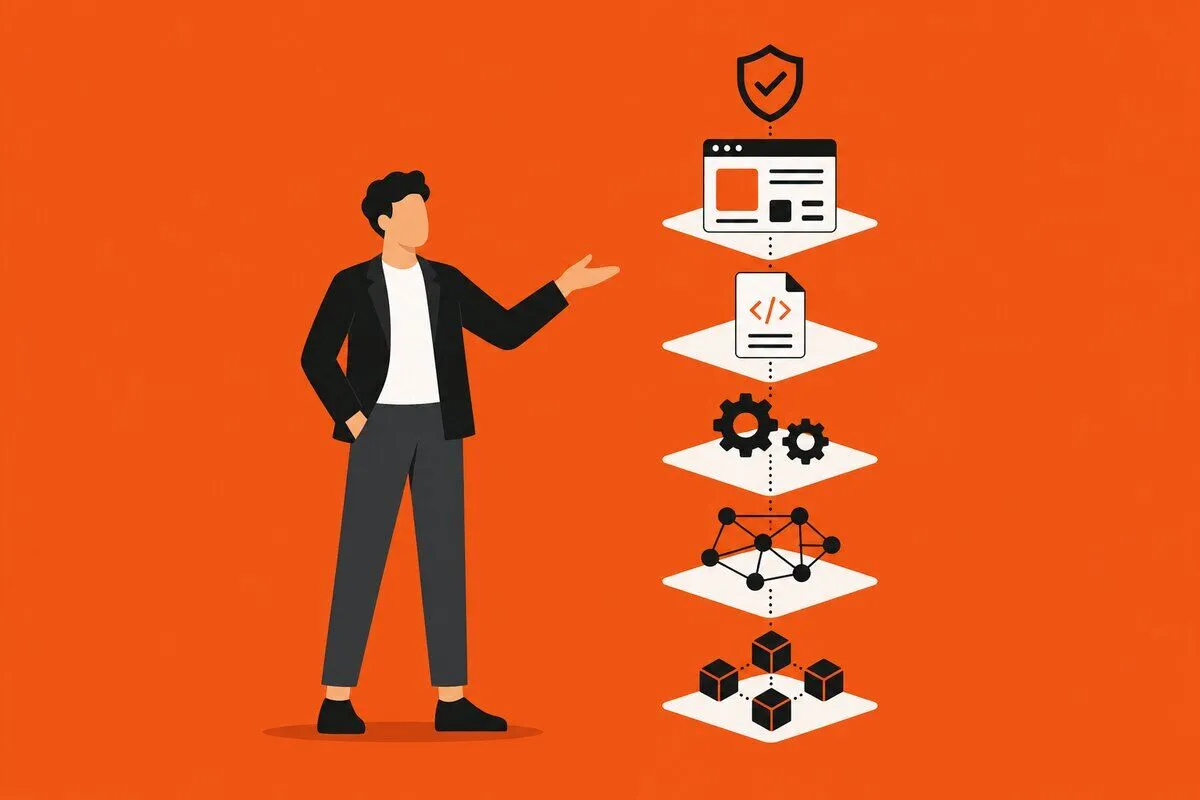
Web3 applications function through interconnected layers including blockchain networks for transaction processing, smart contracts for automated logic execution, and decentralized storage for data persistence. Users interact via wallet interfaces that sign transactions cryptographically. Smart contracts execute predefined conditions without human intervention, while consensus mechanisms ensure network agreement. This architecture creates transparent, tamper-resistant systems accessible globally.
Q3.What are the best examples of web3 applications currently available?
Leading examples of web3 applications include Uniswap for decentralized trading, Aave for lending and borrowing, OpenSea for NFT marketplaces, Axie Infinity for blockchain gaming, ENS for decentralized identity, and Snapshot for DAO governance. These platforms demonstrate mature implementations serving millions of users across financial services, digital ownership, gaming, and community coordination use cases globally.
Q4.What are the main benefits of web3 applications for users?
The benefits of web3 applications include true digital ownership through self-custody wallets, censorship resistance against arbitrary platform bans, reduced transaction fees by eliminating intermediaries, transparent operations through public blockchain records, and programmable money enabling automated financial agreements. Users gain control over their data and assets while participating in community governance through token-based voting mechanisms.
Q5.What challenges do web3 applications currently face?
Web3 applications face scalability limitations causing high transaction fees during network congestion, user experience complexity requiring technical knowledge, regulatory uncertainty across different jurisdictions, and smart contract vulnerabilities risking user funds. Additionally, wallet management responsibilities and irreversible transactions create adoption barriers for mainstream users accustomed to traditional customer support and account recovery options.
Q6.How are businesses in the USA, UK, and UAE adopting web3 applications?
Enterprises across the USA, UK, and UAE are integrating web3 applications for treasury management, supply chain transparency, customer loyalty programs, and cross-border payments. Major brands launch NFT collections for customer engagement, financial institutions explore DeFi for capital efficiency, and corporations establish dedicated blockchain teams. Regulatory clarity in these markets accelerates institutional adoption of blockchain-based solutions.
Q7.What does the future hold for web3 applications?
The future of web3 applications points toward mass adoption driven by improved user experiences, account abstraction simplifying wallet management, Layer 2 scaling reducing costs, and regulatory frameworks providing operational certainty. Emerging trends include AI integration with blockchain, tokenization of real-world assets, and convergence with traditional financial systems. These developments position web3 for significant expansion across enterprise and consumer markets.
Explore Services
Related Services
Reviewed by

Aman Vaths
Founder of Nadcab Labs
Aman Vaths is the Founder & CTO of Nadcab Labs, a global digital engineering company delivering enterprise-grade solutions across AI, Web3, Blockchain, Big Data, Cloud, Cybersecurity, and Modern Application Development. With deep technical leadership and product innovation experience, Aman has positioned Nadcab Labs as one of the most advanced engineering companies driving the next era of intelligent, secure, and scalable software systems. Under his leadership, Nadcab Labs has built 2,000+ global projects across sectors including fintech, banking, healthcare, real estate, logistics, gaming, manufacturing, and next-generation DePIN networks. Aman’s strength lies in architecting high-performance systems, end-to-end platform engineering, and designing enterprise solutions that operate at global scale.