Ai Overview
Web3 platforms represent the next generation of internet infrastructure built on blockchain networks that enable decentralized applications, digital asset ownership, and peer-to-peer transactions without intermediaries. NFT Marketplaces: Ethereum remains dominant for high-value NFTs, while Polygon and Solana serve high-volume, lower-cost marketplace needs effectively.
Key Takeaways
- Web3 platforms enable decentralized ownership, trustless transactions, and transparent governance through blockchain technology and smart contracts.
- Ethereum remains the most trusted ecosystem for smart contracts, while Layer 2 solutions like Arbitrum and Optimism offer lower fees.
- Choosing between EVM-compatible and non-EVM platforms depends on your technical requirements, language preferences, and target user base.
- Top web3 applications for DeFi prioritize liquidity depth, oracle reliability, and composability with existing protocols.
- Security evaluation requires examining audit histories, validator distribution, bridge safety records, and governance mechanisms.
- Gas fee predictability varies significantly across platforms, with Layer 2 rollups offering the most consistent low-cost transactions.
- Enterprise adoption in the USA, UK, and UAE increasingly favors Polygon, Avalanche, and permissioned blockchain configurations.
- Web3 platforms with best tooling include comprehensive SDKs, testing frameworks, indexing services, and active community support.
- Multi-chain strategies make sense when targeting diverse user bases or requiring specific platform capabilities unavailable elsewhere.
- Future trends point toward account abstraction, modular architectures, and AI-integrated web3 platforms reshaping user experiences.
What Are Web3 Platforms?
Web3 platform meaning (simple definition)
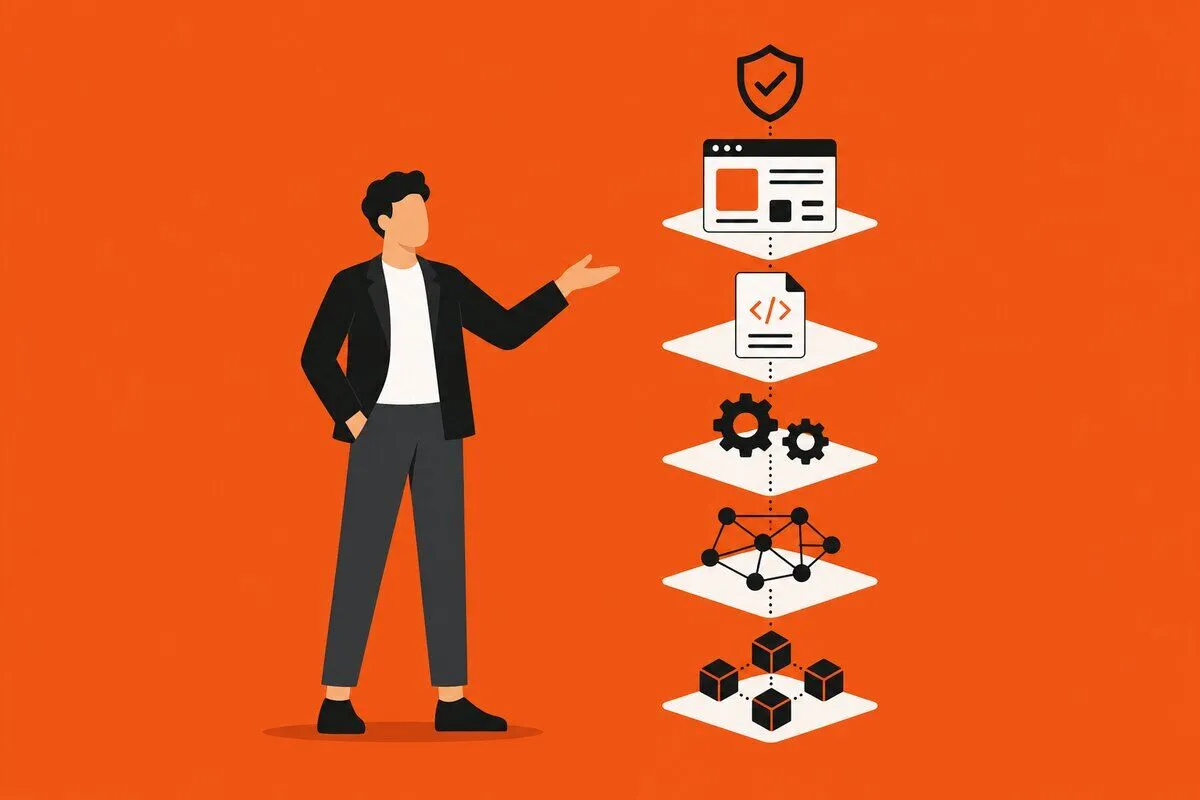
Web3 platforms represent the next generation of internet infrastructure built on blockchain networks that enable decentralized applications, digital asset ownership, and peer-to-peer transactions without intermediaries. These platforms provide the foundational layer where smart contracts execute automatically, users maintain control of their data through cryptographic wallets, and governance happens transparently through token-based voting mechanisms. Unlike traditional software platforms controlled by single entities, web3 platforms distribute authority across global networks of validators and node operators.
Web3 platforms vs Web2 platforms
The fundamental distinction between web3 and web2 platforms lies in ownership and control architecture. Web2 platforms like social media networks and cloud services store user data on centralized servers owned by corporations who monetize that information. Web3 platforms flip this model entirely by storing data on distributed ledgers where users hold cryptographic keys granting exclusive access to their assets and information. This architectural shift eliminates single points of failure, reduces censorship risks, and enables true digital property rights that persist regardless of platform operator decisions.
Why Web3 platforms matter for users and builders?
For users, web3 platforms provide unprecedented control over digital identities, financial assets, and online interactions without requiring trust in centralized authorities. Builders benefit from permissionless innovation environments where applications can launch without gatekeepers, composability allows combining existing protocols like building blocks, and global markets become accessible from day one. Organizations across Canada, the UK, and UAE increasingly recognize these platforms as essential infrastructure for next-generation digital services.
How Web3 Platforms Work (Behind the Scenes)
Role of blockchain networks in Web3 platforms
Blockchain networks serve as the immutable ledger layer that records every transaction, smart contract execution, and state change across web3 platforms. These distributed databases replicate across thousands of nodes globally, ensuring no single entity can alter historical records or censor specific transactions. The consensus mechanisms governing these networks, whether proof-of-stake or other variations, determine transaction finality speed, energy consumption, and security guarantees that each platform offers.
Smart contracts as the execution layer
Smart contracts function as self-executing programs deployed on blockchain networks that automatically enforce agreement terms when predefined conditions occur. These immutable code blocks power everything from simple token transfers to complex DeFi lending protocols, NFT royalty distributions, and decentralized governance systems. Understanding how to build a web3 game or DeFi application requires mastering smart contract logic, security patterns, and gas optimization techniques specific to your chosen platform.
Wallets, keys, and identity in Web3 platforms
Cryptographic wallets serve as the identity and authentication layer across all web3 platforms, replacing traditional username-password systems with public-private key pairs. Users maintain sole custody of private keys that authorize transactions, sign messages, and prove asset ownership without relying on centralized identity providers. This self-sovereign identity model enables seamless cross-platform authentication while placing security responsibility directly on users to protect their keys.
On-chain vs off-chain components (hybrid architecture)
Modern web3 platforms employ hybrid architectures combining on-chain settlement for critical operations with off-chain computation for performance-intensive tasks. On-chain components handle asset custody, final transaction settlement, and governance voting, while off-chain systems manage user interfaces, metadata storage, complex calculations, and real-time interactions. This architectural pattern enables web3 applications to deliver user experiences comparable to web2 platforms while maintaining blockchain security guarantees for essential operations.
Key Components of a Web3 Platform
Layer 1 Blockchain (Settlement Layer)
The foundational blockchain providing final transaction settlement, security guarantees, and decentralized consensus for all activities built above it.
Layer 2 Scaling Solutions
Secondary networks processing transactions off the main chain while inheriting security from Layer 1, enabling higher throughput and lower costs.
Nodes, Validators and Consensus
Distributed network participants validating transactions, proposing blocks, and maintaining consensus about the current state of the blockchain.
Tokens, Gas Fees and Transactions
Native tokens incentivizing validators, gas fees preventing spam, and transaction mechanics enabling value transfer across the network.
dApps, APIs and Middleware
Decentralized applications, indexing services, and middleware tools connecting blockchain data with user-facing interfaces and external systems.
Types of Web3 Platforms
Layer 1 platforms (L1)
Layer 1 platforms represent independent blockchain networks with their own consensus mechanisms, native tokens, and validator sets. Examples include Ethereum, Solana, Avalanche, and Near Protocol, each offering distinct tradeoffs between decentralization, scalability, and transaction costs. These foundational platforms serve as settlement layers for the broader ecosystem, with their security properties inherited by applications and Layer 2 solutions built above them.
Layer 2 platforms (L2)
Layer 2 solutions extend base layer capacity by processing transactions off-chain while posting cryptographic proofs or compressed data back to Layer 1 for final settlement. Arbitrum, Optimism, Base, and zkSync represent the leading L2 platforms, each employing different technical approaches ranging from optimistic rollups to zero-knowledge proofs. These platforms dramatically reduce transaction costs while maintaining the security guarantees of their underlying Layer 1 networks.
App-specific chains and modular chains
Application-specific blockchains dedicate entire networks to single applications, providing customized throughput, governance, and tokenomics unavailable on general-purpose platforms. Modular blockchain architectures separate execution, consensus, and data availability into specialized layers that applications can mix and match according to their requirements. This approach enables unprecedented flexibility for projects requiring specific performance characteristics or regulatory compliance configurations.
Cross-chain ecosystems and interoperability networks
Interoperability protocols like Cosmos and Polkadot enable communication and asset transfers between otherwise isolated blockchain networks. These ecosystems provide shared security models, standardized messaging protocols, and bridge infrastructure that connect diverse web3 platforms into unified networks. Cross-chain capabilities become increasingly important as applications seek to access liquidity and users across multiple platforms simultaneously.
Web3 Platforms for Users – What Matters Most
Wallet compatibility and onboarding ease
User adoption depends heavily on seamless wallet integration and intuitive onboarding experiences that minimize friction for newcomers. The best web3 platforms support multiple wallet options including MetaMask, Coinbase Wallet, and emerging smart wallet solutions that simplify key management. Platforms investing in social login alternatives and account abstraction features demonstrate stronger commitment to mainstream accessibility.
Transaction speed and low-fee usability
Transaction confirmation times and fee structures directly impact user experience quality across web3 platforms. Users in the USA, UK, and Canada increasingly expect near-instant confirmations and predictable costs comparable to traditional payment systems. Layer 2 platforms and high-throughput Layer 1 chains like Solana excel in delivering responsive experiences that support high-frequency interactions.
dApp availability (DeFi, NFTs, gaming)
The richness of decentralized application ecosystems determines practical utility for end users exploring web3 platforms. Platforms with diverse DeFi protocols, active NFT marketplaces, and engaging gaming experiences attract larger user bases and maintain higher retention rates. Ecosystem depth in web3 dapp platforms reflects both builder interest and sustainable long-term growth potential.
Safety: scams, approvals, and user protection
Secure web3 platforms implement multiple layers of user protection including transaction simulation, approval management tools, and scam detection warnings. Educated users verify contract addresses, review token approval limits, and utilize hardware wallets for significant holdings. Platform-level safety features like automatic approval revocation and phishing prevention significantly reduce risks for less technical users.
UI/UX maturity across platforms
User interface quality varies dramatically across web3 platforms, with leading ecosystems investing heavily in polished experiences that rival traditional applications. Mature platforms offer responsive designs, clear transaction previews, and helpful error messages that guide users through complex operations. Interface improvements represent a key differentiator attracting mainstream adoption in competitive markets.
Web3 Platforms for Builders – What Matters Most
EVM compatibility vs non-EVM options
EVM-compatible platforms allow builders to deploy existing Ethereum smart contracts with minimal modifications, leveraging established tooling and security patterns. Non-EVM platforms like Solana, Sui, and Aptos offer performance advantages but require learning new languages and paradigms. Web3 platform comparison for builders often centers on this fundamental architectural choice and its implications for team capabilities.
Smart contract language options
Solidity dominates EVM ecosystems with extensive documentation, mature tooling, and large talent pools available globally. Rust powers Solana and Near ecosystems, offering memory safety and performance benefits for complex applications. Move language on Sui and Aptos platforms provides resource-oriented programming that prevents common smart contract vulnerabilities at the language level.
Testing, deployment, and tools
Web3 platforms with best tooling provide comprehensive testing frameworks, local network simulators, and streamlined deployment pipelines that accelerate delivery cycles. Foundry, Hardhat, and Anchor represent leading toolchains across different platform ecosystems. Builder productivity directly correlates with tooling maturity, documentation quality, and community support availability.
Indexing, analytics, and monitoring tools
Indexing services like The Graph, Goldsky, and platform-native solutions enable efficient querying of blockchain data essential for responsive application frontends. Analytics and monitoring tools help teams track performance metrics, detect anomalies, and optimize smart contract operations. These infrastructure components distinguish production-ready web3 platforms from those still maturing.
Upgradeability and governance support
Smart contract upgradeability patterns and governance frameworks determine long-term maintainability of deployed applications. Proxy patterns, modular architectures, and on-chain governance tooling vary significantly across platforms. Builders must understand upgrade mechanisms and their security implications when selecting platforms for applications requiring iterative improvements.
Best Web3 Platforms by Use Case
DeFi Applications: Ethereum, Arbitrum, and Solana lead for DeFi due to deep liquidity pools, established oracle networks, and mature protocol ecosystems.
NFT Marketplaces: Ethereum remains dominant for high-value NFTs, while Polygon and Solana serve high-volume, lower-cost marketplace needs effectively.
Web3 Gaming: Immutable X, Polygon, and Sui excel for gaming with high throughput, low latency, and gaming-specific infrastructure support.
Enterprise Solutions: Polygon, Avalanche subnets, and Hyperledger integrations serve enterprises in USA, UK, and UAE requiring compliance configurations.
Identity and Credentials: Polygon ID, Ethereum attestations, and Ceramic Network provide robust decentralized identity infrastructure for credential applications.
Top Web3 Platforms List
| Platform | Type | Key Strength | Best For |
|---|---|---|---|
| Ethereum | L1 | Most trusted smart contract ecosystem | DeFi, NFTs, Enterprise |
| Solana | L1 | High-speed, low-cost transactions | DeFi, Gaming, Payments |
| Polygon | L2/Sidechain | Enterprise-friendly scaling | Enterprise, Gaming, NFTs |
| Arbitrum | L2 | Leading optimistic rollup for DeFi | DeFi Applications |
| Optimism | L2 | Strong governance ecosystem | DeFi, Public Goods |
| Avalanche | L1 | Subnet flexibility | Enterprise, Gaming |
| BNB Chain | L1 | High adoption, low fees | DeFi, Trading |
| Base | L2 | Coinbase backing, growth focus | Consumer Apps |
| Near Protocol | L1 | Builder-friendly, sharding | dApps, Social |
| Cosmos | Ecosystem | Interoperability-first | App Chains |
| Polkadot | Ecosystem | Shared security parachains | Custom Chains |
| Sui | L1 | Move-based, high performance | Gaming, DeFi |
| Aptos | L1 | Move-based, scalability focus | Enterprise, DeFi |
| zkSync | L2 (ZK) | ZK-rollup technology | DeFi, Scaling |
| Starknet | L2 (ZK) | Cairo ecosystem, ZK-based | DeFi, Gaming |
Web3 Platform Comparison (L1 vs L2 vs Modular)
L1 vs L2 – which is better for building?
Layer 1 platforms offer complete control over execution environments and direct access to native security properties, making them ideal for foundational infrastructure and protocols requiring maximum decentralization. Layer 2 solutions inherit security from established L1s while providing dramatically lower costs and faster confirmations, suiting applications prioritizing user experience and transaction volume. The decision framework depends on security requirements, target user demographics, and long-term scaling strategies specific to each project.
| Aspect | Layer 1 | Layer 2 | Modular |
|---|---|---|---|
| Security | Native consensus | Inherited from L1 | Customizable layers |
| Cost | Higher fees | Lower fees | Variable |
| Speed | Varies widely | Generally faster | Optimized per layer |
| Flexibility | Fixed parameters | L1 constraints | Maximum flexibility |
Monolithic vs modular Web3 platforms
Monolithic blockchains handle execution, consensus, and data availability within single unified networks, simplifying architecture but limiting customization options. Modular approaches separate these concerns into specialized layers that applications can compose according to specific requirements. This architectural evolution enables unprecedented flexibility for projects needing particular performance characteristics or regulatory configurations unavailable in traditional designs.
Trade-offs: decentralization vs speed vs cost
The blockchain trilemma forces every platform to balance decentralization, scalability, and security, with different solutions prioritizing different vertices. Highly decentralized networks like Ethereum sacrifice speed for censorship resistance, while performance-focused chains like Solana accept higher validator requirements. Understanding these tradeoffs helps teams select platforms aligned with their specific priorities and user expectations.
Ecosystem maturity comparison
Ecosystem maturity encompasses tooling quality, documentation depth, community size, funding availability, and battle-tested security track records. Ethereum leads in maturity with years of production experience, while newer platforms like Sui and Aptos offer technical innovations with developing ecosystems. Builders should weigh innovation potential against ecosystem support when evaluating emerging web3 platforms for production deployments.
Security Risks in Web3 Platforms
Smart contract vulnerabilities and exploits
Smart contract vulnerabilities remain the primary attack vector across web3 platforms, with reentrancy attacks, integer overflows, and access control flaws causing billions in losses historically. Secure web3 platforms require rigorous audit processes, formal verification for critical contracts, and ongoing monitoring for suspicious activity patterns. Teams must implement defense-in-depth strategies including bug bounties, gradual rollouts, and emergency pause mechanisms.
Bridge hacks and cross-chain risks
Cross-chain bridges represent concentrated security risks due to complex multi-signature schemes, oracle dependencies, and large value concentrations attracting sophisticated attackers. Major bridge exploits have resulted in hundreds of millions in losses, highlighting the importance of careful bridge selection and exposure management. Users and builders should evaluate bridge security histories, insurance coverage, and decentralization levels when moving assets between platforms.
Validator centralization risks
Validator centralization threatens the censorship resistance and security guarantees that web3 platforms promise. Networks with concentrated stake distributions or high hardware requirements may become vulnerable to collusion or regulatory pressure targeting small validator sets. Evaluating validator distribution, geographic diversity, and stake concentration helps identify platforms with stronger decentralization properties.
MEV risks and front-running
Maximal extractable value (MEV) enables validators and searchers to profit by reordering, inserting, or censoring transactions within blocks. Users experience MEV as sandwich attacks, front-running, and worse execution prices on decentralized exchanges. Some platforms implement MEV protection mechanisms, private mempools, or fair ordering protocols that mitigate these risks for users.
How to evaluate platform security before building?
Security evaluation requires examining audit histories, incident response track records, bug bounty programs, and validator distribution metrics for each platform under consideration. Review documentation of past exploits and how teams responded, governance processes for emergency actions, and insurance or recovery mechanisms available. Platforms with transparent security practices and active researcher communities generally offer stronger security guarantees for builders.[1]
Compliance, Legal and Regulation Considerations
Compliance and Governance Checklist
KYC/AML Requirements
- Identity verification protocols
- Transaction monitoring systems
- Suspicious activity reporting
- Regional compliance variations
Token Compliance
- Securities classification analysis
- Utility token documentation
- Governance token structures
- Distribution mechanisms
Data Privacy (GDPR)
- On-chain data minimization
- Right to erasure challenges
- Consent mechanisms
- Cross-border data flows
Regulatory frameworks across the USA, UK, UAE, and Canada continue evolving rapidly, creating compliance challenges for web3 platforms and applications operating in these jurisdictions. KYC/AML requirements vary by platform type, user geography, and transaction volumes, with DeFi protocols facing increasing scrutiny from regulators worldwide. Enterprise adoption particularly requires careful attention to securities laws, data privacy regulations, and industry-specific compliance requirements that vary significantly across regions.
Cost, Pricing and ROI of Choosing a Web3 Platform
Gas fees and hidden infrastructure costs
Gas fees represent the most visible cost component but often underestimate total infrastructure expenses including RPC node services, indexing subscriptions, monitoring tools, and security audit requirements. Hidden costs compound when applications scale, with some platforms charging premium rates during network congestion periods. Comprehensive cost modeling should include peak usage scenarios and long-term infrastructure scaling requirements.
L1 vs L2 cost comparison
Layer 2 platforms consistently offer 10-100x cost reductions compared to Ethereum mainnet for equivalent operations, making them essential for cost-sensitive applications. However, L2 costs vary significantly based on data compression efficiency, batch sizes, and L1 settlement frequency. Projects should benchmark actual workloads across multiple platforms before committing to production deployments.
ROI factors: user adoption, ecosystem grants, liquidity
Platform ROI extends beyond direct costs to include user acquisition advantages, ecosystem grant opportunities, and liquidity availability for DeFi integrations. Active ecosystems with builder incentive programs can offset initial costs through grants, accelerator participation, and community support. Platforms with established user bases reduce customer acquisition costs and accelerate time-to-market for new applications.
How to Choose the Right Web3 Platform (Decision Framework)
Step 1: Define Requirements
Identify transaction volume needs, security requirements, target user geography, and compliance constraints specific to your project.
Step 2: Evaluate Technical Fit
Assess EVM compatibility needs, language preferences, existing team expertise, and tooling requirements for efficient building.
Step 3: Analyze Ecosystem
Review existing protocols, community activity, grant programs, and liquidity availability relevant to your application category.
Step 4: Test and Validate
Deploy test contracts, benchmark performance, evaluate costs under realistic conditions, and validate user experience assumptions.
Choosing based on product type (DeFi, NFT, gaming)
DeFi applications prioritize liquidity depth, oracle reliability, and composability with existing protocols, making Ethereum and Arbitrum natural choices. NFT projects balance minting costs against secondary market liquidity, with Polygon and Solana serving high-volume needs. Gaming applications require high throughput and low latency, pointing toward Sui, Immutable X, or dedicated gaming chains that can handle frequent micro-transactions.
Choosing based on target users and region
User geography influences platform selection through regulatory requirements, exchange integrations, and regional ecosystem strength. North American users often prefer platforms with strong compliance frameworks and Coinbase integration like Base. UAE and Asian markets may prioritize BNB Chain accessibility, while European users benefit from platforms with clear GDPR-compatible data handling practices.
When multi-chain strategy makes sense
Multi-chain deployment becomes valuable when targeting diverse user bases, accessing specific liquidity pools, or requiring capabilities unavailable on single platforms. However, multi-chain architectures increase complexity, security surface area, and maintenance overhead significantly. Teams should carefully evaluate whether multi-chain benefits outweigh additional engineering and security costs before committing to this approach.
beyond simple private keys. Platforms implementing ERC-4337 and native account abstraction will lead mainstream adoption by matching web2 user experience expectations.
Modular blockchains and rollup-as-a-service
Rollup-as-a-service providers enable teams to deploy custom rollups without building infrastructure from scratch, dramatically lowering barriers to launching dedicated chains. Modular architectures separating execution, data availability, and settlement allow unprecedented customization for specific use cases. This trend democratizes blockchain infrastructure, enabling smaller teams to access enterprise-grade performance previously requiring massive engineering investments.
AI and Web3 platforms
The convergence of artificial intelligence and web3 platforms creates new possibilities for autonomous agents, decentralized compute networks, and AI-powered smart contracts. On-chain AI inference, verifiable computation proofs, and decentralized training infrastructure represent emerging frontiers. Teams building at this intersection position themselves at the cutting edge of technology innovation with significant first-mover advantages in nascent markets.
Institutional adoption and enterprise Web3
Major financial institutions, corporations, and governments increasingly explore web3 platforms for asset tokenization, supply chain tracking, and digital identity solutions. Enterprise adoption drives demand for permissioned configurations, compliance tooling, and institutional-grade security practices. Platforms successfully bridging public blockchain innovation with enterprise requirements will capture significant market share as traditional organizations embrace decentralized technologies.
The best web3 platforms ultimately depend on your specific requirements, target audience, and long-term vision. Our agency recommends starting with thorough requirements analysis, testing multiple platforms with realistic workloads, and maintaining flexibility for multi-chain expansion as the ecosystem evolves. With proper platform selection, teams across the USA, UK, UAE, and Canada can build transformative applications that leverage the full potential of decentralized technology.
Whether you are exploring web3 platforms for DeFi innovation, NFT marketplace creation, or enterprise blockchain solutions, the landscape offers unprecedented opportunities for those who invest time in understanding platform strengths and selecting the right foundation for their projects. The future of web3 continues accelerating, and choosing the right platform today positions your project for success in the decentralized economy of tomorrow.
Ready to Build on the Right Web3 Platform?
Partner with our experienced team to select, architect, and deploy your web3 application on the ideal platform for your needs.
Frequently Asked Questions
Q1.How do web3 platforms differ from traditional web2 platforms?
Web3 platforms operate on decentralized blockchain networks where users own their data and digital assets through cryptographic wallets and private keys. Unlike web2 platforms controlled by centralized corporations, web3 platforms distribute control across validator networks and utilize smart contracts for trustless transactions. This architectural shift enables true digital ownership, censorship resistance, and transparent governance mechanisms. Users maintain complete custody of their assets without relying on intermediaries, while builders can deploy applications permissionlessly without gatekeepers controlling access.
Q2.What makes a web3 platform secure for users and builders?
Secure web3 platforms demonstrate proven track records through extensive smart contract audits, decentralized validator networks, and transparent security incident responses. Key indicators include time-tested protocols with multiple independent audits, active bug bounty programs, formal verification processes, and multi-signature governance controls. Platforms with higher validator counts and distributed stake typically offer stronger security guarantees against attacks and censorship. Builders should evaluate audit histories, past exploit responses, and insurance mechanisms before deploying production applications.
Q3.How do I choose the right web3 platform for DeFi applications?
Choosing web3 platforms for DeFi requires evaluating total value locked, liquidity depth, existing protocol integrations, and oracle reliability for price feeds. Ethereum remains the gold standard for DeFi due to ecosystem maturity and composability, while Layer 2 solutions like Arbitrum offer similar security with significantly lower costs. Consider cross-chain bridge availability, MEV protection mechanisms, and composability with existing DeFi primitives like lending protocols and decentralized exchanges. Projects targeting institutional users should prioritize platforms with established compliance frameworks and regulatory clarity.
Q4.Are web3 platforms suitable for enterprise blockchain solutions?
Enterprise organizations increasingly adopt web3 platforms like Polygon, Avalanche, and Hyperledger-compatible networks for supply chain tracking, digital identity verification, and tokenized asset management. These platforms offer permissioned deployment options, compliance frameworks, and scalability requirements that enterprises demand for production workloads. Major corporations across the USA, UK, UAE, and Canada have successfully deployed production applications handling millions of transactions on these networks. Enterprise adoption continues accelerating as platforms improve privacy features, regulatory compliance tooling, and integration capabilities with existing business systems.
Q5.What are the best web3 platforms for beginners?
The best web3 platforms for beginners include Polygon, Base, and BNB Chain due to their low transaction fees and straightforward onboarding processes. These platforms offer intuitive wallet integrations, extensive documentation, and active community support that helps newcomers navigate the decentralized ecosystem. Beginners benefit from established dApp marketplaces and simplified user interfaces that reduce the learning curve significantly. Polygon particularly stands out with its EVM compatibility allowing users to interact with familiar Ethereum-based applications at fraction of the cost.
Explore Services
Related Services
Reviewed by

Aman Vaths
Founder of Nadcab Labs
Aman Vaths is the Founder & CTO of Nadcab Labs, a global digital engineering company delivering enterprise-grade solutions across AI, Web3, Blockchain, Big Data, Cloud, Cybersecurity, and Modern Application Development. With deep technical leadership and product innovation experience, Aman has positioned Nadcab Labs as one of the most advanced engineering companies driving the next era of intelligent, secure, and scalable software systems. Under his leadership, Nadcab Labs has built 2,000+ global projects across sectors including fintech, banking, healthcare, real estate, logistics, gaming, manufacturing, and next-generation DePIN networks. Aman’s strength lies in architecting high-performance systems, end-to-end platform engineering, and designing enterprise solutions that operate at global scale.