Ai Overview
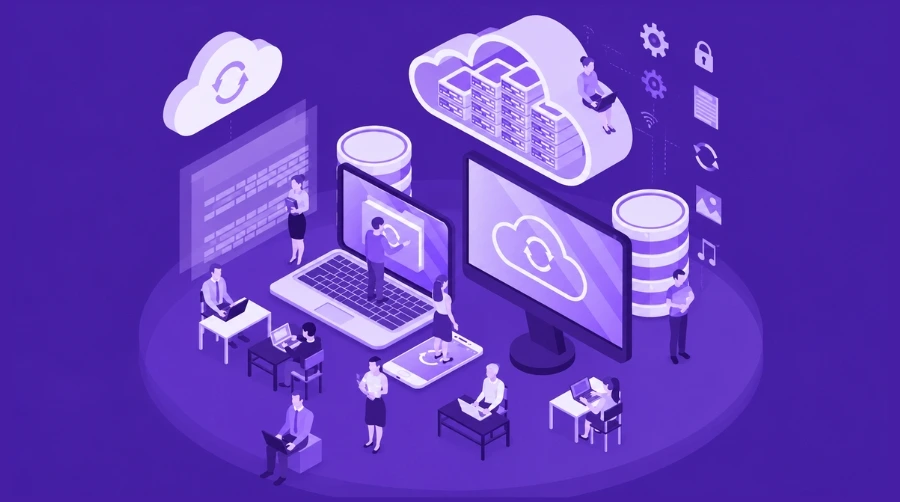
AWS cloud infrastructure is the foundation that helps modern businesses build, run, secure, and scale digital products. Whether a company is launching a website, mobile app, SaaS platform, enterprise system, or data-driven application, it needs a strong cloud setup to manage performance, security, uptime, and cost. Many businesses choose AWS because it provides flexible cloud services for compute, storage, networking, databases, monitoring, automation, and security.
AWS cloud infrastructure is the foundation that helps modern businesses build, run, secure, and scale digital products. Whether a company is launching a website, mobile app, SaaS platform, enterprise system, or data-driven application, it needs a strong cloud setup to manage performance, security, uptime, and cost.
Many businesses choose AWS because it provides flexible cloud services for compute, storage, networking, databases, monitoring, automation, and security. Instead of buying physical servers and maintaining a data center, businesses can use AWS resources based on their real needs.
However, AWS infrastructure is not only about launching servers. A poor setup can increase monthly bills, create security gaps, slow down applications, and make scaling difficult. That is why businesses need to understand the main components, setup process, cost factors, and best practices before building on AWS.
Key Takeaways
- AWS cloud infrastructure includes compute, storage, database, networking, security, monitoring, and automation services.
- A strong AWS setup helps improve scalability, performance, security, and business continuity.
- Cost depends on compute usage, storage, traffic, database type, region, backup, and support needs.
- A secure AWS setup should use IAM, encryption, private networking, logging, and regular monitoring.
- AWS infrastructure should follow proper planning, backup, cost optimization, and high-availability practices.
- Businesses should choose professional AWS support when the setup is complex, business-critical, or security-sensitive.
What is AWS Cloud Infrastructure?
AWS cloud infrastructure is a group of cloud services used to build, host, manage, secure, and scale applications on Amazon Web Services. It includes virtual servers, storage, databases, networking, security controls, monitoring tools, backup systems, and automation services.
In simple words, AWS infrastructure works like a digital foundation for your business application. It gives you the resources needed to run software, store data, manage users, route traffic, protect systems, and monitor performance.
For example, a web application may use Amazon EC2 for compute power, Amazon S3 for file storage, Amazon RDS for database management, Amazon VPC for networking, AWS IAM for access control, and Amazon CloudWatch for monitoring.
A well-planned AWS environment helps businesses start small and scale as traffic grows. It also reduces dependency on physical hardware and gives teams more control over performance, security, and cost.
Why AWS Cloud Infrastructure Matters
Modern applications need speed, uptime, security, and flexibility. Traditional hosting often becomes limited when traffic grows or when the business needs better control over servers, data, and performance. AWS solves this problem by offering cloud resources that can be increased, reduced, or changed based on business needs.
For startups, AWS helps reduce early infrastructure investment. For enterprises, it supports complex workloads, secure systems, automation, and large-scale applications. For SaaS companies, it gives the flexibility to support many users and handle changing traffic.
A strong AWS setup can help businesses:
- Improve application performance
- Scale resources based on demand
- Reduce downtime
- Secure customer data
- Manage backup and recovery
- Control cloud spending
- Support faster development and deployment
For businesses planning digital transformation, AWS Cloud can provide a flexible base to build new applications, modernize old systems, and manage workloads without depending on traditional data center infrastructure.
Core Components of AWS Cloud Infrastructure
AWS cloud infrastructure is made of different service groups. Each group has a specific role in running and managing applications. Understanding these components helps businesses design better architecture and avoid unnecessary technical or cost problems.
| Component | Common AWS Services | Main Purpose |
|---|---|---|
| Compute | EC2, ECS, EKS, Fargate, Lambda | Runs applications and workloads |
| Storage | S3, EBS, EFS, Glacier | Stores files, backups, and application data |
| Database | RDS, Aurora, DynamoDB, Redshift | Manages application and business data |
| Networking | VPC, Route 53, CloudFront, ELB | Connects resources and manages traffic |
| Security | IAM, KMS, WAF, Shield | Protects users, data, and applications |
| Monitoring | CloudWatch, CloudTrail, Config | Tracks performance, logs, and activity |
| Automation | CloudFormation, Systems Manager | Manages infrastructure setup and operations |
Compute Services
Compute services provide the processing power required to run applications, websites, APIs, backend systems, and workloads. In AWS, businesses can use virtual machines, containers, or serverless computers depending on the application needs.
Common compute services include Amazon EC2 for virtual servers, Amazon ECS for containers, Amazon EKS for Kubernetes workloads, AWS Fargate for serverless containers, and AWS Lambda for event-based functions.
AWS Lambda is useful when businesses want to run code without managing servers. It works well for APIs, file processing, automation tasks, scheduled jobs, and event-driven backend functions where resources should run only when needed.
Storage Services
Storage services help businesses store files, media, backups, logs, static assets, and large datasets. AWS provides different storage options based on access frequency, performance needs, and cost control.
Amazon S3 is commonly used for object storage, images, files, videos, logs, and backups. Amazon EBS is used as block storage for EC2 instances. Amazon EFS provides shared file storage, while Amazon Glacier is useful for long-term archive storage.
Choosing the right storage service is important because storage cost and performance depend on how data is stored, accessed, and retained.
Database Services
Database services help applications store, manage, and access data. AWS offers managed database services, which reduce the need for manual database administration.
Common AWS database services include Amazon RDS, Amazon Aurora, Amazon DynamoDB, Amazon ElastiCache, and Amazon Redshift. RDS is useful for relational databases, DynamoDB is useful for NoSQL workloads, and Redshift is mainly used for data warehousing.
Managed databases help businesses handle backup, patching, replication, and scaling more easily. This allows teams to focus more on product development instead of database maintenance.
Networking Services
Networking connects cloud resources and controls how traffic flows inside and outside the infrastructure. A strong networking setup improves performance, security, and reliability.
Amazon VPC is the base networking service in AWS. It allows businesses to create an isolated cloud network. Subnets divide the network into public and private areas. Route tables control traffic paths. Internet Gateway allows public internet access, while NAT Gateway allows private resources to access the internet safely.
Load balancers distribute traffic across servers, Route 53 manages DNS, and CloudFront improves content delivery speed for users in different locations.
A good network design keeps sensitive resources like databases in private subnets and allows public access only where required.
Security and Identity Services
Security is one of the most important parts of AWS infrastructure. Businesses need to protect applications, customer data, user accounts, APIs, and internal systems from unauthorized access and cyber risks.
Common security services include AWS IAM for access control, AWS KMS for encryption keys, AWS WAF for web application protection, AWS Shield for DDoS protection, Security Groups for traffic control, and CloudTrail for activity tracking.
AWS Cloud Security should not be treated as a one-time setup. It requires strong IAM policies, encryption, logging, private networking, patching, monitoring, backup, and regular security reviews.
The best approach is to follow the principle of least privilege. This means every user, service, or application should only get the permissions needed to do its work.
Monitoring and Management Services
Monitoring helps teams understand how infrastructure is performing. It also helps detect errors, high usage, downtime, security events, and cost spikes.
Amazon CloudWatch tracks metrics, logs, alarms, and application health. CloudTrail records API activity and user actions. AWS Config tracks resource configuration changes. AWS Systems Manager helps manage operations across cloud resources.
Without monitoring, teams may not know when an application is slow, when a database is overloaded, or when cost is increasing. Monitoring should be added from the beginning of the setup.
Automation and Infrastructure as Code
Automation helps teams manage infrastructure more efficiently. Instead of creating cloud resources manually, businesses can use templates and scripts to create repeatable setups.
AWS CloudFormation helps define infrastructure as code. This means teams can create and manage AWS resources through templates. It reduces manual mistakes and makes it easier to repeat the same setup across development, testing, and production environments.
Automation is very useful for businesses managing multiple applications, teams, or deployment pipelines.
How to Set Up AWS Cloud Infrastructure
Setting up AWS infrastructure requires proper planning. A business should not start launching services without understanding application requirements, expected traffic, data needs, security rules, and budget limits.
Step 1: Define Application Requirements
Start by understanding what the application needs. Define the application type, expected users, traffic volume, data size, uptime needs, security requirements, compliance needs, and future growth plans.
A small website may need a simple setup, while a SaaS platform may need load balancing, private networking, managed databases, auto scaling, monitoring, backup, and CI/CD support.
Step 2: Choose the Right AWS Region
An AWS Region is a physical location where AWS has data centers. Choosing the right region affects latency, cost, service availability, and compliance.
Businesses should choose a region close to their main users when speed is important. They should also check legal or compliance requirements if data must stay within a specific country or region.
Step 3: Design the Network
The network should be designed carefully using Amazon VPC. A good setup usually includes public subnets for load balancers and private subnets for application servers and databases.
Databases should not be open to the public internet. Public access should be limited only to resources that truly need it, such as load balancers or public APIs.
Step 4: Select Compute Resources
Choose compute services based on workload type. EC2 is useful for traditional server-based applications. ECS and EKS are useful for containerized applications. Serverless compute is useful for event-based workloads.
Lambda can reduce server management work for backend tasks, lightweight APIs, automation, and event-driven processes. However, it should be selected based on execution time, workload behavior, and integration needs.
Step 5: Configure Storage and Database
Select storage and database services based on data type and usage pattern. Use S3 for files and static assets, EBS for server storage, RDS for relational databases, DynamoDB for NoSQL workloads, and ElastiCache for faster response times.
Database setup should include backup, encryption, scaling, recovery planning, and performance monitoring.
Step 6: Add Security Controls
Security should be added at every layer. Enable multi-factor authentication, use IAM roles, restrict public access, encrypt sensitive data, configure security groups, and enable logging.
Security should be reviewed regularly because access needs and infrastructure size may change over time.
Step 7: Enable Monitoring and Alerts
Set up CloudWatch alarms, logs, and dashboards to track system health. Monitor CPU usage, memory, database performance, API errors, traffic, and billing.
Good monitoring helps teams fix problems before users are affected.
Step 8: Plan Backup and Disaster Recovery
Backup and disaster recovery protect the business from data loss, accidental deletion, system failure, and unexpected outages.
A good backup plan should define what data needs backup, how often backups run, how long they are stored, who can access them, and how quickly systems must recover.
AWS Cloud Infrastructure Setup Checklist
Before launching production infrastructure, businesses should review the full setup carefully.
- Define business and technical requirements
- Choose the right AWS Region
- Create VPC, subnets, and route tables
- Separate public and private resources
- Select the right compute service
- Configure storage and database services
- Set IAM roles and permissions
- Enable encryption where needed
- Add monitoring and alerts
- Enable CloudTrail activity tracking
- Set backup and recovery policies
- Add billing alerts
- Test performance before launch
- Review security before going live
AWS Cloud Infrastructure Cost Factors
AWS cost depends on usage. This makes AWS flexible, but it also means poor planning can increase monthly bills. Businesses should understand cost factors before setting up infrastructure.
AWS Pricing Models should be reviewed before selecting services because different services may use on-demand pricing, reserved capacity, savings plans, storage-based billing, request-based billing, or data transfer charges.
| Business Type | Common Setup | Cost Level |
|---|---|---|
| Small website | EC2, S3, Route 53, basic monitoring | Low |
| SaaS application | VPC, EC2/ECS, RDS, S3, CloudWatch | Medium |
| Enterprise system | Multi-AZ, auto scaling, backup, security, monitoring | High |
Compute Cost
Compute cost depends on instance size, running time, server type, and workload demand. Always-on servers cost more than temporary workloads. Oversized resources can quickly increase bills.
Storage Cost
Storage cost depends on data volume, storage class, access frequency, and retention period. Old logs, unused snapshots, and unnecessary backups can increase cost over time.
Database Cost
Database cost depends on instance size, storage, backup, replicas, and high availability. Managed databases are useful, but they should be monitored and right-sized regularly.
Data Transfer Cost
Data transfer cost depends on traffic volume, internet delivery, cross-region movement, and architecture design. Applications with heavy media or global users should plan data transfer carefully.
AWS Cloud Infrastructure Best Practices
A strong AWS setup should be secure, scalable, reliable, cost-aware, and easy to manage. It should support both current business needs and future growth.
Follow the AWS Well-Architected Framework
The AWS Well-Architected Framework helps teams review cloud workloads based on operational excellence, security, reliability, performance efficiency, cost optimization, and sustainability.
This helps businesses design infrastructure that is more reliable, secure, efficient, and cost-effective.
Design a Secure Architecture
Security should start from the architecture level. A strong AWS Cloud Architecture uses private subnets, IAM roles, encryption, logging, load balancers, access control, and backup planning to reduce risk.
Use Least Privilege Access
Every user and service should only get the permissions needed for its role. Avoid giving full access unless it is truly required. Old users, unused keys, and unnecessary permissions should be removed.
Use Auto Scaling
Auto Scaling helps applications handle traffic changes. When demand increases, AWS can add resources. When demand decreases, it can reduce resources. This improves performance and helps control cost.
Keep Databases Private
Databases should usually stay in private subnets. They should only allow access from trusted application servers or services. This reduces the risk of public exposure.
Enable Logging and Monitoring
Logs and metrics help teams understand system behavior. They are useful for debugging, performance tracking, security investigation, and cost monitoring.
Review Cost Regularly
AWS cost optimization should be done every month. Teams should stop unused resources, delete old snapshots, right-size instances, set billing alerts, and review data transfer patterns.
Common AWS Infrastructure Mistakes to Avoid
AWS provides powerful services, but mistakes can happen when infrastructure is created without planning.
Overprovisioning Resources
Choosing larger servers than required increases cost. It is better to start with the right size and scale based on real usage.
Ignoring Security
Weak IAM permissions, public databases, open ports, and missing encryption can create serious risks. Security should be planned from the beginning.
No Backup Plan
Cloud does not remove the need for backup. Businesses should create backup policies and test recovery regularly.
Poor Network Design
Public and private resources should be separated properly. A weak VPC setup can create security and performance issues.
No Cost Monitoring
Without billing alerts and regular reviews, AWS bills can increase quickly due to unused resources, old backups, or high traffic.
Example AWS Cloud Infrastructure for a Web Application
A basic AWS web application setup may include Route 53 for domain management, CloudFront for content delivery, Load Balancer for traffic distribution, EC2 or ECS for application hosting, RDS for database management, S3 for file storage, IAM for access control, and CloudWatch for monitoring.
The simple flow can look like this:
User → Route 53 → CloudFront → Load Balancer → EC2/ECS/Lambda → RDS/S3 → CloudWatch
This setup helps the application handle users, route traffic, store data, monitor performance, and scale when needed. Enterprise systems may also need multi-region deployment, CI/CD pipelines, disaster recovery, and advanced security controls.
AWS Infrastructure for Migration Projects
Many businesses do not build AWS infrastructure from zero. They move existing applications, databases, and workloads from traditional servers or another cloud platform to AWS. AWS Cloud Migration requires proper planning because teams need to assess existing systems, choose the right migration strategy, secure data, reduce downtime, and optimize cost after migration.
A good migration project includes infrastructure assessment, application dependency mapping, cloud architecture planning, data migration, testing, monitoring, and post-migration optimization. Migration should not simply move old problems into the cloud. It should improve performance, security, scalability, and long-term maintainability.
AWS Cloud Infrastructure vs Serverless Infrastructure
Traditional AWS infrastructure often uses virtual servers, databases, storage, and networking. Serverless infrastructure reduces the need to manage servers directly.
In serverless systems, developers focus more on code while the cloud provider manages much of the infrastructure layer. This is useful for APIs, automation, scheduled jobs, lightweight backend services, and event-based workflows.
Comparisons like Azure Functions vs AWS Lambda are useful for businesses that want to understand serverless options across cloud platforms. The right choice depends on cloud ecosystem, pricing, integrations, performance needs, and developer experience.
Serverless is powerful, but it is not always the best fit for every workload. Long-running processes, complex networking, or applications needing deep server control may still need traditional compute services.
When Should You Choose Professional AWS Support?
Some businesses can manage basic AWS setups internally. But professional support becomes important when the infrastructure is complex, security-sensitive, or critical for business operations.
You may need expert AWS support when:
- You are moving from traditional hosting to AWS
- Your application needs high availability
- Your AWS bill is increasing
- Your team is unsure about security
- You need automation or infrastructure as code
- You need better monitoring and backup
- Your application handles sensitive data
- Your current setup has downtime or performance issues
Professional AWS support helps businesses reduce mistakes, improve architecture quality, secure workloads, and control long-term cloud costs.
Final Thoughts
AWS cloud infrastructure gives businesses a strong foundation to build, run, secure, and scale modern applications. It includes compute, storage, databases, networking, security, monitoring, automation, and backup services. But success depends on planning. Businesses need to understand their workload, choose the right services, design secure networks, monitor performance, manage backup, and control cost.
A well-designed AWS setup can improve speed, reliability, security, and business growth. A poorly planned setup can create high costs, downtime, weak security, and operational problems. The best approach is to start with clear requirements, follow proven architecture practices, monitor continuously, and optimize regularly. With the right setup, AWS cloud infrastructure can become a reliable and scalable foundation for long-term digital growth.
Frequently Asked Questions
Q1.What is AWS cloud infrastructure?
AWS cloud infrastructure is a group of cloud services used to run applications, store data, manage networking, secure systems, monitor performance, and scale workloads on Amazon Web Services.
Q2.What are the main components of AWS cloud infrastructure?
The main components include compute, storage, database, networking, security, monitoring, backup, and automation services. These services work together to support modern applications and business systems.
Q3.How much does AWS cloud infrastructure cost?
AWS infrastructure cost depends on compute usage, storage volume, database type, traffic, region, backup, monitoring, and support needs. Cost can be controlled through right-sizing, billing alerts, and regular optimization.
Q4.How do you secure AWS cloud infrastructure?
AWS infrastructure can be secured using IAM, MFA, encryption, private subnets, security groups, logging, monitoring, backup, and least privilege access. Security should be reviewed regularly.
Q5.When should a business hire AWS infrastructure experts?
A business should hire AWS experts when it needs migration, secure architecture, high availability, cost optimization, automation, disaster recovery, or support for complex workloads.
Explore Services
Related Services
Reviewed by

Aman Vaths
Founder of Nadcab Labs
Aman Vaths is the Founder & CTO of Nadcab Labs, a global digital engineering company delivering enterprise-grade solutions across AI, Web3, Blockchain, Big Data, Cloud, Cybersecurity, and Modern Application Development. With deep technical leadership and product innovation experience, Aman has positioned Nadcab Labs as one of the most advanced engineering companies driving the next era of intelligent, secure, and scalable software systems. Under his leadership, Nadcab Labs has built 2,000+ global projects across sectors including fintech, banking, healthcare, real estate, logistics, gaming, manufacturing, and next-generation DePIN networks. Aman’s strength lies in architecting high-performance systems, end-to-end platform engineering, and designing enterprise solutions that operate at global scale.