Ai Overview
The emergence of Web3 technology has fundamentally transformed how developers approach building decentralized applications. However, the reliance on Moralis infrastructure means applications are dependent on their service availability and pricing model. You have several options for obtaining provider access, each with different tradeoffs between cost, reliability, and decentralization. These calls are free (no gas cost) and return results immediately.
1. Introduction to Web3 SDKs
The emergence of Web3 technology has fundamentally transformed how developers approach building decentralized applications. At the heart of this transformation lies a critical toolset that bridges the gap between traditional web development and blockchain technology: Web3 Software Development Kits (SDKs). These powerful libraries have become indispensable for developers seeking to create seamless, user-friendly decentralized applications without becoming blockchain protocol experts.
Web3 SDKs represent a paradigm shift in blockchain development. Before their widespread adoption, developers faced the daunting task of directly interfacing with blockchain nodes using low-level JSON-RPC calls, manually encoding and decoding data according to complex Application Binary Interface (ABI) specifications, and handling the intricate details of cryptographic operations. This complexity created a significant barrier to entry for developers who wanted to build decentralized applications but lacked deep blockchain expertise.
Today, Web3 SDKs abstract away these complexities, providing intuitive APIs that allow developers to focus on building features rather than wrestling with protocol-level details. Whether you’re building a decentralized finance (DeFi) platform, a non-fungible token (NFT) marketplace, a decentralized autonomous organization (DAO) governance interface, or a blockchain-based gaming application, the right Web3 SDK can dramatically reduce development time while improving code quality and security.
What Exactly is a Web3 SDK?
A Web3 SDK is a comprehensive collection of software tools, libraries, code samples, documentation, and APIs that developers use to create applications capable of interacting with blockchain networks. These kits provide pre-built functionality for common blockchain operations, including wallet connectivity, transaction management, smart contract deployment and interaction, token operations, and event monitoring.
The term ‘SDK’ in the Web3 context encompasses more than just a single library. Modern Web3 SDKs often include multiple integrated components working together: provider libraries for blockchain connectivity, utility functions for data encoding and cryptography, wallet adapters for user authentication, smart contract wrappers for simplified interactions, and sometimes even backend services for enhanced functionality like indexing and caching.
The Evolution of Web3 Development Tools
The history of Web3 SDKs is intrinsically linked to the evolution of Ethereum, the first blockchain platform to support general-purpose smart contracts. In Ethereum’s early days, developers relied primarily on raw JSON-RPC calls to interact with nodes. This approach required extensive knowledge of the Ethereum protocol, manual handling of data serialization, and custom implementation of common patterns.
Web3.js emerged as one of the first comprehensive JavaScript libraries for Ethereum development, providing a more accessible interface for browser-based dApps. As the ecosystem matured, alternative libraries like Ethers.js appeared, offering improved developer experience, better TypeScript support, and more modular architecture. Today, the landscape includes numerous options catering to different use cases, programming languages, and development philosophies.
Why Web3 SDKs Matter for dApp Development
The importance of Web3 SDKs in modern dApp development cannot be overstated. They serve as the crucial middleware layer that enables frontend applications to communicate with blockchain networks reliably and efficiently. Without these tools, every dApp developer would need to implement their own solutions for fundamental operations like transaction signing, gas estimation, and event filtering.
Furthermore, Web3 SDKs promote standardization across the ecosystem. When developers use established libraries, they benefit from community-tested code, regular security updates, and compatibility with widely adopted wallet solutions. This standardization improves the overall security posture of the Web3 ecosystem and creates a more consistent experience for end users interacting with different dApps.
Looking to implement Web3 SDKs in your project? Our team specializes in blockchain integration and can help you choose and implement the right SDK for your needs. Explore our Web3 Development Services →
2. Understanding the Web3 Technology Stack
Before diving deep into specific Web3 SDKs, it’s essential to understand the broader technology stack that powers decentralized applications. This knowledge provides context for how SDKs fit into the overall architecture and helps developers make informed decisions about which tools to use for different components of their applications.
The Layered Architecture of Web3 Applications
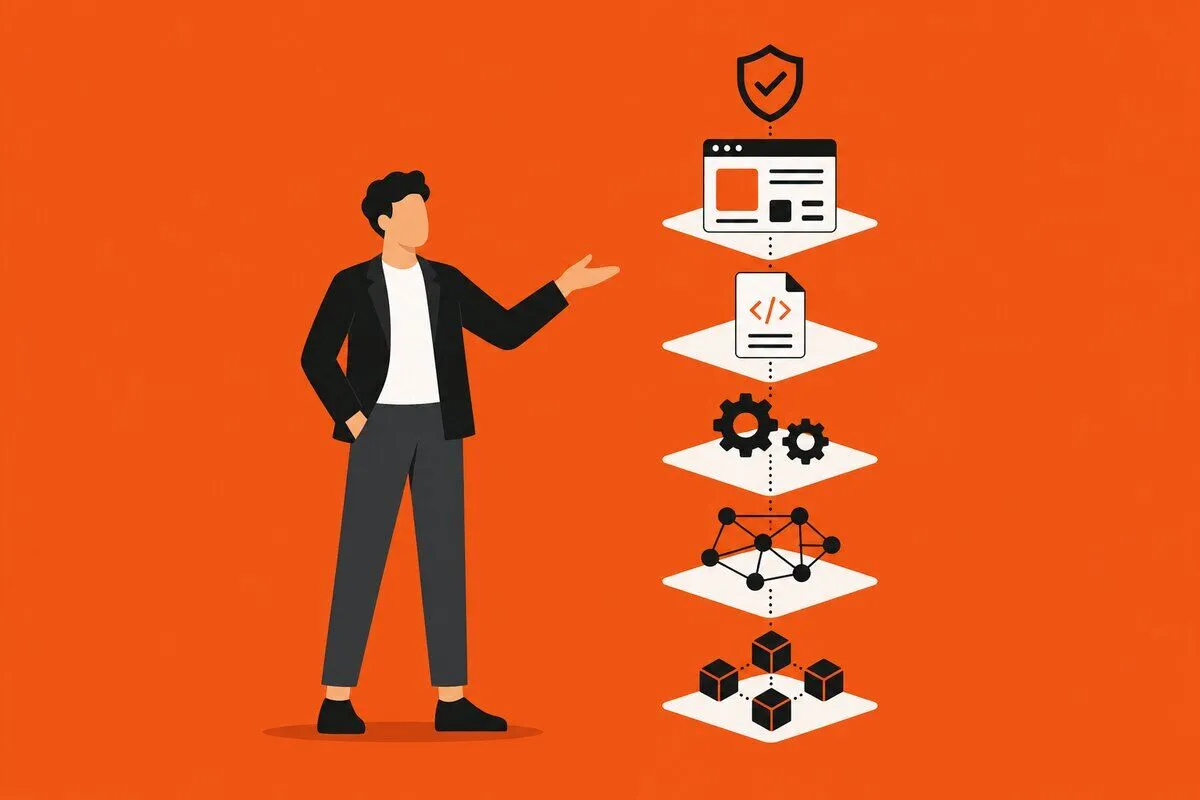
Web3 applications operate across multiple layers, each serving a distinct purpose in the overall system. At the foundation lies the blockchain layer, consisting of the distributed network of nodes that maintain the shared state and process transactions. Above this sits the protocol layer, which defines the rules for smart contract execution, token standards, and consensus mechanisms.
The middleware layer is where Web3 SDKs operate, providing the crucial bridge between blockchain protocols and application logic. This layer handles communication with nodes, transaction construction and signing, event monitoring, and data transformation. Finally, the application layer encompasses the user interface and business logic that end users interact with directly.
Key Components of the Web3 Stack
Blockchain Nodes and RPC Endpoints
Blockchain nodes are the backbone of any decentralized network. They store the complete history of the blockchain, validate transactions, and participate in consensus. For dApp developers, nodes provide the interface through which applications read blockchain state and submit transactions. Most developers access nodes through Remote Procedure Call (RPC) endpoints, either by running their own nodes or using node infrastructure providers like Infura, Alchemy, or QuickNode.
Web3 SDKs typically abstract the details of RPC communication, allowing developers to configure their provider once and then use high-level APIs for all blockchain interactions. This abstraction is crucial because different node implementations and providers may have subtle variations in their RPC implementations, and SDKs handle these differences transparently.
Smart Contracts and ABIs
Smart contracts are self-executing programs stored on the blockchain that define the rules and logic for decentralized applications. They’re written in languages like Solidity or Vyper and compiled to bytecode that runs on the Ethereum Virtual Machine (EVM) or equivalent execution environments on other chains. The Application Binary Interface (ABI) is a JSON specification that describes a contract’s functions, events, and data structures, enabling external applications to correctly encode function calls and decode return values.
Web3 SDKs use ABIs to generate typed interfaces for smart contracts, allowing developers to call contract functions as if they were regular JavaScript methods. This abstraction eliminates the need for manual data encoding and significantly reduces the likelihood of errors that could result in failed transactions or lost funds.
Wallets and Signers
Wallets are perhaps the most user-facing component of the Web3 stack. They manage private keys used to sign transactions and messages, proving ownership and authorization. Browser extension wallets like MetaMask have become the standard for desktop users, while mobile wallets and hardware wallets cater to different security and convenience requirements.
Web3 SDKs provide wallet adapter interfaces that standardize how dApps connect to different wallet implementations. This abstraction is increasingly important as the wallet landscape diversifies, with new solutions like smart contract wallets (account abstraction), social login wallets, and multi-party computation (MPC) wallets offering alternatives to traditional externally owned accounts (EOAs).
IPFS and Decentralized Storage
While blockchains excel at storing small amounts of critical data, they’re not designed for large files or media. The InterPlanetary File System (IPFS) and similar decentralized storage solutions like Arweave and Filecoin provide content-addressed storage that complements blockchain data. Many NFT marketplaces, for example, store artwork on IPFS while keeping ownership records on-chain.
Some Web3 SDKs include built-in IPFS integration or provide easy-to-use wrappers for uploading and retrieving decentralized content. This integration streamlines workflows for applications that need to manage both on-chain and off-chain data.
How Web3 SDKs Fit Into the Stack
Web3 SDKs serve as the integration layer that ties together all these components into a cohesive development experience. A well-designed SDK provides unified APIs that handle the complexity of coordinating between blockchain nodes, wallet providers, smart contracts, and potentially off-chain services. Developers can focus on application logic rather than infrastructure concerns, accelerating development while maintaining the security guarantees that users expect from decentralized applications.
3. Popular Web3 SDKs Compared
The Web3 SDK landscape has evolved significantly over the years, with multiple mature options now available for developers. Each SDK has its strengths, design philosophies, and ideal use cases. Understanding these differences is crucial for selecting the right tool for your project’s specific requirements.
Web3.js: The Pioneer
Web3.js holds the distinction of being one of the earliest and most widely adopted JavaScript libraries for Ethereum development. Originally created by the Ethereum Foundation, it has served as the foundation for countless dApps and continues to receive active maintenance and updates.
The library provides comprehensive coverage of Ethereum functionality, including contract interaction, account management, transaction handling, and utility functions. Web3.js 4.x, the latest major version, brings significant improvements including better TypeScript support, tree-shakable modules, and enhanced performance. Its long history means extensive documentation, numerous tutorials, and a large community familiar with its patterns.
However, Web3.js has faced criticism for its somewhat inconsistent API design across different modules and relatively large bundle size when using all features. The library’s callback-based origins are still visible in some areas, though modern versions support Promises throughout.
Ethers.js: The Developer Favorite
Ethers.js was created by Richard Moore with a focus on developer experience, code clarity, and security. It has gained tremendous popularity, particularly among newer projects, and is often recommended as the default choice for Ethereum development.
The library’s architecture separates concerns cleanly between Providers (which read blockchain state), Signers (which manage keys and sign transactions), and Contracts (which represent deployed smart contracts). This separation makes the code more intuitive and easier to test. Ethers.js also provides excellent TypeScript definitions and smaller bundle sizes through its modular design.
Ethers.js version 6 represents a significant evolution, introducing modern JavaScript features, improved tree-shaking, and better handling of BigInt values. The migration from v5 to v6 requires some code changes, but the improvements in performance and developer experience are substantial.
Viem: The Modern Alternative
Viem represents the newest generation of Web3 libraries, designed from the ground up for TypeScript with an emphasis on type safety, performance, and developer experience. Created by the team behind wagmi (a popular React hooks library for Ethereum), Viem offers strict typing that catches errors at compile time rather than runtime.
The library’s functional approach differs from the object-oriented patterns used by Web3.js and Ethers.js. Instead of creating contract instances, you call functions with the client and contract details as parameters. This design promotes better tree-shaking and can result in significantly smaller production bundles. Viem also provides excellent documentation with interactive examples.
For projects already using wagmi for React integration, Viem is a natural choice as it’s the underlying library. However, teams with existing Ethers.js codebases should weigh the migration effort against the benefits.
thirdweb SDK: The All-in-One Solution
thirdweb takes a different approach by providing a complete Web3 development platform rather than just a library. The SDK includes pre-built smart contracts, wallet infrastructure, and backend services that significantly accelerate dApp development. It’s particularly popular for NFT projects and applications that need rapid time-to-market.
The thirdweb SDK supports multiple blockchains out of the box and provides high-level abstractions for common use cases like minting NFTs, creating marketplaces, and implementing token-gated access. While this convenience is valuable, some developers prefer lower-level control that simpler libraries provide. thirdweb’s infrastructure services, while powerful, also introduce dependencies on their platform.
Moralis SDK: Backend Services Integration
Moralis positions itself as the Firebase for Web3, providing SDKs that integrate with their backend services for data indexing, authentication, and real-time event streams. The platform excels at providing historical blockchain data and cross-chain queries that would be complex to implement from scratch.
The Moralis SDK simplifies common patterns like getting all NFTs owned by an address or tracking token price history. These features can save significant development time for applications that need rich blockchain data. However, the reliance on Moralis infrastructure means applications are dependent on their service availability and pricing model.
Alchemy SDK: Node Provider Plus
Alchemy, primarily known as a node infrastructure provider, offers an SDK that enhances their RPC services with additional capabilities. The SDK provides a supercharged version of standard Ethereum methods along with proprietary APIs for NFT data, token metadata, and transaction simulation.
For teams already using Alchemy nodes, their SDK offers seamless integration and access to powerful features like the Notify API for webhooks and the Transact API for transaction management. The SDK can work alongside other libraries like Ethers.js, complementing rather than replacing them.
Comparison Summary
| Feature | Web3.js | Ethers.js | Viem | thirdweb | Moralis |
|---|---|---|---|---|---|
| TypeScript | Good | Excellent | Excellent | Good | Good |
| Bundle Size | Large | Medium | Small | Large | Medium |
| Learning Curve | Medium | Easy | Medium | Easy | Easy |
| Multi-chain | Limited | Good | Excellent | Excellent | Excellent |
| Documentation | Good | Excellent | Excellent | Excellent | Good |
| Ecosystem | Large | Large | Growing | Medium | Medium |
4. Getting Started with Web3 SDK Integration
Now that we’ve surveyed the landscape of available Web3 SDKs, let’s dive into the practical aspects of integrating them into your projects. This section covers the essential setup steps and foundational concepts you’ll need regardless of which SDK you choose.
Setting Up Your Development Environment
Before integrating any Web3 SDK, ensure your development environment is properly configured. You’ll need Node.js (version 18 or later recommended for native BigInt support and modern JavaScript features), a package manager (npm, yarn, or pnpm), and a code editor with good TypeScript support. Many developers also install browser extensions like MetaMask for testing wallet interactions during development.
Installing Common SDKs
Installation for most SDKs is straightforward using your package manager. For Ethers.js, run npm install ethers or yarn add ethers. For Viem, use npm install viem. thirdweb requires npm install @thirdweb-dev/sdk, while Web3.js uses npm install web3. Each SDK also recommends installing their TypeScript types if not included in the main package.
Configuring Blockchain Providers
Every Web3 SDK requires a provider to connect to blockchain networks. Providers handle the low-level communication with nodes, abstracting the JSON-RPC protocol details. You have several options for obtaining provider access, each with different tradeoffs between cost, reliability, and decentralization.
Node Infrastructure Services
Services like Infura, Alchemy, QuickNode, and Ankr provide managed node infrastructure with simple API endpoints. After creating an account and project, you receive an API key that you use to construct RPC URLs. For example, an Infura Ethereum mainnet URL looks like https://mainnet.infura.io/v3/YOUR_API_KEY. These services offer free tiers suitable for development and testing, with paid plans for production traffic.
Running Your Own Node
For maximum decentralization and control, teams can run their own blockchain nodes using clients like Geth (Ethereum), Erigon, or Nethermind. This approach eliminates dependency on third-party services but requires significant infrastructure investment and technical expertise. Most teams opt for a hybrid approach, using their own nodes for critical production traffic while leveraging managed services for development and fallback.
Public RPC Endpoints
Many blockchain networks provide public RPC endpoints that anyone can use without authentication. While convenient for quick testing, these endpoints often have rate limits, may be unreliable during peak usage, and shouldn’t be used for production applications. Resources like Chainlist aggregate public endpoints across various networks.
Provider Configuration Examples
Using Ethers.js, you can create a provider with: const provider = new ethers.JsonRpcProvider(RPC_URL). For Viem, you use createPublicClient({ chain: mainnet, transport: http(RPC_URL) }). The SDK documentation provides detailed examples for each supported network and provider type.
Most SDKs also support WebSocket providers for real-time event subscriptions. WebSocket connections are essential for applications that need to react immediately to on-chain events, such as DEX interfaces displaying live trades or wallet applications showing incoming transfers.
Environment Variables and Security
Never hardcode API keys or private keys in your source code. Use environment variables to store sensitive configuration, loading them at runtime using packages like dotenv for Node.js or built-in support in frameworks like Next.js and Vite. Create a .env file for local development (remember to add it to .gitignore) and configure environment variables in your hosting platform for production deployments.
For frontend applications, be aware that any API key included in client-side code will be visible to users. Node infrastructure providers offer domain allowlisting and other security features to mitigate abuse. Consider implementing a backend proxy that adds API keys server-side for sensitive endpoints.
Testing Network Configuration
Development should always begin on test networks to avoid spending real cryptocurrency on failed transactions. Ethereum’s Sepolia and Goerli testnets mirror mainnet functionality while using valueless test ETH obtainable from faucets. Polygon has Mumbai, Arbitrum has Goerli, and most major networks maintain similar testing environments.
For local development, tools like Hardhat and Anvil (from Foundry) provide local blockchain nodes that can fork mainnet state. This enables testing against real contract deployments without any network costs, dramatically speeding up the development iteration cycle.
5. Wallet Integration Strategies
Wallet integration is often the first blockchain interaction users encounter in a dApp. Getting this right is crucial for user experience, as a confusing or buggy wallet connection flow can drive users away before they even use your application. Web3 SDKs provide various approaches to wallet integration, from low-level provider detection to high-level wallet connection libraries.
Understanding Wallet Connection Patterns
The standard wallet connection flow begins with detecting available wallet providers in the user’s browser. Browser extension wallets like MetaMask inject a provider object (typically window.ethereum) that dApps can use to request account access. Mobile wallets use deep linking or WalletConnect protocols to establish secure connections across applications.
When a user initiates connection, the dApp calls a method (like eth_requestAccounts) that prompts the wallet to display a permission dialog. If approved, the wallet returns the user’s account addresses, which the dApp stores and uses for subsequent interactions. Modern wallets also emit events for account changes and disconnections that applications should handle.
MetaMask Integration
MetaMask remains the most widely used browser wallet, making it an essential integration target. The basic connection flow using Ethers.js involves creating a BrowserProvider from the injected window.ethereum object: const provider = new ethers.BrowserProvider(window.ethereum). You then request accounts with await provider.send("eth_requestAccounts", []) and get the signer for transactions with await provider.getSigner().
MetaMask’s provider emits several important events that your application should listen for. The ‘accountsChanged’ event fires when users switch accounts in their wallet. The ‘chainChanged’ event indicates a network switch. Best practice is to reload your application state or re-fetch relevant data when these events occur to ensure the UI reflects the current wallet state.
WalletConnect Protocol
WalletConnect is an open protocol that enables secure communication between dApps and mobile wallets without requiring browser extensions. The protocol works by establishing an encrypted connection through a relay server, with QR codes or deep links used to initiate the pairing process. WalletConnect 2.0, the current version, supports multiple simultaneous sessions and improved chain support.
Integrating WalletConnect requires registering for a project ID and using their SDK alongside your primary Web3 library. The WalletConnect provider implements the same interface as injected browser wallets, making it relatively straightforward to support both connection methods in the same application.
Multi-Wallet Support Libraries
As the wallet ecosystem has expanded, libraries have emerged that simplify supporting multiple wallet options. Rainbow Kit provides beautiful, pre-built wallet connection UI components for React applications. Web3Modal offers a framework-agnostic modal that supports numerous wallets. wagmi provides React hooks that work with any wallet through its connector system.
These libraries handle the complexity of detecting installed wallets, managing connection state, and switching between different providers. They also typically include support for email and social login through embedded wallet solutions, broadening accessibility for users new to crypto.
Account Abstraction and Smart Wallets
Account abstraction (ERC-4337) represents a significant evolution in wallet technology. Instead of externally owned accounts controlled directly by private keys, smart contract wallets enable features like social recovery, transaction batching, gasless transactions (sponsored by applications), and programmable security rules.
Web3 SDKs are increasingly adding support for account abstraction. thirdweb, for example, provides built-in smart wallet functionality. Alchemy’s Account Kit and ZeroDev offer SDKs specifically designed for building with smart accounts. Supporting these wallets requires understanding concepts like UserOperations, bundlers, and paymasters that differ from traditional transaction flows.
Handling Connection State
Robust dApps maintain wallet connection state across page refreshes and implement proper disconnect handling. Store connection information in local storage or a state management solution, but always verify the connection is still valid on page load. Users may have disconnected the site from their wallet settings, and your UI should gracefully handle this scenario.
Implement clear visual feedback throughout the connection flow. Show loading states during wallet popups, display the connected address (typically truncated like ‘0x1234…5678’), and provide an obvious way to disconnect. Users should always know their connection status and have control over it.
6. Smart Contract Interaction Patterns
Smart contracts are the backbone of decentralized applications, containing the business logic that executes on the blockchain. Web3 SDKs provide powerful abstractions for interacting with contracts, transforming what would be complex RPC calls into simple function invocations. Understanding these interaction patterns is fundamental to effective dApp development.
Understanding ABIs and Contract Interfaces
The Application Binary Interface (ABI) is a JSON description of a smart contract’s public interface. It specifies the names, inputs, and outputs of functions, as well as event definitions. Web3 SDKs use ABIs to encode function calls into the binary format expected by the EVM and decode return values back into JavaScript types.
ABIs are generated when compiling smart contracts and should be included in your dApp’s codebase. For verified contracts on block explorers like Etherscan, you can retrieve ABIs programmatically. Some SDKs can also infer partial ABIs from function signatures, useful when you only need to call a few specific functions.
Creating Contract Instances
With Ethers.js, you create a contract instance by providing the contract address, ABI, and a provider or signer: const contract = new ethers.Contract(address, abi, signerOrProvider). Using a provider allows read-only operations, while a signer enables state-changing transactions. Viem uses a different pattern with getContract({ address, abi, publicClient }) or passing contract details directly to action functions.
Read Operations (View Functions)
View and pure functions in Solidity don’t modify blockchain state and can be called without submitting transactions. These calls are free (no gas cost) and return results immediately. With a contract instance, you simply call the function as a method: const balance = await contract.balanceOf(userAddress). The SDK handles encoding the call data and decoding the result.
For complex queries that might return large amounts of data, consider using multicall contracts that batch multiple read calls into a single RPC request. Libraries like viem include built-in multicall support, and Ethers-multicall provides similar functionality for Ethers.js.
Write Operations (State-Changing Functions)
Functions that modify contract state require submitting transactions to the network. The user must approve the transaction in their wallet, pay gas fees, and wait for confirmation. The SDK method returns a transaction response that you can use to track the transaction status: const tx = await contract.transfer(recipient, amount) followed by await tx.wait() to wait for confirmation.
Always implement proper error handling for transactions. Common failure modes include user rejection (they canceled in their wallet), insufficient gas, contract reverts due to failed require statements, and nonce conflicts if multiple transactions are pending. Provide clear feedback to users about transaction status and any errors that occur.
Gas Estimation and Configuration
Web3 SDKs automatically estimate gas requirements for transactions, but you may want to override these estimates in certain situations. Setting a higher gas limit provides a safety margin for complex operations, while EIP-1559 parameters (maxFeePerGas and maxPriorityFeePerGas) control transaction pricing on supported networks.
Transaction override options are passed as the last argument to contract methods: await contract.mint(tokenId, { gasLimit: 500000, maxFeePerGas: ethers.parseUnits("100", "gwei") }). For user-facing applications, consider implementing gas price suggestions based on current network conditions to help users balance cost against confirmation speed.
Event Listening and Filtering
Smart contracts emit events to log important state changes and provide off-chain applications with a way to track activity. Events are indexed in transaction receipts and can be efficiently queried through SDKs. Listening to events enables real-time updates without constantly polling for state changes.
With Ethers.js, set up event listeners using contract.on("Transfer", (from, to, amount) => { ... }). Query historical events with contract.queryFilter(contract.filters.Transfer(userAddress), fromBlock, toBlock). WebSocket providers are recommended for real-time listening as they push events immediately rather than requiring periodic polling.
Working with Common Token Standards
ERC-20 fungible tokens, ERC-721 NFTs, and ERC-1155 multi-tokens are the most common contract standards you’ll interact with. These standards define consistent interfaces that enable interoperability across the ecosystem. Web3 SDKs often include pre-defined ABIs or helper functions for these standards.
When working with ERC-20 tokens, remember that transfer amounts must account for the token’s decimal places. A token with 18 decimals represents 1 whole token as 1e18 in the contract. Use SDK parsing utilities: ethers.parseUnits("100", 18) converts 100 tokens to the proper integer format, and ethers.formatUnits(balance, 18) converts back for display.
7. Cross-Chain Integration with Web3 SDKs
The blockchain ecosystem has evolved from Ethereum’s dominance to a multi-chain landscape where users hold assets and interact with applications across numerous networks. Cross-chain functionality has become a critical requirement for modern dApps, and Web3 SDKs have evolved to support this reality.
For an in-depth exploration of cross-chain SDK capabilities, check out our detailed guide on How Web3 SDKs Manage Cross-Chain Interactions → which covers advanced bridging and multi-network strategies.
Multi-Chain Architecture Considerations
Supporting multiple chains introduces complexity at every layer of your application. You need providers configured for each network, logic to handle chain-specific differences, and UI that helps users understand which network they’re interacting with. Some SDKs handle this complexity better than others.
Viem and wagmi excel at multi-chain development with their built-in chain configurations. You can import chain definitions directly: import { mainnet, polygon, arbitrum } from "viem/chains" and configure clients for each. The library handles chain-specific RPC URLs, block explorers, and native currency details automatically.
Chain Switching and Network Management
When users need to interact with contracts on different networks, your dApp should guide them through switching chains. The ‘wallet_switchEthereumChain’ RPC method prompts wallets to change networks, while ‘wallet_addEthereumChain’ can add networks users don’t have configured. Handle cases where switching fails gracefully, providing instructions for manual network configuration if needed.
Consider implementing automatic chain detection based on the contracts users are trying to interact with. If your application spans multiple chains, show clear indicators of the currently selected network and the network required for each action. Preventing users from accidentally sending transactions on the wrong chain is crucial for maintaining trust.
Cross-Chain Communication Protocols
True cross-chain functionality requires more than just supporting multiple networks independently—it requires moving assets and messages between chains. Protocols like LayerZero, Wormhole, Axelar, and Hyperlane provide messaging infrastructure for cross-chain communication. Native bridges operated by Layer 2 networks handle movement between Ethereum and their respective chains.
Integrating these protocols typically involves interacting with their smart contracts using your Web3 SDK. Each protocol has its own SDKs and documentation. For example, bridging tokens through LayerZero requires calling their OFT (Omnichain Fungible Token) contracts with properly formatted messages. Understanding the security models and finality guarantees of different bridges is essential when building cross-chain applications.
Aggregated Cross-Chain Services
Services like LI.FI, Socket, and Squid aggregate multiple bridges and DEXs to find optimal routes for cross-chain swaps. Their SDKs allow you to offer cross-chain functionality without integrating each bridge individually. Users can swap tokens across chains in a single transaction flow, with the service handling the complexity of bridge selection and execution.
These aggregation services significantly improve user experience for cross-chain operations. However, they add another dependency and potential point of failure. Evaluate the tradeoffs for your specific use case, considering factors like supported chains, fee structures, reliability, and the security track record of underlying bridges.
8. Security Best Practices
Security in Web3 development carries higher stakes than traditional web applications. Blockchain transactions are irreversible, and smart contract vulnerabilities have resulted in billions of dollars in losses. While Web3 SDKs handle many low-level security concerns, developers must remain vigilant about security at every layer of their applications.
Secure Key Management
Never store private keys in application code, version control, or client-side storage. For backend services that need signing capabilities, use hardware security modules (HSMs), key management services like AWS KMS or HashiCorp Vault, or dedicated custody solutions. Environment variables are acceptable for development but should be combined with more robust solutions in production.
User-facing applications should never have access to user private keys. Always delegate signing to user wallets. If your application requires automated signing (for example, a relayer service), isolate those capabilities in separate services with strict access controls and limited key permissions.
Input Validation and Sanitization
Validate all user inputs before constructing transactions. Verify that addresses are properly formatted checksummed Ethereum addresses. Validate token amounts are positive numbers within reasonable bounds. Check that contract addresses match expected deployments to prevent phishing attacks that redirect users to malicious contracts.
Web3 SDKs provide utility functions for address validation: ethers.isAddress(input) in Ethers.js and isAddress(input) from viem. Use these consistently rather than implementing your own validation logic. Remember that valid addresses can still be incorrect—consider implementing address book features and confirmation dialogs for large transfers.
Transaction Simulation
Before submitting transactions, simulate them to verify expected outcomes. SDK methods like contract.transfer.staticCall(recipient, amount) execute calls without broadcasting transactions, returning results or throwing errors if the transaction would fail. This catches issues like insufficient balance or failed contract requirements before users pay gas.
Advanced simulation services like Tenderly and Alchemy provide detailed transaction previews including state changes, internal transactions, and gas usage. Integrating these services can help users understand exactly what will happen when they confirm a transaction, building trust and preventing costly mistakes.
Protecting Against Common Vulnerabilities
Front-running occurs when malicious actors observe pending transactions and submit their own with higher gas prices to execute first. For sensitive operations, consider using private transaction pools or commit-reveal schemes. SDKs like Flashbots Protect route transactions through private mempools to prevent front-running.
Signature replay attacks can occur when signed messages are used in unintended contexts. Always include chain IDs, contract addresses, and nonces in signed messages. EIP-712 typed data signing provides a standard format that wallets display clearly to users, helping them verify what they’re signing. Most SDKs support EIP-712 through methods like signer.signTypedData().
Dependency Security
Web3 applications have complex dependency trees that can hide vulnerabilities. Regularly audit your dependencies using tools like npm audit and consider using lockfiles to ensure reproducible builds. Be especially cautious with packages that haven’t been updated recently or have few maintainers.
Stick to well-maintained, widely-used Web3 SDKs from reputable sources. Major libraries like Ethers.js and Viem undergo constant community scrutiny. Be wary of forks or alternative packages that promise additional features but may contain malicious code. Verify packages are official by checking repository links on npm.
9. Performance Optimization Techniques
Performance optimization in dApp development involves balancing multiple factors: minimizing RPC calls to reduce latency and costs, optimizing gas usage for on-chain operations, and ensuring smooth user experiences even during network congestion. Web3 SDKs provide various tools and patterns to address these challenges.
Reducing RPC Calls
Every RPC call introduces latency and potentially incurs costs with metered providers. Minimize calls by batching related queries using multicall contracts, which execute multiple read operations in a single RPC request. Viem’s publicClient.multicall() and libraries like ethers-multicall make this straightforward.
Cache frequently accessed data appropriately. Immutable information like token names, symbols, and decimals only needs to be fetched once and stored. For changing data, implement cache invalidation strategies based on blocks or events rather than arbitrary time intervals. React Query and SWR work well for frontend caching with Web3 data.
Optimizing Bundle Size
Large JavaScript bundles slow initial page loads. Modern Web3 SDKs are designed for tree-shaking, which allows bundlers to eliminate unused code. Import only what you need: import { parseEther } from "ethers" rather than import ethers from "ethers". Configure your bundler to enable tree-shaking in production builds.
Viem’s functional architecture often results in the smallest bundles among major SDKs. For applications where bundle size is critical, benchmark different libraries with your specific usage patterns. Consider code-splitting to defer loading Web3 functionality until users actually need it.
Gas Optimization Strategies
While gas optimization primarily involves smart contract design, frontend applications can help users reduce costs. Implement gas price recommendations based on current network conditions. Services like Blocknative, GasNow, and provider APIs offer real-time gas estimates. Present options for users to choose between speed and cost.
For applications with recurring operations, batch multiple actions into single transactions when possible. DEX aggregators, for example, batch approvals and swaps. Consider implementing transaction queuing that batches user operations submitted within a time window, sharing gas costs across users.
Handling Network Congestion
During network congestion, RPC calls may fail or take longer than usual. Implement retry logic with exponential backoff for non-critical operations. Most SDKs automatically retry certain failures, but you may want additional application-level retries. Always set reasonable timeouts to prevent indefinite hanging.
Configure fallback providers to maintain availability when primary endpoints fail. Ethers.js FallbackProvider automatically routes requests through multiple providers. For critical applications, consider implementing your own failover logic with health checks and automatic provider rotation.
10. Testing and Debugging dApps
Thorough testing is essential for dApp reliability and security. The irreversible nature of blockchain transactions makes bugs particularly costly. Modern testing approaches combine unit tests for individual components, integration tests with local blockchain nodes, and mainnet fork testing for realistic scenarios.
Local Blockchain Testing
Local blockchain nodes like Hardhat Network and Anvil provide fast, free environments for testing. These tools support mainnet forking, which clones state from a specific block, allowing you to test against real deployed contracts. Fork testing is invaluable for DeFi applications that interact with existing protocols.
Configure your Web3 SDK to connect to local nodes during development. Hardhat nodes typically run on http://localhost:8545. Use the node’s test accounts with pre-funded ETH for transactions. Local testing provides instant transaction confirmations and detailed error messages not available on public networks.
Unit Testing SDK Interactions
Mock SDK providers and contracts for isolated unit tests. Libraries like ‘sinon’ and ‘jest’ can stub SDK methods. Test that your application correctly handles successful responses, various error types, and edge cases like zero balances or maximum values. Verify that user inputs are validated before being passed to SDK methods.
For contract interactions, test with a range of scenarios: first-time users with no token approvals, users with existing allowances, transactions at gas price limits, and operations near maximum integer values. The blockchain doesn’t forgive edge cases that traditional databases might handle gracefully.
Debugging Transactions
When transactions fail, SDK error messages often contain useful information. Ethers.js wraps revert reasons from contracts in error objects. Enable verbose logging during development to capture full error details. Common issues include insufficient gas, failed require statements, and nonce conflicts.
Transaction debugging tools like Tenderly provide detailed traces showing every step of transaction execution. Import failed transaction hashes to see exactly where and why reverts occurred. Block explorers like Etherscan also show revert reasons for failed transactions, helping diagnose issues in production.
End-to-End Testing
E2E tests verify complete user flows including wallet interactions. Tools like Synpress extend Playwright and Cypress with MetaMask automation capabilities. These tests catch integration issues between your frontend, SDK, and wallet that unit tests might miss. However, E2E tests are slower and more fragile, so use them judiciously for critical paths.
11. Real-World Implementation Examples
Understanding Web3 SDKs in theory is valuable, but seeing how they’re applied in real applications cements that knowledge. This section walks through implementation patterns for common dApp types, demonstrating how SDK features combine to create functional blockchain applications.
DeFi Application: Token Swap Interface
A token swap interface requires multiple SDK interactions working in concert. First, the application fetches token balances for display. When users input swap amounts, it queries DEX contracts for price quotes, typically using multicall to check multiple liquidity sources efficiently. Before executing swaps, it must check and request token allowances.
The swap execution flow involves constructing the transaction with appropriate slippage protection, deadline parameters, and gas settings. After submission, the application tracks the transaction through pending, mined, and confirmed states, updating the UI at each stage. Error handling must account for price movements, insufficient liquidity, and user cancellations.
NFT Marketplace: Minting and Trading
NFT marketplaces combine on-chain transactions with off-chain metadata management. Minting involves uploading media to IPFS, constructing metadata JSON, uploading that to IPFS, and finally calling the mint function with the metadata URI. SDKs with IPFS integration like thirdweb simplify this workflow significantly.
Listing NFTs for sale typically uses signature-based orders rather than on-chain listings to save gas. The seller signs a message containing price, expiration, and NFT details. When a buyer purchases, they submit this signature along with payment to the marketplace contract, which validates the signature and executes the transfer atomically.
DAO Governance: Proposal and Voting
DAO governance interfaces read on-chain proposal data and enable token holders to vote. Reading proposals involves querying the governance contract for active proposals, their descriptions (often stored as IPFS hashes), vote counts, and status. Historical proposals might require querying events to reconstruct the full history.
Voting can be on-chain (gas-intensive but trustless) or off-chain with signature aggregation (Snapshot-style). On-chain voting is a simple transaction calling the vote function. Off-chain voting requires signing a message and submitting to an aggregation service, with final results posted on-chain. SDKs handle both patterns with appropriate signing methods.
Gaming: On-Chain Assets and State
Blockchain games balance on-chain ownership with off-chain gameplay. Assets like characters and items are NFTs with attributes stored in metadata. Game actions might update on-chain state for significant events (battles, trades) while keeping frequent updates off-chain for performance. State channels and rollups provide hybrid solutions.
Implementing game rewards often involves lazy minting patterns where rewards are calculated off-chain but only minted when claimed. This reduces gas costs for the game while giving players verifiable ownership. SDKs support the signature verification and contract interactions needed for secure claim mechanisms.
12. Future Trends in Web3 SDK Development
The Web3 SDK landscape continues to evolve rapidly, driven by new blockchain capabilities, developer experience improvements, and emerging use cases. Understanding these trends helps developers make forward-looking technology choices and prepare for upcoming paradigm shifts.
Account Abstraction Adoption
ERC-4337 account abstraction is transitioning from experimental to mainstream adoption. SDKs are adding native support for creating and managing smart wallets, constructing UserOperations, and integrating with bundlers and paymasters. This shift enables features previously impossible with EOAs: gasless transactions, social recovery, session keys, and batch operations.
Developers should familiarize themselves with the account abstraction stack even if not immediately adopting it. The programming model differs from traditional EOA interactions, and SDKs that support both patterns smoothly will become increasingly valuable as smart wallets gain market share.
Enhanced TypeScript and Developer Experience
The trend toward stricter typing continues with libraries competing on TypeScript ergonomics. Viem’s success demonstrates developer appetite for compile-time safety. Future SDKs will likely offer even more sophisticated type inference, potentially generating contract types directly from verified source code or ABIs at build time.
Developer experience extends beyond types to documentation, error messages, and debugging tools. Expect SDKs to provide better integration with development environments, more descriptive errors that guide toward solutions, and visual debugging tools that help developers understand blockchain interactions.
AI and LLM Integration
Large language models are becoming useful tools for blockchain development. AI assistants can help generate contract interaction code, explain transaction errors, and suggest optimizations. Some projects are exploring AI agents that execute on-chain actions autonomously, requiring new patterns for permissioned signing and transaction validation.
SDKs may evolve to provide AI-friendly interfaces that make it easier to integrate blockchain capabilities into AI-powered applications. Clear documentation, consistent APIs, and well-structured error information all contribute to better AI tool usage.
Privacy and Zero-Knowledge Proofs
Privacy-preserving technologies like zero-knowledge proofs are moving from research to production. ZK rollups already provide scalability benefits, and applications are exploring ZK for privacy features like anonymous voting and confidential transactions. SDKs will need to support ZK proof generation, verification, and the unique transaction patterns these systems require.
The computational complexity of ZK proofs presents challenges for browser-based applications. SDKs may evolve to support hybrid approaches where proof generation happens on more powerful backends while verification and submission remain client-side.
13. Choosing the Right SDK for Your Project
Selecting the appropriate Web3 SDK involves evaluating multiple factors against your project’s specific requirements. There’s no universally best choice—the right SDK depends on your team’s expertise, project complexity, performance requirements, and long-term maintenance considerations.
Evaluating Project Requirements
Start by listing the blockchain features your application needs. Simple applications that only read data and send basic transactions have different requirements than complex DeFi protocols with multiple contract interactions. Consider which chains you need to support now and might support in the future. Evaluate whether you need advanced features like meta-transactions or account abstraction.
Team Expertise and Learning Curve
Consider your team’s existing knowledge. Teams familiar with Ethers.js can be productive immediately, while switching to Viem requires learning new patterns. For teams new to Web3, higher-level SDKs like thirdweb might accelerate initial development at the cost of some flexibility. Invest in the learning curve if a more advanced tool provides significant long-term benefits.
Community and Ecosystem
Evaluate the community around each SDK. Active Discord servers or forums provide help when you encounter issues. Check GitHub activity for responsiveness to issues and pull requests. Consider how quickly security vulnerabilities are addressed. A larger community also means more tutorials, examples, and Stack Overflow answers.
Long-term Maintenance Considerations
Choose SDKs with sustainable development models. Open-source libraries maintained by companies (like Ethers.js, Viem, or thirdweb) typically have more resources than individual maintainer projects. Check the funding and sponsorship situation—well-funded projects are more likely to receive continued development and support.
Consider how breaking changes are handled. Ethers.js’s jump from v5 to v6 required significant migration effort. SDKs with clear deprecation policies and migration guides make upgrades manageable. Factor in the time cost of staying current with security updates and new features.
Recommendations by Use Case
For new React-based dApps, wagmi combined with Viem offers excellent developer experience and modern tooling. Teams seeking maximum control and TypeScript safety should evaluate Viem directly. Ethers.js remains an excellent choice for projects needing extensive documentation and a proven track record. thirdweb suits rapid prototyping and NFT-focused applications where its pre-built contracts accelerate development.
For backend services and scripts, Ethers.js and Viem both work well. Consider whether you need WebSocket support, multicall utilities, or specific chain configurations. Node infrastructure providers’ SDKs (Alchemy, Infura) can complement these libraries with enhanced APIs if you’re already using their services.
14. Conclusion and Next Steps
Web3 SDKs have transformed blockchain development from an arcane specialty into an accessible discipline for mainstream developers. These tools abstract the complexity of blockchain protocols while preserving the security guarantees that make decentralized applications valuable. Choosing and effectively using the right SDK is fundamental to successful dApp development.
Throughout this guide, we’ve explored the landscape of available SDKs, from pioneers like Web3.js to modern alternatives like Viem. We’ve covered essential patterns for wallet integration, smart contract interaction, and cross-chain operations. Security considerations, performance optimization, and testing strategies provide the foundation for building production-quality applications.
Key Takeaways for Developers
Start with a solid understanding of the Web3 technology stack before diving into specific SDKs. This foundation helps you understand what the SDK is abstracting and enables better debugging when issues arise. Experiment with multiple SDKs through small projects before committing to one for a major application.
Prioritize security at every stage of development. Use established libraries, validate inputs thoroughly, and never expose sensitive keys. Test extensively on local and test networks before deploying to mainnet. The irreversible nature of blockchain transactions means bugs have permanent consequences.
Stay current with ecosystem developments. The Web3 space evolves rapidly, with new standards, chains, and tools emerging regularly. Follow the development blogs and GitHub repositories of your chosen SDKs. Participate in community discussions to learn from other developers’ experiences and contribute back when you can.
Your Path Forward
The best way to master Web3 SDK integration is through practice. Start with a simple project—perhaps a wallet connection with balance display—and progressively add complexity. Build a token transfer interface, then an NFT minting page, then a more complex DeFi interaction. Each project reinforces concepts and reveals new challenges to overcome.
Consider contributing to open-source Web3 projects. Reading and understanding existing codebases accelerates learning. Contributing documentation, tests, or bug fixes builds deeper understanding while helping the community. Many successful Web3 developers started by contributing to the tools they use.
Ready to build your blockchain application? Our experienced team has implemented Web3 SDK integrations for projects ranging from DeFi protocols to NFT marketplaces to enterprise blockchain solutions.
Contact our Web3 Development Services team → to discuss how we can help accelerate your development journey.
The decentralized web is still in its early stages, and the developers building it today are shaping how billions of people will interact with digital assets and services in the future. With the right tools and knowledge, you’re well-positioned to be part of this transformation. The skills you develop working with Web3 SDKs today will remain valuable as the ecosystem continues to mature and expand.
Glossary of Key Terms
Understanding Web3 SDK terminology is essential for effective communication with your development team and the broader blockchain community. This glossary covers the most important terms you’ll encounter when working with Web3 SDKs and blockchain development.
ABI (Application Binary Interface): A JSON specification that describes how to interact with a smart contract, including function signatures, parameter types, and return values.
Account Abstraction: A paradigm (ERC-4337) that replaces externally owned accounts with smart contract wallets, enabling features like gasless transactions, social recovery, and batch operations.
Bundler: In account abstraction, a service that collects UserOperations from multiple users and submits them to the blockchain in batches.
dApp (Decentralized Application): An application that runs on a decentralized network like a blockchain, combining traditional frontend interfaces with smart contract backends.
EIP (Ethereum Improvement Proposal): Standards documents that describe proposed changes or additions to the Ethereum protocol.
EOA (Externally Owned Account): A traditional Ethereum account controlled by a private key, as opposed to a smart contract account.
EVM (Ethereum Virtual Machine): The runtime environment for smart contracts on Ethereum and compatible chains.
Gas: The unit of computational work on Ethereum. Users pay gas fees to compensate validators for processing transactions.
JSON-RPC: A remote procedure call protocol using JSON for data encoding. Blockchain nodes expose JSON-RPC APIs that SDKs use.
Multicall: A pattern for batching multiple smart contract read calls into a single RPC request.
Nonce: A sequential number associated with each transaction from an address, used to prevent replay attacks.
Paymaster: In account abstraction, a contract that sponsors gas fees for users, enabling gasless transactions.
Provider: An SDK component that handles communication with blockchain nodes.
Signer: An SDK component that manages private keys and signs transactions or messages.
Tree-shaking: A bundler optimization that eliminates unused code from the final application bundle.
UserOperation: In account abstraction (ERC-4337), a data structure representing a user’s intended action.
WebSocket: A protocol for persistent, bidirectional communication enabling real-time event subscriptions.
Frequently Asked Questions
Q1.Which Web3 SDK should I use if I'm just getting started?
For beginners, Ethers.js v6 offers the best combination of documentation, community support, and learning resources. Its clear separation of Providers, Signers, and Contracts makes concepts easy to understand. Once comfortable, you can evaluate Viem or other options based on project needs.
Q2.Do I need to run my own blockchain node?
For most applications, no. Node infrastructure providers like Infura, Alchemy, and QuickNode offer reliable access without the operational overhead of running nodes. Consider self-hosting only for maximum decentralization or specific compliance requirements.
Q3.How do I handle users without wallets installed?
Modern wallet connection libraries like RainbowKit and Web3Modal support embedded wallets and social login options. These allow users to onboard without installing browser extensions, creating wallets through email or social accounts.
Q4.Can I use multiple SDKs in the same project?
Yes, though it adds complexity and bundle size. Common combinations include using wagmi/Viem for frontend wallet management while using Ethers.js in backend scripts. Ensure both libraries connect to the same networks and handle types consistently.
Q5.How do I test transactions without spending real cryptocurrency?
Use test networks (Sepolia, Mumbai, Goerli) with test tokens from faucets, or run local nodes with Hardhat or Anvil. Local development provides instant confirmations and detailed debugging. Mainnet fork testing lets you test against real contract state without costs.
Q6.What's the best way to handle transaction errors?
Wrap all SDK calls in try-catch blocks. Parse error messages to identify common issues like user rejection, insufficient funds, or contract reverts. Provide user-friendly error messages that suggest next steps. Log detailed errors for debugging while showing simplified messages to users.
Q7.How do I keep my dApp working when gas prices spike?
Implement gas price monitoring and display current costs to users before they submit transactions. Offer options for different speed/cost tradeoffs. Consider Layer 2 networks for lower fees. For non-urgent operations, implement queuing systems that execute when gas prices drop.
Q8.Should I use TypeScript with Web3 SDKs?
Strongly recommended. TypeScript catches many errors at compile time that would otherwise cause runtime failures or lost funds. Modern SDKs like Viem and Ethers.js v6 have excellent TypeScript support. The investment in type safety pays dividends in reduced debugging time.
Q9.How do I migrate from one SDK to another?
Plan migrations incrementally. Start by adding the new SDK alongside the old one, migrating features one at a time while maintaining test coverage. Most SDKs provide migration guides. Consider wrapper functions that abstract SDK-specific details, making future migrations easier.
Explore Services
Related Services
Reviewed by

Aman Vaths
Founder of Nadcab Labs
Aman Vaths is the Founder & CTO of Nadcab Labs, a global digital engineering company delivering enterprise-grade solutions across AI, Web3, Blockchain, Big Data, Cloud, Cybersecurity, and Modern Application Development. With deep technical leadership and product innovation experience, Aman has positioned Nadcab Labs as one of the most advanced engineering companies driving the next era of intelligent, secure, and scalable software systems. Under his leadership, Nadcab Labs has built 2,000+ global projects across sectors including fintech, banking, healthcare, real estate, logistics, gaming, manufacturing, and next-generation DePIN networks. Aman’s strength lies in architecting high-performance systems, end-to-end platform engineering, and designing enterprise solutions that operate at global scale.