Ai Overview
Building decentralized applications requires a comprehensive understanding of multiple interconnected technologies that form the complete tech stack for dApp development. This layer is characterized by high security, transparency, and immutability but faces constraints in transaction speed, cost, and computational complexity.
Key Takeaways
- A complete tech stack for dApp requires 11 distinct layers working in harmony for optimal functionality and user experience.
- Smart contract stack forms the core business logic layer where dapps in smart contracts execute trustless transactions on blockchain networks.
- RPC providers and node infrastructure enable seamless connectivity between frontend applications and blockchain networks without running dedicated nodes.
- Indexing solutions like The Graph dramatically improve query performance by organizing blockchain data into accessible and searchable formats.
- Decentralized storage solutions including IPFS and Filecoin handle large files while keeping application architecture aligned with web3 principles.
- Security audits, comprehensive testing frameworks, and continuous monitoring are non-negotiable components of production-ready dApp development workflows.
- Middleware components like oracles and bridges extend smart contract capabilities by connecting to external data and cross-chain ecosystems.
- Full-stack web3 development demands expertise across blockchain protocols, smart contract languages, frontend frameworks, and backend services simultaneously.
- Choosing the right blockchain network depends on specific requirements including transaction speed, cost, security level, and ecosystem maturity.
- Hybrid dApp workflow combines on-chain immutability with off-chain scalability to deliver enterprise-grade performance and user experience.
Introduction to the Tech Stack for dApp
Building decentralized applications requires a comprehensive understanding of multiple interconnected technologies that form the complete tech stack for dApp development. Unlike traditional web applications that rely on centralized servers and databases, dApps leverage blockchain networks, smart contracts, and distributed systems to create trustless, transparent, and censorship-resistant applications.
The modern dApp architecture consists of multiple specialized layers, each serving distinct purposes within the ecosystem. These layers include blockchain networks for consensus and state management, smart contract platforms for business logic execution, node infrastructure for blockchain connectivity, wallet systems for user authentication, frontend interfaces for user interaction, backend services for off-chain processing, decentralized storage for files and metadata, indexing systems for efficient data querying, middleware components for external connectivity, and security frameworks for protecting user assets.
Understanding how these components work together is essential for building robust, scalable, and user-friendly decentralized applications. With over eight years of experience in blockchain development, we have witnessed the evolution of blockchain tools and web3 infrastructure from rudimentary solutions to sophisticated platforms that enable enterprise-grade applications. This comprehensive guide explores each layer of the dApp tech stack, providing practical insights into architecture decisions, tool selection, and development workflows that have been proven through numerous production deployments.
Role of On-Chain and Off-Chain Layers in a dApp Tech Stack
The fundamental architecture of dapps in smart contracts revolves around the strategic division of responsibilities between on-chain and off-chain components. This separation addresses the inherent limitations of blockchain technology while maximizing its unique advantages in trust, transparency, and immutability.
On-Chain Layer
Handles trustless execution of business logic, state transitions, asset transfers, and consensus validation. This layer is characterized by high security, transparency, and immutability but faces constraints in transaction speed, cost, and computational complexity. Smart contracts running on-chain ensure that critical operations cannot be tampered with or censored.
Off-Chain Layer
Manages user interfaces, complex computations, data storage, indexing, and auxiliary services that benefit from flexibility and efficiency. Off-chain components enable responsive user experiences, cost-effective data management, and integration with traditional systems while maintaining appropriate verification mechanisms to ensure data integrity and authenticity.
The hybrid dApp workflow represents the optimal balance between decentralization and practicality. By keeping only essential trust-requiring operations on-chain while delegating performance-intensive tasks to off-chain systems, developers create applications that combine blockchain benefits with real-world usability. This architecture enables applications to scale effectively while maintaining security guarantees where they matter most.
Core Layers in a Complete dApp Tech Stack
A production-ready dApp architecture comprises distinct layers that work in concert to deliver secure, performant, and user-friendly applications. Each layer addresses specific technical requirements and interacts with adjacent layers through well-defined interfaces.
Blockchain Layer
The foundational layer providing consensus mechanisms, state management, and transaction finality across distributed networks.
Smart Contract Layer
Contains executable business logic, state variables, and functions that enforce application rules on the blockchain.
Node and RPC Layer
Provides connectivity to blockchain networks through API endpoints, enabling data queries and transaction submissions.
Wallet Layer
Manages user authentication, key storage, and transaction signing for secure blockchain interactions.
Frontend Layer
Delivers responsive user interfaces across web and mobile platforms with seamless wallet integration.
Backend Layer
Handles off-chain computations, business logic, API services, and integration with external systems.
Storage Layer
Provides decentralized file storage solutions for assets, metadata, and documents through IPFS and similar protocols.
Indexing Layer
Transforms raw blockchain data into structured, queryable formats for efficient application data retrieval.
Middleware Layer
Connects smart contracts with external data sources, cross-chain bridges, and communication protocols.
Security Layer
Encompasses auditing, testing, monitoring, and best practices ensuring application and user asset protection.
Understanding the Blockchain Layer and Network Selection
The blockchain layer forms the foundation of any dApp, providing the distributed ledger, consensus mechanism, and state management infrastructure. Selecting the appropriate blockchain network is one of the most critical architectural decisions, impacting everything from transaction costs and speed to security guarantees and developer ecosystem support.
Ethereum remains the dominant platform for dapps in smart contracts, offering the most mature ecosystem, extensive tooling, and largest developer community. However, high gas fees and network congestion have driven innovation in Layer 2 solutions and alternative Layer 1 blockchains. Polygon, Arbitrum, and Optimism provide Ethereum-compatible environments with significantly reduced costs while maintaining security through various rollup mechanisms.
| Blockchain Network | Consensus Mechanism | Transaction Speed | Best Use Case |
|---|---|---|---|
| Ethereum | Proof of Stake | 15-30 TPS | DeFi protocols, NFT platforms, high-value applications |
| Polygon | Proof of Stake | 7000+ TPS | Gaming, social apps, high-frequency transactions |
| Arbitrum | Optimistic Rollup | 4000+ TPS | DeFi protocols prioritizing Ethereum security |
| Solana | Proof of History | 65000+ TPS | High-performance applications, DEXs, payment systems |
| BNB Chain | Proof of Staked Authority | 2000+ TPS | Exchange-integrated apps, cost-sensitive projects |
When selecting a blockchain network, developers must evaluate multiple factors including transaction throughput requirements, acceptable latency levels, budget constraints for gas fees, security requirements, target user demographics, and availability of development tools and infrastructure. Many successful projects adopt multi-chain strategies, deploying to multiple networks to maximize reach while accepting the complexity of maintaining compatibility across different environments.
Smart Contract Layer with Languages and Frameworks
The smart contract stack represents the core business logic layer where application rules are encoded and executed in a trustless manner. This layer defines how users interact with the blockchain, what state transitions are permitted, and how assets move between addresses.
Solidity dominates as the primary language for implementing dapps in smart contracts on EVM-compatible blockchains. Its syntax resembles JavaScript and provides features specifically designed for blockchain development including address types, payable functions, event emissions, and modifier patterns. Vython offers an alternative with Python-like syntax and enhanced security through simplified semantics, though with a smaller ecosystem.
Development Frameworks
Hardhat: The most popular Ethereum development environment offering comprehensive testing, debugging, and deployment capabilities with extensive plugin ecosystem.
Foundry: Blazing-fast framework written in Rust, preferred for performance-critical testing and advanced developers seeking speed.
Truffle: Legacy framework still used in many projects, providing integrated development environment and migration management.
Essential Libraries
OpenZeppelin: Battle-tested smart contract library providing secure implementations of tokens, access control, and common patterns.
Chainlink: Standard oracle integration libraries for accessing external data feeds and verifiable randomness.
Ethers.js: Lightweight library for interacting with Ethereum blockchain and smart contracts from JavaScript environments.
Modern development workflows emphasize test-driven development with comprehensive coverage of edge cases and security scenarios. Hardhat and Foundry provide local blockchain environments where developers can rapidly iterate, test state transitions, simulate complex scenarios, and debug transaction failures before deploying to testnets and mainnet. Integration with OpenZeppelin libraries accelerates development while ensuring adherence to security best practices established through years of production battle-testing.
Node and RPC Layer for Blockchain Connectivity
The node and RPC layer provides the critical infrastructure connecting applications to blockchain networks. While theoretically possible to run dedicated full nodes, most production dApps leverage specialized web3 infrastructure providers that offer managed node services with superior reliability, performance, and global distribution.
RPC providers expose standardized JSON-RPC interfaces allowing applications to query blockchain state, submit transactions, monitor events, and interact with deployed smart contracts. Leading providers including Alchemy, Infura, QuickNode, and Ankr have built sophisticated infrastructure handling billions of requests daily with advanced features like enhanced APIs, WebSocket support, archive node access, and built-in analytics.
RPC Provider Comparison
Alchemy
Offers enhanced APIs, NFT API, advanced monitoring, and debugging tools. Excellent documentation and developer experience with generous free tier.
Infura
Industry pioneer with robust infrastructure, IPFS integration, and comprehensive network support. Trusted by many established projects.
QuickNode
Focuses on performance with globally distributed nodes, add-on marketplace, and dedicated support. Ideal for high-throughput applications.
Ankr
Provides cost-effective access to multiple chains with public RPC endpoints and premium tiers. Good option for multi-chain projects.
Selecting an RPC provider involves evaluating request limits, latency requirements, geographic distribution of users, supported blockchain networks, pricing models, and additional features like webhooks and archive data access. Many projects implement fallback mechanisms using multiple providers to ensure availability and distribute load, particularly for production environments where downtime directly impacts revenue and user experience.
Wallet Layer for User Access and Key Management
The wallet layer serves as the authentication and authorization mechanism for dapps in smart contracts, replacing traditional username and password systems with cryptographic key pairs. Wallets manage private keys, sign transactions, and provide user identity within the decentralized ecosystem.
Browser extension wallets like MetaMask, Coinbase Wallet, and Rabby dominate desktop usage, while WalletConnect enables mobile wallet integration through QR code scanning. Modern wallet connection libraries such as RainbowKit, Web3Modal, and ConnectKit abstract the complexity of supporting multiple wallet types, providing beautiful pre-built UI components and seamless user experiences.
Wallet Integration Best Practices
- Implement wallet connection libraries rather than building custom integration to ensure compatibility and security.
- Support multiple wallet providers to maximize accessibility across different user preferences and platforms.
- Handle wallet disconnection gracefully and persist connection preferences using local storage for improved UX.
- Display clear transaction previews before requesting signatures to prevent user confusion and errors.
- Implement proper error handling for rejected transactions, insufficient funds, and network switching scenarios.
- Validate wallet addresses on both frontend and smart contract level to prevent fund loss from typos.
Emerging wallet technologies including smart contract wallets and account abstraction are transforming user experiences by enabling features like social recovery, gasless transactions, transaction batching, and customizable security policies. These innovations address major UX pain points that have historically hindered mainstream adoption of blockchain applications.
Frontend Layer for Web Mobile and UI Interfaces
The frontend layer delivers user interfaces that make blockchain functionality accessible and intuitive. Modern full-stack web3 applications leverage established web frameworks while integrating specialized blockchain libraries for wallet connections, transaction handling, and real-time data updates.
React dominates frontend development for dApps, with Next.js providing server-side rendering, routing, and optimized performance. Web3 integration libraries like ethers.js and wagmi provide React hooks for blockchain interactions, enabling developers to build reactive interfaces that automatically update based on blockchain state changes, wallet connections, and transaction confirmations.
Core Frontend Technologies
React/Next.js: Primary framework for building responsive UIs
Wagmi: React hooks for Ethereum interactions
Ethers.js/Viem: Blockchain interaction libraries
TailwindCSS: Utility-first styling framework
Mobile Development
React Native: Cross-platform mobile applications
WalletConnect: Mobile wallet integration protocol
Trust Wallet SDK: Native wallet embedding
Progressive Web Apps: Hybrid web-mobile solutions
Successful dApp frontends prioritize responsive design that works seamlessly across devices, clear transaction feedback with loading states and confirmations, error handling that explains blockchain-specific issues in user-friendly language, and performance optimization to minimize JavaScript bundle sizes. The goal is creating interfaces that abstract blockchain complexity while maintaining transparency about on-chain actions.
Backend Layer Handling Off-Chain Logic and Services
While smart contracts handle trustless on-chain logic, the backend layer manages operations that benefit from centralized execution including complex computations, external API integrations, notification systems, user management, and business intelligence. This hybrid dApp workflow enables applications to deliver features impossible or impractical to implement entirely on-chain.
Backend services built with Node.js, Python, or Go interact with blockchain networks through RPC providers while maintaining traditional databases for off-chain data. Common backend responsibilities include monitoring blockchain events and triggering automated responses, aggregating data from multiple sources for analytics dashboards, managing user profiles and preferences, sending email or push notifications about on-chain activities, implementing rate limiting and anti-spam measures, and caching frequently accessed blockchain data for performance.
Backend Service Examples
Event Listeners
Monitor smart contract events and execute corresponding business logic or notifications.
API Aggregation
Combine data from blockchain, IPFS, and external APIs into unified responses.
Computation Services
Perform heavy calculations off-chain and submit results with cryptographic proofs.
Metadata Management
Handle user preferences, settings, and content that doesn’t require blockchain storage.
The key architectural consideration is determining which operations truly require blockchain guarantees versus those that can execute off-chain with appropriate trust assumptions. Backend services should never have unilateral control over user assets or critical application state but can safely handle user experience enhancements, data aggregation, and auxiliary features that complement the core on-chain functionality.
Database and Storage Layer including IPFS and Filecoin
The storage layer addresses the challenge of managing data that is too large, expensive, or inappropriate for direct blockchain storage. This layer combines decentralized storage protocols with traditional databases, each serving specific use cases within the dApp architecture.
IPFS has emerged as the standard for decentralized file storage in dapps in smart contracts, particularly for NFT metadata, images, documents, and static assets. Content addressing ensures data integrity while distributed hosting prevents censorship and single points of failure. Filecoin extends IPFS with economic incentives, providing long-term storage guarantees through blockchain-based contracts between storage providers and users.
| Storage Solution | Decentralization | Use Case | Cost |
|---|---|---|---|
| Blockchain | Fully Decentralized | Critical state, ownership records, small data | Very High |
| IPFS | Decentralized | NFT metadata, images, documents, assets | Low |
| Filecoin | Decentralized | Long-term archival, guaranteed persistence | Medium |
| Arweave | Decentralized | Permanent storage, historical records | One-time Fee |
| PostgreSQL/MongoDB | Centralized | User profiles, analytics, cached data | Very Low |
Traditional databases remain valuable for storing user preferences, application analytics, cached blockchain data, and other information that doesn’t require decentralization guarantees. Services like Pinata, NFT.Storage, and Web3.Storage simplify IPFS integration by providing managed pinning services that ensure content availability without requiring developers to maintain IPFS nodes. The optimal storage strategy uses blockchain for critical state and ownership, IPFS for user-facing content requiring permanence, and traditional databases for auxiliary data prioritizing query performance and cost efficiency.
Indexing Layer with Subgraphs and Data Querying Tools
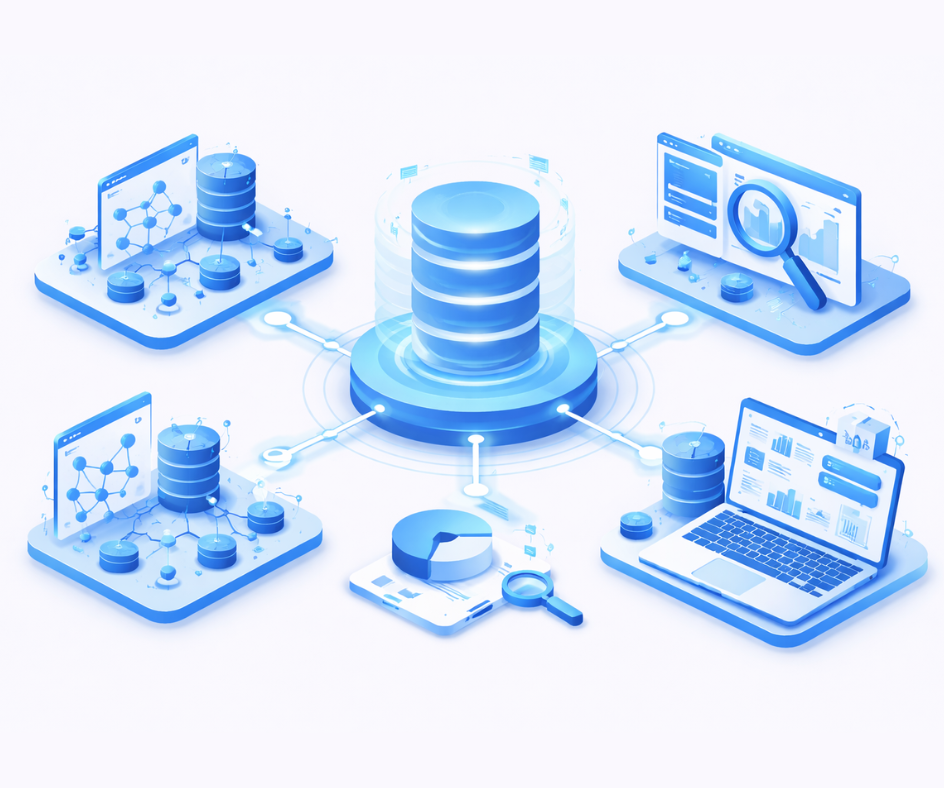
The indexing layer transforms raw blockchain data into structured, queryable formats that enable efficient application data retrieval. Without indexing, applications would need to scan entire blockchain histories to answer simple queries, resulting in unacceptable performance for user-facing features.
The Graph protocol has become the standard indexing solution for dapps in smart contracts, allowing developers to define subgraphs that index specific smart contract events and state changes. Subgraphs expose GraphQL APIs that applications query for historical data, user activity, token balances, and complex relationships between on-chain entities. This blockchain tools category dramatically improves performance compared to direct RPC queries while reducing infrastructure costs.
Indexing Solutions Ecosystem
The Graph
Decentralized indexing protocol with GraphQL APIs and community-maintained subgraphs.
Covalent
Unified API providing indexed data across multiple blockchains with minimal setup.
Moralis
Comprehensive backend platform with built-in indexing, authentication, and real-time data.
Subsquid
High-performance indexing framework optimized for cost and query speed.
Alternative approaches include building custom indexers using event listeners and databases, leveraging provider-specific APIs like Alchemy’s Enhanced APIs, or using managed indexing services like Moralis that bundle indexing with other backend functionality. The choice depends on customization needs, budget constraints, query complexity, and whether existing subgraphs already index the required contracts. For complex applications requiring advanced queries across multiple contracts and blockchain networks, The Graph provides unmatched flexibility and performance through its decentralized indexer network.
Middleware Layer with Bridges Oracles and Messaging Systems
The middleware layer connects smart contracts with external systems, enabling capabilities beyond what isolated blockchain networks can provide. This includes accessing real-world data, communicating across different blockchains, and integrating with traditional web services.
Oracle networks solve the oracle problem by securely bridging off-chain data to on-chain smart contracts. Chainlink dominates this space with decentralized price feeds, verifiable randomness, proof-of-reserve systems, and custom data delivery. DeFi protocols rely heavily on price oracles for accurate asset valuations, while gaming applications use verifiable random functions for fair outcomes, and insurance contracts consume weather or flight data for automated claim processing.
Oracle Solutions
Chainlink: Market leader with extensive price feeds, VRF, automation, and cross-chain messaging.
Band Protocol: Alternative oracle network with competitive pricing and cross-chain focus.
API3: First-party oracles connecting directly to data providers for transparency.
Cross-Chain Bridges
LayerZero: Omnichain messaging protocol enabling arbitrary cross-chain communication.
Axelar: Universal interoperability network with secure cross-chain asset transfers.
Wormhole: Generic message passing protocol supporting multiple blockchain ecosystems.
Cross-chain bridges and messaging protocols enable full-stack web3 applications to operate across multiple blockchain networks, allowing users to move assets and data between chains. However, bridges represent significant security risks as evidenced by numerous high-profile exploits, requiring careful evaluation of bridge security models, audits, and track records before integration. The middleware layer exemplifies the growing sophistication of web3 infrastructure, enabling increasingly complex applications that leverage the unique strengths of different blockchain networks while maintaining interoperability.
Security Layer with Audits Testing and Best Practices
Security represents the most critical aspect of the tech stack for dApp development, as vulnerabilities can result in permanent loss of user funds with no recourse for recovery. The immutable nature of blockchain deployments means security must be addressed comprehensively before mainnet launch.
Professional smart contract audits from specialized firms like Trail of Bits, OpenZeppelin, Consensys Diligence, and Certora are essential for production deployments handling significant value. Auditors perform manual code review, automated analysis, and formal verification to identify vulnerabilities including reentrancy attacks, integer overflows, access control issues, flash loan exploits, and logic errors that could compromise dapps in smart contracts.
Security Implementation Checklist
✓ Comprehensive unit and integration testing with 90%+ coverage
✓ Professional audit from reputable security firm
✓ Automated security scanning with Slither, Mythril, or Securify
✓ Testnet deployment with extensive user testing
✓ Bug bounty program on platforms like Immunefi or Code4rena
✓ Implementation of established patterns from OpenZeppelin
✓ Monitoring and alerting for suspicious on-chain activity
✓ Incident response plan for handling discovered vulnerabilities
Beyond smart contracts, frontend security requires protecting against phishing attacks, ensuring secure wallet connections, validating user inputs, and implementing content security policies. Backend services need traditional security measures including API authentication, rate limiting, SQL injection prevention, and secure key management for any privileged operations. The security layer must span the entire tech stack for dApp, with particular emphasis on the smart contract stack where vulnerabilities have the most severe consequences.
Performance Layer for Scalability and Optimization
Performance optimization in dApp development requires addressing challenges unique to blockchain applications including transaction latency, gas costs, data retrieval speeds, and frontend responsiveness. Successful optimization strategies span multiple layers of the tech stack.
Smart contract optimization focuses on minimizing gas consumption through efficient data structures, storage patterns, and algorithm implementations. Techniques include packing storage variables, using events for historical data instead of storage, implementing off-chain signatures for authorization, batching operations, and leveraging Layer 2 solutions for high-frequency interactions. Every optimization must balance gas savings against code clarity and security considerations.
Performance Optimization Strategies
Smart Contract Level
- Optimize storage layouts
- Use libraries for common logic
- Implement lazy evaluation
- Minimize external calls
Data Access Level
- Leverage indexing solutions
- Implement caching layers
- Use WebSocket connections
- Batch RPC requests
Frontend Level
- Code splitting and lazy loading
- Optimize bundle sizes
- Implement progressive loading
- Use service workers
Frontend performance benefits from code splitting, lazy loading of wallet libraries, optimized asset delivery, and perceived performance improvements through skeleton screens and optimistic UI updates. Data access performance improves through strategic caching, WebSocket connections for real-time updates, GraphQL query optimization, and leveraging CDN distribution for static assets. Continuous monitoring using tools like Tenderly, Dune Analytics, and custom dashboards helps identify performance bottlenecks and track optimization impact over time.
Tooling and Development Environment for dApp Projects
The development environment and blockchain tools ecosystem has matured significantly, providing comprehensive solutions for every stage of the dApp development lifecycle from initial prototyping through production deployment and maintenance.
Local development environments like Hardhat Network and Anvil from Foundry provide instant blockchain simulation, enabling rapid iteration without network delays or gas costs. These tools integrate with development frameworks offering hot reload, console logging, stack traces, and time manipulation for testing time-dependent logic. Browser-based Remix IDE remains valuable for quick prototyping and educational purposes, offering instant compilation, deployment, and interaction without setup overhead.
Development Tools
Hardhat/Foundry: Core development frameworks
Remix: Browser-based IDE for prototyping
Tenderly: Debugging and monitoring platform
OpenZeppelin Defender: Operations and security
Testing Tools
Waffle/Chai: Testing frameworks and assertions
Forge: Fast Solidity testing with fuzz testing
Echidna: Property-based fuzz testing tool
Manticore: Symbolic execution for deep testing
Deployment Tools
Hardhat Deploy: Automated deployment scripts
Forge Script: Solidity-based deployment workflows
Gnosis Safe: Multi-sig deployment and management
Etherscan: Contract verification and monitoring
Advanced tooling includes Tenderly for production debugging and transaction simulation, OpenZeppelin Defender for automated operations and security monitoring, Dune Analytics for on-chain analytics and dashboards, and various security analyzers for continuous vulnerability scanning. The modern development stack emphasizes automation, continuous integration, and comprehensive testing to maintain code quality and security standards throughout the development lifecycle.
Ready to Launch a Scalable dApp?
Talk to our Web3 specialists to choose the ideal tech stack and development roadmap.
Workflow for Building a Complete dApp Tech Stack
Building production-ready dapps in smart contracts requires a systematic workflow that progresses through planning, development, testing, deployment, and maintenance phases. Understanding this workflow helps teams allocate resources effectively and avoid common pitfalls that can derail projects.
dApp Development Lifecycle
Phase 1: Planning and Architecture
Define requirements, select blockchain network, design smart contract architecture, plan user flows, and choose tech stack components. This phase establishes technical foundation and identifies potential challenges early.
Phase 2: Smart Contract Development
Implement core business logic using Solidity, write comprehensive tests, perform security analysis, and iterate based on findings. Focus on gas optimization and security best practices throughout development.
Phase 3: Frontend and Backend Development
Build user interfaces with wallet integration, implement backend services for off-chain functionality, set up indexing solutions, and integrate with storage systems. Parallel development with smart contracts accelerates delivery.
Phase 4: Integration and Testing
Conduct end-to-end testing, perform security audits, deploy to testnets for user testing, gather feedback, and refine implementation. Multiple audit rounds may be necessary for complex systems.
Phase 5: Deployment and Launch
Deploy smart contracts to mainnet, verify contracts on block explorers, configure production infrastructure, deploy frontend and backend services, and monitor initial user activity closely for issues.
Phase 6: Maintenance and Upgrades
Monitor performance and security, respond to user feedback, plan upgrades using proxy patterns or new deployments, maintain infrastructure, and continuously optimize gas usage and user experience.
Real-world dApp example workflows demonstrate this process in action. A DeFi lending protocol might spend two months on smart contract development with extensive testing, one month on security audits addressing multiple iterations, one month on frontend development and backend indexing setup, and two weeks on testnet deployment before mainnet launch. The workflow emphasizes thorough testing and security validation over rapid deployment, as post-deployment fixes are significantly more complex and costly in blockchain environments.
Final Thoughts on Choosing the Best Tech Stack for dApp
Selecting the optimal tech stack for dApp development requires careful evaluation of project requirements, user expectations, budget constraints, and long-term maintenance considerations. There is no universal best stack, rather the right combination depends on specific application needs and team capabilities.
Key decision factors include target transaction volume and acceptable latency, budget for gas fees and infrastructure costs, security requirements and audit resources, team expertise with specific blockchain tools and frameworks, expected user base and their technical sophistication, need for cross-chain functionality, and compliance with regulatory requirements. Projects handling significant value should prioritize security and established networks over cost savings, while consumer applications might emphasize user experience and low transaction fees.
Tech Stack Selection Framework
For DeFi Applications
Ethereum or Arbitrum for security, Hardhat for development, The Graph for indexing, Chainlink for oracles, multiple security audits, emphasis on formal verification and battle-tested contracts.
For Gaming and NFTs
Polygon or Solana for low fees, IPFS for metadata storage, custom indexing for performance, focus on user experience and transaction speed, reduced emphasis on maximum decentralization.
For Enterprise Solutions
Private or consortium blockchains, robust backend services, traditional database integration, compliance tooling, permissioned access control, emphasis on privacy and regulatory compliance.
The web3 infrastructure landscape continues evolving rapidly with new Layer 2 solutions, improved development tools, and enhanced cross-chain capabilities. Successful projects maintain flexibility in their architecture, avoiding tight coupling to specific providers or platforms that might become obsolete. Building with established standards, open protocols, and modular designs enables easier migration and upgrades as the ecosystem matures.
With over eight years of experience building production dapps in smart contracts across various sectors, we have witnessed firsthand how thoughtful architecture decisions compound over time. Projects that invest appropriately in security, testing, and robust infrastructure from the beginning significantly outperform those that prioritize rapid deployment over quality. The complete tech stack for dApp development represents a sophisticated ecosystem of specialized components that, when properly integrated, enable powerful decentralized applications serving millions of users worldwide.
Whether building a DeFi protocol, NFT marketplace, gaming platform, or enterprise blockchain solution, understanding each layer of the dApp architecture and selecting appropriate blockchain tools ensures your project has the foundation necessary for success. The hybrid dApp workflow balancing on-chain security with off-chain efficiency represents the proven path forward for full-stack web3 applications that meet real user needs while maintaining the core benefits of blockchain technology.
Frequently Asked Questions
Q1.What are the essential layers in a dApp tech stack?
A complete dApp tech stack includes blockchain layer, smart contract layer, node and RPC layer, wallet layer, frontend layer, backend layer, storage layer, indexing layer, middleware layer, security layer, and performance layer. Each layer serves specific functions to create robust dapps in smart contracts.
Q2.How do RPC providers connect dApps to blockchain networks?
RPC providers like Infura, Alchemy, and QuickNode act as intermediaries between dApps and blockchain nodes, enabling developers to send transactions and read blockchain data without running full nodes. They provide reliable web3 infrastructure for seamless connectivity and faster development cycles.
Q3.What is the difference between on-chain and off-chain components?
On-chain components include smart contracts and blockchain data stored directly on the network, ensuring immutability and decentralization. Off-chain components comprise frontend interfaces, backend services, databases, and storage solutions that handle user interactions, complex computations, and large data outside blockchain constraints.
Q4.Which smart contract languages should I learn for building dApps?
Solidity remains the most popular for Ethereum and EVM-compatible chains, while Rust is essential for Solana and Polkadot development. Vyper offers Python-like syntax for Ethereum, and Move powers Aptos and Sui blockchains. Your choice depends on the target blockchain networks and ecosystem.
Q5.Why do dApps need indexing tools like The Graph?
Blockchain data is stored in blocks, making complex queries slow and inefficient. Indexing tools organize and structure blockchain data into queryable databases, enabling fast retrieval of historical transactions, events, and state changes. This dramatically improves dApp performance and user experience for data-heavy applications.
Q6.What storage solutions work best for decentralized applications?
IPFS provides content-addressable storage for static files, Filecoin offers incentivized long-term storage, Arweave enables permanent data storage, and Ceramic Network handles mutable user data. Traditional databases like MongoDB complement these for off-chain data requiring frequent updates and complex queries.
Q7.How do oracles enable dApps to access external data?
Oracles like Chainlink, Band Protocol, and API3 fetch real-world data and feed it to smart contracts on blockchain networks. They bridge the gap between on-chain and off-chain worlds, enabling dapps in smart contracts to react to price feeds, weather data, sports scores, and IoT inputs.
Q8.What security measures are critical for building secure dApps?
Essential security measures include smart contract audits from firms like CertiK or OpenZeppelin, comprehensive testing with Hardhat and Foundry, formal verification, bug bounty programs, secure wallet integration, input validation, reentrancy guards, access controls, and continuous monitoring for vulnerabilities throughout the development lifecycle.
Q9.What frameworks accelerate full-stack Web3 workflows?
Hardhat and Foundry dominate the ecosystem for testing, debugging, and deploying contracts. On the frontend, Ethers.js and Web3.js handle blockchain interactions, while React frameworks like Next.js and Vite optimize UI development. Scaffold-ETH and Thirdweb provide complete boilerplates for rapid prototyping and production deployment.
Q10.How do I choose the right blockchain for my dApp?
Consider transaction costs, speed, security, decentralization level, developer ecosystem, smart contract capabilities, and target user base. Ethereum offers maximum security and adoption, Polygon provides low-cost scaling, Solana delivers high throughput, and Avalanche balances speed with customization. Match blockchain characteristics with your specific use case requirements.
Explore Services
Related Services
Reviewed by

Aman Vaths
Founder of Nadcab Labs
Aman Vaths is the Founder & CTO of Nadcab Labs, a global digital engineering company delivering enterprise-grade solutions across AI, Web3, Blockchain, Big Data, Cloud, Cybersecurity, and Modern Application Development. With deep technical leadership and product innovation experience, Aman has positioned Nadcab Labs as one of the most advanced engineering companies driving the next era of intelligent, secure, and scalable software systems. Under his leadership, Nadcab Labs has built 2,000+ global projects across sectors including fintech, banking, healthcare, real estate, logistics, gaming, manufacturing, and next-generation DePIN networks. Aman’s strength lies in architecting high-performance systems, end-to-end platform engineering, and designing enterprise solutions that operate at global scale.