Ai Overview
Maximal Extractable Value refers to the total value that can be extracted from block production beyond the standard block reward and gas fees. Originally termed Miner Extractable Value when proof-of-work consensus dominated, the concept was renamed after Ethereum transitioned to proof-of-stake, as validators now control transaction ordering rather than miners. The investment required for MEV bot development varies significantly based on scope, complexity, and competitive targets.
Key Takeaways
- ◆
MEV represents the maximum value that can be extracted from block production beyond standard rewards, with over 675 million dollars extracted on Ethereum alone since 2020 through various strategies including sandwich attacks, arbitrage, and liquidations. - ◆
Sandwich bots exploit pending transactions by placing orders before and after a target trade, profiting from the price impact caused by the victim transaction while operating in the mempool before block confirmation. - ◆
MEV bot development requires deep expertise in mempool monitoring, gas optimization, smart contract development, and millisecond-level execution infrastructure to compete in an increasingly sophisticated landscape. - ◆
The MEV ecosystem has evolved from simple frontrunning to complex multi-block strategies, Flashbots integration, cross-chain MEV, and sophisticated bundle auctions that reshape how value flows through decentralized networks. - ◆
Ethical considerations and regulatory scrutiny around MEV extraction continue to intensify, pushing the industry toward MEV redistribution mechanisms and protection protocols that balance efficiency with fairness.
The decentralized finance ecosystem processes billions of dollars in transactions daily, and within this constant flow of value lies a hidden economy that most users never see. Maximal Extractable Value, commonly known as MEV, represents the profit that sophisticated actors can capture by manipulating the order of transactions within a block. This phenomenon has grown from a theoretical concern discussed in academic papers to a multi-billion dollar industry that fundamentally shapes how blockchain networks operate.
Among the various MEV extraction strategies, sandwich attacks have emerged as one of the most prevalent and profitable techniques. These attacks target users making swaps on decentralized exchanges, extracting value by strategically placing transactions before and after the victim trade. Understanding how these bots work is essential for anyone involved in DeFi, whether you are a trader seeking protection, a protocol designer implementing safeguards, or a developer exploring the technical frontier of blockchain systems.
This comprehensive guide explores the technical architecture of MEV bots, the mechanics of sandwich attacks, development considerations, and the broader implications for the DeFi ecosystem. At Nadcab Labs, our team has spent years developing and analyzing MEV infrastructure, giving us deep insight into both the opportunities and challenges this technology presents. Whether you seek to understand MEV for protection or development purposes, this guide provides the technical depth and practical knowledge required to navigate this complex landscape.
Understanding Maximal Extractable Value
Maximal Extractable Value refers to the total value that can be extracted from block production beyond the standard block reward and gas fees. Originally termed Miner Extractable Value when proof-of-work consensus dominated, the concept was renamed after Ethereum transitioned to proof-of-stake, as validators now control transaction ordering rather than miners. The core principle remains unchanged: whoever controls transaction ordering within a block possesses the power to extract additional value.
The existence of MEV stems from a fundamental characteristic of blockchain architecture. When users submit transactions, these transactions enter a public waiting area called the mempool before being included in a block. During this waiting period, the transaction details are visible to anyone monitoring the network. This transparency, while essential for decentralization, creates opportunities for sophisticated actors to observe pending transactions and strategically place their own transactions to profit from the information.
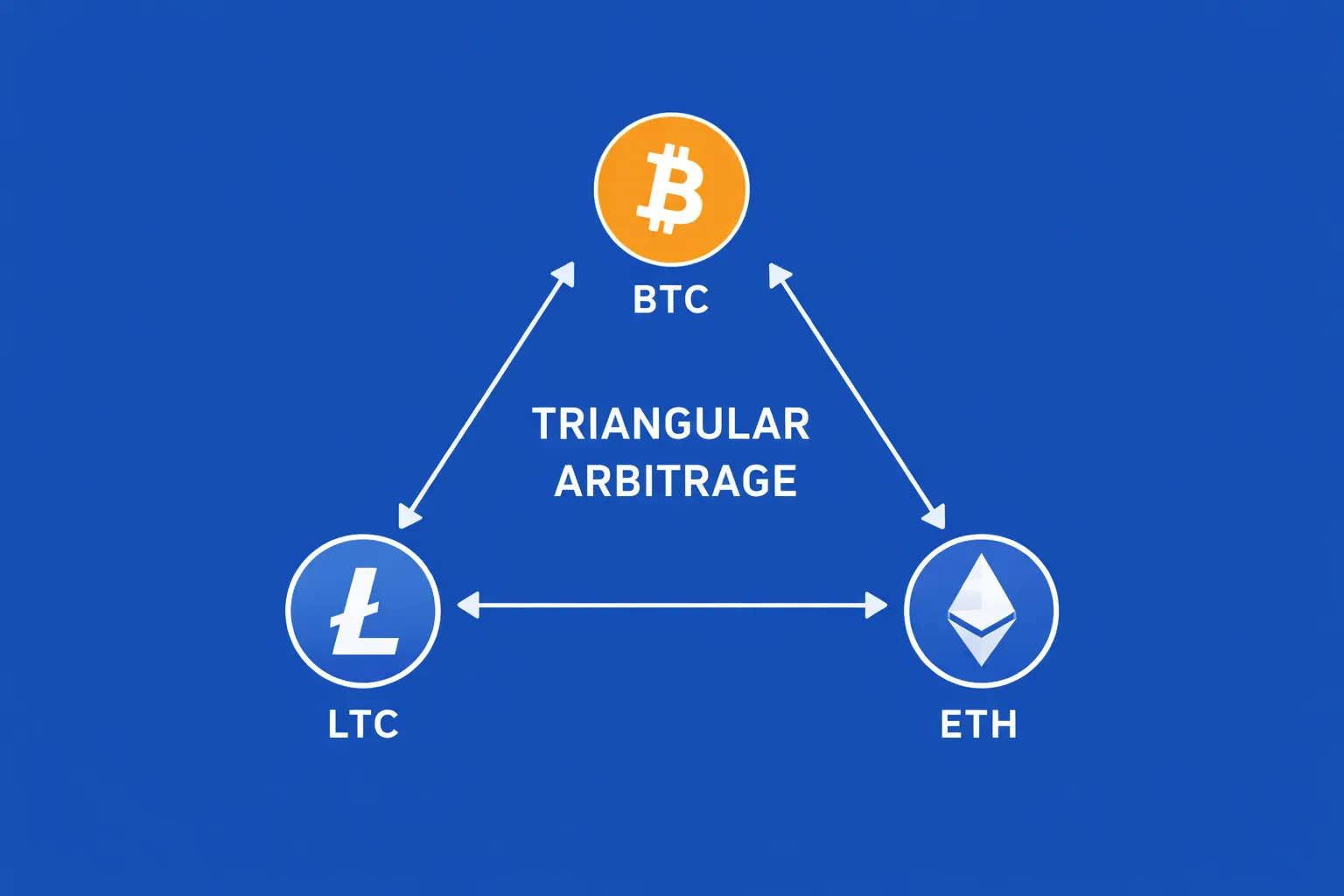
The MEV landscape encompasses multiple extraction strategies, each exploiting different aspects of blockchain mechanics and DeFi protocol design. Arbitrage opportunities arise when price discrepancies exist between different trading venues. Liquidation bots monitor lending protocols to claim collateral from undercollateralized positions. Frontrunning involves copying profitable transactions and paying higher gas to execute first. Sandwich attacks, the focus of this guide, combine frontrunning and backrunning to extract value from swap transactions.
MEV Extraction Statistics by Category
| MEV Category | Estimated Annual Volume | Percentage of Total MEV | Primary Targets |
|---|---|---|---|
| Sandwich Attacks | 287 Million USD | 38 Percent | DEX Swaps, Large Trades |
| DEX Arbitrage | 245 Million USD | 32 Percent | Price Discrepancies |
| Liquidations | 156 Million USD | 21 Percent | Lending Protocols |
| NFT Sniping | 45 Million USD | 6 Percent | NFT Mints, Listings |
| Other Strategies | 22 Million USD | 3 Percent | Various Protocols |
Anatomy of a Sandwich Attack
A sandwich attack derives its name from the way the attacker positions transactions around a victim trade, placing one transaction before and one after, effectively sandwiching the target. This strategy exploits the predictable price impact of trades on automated market makers, particularly those using constant product formulas like Uniswap. When a large swap occurs, it moves the price within the liquidity pool. By anticipating this movement, an attacker can profit from the temporary price displacement.
The attack begins with mempool monitoring. The attacker operates nodes that observe pending transactions before they are included in blocks. When the bot detects a swap transaction meeting certain criteria, typically involving sufficient size and acceptable slippage tolerance, it initiates the attack sequence. The technical sophistication required to execute this consistently separates amateur attempts from professional MEV operations.
Sandwich Attack Execution Flow
Mempool Monitoring: Bot continuously scans pending transactions for profitable swap opportunities
Target Identification: Analyzes victim transaction for size, slippage tolerance, and profit potential
Frontrun Transaction: Bot places buy order with higher gas price to execute before victim
Victim Transaction Executes: Original trade goes through at worse price due to prior price impact
Backrun Transaction: Bot immediately sells acquired tokens at the elevated price
Profit Realization: Difference between buy and sell price minus gas costs equals extracted value
The mathematical foundation of sandwich profitability relies on the constant product formula used by most automated market makers. In a pool containing two assets, the product of their quantities remains constant during trades. When the attacker buys tokens before the victim, they push the price up. The victim then buys at this elevated price, pushing it higher still. The attacker then sells into this artificially elevated price, capturing the spread as profit.
Transaction ordering is achieved through gas price manipulation or, increasingly, through block builder relationships. In the traditional approach, the attacker pays a higher gas price than the victim for the frontrun transaction and a carefully calibrated gas price for the backrun to ensure proper ordering. Modern MEV extraction often utilizes Flashbots or similar systems where transaction bundles are submitted directly to block builders, guaranteeing atomic execution of the sandwich sequence.
Practical Sandwich Attack Example
Consider a Uniswap ETH/USDC pool with the following state:
| Initial Pool State | 1000 ETH and 2000000 USDC |
| Initial ETH Price | 2000 USDC per ETH |
| Victim Transaction | Buy 50 ETH with 5 percent slippage tolerance |
Attack Sequence:
Step 1: Attacker buys 20 ETH, paying approximately 40816 USDC, moving price to 2083 USDC per ETH
Step 2: Victim buys 50 ETH at the elevated price, paying approximately 109200 USDC instead of expected 102000 USDC
Step 3: Attacker sells 20 ETH at the new elevated price, receiving approximately 42650 USDC
Result: Attacker profits approximately 1834 USDC minus gas costs. Victim loses approximately 7200 USDC to slippage.
Technical Architecture of MEV Bots
Building a competitive MEV bot requires sophisticated infrastructure spanning multiple layers of the blockchain stack. The architecture must handle real-time data processing, complex calculations, and sub-second transaction submission while maintaining reliability under varying network conditions. At Nadcab Labs, our experience developing MEV infrastructure has revealed the critical importance of each architectural component and how they must work together seamlessly.
The system architecture divides into several interconnected modules, each responsible for specific functions within the MEV extraction pipeline. Understanding these components provides insight into both the complexity of MEV bot development and the competitive advantages that optimization at each layer can provide.
Mempool Monitoring Layer
This component connects to multiple Ethereum nodes to receive pending transactions in real-time. Running dedicated archive nodes with custom patches reduces latency compared to public RPC endpoints. The monitoring layer filters and categorizes transactions, identifying those targeting DEX protocols and extracting relevant parameters such as token addresses, amounts, and slippage settings.
Simulation Engine
Before committing capital, the bot must simulate potential attacks against a local copy of blockchain state. This engine forks the current state and executes the sandwich sequence virtually to calculate exact profit potential. High-fidelity simulation prevents failed transactions that waste gas and reveal strategy to competitors observing failed attempts.
Profit Calculator
The calculator determines optimal attack parameters including position size for the frontrun transaction, expected slippage, gas costs across all transactions, and probability of successful inclusion. It must account for competing MEV bots, potential for the victim to use MEV protection, and current network congestion levels.
Execution Module
This component handles transaction construction and submission. It interfaces with block builders through Flashbots or similar systems, constructs optimized transaction bundles, and manages nonce sequencing. The module must handle failures gracefully, including bundle rejection, transaction reversion, and network congestion.
Smart Contract Layer
Custom smart contracts execute the actual trades with optimizations for gas efficiency. These contracts often combine multiple operations into single transactions, implement atomic execution guarantees, and include safety checks to prevent loss in edge cases. Contract optimization directly impacts profitability through reduced gas costs.
Risk Management System
Capital preservation requires sophisticated risk controls. This system monitors exposure limits, tracks profit and loss in real-time, detects anomalous market conditions, and can halt operations if predefined thresholds are breached. It also manages the distribution of capital across multiple strategies and chains.
MEV Bot System Architecture Diagram
+------------------+     +-------------------+     +------------------+
|   Ethereum       |     |   Mempool         |     |   Transaction    |
|   Full Nodes     |---->|   Monitor         |---->|   Parser         |
|   (Multiple)     |     |   Service         |     |   Module         |
+------------------+     +-------------------+     +------------------+
                                                            |
                                                            v
+------------------+     +-------------------+     +------------------+
|   Bundle         |     |   Profit          |<----|   Opportunity    |
|   Submission     |<----|   Calculator      |     |   Detector       |
|   (Flashbots)    |     |   Engine          |     |                  |
+------------------+     +-------------------+     +------------------+
        |                         ^                         |
        v                         |                         v
+------------------+     +-------------------+     +------------------+
|   Block          |     |   State           |     |   Simulation     |
|   Builders       |     |   Forking         |<----| Engine | | | | Service | | | +------------------+ +-------------------+ +------------------+ | v +------------------+ +-------------------+ +------------------+ | Blockchain | | Risk | | Analytics | | Inclusion |---->|   Management      |---->|   Dashboard      |
|                  |     |   System          |     |                  |
+------------------+     +-------------------+     +------------------+
MEV Bot Development Lifecycle
Developing a production-ready MEV bot follows a structured lifecycle that progresses from initial research through deployment and ongoing optimization. Each phase presents unique challenges and requires specific expertise. The timeline and resource requirements vary significantly based on target strategies and competitive positioning goals.
Research and Strategy Definition
The initial phase involves comprehensive analysis of MEV opportunities across target protocols and chains. Teams study existing MEV extraction patterns, analyze competitor strategies through on-chain data, and identify underexploited opportunities. This research informs strategic decisions about which MEV types to pursue and competitive positioning.
Duration: 2 to 4 weeks
Infrastructure Setup
Building the underlying infrastructure requires deploying and synchronizing multiple blockchain nodes, establishing low-latency network connections, setting up development and testing environments, and configuring cloud or dedicated server resources. Geographic distribution of nodes near major validator clusters reduces latency.
Duration: 2 to 3 weeks
Core Development
The development phase implements mempool monitoring, transaction parsing, opportunity detection, simulation engines, and execution logic. Smart contracts are written and optimized for gas efficiency. This phase requires deep expertise in blockchain internals, Solidity development, and high-performance systems programming.
Duration: 6 to 10 weeks
Testing and Simulation
Rigorous testing validates bot behavior under various market conditions. This includes unit testing individual components, integration testing the complete pipeline, backtesting against historical data, and dry-run testing on testnets or mainnet forks. Edge cases and failure modes receive particular attention.
Duration: 3 to 4 weeks
Mainnet Deployment
Initial mainnet deployment begins with limited capital and conservative parameters. The team monitors performance closely, comparing actual results against simulations. Gradual scaling occurs as confidence builds and edge cases are identified and addressed. Security measures protect deployed capital.
Duration: 2 to 4 weeks initial, ongoing thereafter
Optimization and Maintenance
MEV extraction is intensely competitive, requiring continuous optimization. Teams analyze performance data, identify inefficiencies, and implement improvements. Protocol upgrades, new DEX deployments, and competitor evolution demand ongoing adaptation. This phase continues indefinitely throughout the bot’s operational life.
Duration: Ongoing
MEV Bot Development Cost Analysis
The investment required for MEV bot development varies significantly based on scope, complexity, and competitive targets. Understanding cost components helps organizations plan appropriately and set realistic expectations for return on investment timelines.
| Cost Component | Basic Bot | Advanced Bot | Enterprise Grade |
|---|---|---|---|
| Infrastructure Setup | 5000 to 10000 USD | 15000 to 30000 USD | 50000 to 100000 USD |
| Core Development | 25000 to 50000 USD | 75000 to 150000 USD | 200000 to 400000 USD |
| Smart Contract Development | 10000 to 20000 USD | 30000 to 60000 USD | 80000 to 150000 USD |
| Testing and Audit | 5000 to 15000 USD | 20000 to 40000 USD | 50000 to 100000 USD |
| Monthly Operating Costs | 2000 to 5000 USD | 8000 to 15000 USD | 25000 to 50000 USD |
| Total Initial Investment | 45000 to 95000 USD | 140000 to 280000 USD | 380000 to 750000 USD |
Nadcab Labs MEV Development Expertise
Nadcab Labs has established itself as a leading provider of MEV infrastructure development, bringing together deep blockchain expertise with practical trading systems experience. Our team has been actively involved in MEV research and development since the early days of DeFi, providing us with insights that only come from years of hands-on experience in this rapidly evolving field.
Our approach to MEV bot development emphasizes robustness, efficiency, and adaptability. We understand that MEV extraction operates in an adversarial environment where competitors constantly seek advantages. This reality shapes our engineering decisions, from low-level gas optimizations to high-level architectural choices that enable rapid strategy iteration.
Core Development Capabilities
Multi-Chain MEV Extraction
Development of MEV bots operating across Ethereum, Binance Smart Chain, Polygon, Arbitrum, and other EVM-compatible networks with unified management and cross-chain opportunity detection.
Flashbots Integration
Expert implementation of Flashbots bundle submission, MEV-Share participation, and direct block builder relationships for optimal transaction inclusion and reduced competition.
Custom Strategy Development
Design and implementation of tailored MEV strategies including sandwich attacks, arbitrage, liquidations, and novel approaches targeting specific protocol mechanics.
Infrastructure Optimization
High-performance node infrastructure, latency optimization, geographic distribution strategies, and custom node modifications for competitive MEV extraction.
47
MEV Projects Delivered
12
Blockchain Networks Supported
98.7
Percent Transaction Success Rate
6
Years MEV Development Experience
MEV Strategy Comparison Analysis
Different MEV strategies present varying risk-reward profiles, technical requirements, and competitive dynamics. Understanding these differences helps inform strategic decisions about which approaches to pursue and how to allocate development resources.
| Strategy Type | Capital Required | Technical Complexity | Competition Level | Profit Potential | Risk Level |
|---|---|---|---|---|---|
| Sandwich Attacks | High | High | Very High | High | Medium |
| DEX Arbitrage | Medium to High | Medium | Very High | Medium | Low |
| Liquidations | High | Medium to High | High | High | Medium |
| NFT Sniping | Medium | Medium | Medium | Variable | High |
| Backrunning | Low to Medium | Low to Medium | Medium | Low to Medium | Low |
| JIT Liquidity | Very High | Very High | Low | High | Medium |
MEV Profit Distribution by Strategy Type
Sandwich
38%
Arbitrage
32%
Liquidations
21%
NFT Sniping
6%
Other
3%
Based on Ethereum mainnet MEV extraction data from 2024
MEV Protection Mechanisms
The prevalence of MEV extraction has spawned a parallel industry focused on protection. Understanding these mechanisms is essential both for MEV developers seeking to navigate around them and for users seeking protection from extraction. The arms race between extraction and protection drives continuous innovation on both sides.
Protection strategies operate at different layers of the transaction lifecycle, from submission through execution. Some approaches hide transaction details until inclusion, others route transactions through private channels, and still others modify protocol mechanics to reduce exploitability.
Private Transaction Pools
Services like Flashbots Protect route transactions directly to block builders, bypassing the public mempool entirely. Transactions remain invisible until block inclusion, preventing frontrunning. However, validators can still extract value through their ordering power.
MEV Share and Redistribution
Rather than eliminating MEV, redistribution mechanisms return a portion of extracted value to the original transaction submitter. This approach accepts MEV as inevitable while ensuring users benefit from the value their transactions create.
Commit-Reveal Schemes
Cryptographic approaches hide transaction content during ordering, revealing details only after position is determined. While effective against content-based extraction, these schemes add latency and complexity that limit adoption in high-frequency trading contexts.
Protocol-Level Mitigations
DEX protocols implement various protective features including time-weighted average pricing, batch auctions, and concentrated liquidity designs that reduce MEV attack surface. Protocol upgrades continuously evolve in response to newly discovered extraction vectors.
Ethical and Regulatory Considerations
MEV extraction occupies a contested ethical space within the blockchain ecosystem. Proponents argue that MEV represents an inherent feature of open systems, that extractors provide valuable services through arbitrage, and that the practice improves market efficiency. Critics counter that MEV extracts value from ordinary users, creates systemic instability, and represents a form of front-running that would be illegal in traditional markets.
Regulatory bodies have begun examining MEV practices with increasing scrutiny. While blockchain transactions occur in a relatively unregulated environment, the application of existing securities and market manipulation laws to MEV activities remains an open question. Sandwich attacks in particular bear resemblance to prohibited trading practices in traditional finance, potentially exposing operators to legal risk as regulatory clarity develops.
Organizations considering MEV development must carefully evaluate these considerations. At Nadcab Labs, we work with clients to understand the full spectrum of MEV opportunities while maintaining awareness of ethical boundaries and emerging regulatory frameworks. We believe sustainable MEV operations balance profit extraction with ecosystem health, avoiding strategies that cause systemic harm or exploit vulnerable users.
Ready to Build MEV Infrastructure?
Partner with Nadcab Labs for expert MEV bot development. Our team combines deep blockchain knowledge with practical trading systems experience to deliver competitive, robust extraction infrastructure.
The Future of MEV Extraction
The MEV landscape continues to evolve rapidly, driven by protocol upgrades, new extraction techniques, and shifting regulatory attention. Several trends are reshaping how value flows through blockchain networks and how extractors must adapt to remain competitive.
Cross-chain MEV represents a significant frontier as bridging protocols and multi-chain applications create new extraction opportunities spanning multiple networks. Extractors who can monitor and execute across chains simultaneously gain access to larger opportunity sets and more complex arbitrage paths.
Proposer-builder separation and related protocol changes fundamentally alter MEV dynamics by decoupling block construction from validation. This creates new competitive structures and potentially democratizes MEV access while introducing novel strategic considerations around builder relationships and bundle optimization.
Intent-based trading systems represent perhaps the most significant potential disruption to MEV extraction. By abstracting user goals from specific transaction paths, these systems enable sophisticated solvers to find optimal execution routes while potentially redistributing MEV value more equitably. How MEV extractors adapt to intent architectures will shape the industry’s trajectory for years to come.
Related Resources
Arbitrage Trading Bot Guide
Learn how arbitrage bots profit from price differences across multiple exchanges and DeFi protocols.
Flash Loan Arbitrage Development
Explore how flash loans enable zero-capital arbitrage and liquidation strategies in DeFi.
Custom Trading Bot Development
Build advanced trading bots tailored to your strategy with Nadcab Labs expertise.
Frequently Asked Questions
Q1.What exactly is MEV and why does it matter?
MEV stands for Maximal Extractable Value, representing the profit that can be captured by manipulating the order of transactions within a block. It matters because it represents billions of dollars flowing through blockchain networks annually, affects the prices users receive on trades, influences network congestion and gas prices, and creates systemic effects on protocol economics. Understanding MEV is essential for anyone participating in DeFi, whether as a user seeking protection or an operator seeking opportunities.
Q2.How do sandwich attacks actually extract value from users?
Sandwich attacks work by detecting pending swap transactions in the mempool and placing two transactions around the target: a buy order before and a sell order after. The frontrun buy pushes the price up, forcing the victim to buy at a worse price. The backrun sell then captures the price difference as profit. The value extracted equals the price impact caused by the frontrun minus gas costs. Users experience this as worse execution prices than expected, with the difference flowing to the attacker.
Q3.Is building an MEV bot legal?
The legal status of MEV extraction remains unclear and varies by jurisdiction. While blockchain transactions occur in a relatively unregulated space, some MEV practices resemble front-running and market manipulation prohibited in traditional finance. Regulatory bodies are increasingly scrutinizing these activities. Organizations should consult legal counsel familiar with both securities law and cryptocurrency regulation before engaging in MEV extraction, particularly sandwich attacks which most closely resemble prohibited trading practices.
Q4.How much capital is needed to start extracting MEV?
Capital requirements vary significantly by strategy. Sandwich attacks typically require 50000 to 500000 USD or more to capture meaningful opportunities, as larger position sizes are needed to create profitable price impacts. DEX arbitrage can start with less but scales with capital. Liquidation bots require capital matching the positions being liquidated. Beyond trading capital, infrastructure costs including nodes, servers, and development typically add 50000 to 200000 USD for competitive operations.
Q5.What programming languages are used for MEV bot development?
MEV bots typically combine multiple languages for different components. Rust and Go dominate high-performance components like mempool monitoring and transaction processing due to their speed and memory safety. Python is common for strategy development and data analysis. Solidity handles on-chain smart contracts. TypeScript often manages API interfaces and dashboards. The specific mix depends on team expertise and performance requirements, though competitive operations increasingly favor Rust for latency-critical paths.
Q6.How does Flashbots change MEV extraction?
Flashbots fundamentally altered MEV dynamics by creating private transaction pools and bundle auctions. Instead of competing through gas price wars in the public mempool, extractors submit bundles directly to block builders who include them atomically. This reduces failed transaction costs, enables more sophisticated multi-transaction strategies, and shifts competition toward bundle optimization and builder relationships. Most professional MEV operations now route primarily through Flashbots or similar systems rather than public mempool transactions.
Q7.Can users protect themselves from MEV extraction?
Yes, several protection mechanisms exist. Users can submit transactions through private pools like Flashbots Protect to avoid public mempool exposure. Setting tight slippage tolerances reduces sandwich profitability though risks failed transactions. Using DEXs with built-in MEV protection or batch auction mechanisms provides protocol-level defense. Timing transactions during low-congestion periods reduces competition. Some wallets now offer automatic MEV protection features that route transactions through protected channels.
Q8.What is the difference between MEV and traditional front-running?
Traditional front-running in securities markets involves brokers trading ahead of client orders using privileged information. MEV extraction in blockchain operates on public information since mempool transactions are visible to everyone. However, the economic effect is similar, with sophisticated actors profiting at the expense of regular users. The key distinction is that blockchain MEV exploits transparency and permissionless ordering rather than privileged access. This public nature creates both ethical ambiguity and potential regulatory complexity.
Q9.How long does it take to develop a competitive MEV bot?
Developing a production-ready MEV bot typically requires 4 to 8 months for a skilled team, depending on strategy complexity and competitive targets. The timeline includes research and strategy definition at 2 to 4 weeks, infrastructure setup at 2 to 3 weeks, core development at 6 to 10 weeks, testing and simulation at 3 to 4 weeks, and initial deployment at 2 to 4 weeks. However, reaching competitive profitability often requires additional months of optimization. The MEV space is intensely competitive, meaning development is an ongoing process rather than a one-time project.
Explore Services
Related Services
Reviewed by

Aman Vaths
Founder of Nadcab Labs
Aman Vaths is the Founder & CTO of Nadcab Labs, a global digital engineering company delivering enterprise-grade solutions across AI, Web3, Blockchain, Big Data, Cloud, Cybersecurity, and Modern Application Development. With deep technical leadership and product innovation experience, Aman has positioned Nadcab Labs as one of the most advanced engineering companies driving the next era of intelligent, secure, and scalable software systems. Under his leadership, Nadcab Labs has built 2,000+ global projects across sectors including fintech, banking, healthcare, real estate, logistics, gaming, manufacturing, and next-generation DePIN networks. Aman’s strength lies in architecting high-performance systems, end-to-end platform engineering, and designing enterprise solutions that operate at global scale.