Ai Overview
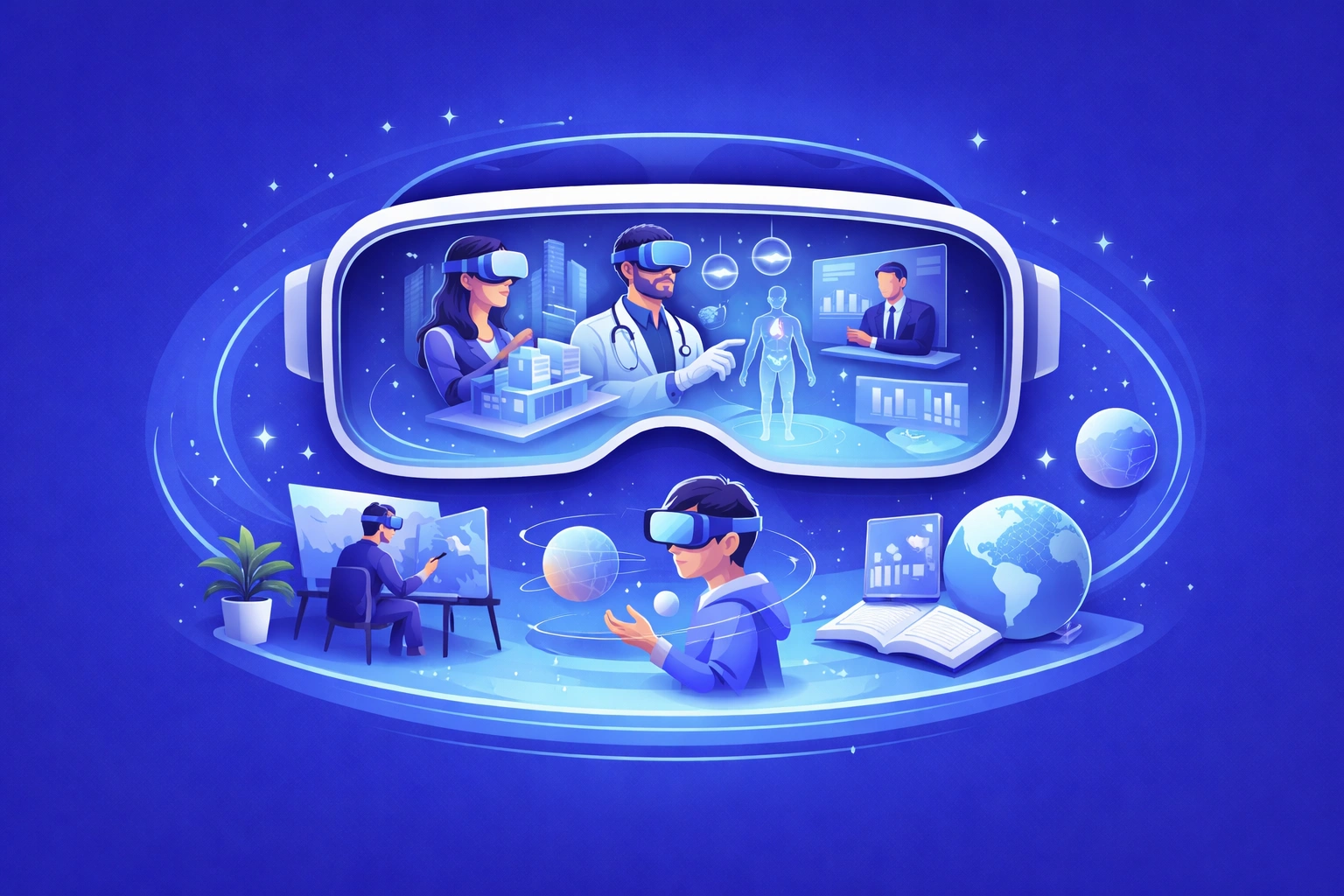
The metaverse is a virtual universe that combines physical and digital spaces, allowing users to interact with each other and in digital environments in real-time. Imagine a world where you can attend events, shop, work, and socialize, all from the comfort of your home, using virtual reality (VR) or augmented reality (AR) devices. The Metaverse offers a blend of technology, social interaction, and digital experiences, making it a new frontier for various industries, including healthcare and medical services.
Key Takeaways
- The metaverse combines virtual reality (VR), augmented reality (AR), and blockchain technology to create immersive digital healthcare environments that transform how patients receive medical services.
- Telemedicine in the metaverse allows patients to consult doctors in comfortable virtual rooms from home, eliminating travel barriers and improving healthcare accessibility for remote communities.
- VR training enables doctors and nurses to practice complex surgeries and emergency responses in risk-free virtual environments, building confidence and skills before treating real patients.
- Augmented reality assists surgeons during operations by highlighting critical areas like blood vessels and organs, leading to safer, more precise procedures and better patient outcomes.
- Interactive 3D patient education tools help individuals understand their health conditions and treatments through visual learning, empowering them to make informed healthcare decisions.
- Mental health support in the metaverse provides calming virtual therapy spaces, exposure therapy for phobias, and online support groups connecting people with similar health challenges.
- Remote monitoring through wearable devices sends real-time health data to doctors in the metaverse, enabling quick detection of health changes and timely treatment adjustments.
- VR-based rehabilitation transforms physical therapy into engaging game-like exercises, increasing patient motivation and improving recovery rates for injuries and surgeries.
- Blockchain technology ensures secure storage and sharing of patient medical records in the metaverse, protecting privacy while enabling seamless healthcare provider collaboration.
- The future of metaverse healthcare promises more personalized, accessible, and patient-centered medical services through continued advancements in VR, AR, and blockchain technologies.
The metaverse is creating amazing new ways for doctors, patients, and medical professionals to connect, treat, and learn. From virtual doctor visits to secure health data sharing, the medical field is transforming with the help of metaverse technology. These solutions, powered by metaverse project development, custom metaverse solutions, and blockchain advancements, bring new ideas to life in medical services. Let’s explore the eight best ways the metaverse is helping healthcare improve.
What is the Metaverse?
The metaverse is a virtual universe that combines physical and digital spaces, allowing users to interact with each other and in digital environments in real-time. Imagine a world where you can attend events, shop, work, and socialize, all from the comfort of your home, using virtual reality (VR) or augmented reality (AR) devices. The Metaverse offers a blend of technology, social interaction, and digital experiences, making it a new frontier for various industries, including healthcare and medical services.
Think of the Metaverse as a 3D internet where people can meet, play, learn, and conduct business. This digital space is not limited to gaming; it encompasses social media, online shopping, education, medical services, and much more. As technology evolves, the Metaverse aims to create immersive experiences that feel real and engaging, expanding the possibilities for medical services in innovative ways.
How Does the Metaverse Work?
The Metaverse works by bringing together different technologies to create interactive digital spaces. At its heart, it uses:
Takes you into completely virtual worlds using special headsets
Adds digital images and information to the real world
Keeps transactions secure and shows ownership of digital items
Makes experiences more personal and engaging
Top 8 Metaverse Technologies for Medical Services
The Metaverse has the potential to revolutionize healthcare by improving accessibility, education, and patient engagement. Here are eight key technologies that are driving this transformation:
Metaverse Healthcare Benefits Summary
| Technology | Primary Benefit | Who Benefits |
|---|---|---|
| Telemedicine | Remote consultations from home | Patients in remote areas |
| VR Training | Risk-free medical practice | Doctors, nurses, students |
| AR Surgery | Precise surgical guidance | Surgeons and patients |
| Patient Education | Visual health understanding | All patients |
| Mental Health | Safe therapeutic environments | Mental health patients |
| Remote Monitoring | Real-time health tracking | Chronic illness patients |
| Rehabilitation | Engaging recovery exercises | Injury recovery patients |
| Support Groups | Community connection | All health communities |
The Future of Healthcare in the Metaverse
The future of healthcare in the metaverse looks bright and full of possibilities. As technology improves, we can expect medical services to become more personal and easier to access. Patients will be able to have medical appointments from home using virtual environments, which will save time and reduce the need to travel. With tools like virtual reality (VR) and augmented reality (AR), doctors and nurses can train in lifelike situations, helping them practice important skills safely.
Blockchain metaverse technology will also play an important role. It will help keep patient data safe and private, allowing healthcare providers to share medical records easily and securely. This means patients can trust that their information is protected while getting the care they need. Additionally, patients will have fun and interactive ways to learn about their health, which will help them be more involved in their care.
What to Expect in the Future
Home-Based Care
Virtual appointments from anywhere
Secure Records
Blockchain-protected patient data
AI Diagnostics
Smarter health predictions
Global Access
Healthcare for everyone, everywhere
Mental health support will be easier to access too. People will be able to connect with therapists and support groups in safe and friendly virtual spaces. Overall, the Metaverse, along with blockchain technology, will create a healthcare system that is more efficient and focused on patients. This will help everyone access better care and lead to healthier lives.
Build Your Metaverse Healthcare Solution
Partner with experienced metaverse developers to create innovative healthcare applications that transform patient care.
Frequently Asked Questions
Q1.How does telemedicine work in the metaverse?
Telemedicine in the metaverse allows patients to meet their doctors in virtual consultation rooms using VR headsets or AR devices. Instead of traditional video calls, patients enter comfortable digital environments where they can discuss health issues, receive diagnoses, and get treatment recommendations. This approach is especially helpful for patients in remote areas or those with mobility challenges.
Q2.How does VR help train medical professionals?
Virtual reality provides doctors and nurses with realistic simulations where they can practice surgeries, handle emergencies, and develop clinical skills without risking patient safety. Medical students can repeat procedures multiple times, learn from mistakes, and build confidence in a risk-free environment. VR training can be customized for different medical specialties and skill levels.
Q3.What is augmented reality (AR) surgery?
AR surgery uses augmented reality technology to overlay digital information onto the surgeon’s view during operations. This includes highlighting blood vessels, organs, and critical areas that need attention. Surgeons can see real-time guidance and anatomical data while operating, which improves precision, reduces errors, and leads to better patient outcomes and faster recovery times.
Q4.How does VR improve physical therapy and rehabilitation?
VR transforms rehabilitation into engaging, game-like experiences that motivate patients to complete their exercises. Patients recovering from injuries or surgeries can play virtual sports or complete interactive challenges that encourage movement. This gamification makes therapy enjoyable rather than tedious, increasing patient compliance and leading to faster, more effective recovery outcomes.
Q5.What equipment do I need to access metaverse healthcare?
Access requirements vary by service. Basic telemedicine may only require a smartphone or computer with internet. Full VR experiences need a VR headset like Meta Quest or similar devices. AR applications can work with smartphones or AR glasses. Wearable devices like fitness trackers enable remote health monitoring. As technology advances, these tools are becoming more affordable and accessible.
Q6.What is the future of healthcare in the metaverse?
The future promises more personalized, accessible, and efficient healthcare through continued technological advancement. We can expect improved VR and AR devices, AI-powered diagnostics, seamless blockchain health records, virtual hospitals, global specialist access, and immersive preventive health programs. The metaverse will create a patient-centered healthcare system that reaches people regardless of location or mobility limitations.
Explore Services
Related Services
Reviewed by

Aman Vaths
Founder of Nadcab Labs
Aman Vaths is the Founder & CTO of Nadcab Labs, a global digital engineering company delivering enterprise-grade solutions across AI, Web3, Blockchain, Big Data, Cloud, Cybersecurity, and Modern Application Development. With deep technical leadership and product innovation experience, Aman has positioned Nadcab Labs as one of the most advanced engineering companies driving the next era of intelligent, secure, and scalable software systems. Under his leadership, Nadcab Labs has built 2,000+ global projects across sectors including fintech, banking, healthcare, real estate, logistics, gaming, manufacturing, and next-generation DePIN networks. Aman’s strength lies in architecting high-performance systems, end-to-end platform engineering, and designing enterprise solutions that operate at global scale.