Ai Overview
As cryptocurrencies transition from speculative investments to practical financial instruments, the demand for real-world utility has never been higher. India now leads global cryptocurrency adoption according to the Chainalysis 2025 Global Adoption Index, with an estimated 119 million crypto owners making it the largest crypto market worldwide. Globally, 28% of Americans owned crypto in 2025, with stablecoins representing over 50% of global crypto transaction volume for the first time.
As cryptocurrencies transition from speculative investments to practical financial instruments, the demand for real-world utility has never been higher. India now leads global cryptocurrency adoption according to the Chainalysis 2025 Global Adoption Index, with an estimated 119 million crypto owners making it the largest crypto market worldwide. Yet despite this massive user base, spending cryptocurrency on everyday purchases has remained frustratingly complex. INRx Pay addresses this gap with its Crypto Debit Cards, enabling users to swipe their crypto at any merchant accepting traditional cards.
The timing aligns with India’s digital payments revolution. UPI processed 21.63 billion transactions worth ₹27.97 trillion in December 2025 alone, demonstrating the country’s readiness for seamless digital payments. By bridging cryptocurrency holdings with this established payment infrastructure, INRx Pay creates a pathway for crypto to become part of everyday financial life rather than remaining locked in wallets.
Key Takeaways
- INRx Pay Crypto Debit Cards enable instant crypto-to-INR conversion at any merchant accepting traditional card payments
- Virtual cards activate instantly for online purchases, UPI payments, and app-based transactions without physical delivery
- Physical cards extend crypto spending to retail stores, restaurants, fuel stations, and ATM cash withdrawals
- Real-time conversion eliminates the need for manual crypto selling, exchange withdrawals, and bank transfer waiting periods
- KYC compliance aligns with Indian regulatory requirements while protecting users through verified identity frameworks
- Multiple cryptocurrency support allows spending from Bitcoin, Ethereum, INRx, and other tokens held in the wallet
- UPI integration combines India’s dominant payment infrastructure with cryptocurrency flexibility for comprehensive utility
Understanding Crypto Debit Cards
A crypto debit card functions similarly to a traditional debit card with one fundamental difference. Instead of drawing funds from a bank account, it pulls directly from a cryptocurrency wallet. When you make a purchase, the card automatically converts your crypto holdings into local currency at the point of sale, completing the transaction seamlessly.
This automatic conversion eliminates the manual process that previously defined crypto spending. Users no longer need to transfer assets to an exchange, sell them for fiat currency, wait for settlement, and then withdraw to a bank account. The entire conversion happens in real-time during the transaction, making crypto as spendable as the money in a traditional bank account.
How Crypto-to-Fiat Conversion Works
When you swipe an INRx Pay card at a store or use it online, several processes occur within seconds. The payment terminal sends a standard card authorization request. The INRx Pay system receives this request and calculates the equivalent crypto amount based on current market rates. The required cryptocurrency is then converted to INR, and the payment completes just like any card transaction. The merchant receives fiat currency while you spend your digital assets.
This mechanism supports various cryptocurrencies including Bitcoin, Ethereum, and the INRx token. The conversion rates reflect current market prices, ensuring transparent value transfer without hidden markups that characterized earlier crypto payment solutions.
Why Crypto Debit Cards Matter for India
India’s crypto ecosystem has grown despite regulatory uncertainty. The landmark Madras High Court ruling in November 2025 recognized cryptocurrency as “property” under Indian law, offering greater legal ownership rights and protection. This development, combined with UPI integration by major exchanges, has lowered barriers for millions of potential users.
However, a significant gap has persisted between holding crypto and actually using it. Traditional methods for converting crypto to spendable currency involve multiple steps, waiting periods, and often risky peer-to-peer transactions. The INRx Pay App bridges this divide by combining crypto wallets with payment cards that work everywhere traditional cards are accepted.
The Problem with Traditional Crypto Spending
Before crypto debit cards, spending digital assets required a cumbersome process. Users would typically need to find a buyer through peer-to-peer platforms, negotiate rates, transfer crypto, wait for payment confirmation, and hope the counterparty acted honestly. This process could take hours or days while exposing users to counterparty risk and price volatility.
Exchange-based conversions offered more security but came with their own delays. Withdrawals to bank accounts could take multiple business days, and the layered fee structure often consumed a significant portion of smaller transactions. For everyday spending, these methods proved impractical.
INRx Pay Platform Overview
INRx Pay positions itself as India’s first crypto UPI platform, combining cryptocurrency flexibility with UPI convenience. The platform enables users to send and receive money using crypto to phone numbers, UPI IDs, or bank accounts directly. Beyond payments, the ecosystem includes utility bill payments through BBPS (Bharat BillPay System), mobile and DTH recharges, FASTag top-ups, and travel bookings.
The addition of crypto debit cards expands this utility into physical retail environments. Users can now pay at restaurants, fuel stations, retail stores, and any other merchant accepting card payments. This represents a significant expansion from digital-only transactions to comprehensive everyday usability.
Core Features and Capabilities
The platform integrates multiple financial functions into a single application. Users can stake cryptocurrency for yields, participate in lending programs, and access affiliate programs alongside payment features. The wallet supports multiple cryptocurrencies, allowing users to hold diversified portfolios while spending from any supported asset.
Security measures include bank-level encryption, KYC compliance for regulatory adherence, and real-time transaction monitoring. The app is available on both Android and iOS platforms, providing broad accessibility for India’s smartphone user base.
Virtual vs Physical Crypto Debit Cards
INRx Pay offers two card variants designed for different usage patterns. Understanding the distinctions helps users choose the option that best matches their spending habits.
INRx Virtual Crypto Debit Card
The virtual card exists entirely within the INRx Pay application. Upon issuance, users receive card details that can be used for online purchases, in-app payments, and UPI scan-and-pay transactions. There’s no physical card to carry, lose, or have stolen.
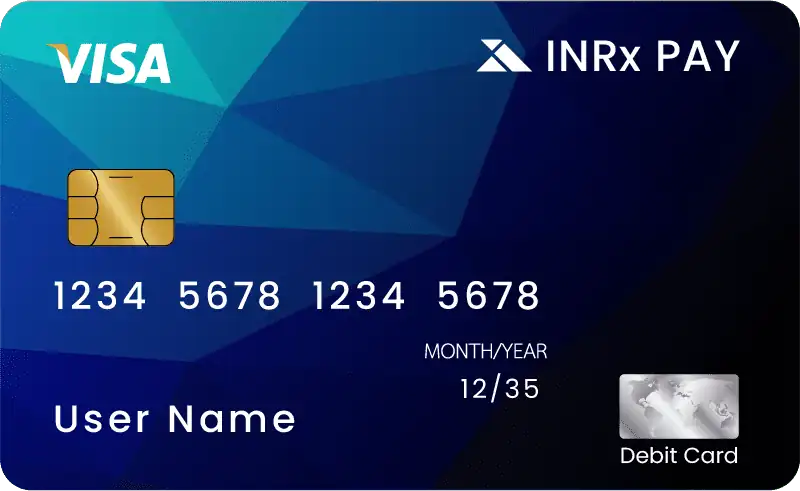
Key applications include online shopping on e-commerce platforms, subscription payments, mobile and DTH recharges, utility bill payments, and UPI-based merchant payments. The instant issuance means users can start spending immediately after activation without waiting for physical delivery.
Security benefits are substantial for virtual cards. Token-based encryption protects transaction data, and there’s no risk of physical card skimming or theft. Real-time spending notifications keep users informed of every transaction, while temporary card freezing is available instantly through the app if suspicious activity occurs.
INRx Physical Crypto Debit Card
The physical card extends crypto spending into offline retail environments. Users receive an actual card that can be swiped or tapped at point-of-sale terminals, inserted into ATMs for cash withdrawals, and used anywhere traditional debit cards work.
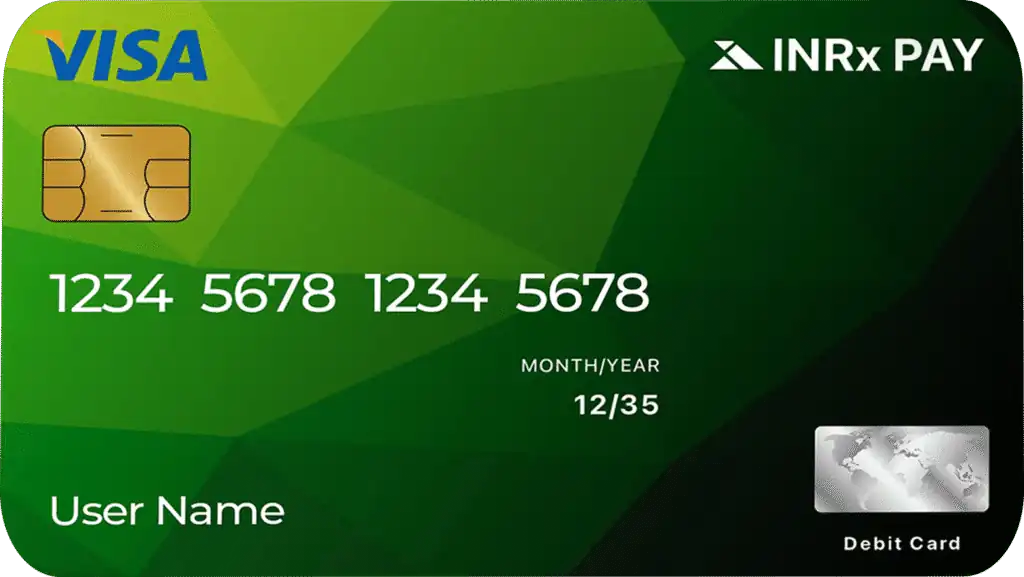
Primary use cases include retail shopping at malls and stores, fuel purchases at petrol pumps, restaurant payments, hotel bookings during travel, and ATM withdrawals when cash is needed. The card supports contactless tap-and-pay functionality for faster checkout at enabled terminals.
ATM withdrawal capability is particularly significant. Users can convert crypto to physical cash on demand, withdrawing from their digital asset holdings at ATMs across India. This bridges the final gap between cryptocurrency and everyday cash needs.
How to Use INRx Crypto Debit Cards
The process from signup to spending involves straightforward steps designed for accessibility. First, users download the INRx Pay app and complete registration with identity verification. KYC compliance is mandatory, ensuring the platform meets regulatory requirements and providing users with full transaction capabilities.
After verification, users load cryptocurrency into their INRx wallet. The platform supports direct crypto deposits from external wallets or purchases through integrated exchange features. Once the wallet is funded, users can apply for either virtual or physical cards based on their preferences.
Virtual cards activate instantly, while physical cards require delivery time. Both card types link directly to the crypto wallet, drawing funds in real-time during transactions. Users can monitor spending, check balances, and manage card settings entirely within the application.
Transaction Flow and Conversion
When making a purchase, the transaction follows a seamless flow. The merchant processes the card like any standard payment. INRx Pay’s backend receives the authorization request, calculates the crypto equivalent at current market rates, confirms sufficient balance, converts the required amount to INR, and completes the payment.
This entire process happens within seconds, appearing to the merchant as a normal card transaction. Users receive instant notification of the transaction details including the crypto amount spent and conversion rate applied. The transparency ensures users always understand exactly what they’re spending.
Advantages Over Traditional Methods
The crypto debit card model offers distinct improvements over previous spending methods. Understanding these benefits clarifies why this approach represents a meaningful advancement for crypto users.
Comparison with P2P Transfers
Peer-to-peer crypto trading exposes users to significant risks. Counterparty fraud remains common, with scammers creating fake payment confirmations or failing to complete their side of trades. Price volatility during the often-lengthy transaction process can result in unfavorable rates. Additionally, P2P platforms operate in regulatory grey areas, offering limited recourse when problems occur.
When you Goodbye to P2P Risks through card-based spending, you eliminate counterparty risk entirely. The transaction completes instantly without involving unknown third parties. Regulatory compliance provides additional protection, and the conversion rate is transparent at the moment of purchase.
Speed and Convenience Benefits
Traditional crypto liquidation could take days when accounting for exchange processing, bank transfers, and settlement periods. Card transactions complete in seconds. This speed difference transforms crypto from a savings vehicle into a genuinely spendable asset.
The ability to Transfer Crypto to INR Instantly opens use cases that were previously impractical. Spontaneous purchases, time-sensitive payments, and everyday shopping all become accessible without planning ahead or maintaining separate fiat balances.
Security and Compliance Framework
Operating in India’s regulated financial environment requires robust compliance measures. INRx Pay implements KYC verification for all card users, aligning with Financial Intelligence Unit requirements that brought virtual digital assets under the Prevention of Money Laundering Act in March 2023.
Transaction monitoring runs continuously to detect suspicious patterns. The platform maintains records as required by regulatory frameworks, ensuring transparency while protecting user privacy within legal bounds. This compliance-first approach positions the platform for long-term viability as India’s crypto regulations continue evolving.
Technical Security Measures
Beyond regulatory compliance, technical security protects user assets and data. Encryption standards match banking industry requirements, protecting both stored data and transactions in transit. Two-factor authentication adds access control layers, while biometric options provide convenient yet secure login methods.
Card-specific protections include instant freeze capabilities, spending limits, and real-time alerts. If a physical card is lost or stolen, users can immediately disable it through the app, preventing unauthorized use while requesting a replacement.
Practical Use Cases
The breadth of acceptance makes crypto debit cards practical for diverse spending needs. Everyday purchases like groceries, fuel, and dining work seamlessly at any card-accepting merchant. Online shopping on major e-commerce platforms accepts the cards without any special integration.
Recurring payments become manageable through card-on-file capabilities. Subscriptions, utility bills, and regular purchases can draw from crypto holdings automatically. This transforms cryptocurrency into a functional checking account alternative for daily financial needs.
Travel presents particularly strong use cases. Hotel bookings, restaurant payments, transportation, and emergency cash withdrawals all work through a single card linked to crypto holdings. As international spending support expands, this utility will extend beyond India’s borders.
Explore Crypto Payment Solutions
Convert crypto to INR in real time and spend anywhere cards are accepted. INRx Pay makes everyday payments simple, secure, and fully compliant.
The Broader Context of Crypto Payments
Crypto debit cards represent part of a larger trend toward mainstream cryptocurrency utility. Globally, 28% of Americans owned crypto in 2025, with stablecoins representing over 50% of global crypto transaction volume for the first time. Major payment networks including Visa and Mastercard now support direct crypto payments in over 40 countries.
In India specifically, the convergence of high crypto adoption with sophisticated digital payment infrastructure creates unique opportunities. With 72% of Indian crypto investors under age 35 and widespread fintech familiarity through UPI, the user base is primed for integrated crypto-fiat solutions.
The challenges remain real. Regulatory uncertainty continues, with the government avoiding a comprehensive crypto law while maintaining heavy taxation. However, the direction of global regulation and India’s own digital asset discussions suggest gradual framework development rather than prohibition.
Final Thoughts
INRx Pay Crypto Debit Cards represent a practical solution to a real problem facing India’s crypto community. With 119 million crypto owners seeking ways to actually use their digital assets, the gap between holding and spending has limited cryptocurrency’s everyday utility. These cards bridge that gap through instant, transparent conversion that works wherever traditional cards are accepted.
The combination of virtual cards for digital transactions and physical cards for retail and ATM access covers the full spectrum of payment needs. Integration with INRx Pay’s broader platform including UPI payments, bill services, and travel bookings creates a comprehensive financial tool rather than a single-purpose product. As India’s regulatory framework continues evolving and digital payment infrastructure expands, crypto-fiat bridges like this become increasingly relevant for the millions who hold digital assets but need practical ways to spend them.
Frequently Asked Questions
Q1.What cryptocurrencies can I spend?
INRx Pay cards support Bitcoin, Ethereum, INRx token, and other cryptocurrencies listed in the app. The platform converts any supported asset to INR at current market rates during transactions.
Q2.How does crypto-to-INR conversion work?
When you make a purchase, the system automatically calculates the crypto equivalent at current market rates, converts the required amount to INR, and completes the transaction instantly.
Q3.Is KYC verification mandatory for cards?
Yes, KYC is mandatory for regulatory compliance and security. Completing verification unlocks full transaction capabilities and higher spending limits on both virtual and physical cards.
Q4.Can I withdraw cash from ATMs?
Yes, the physical debit card enables ATM withdrawals across India. Your crypto is converted to INR at the time of withdrawal, dispensing cash directly from your digital holdings.
Q5.What's the difference between card types?
Virtual cards are digital-only for online and UPI transactions with instant issuance. Physical cards are tangible cards for retail swipe payments, tap-and-pay transactions, and ATM withdrawals.
Q6.Where are INRx Pay cards accepted?
The cards work at any merchant accepting standard debit cards, both online and offline. This includes retail stores, restaurants, fuel stations, e-commerce platforms, and subscription services.
Explore Services
Related Services
Reviewed by

Aman Vaths
Founder of Nadcab Labs
Aman Vaths is the Founder & CTO of Nadcab Labs, a global digital engineering company delivering enterprise-grade solutions across AI, Web3, Blockchain, Big Data, Cloud, Cybersecurity, and Modern Application Development. With deep technical leadership and product innovation experience, Aman has positioned Nadcab Labs as one of the most advanced engineering companies driving the next era of intelligent, secure, and scalable software systems. Under his leadership, Nadcab Labs has built 2,000+ global projects across sectors including fintech, banking, healthcare, real estate, logistics, gaming, manufacturing, and next-generation DePIN networks. Aman’s strength lies in architecting high-performance systems, end-to-end platform engineering, and designing enterprise solutions that operate at global scale.