Ai Overview
A decentralized application, or dApp, is software that runs on a blockchain or peer-to-peer network rather than being hosted on a centralized server controlled by a single company or authority. The concept gained mainstream attention with the rise of Ethereum and has since expanded across dozens of blockchain networks including Solana, Avalanche, Polygon, and BNB Chain.
Key Takeaways
- The future of dApps is being driven by Layer 2 scaling, cross-chain bridges, and AI-powered smart contract logic across global markets.
- Businesses in the USA, UK, UAE, and Canada are actively investing in dApps to reduce operational costs and build user trust through transparency.
- The role of dApps in Web3 is foundational, serving as the primary interface through which users interact with decentralized infrastructure.
- Real-world use cases of dApps now span DeFi, healthcare, gaming, supply chain, and real estate tokenization at enterprise scale.
- Benefits of decentralized applications include censorship resistance, data ownership, automated smart contract execution, and permissionless global access.
- Current limitations such as high gas fees and poor UX are being actively solved by next-generation blockchain protocols in 2026.
- Smart contracts are the backbone of every dApp, enabling trustless automation that removes the need for costly intermediaries in transactions.
- The future of dApp creation in 2026 is shaped by modular blockchains, no-code tooling, and enterprise-grade security frameworks emerging globally.
- Top trends shaping the future of dApps include AI integration, decentralized identity, multi-chain interoperability, and regulatory-compliant DeFi protocols.
- Partnering with a specialized dApp agency with proven Web3 expertise is essential for businesses seeking scalable, compliant, and user-ready applications.
Over the past eight years, we have worked closely with startups, enterprises, and government-backed projects across the USA, UK, UAE, and Canada to build and scale blockchain-powered products. What we have observed in that time is unmistakable: the trajectory of decentralized applications is moving from experimental curiosity to enterprise necessity. The future of dApps is not a distant concept, it is unfolding right now through thousands of live applications that are reshaping how value, data, and trust flow across industries.
This blog is written for business leaders, product managers, and technology strategists who want a grounded, authoritative understanding of where dApps are heading, why businesses are investing in dApps at record rates, and how your organization can position itself to benefit from this transition. Whether you are exploring your first Web3 initiative or scaling an existing blockchain product, the insights in this guide reflect what we see happening on the ground with real clients and real deployments.
1. What Are dApps?
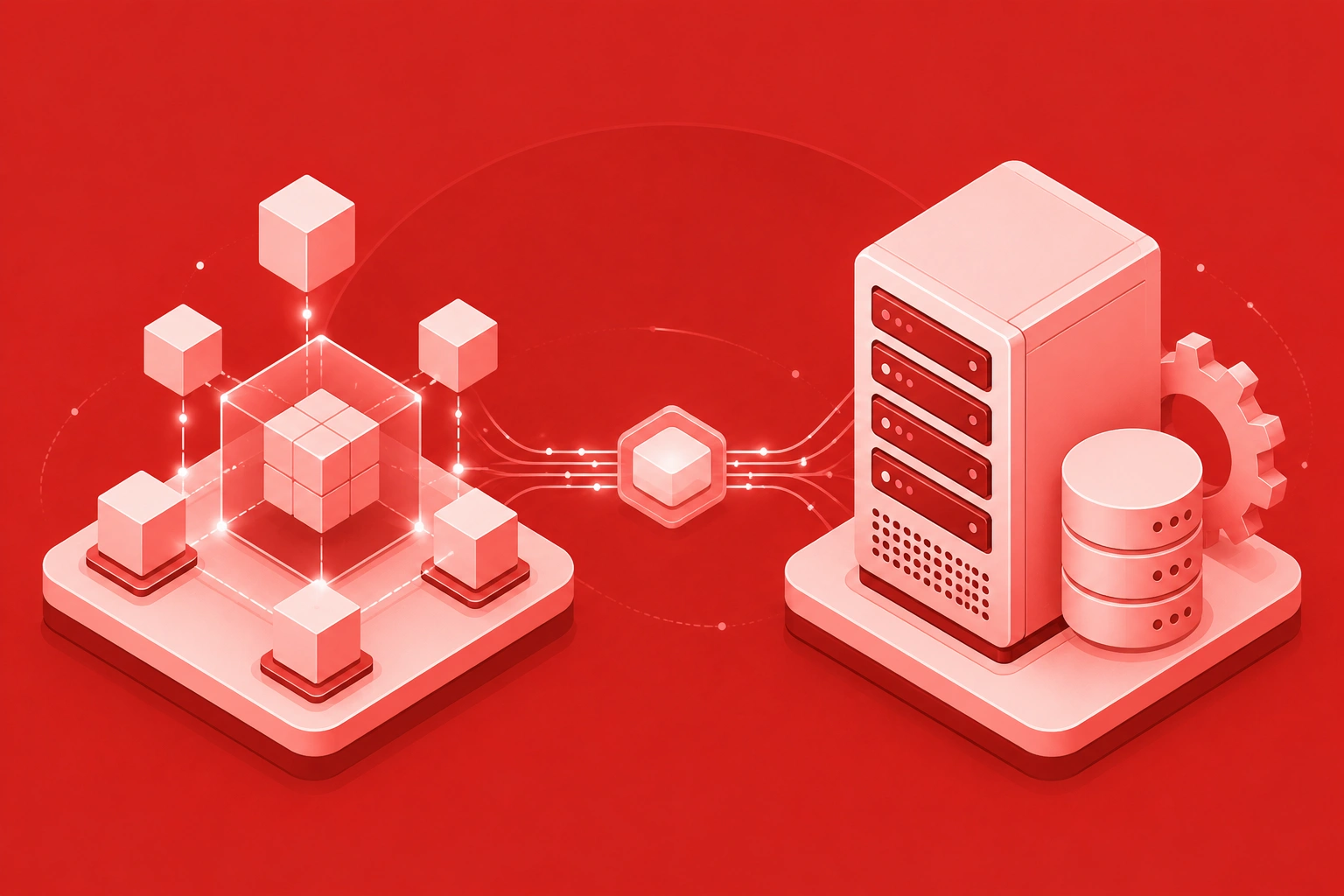
A decentralized application, or dApp, is software that runs on a blockchain or peer-to-peer network rather than being hosted on a centralized server controlled by a single company or authority. Unlike traditional apps where a single company owns and operates the backend infrastructure, dApps distribute their logic across a network of nodes, making them transparent, open-source, and resistant to censorship or downtime caused by a single point of failure.[1]
The concept gained mainstream attention with the rise of Ethereum and has since expanded across dozens of blockchain networks including Solana, Avalanche, Polygon, and BNB Chain. Each dApp interacts with the blockchain through smart contracts, which are self-executing agreements coded directly into the network. The future of dApps is deeply tied to the improvement of these underlying networks, as faster and cheaper blockchains unlock entirely new categories of applications that were previously impractical.
Today, dApps range from decentralized finance protocols handling billions in daily volume to NFT marketplaces, decentralized social platforms, prediction markets, and on-chain governance tools used by DAOs. The scope of what a dApp can be is expanding rapidly, and that expansion is central to understanding the future of dApp use in 2026 and beyond.
2. How dApps Work Behind the Scenes?
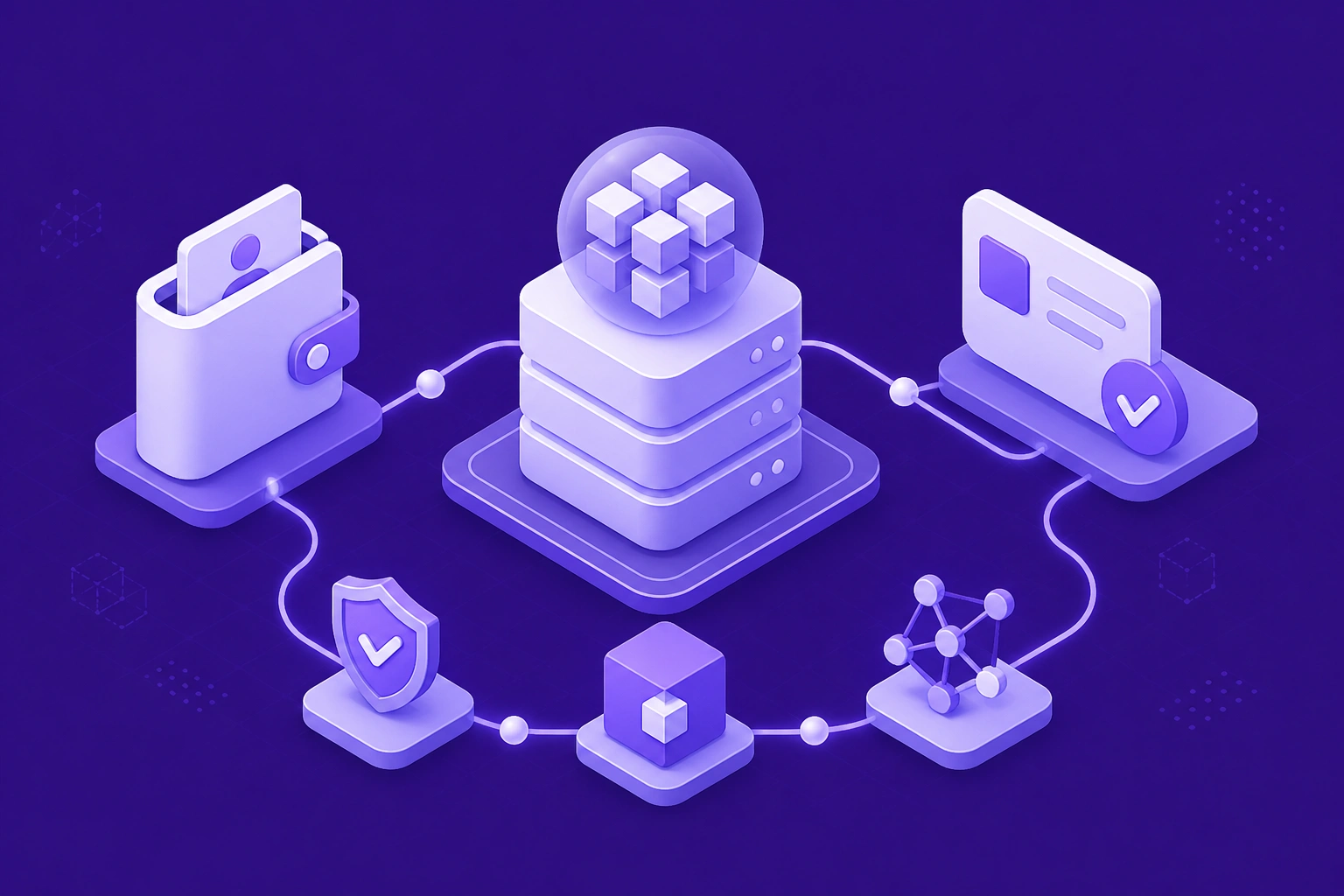
Understanding how dApps work in Web3 requires looking at three core layers: the frontend, the smart contract layer, and the blockchain network itself. The frontend of a dApp looks much like any traditional web application, built with standard technologies like React or Vue. However, instead of communicating with a centralized API server, the frontend connects directly to the blockchain through a user’s crypto wallet such as MetaMask or Coinbase Wallet.
Real-World Example: How a DeFi dApp Processes a Loan
When a user applies for a loan on a DeFi platform like Aave, they connect their wallet, deposit collateral, and the smart contract automatically calculates the loan-to-value ratio and releases funds. No bank, loan officer, or credit check is involved. The entire process executes in minutes, governed entirely by code deployed on the Ethereum network.
The smart contract layer handles all business logic: validating transactions, enforcing rules, and updating state on the blockchain. Every interaction is recorded on the public ledger, making it auditable and immutable. The blockchain network itself provides the consensus mechanism that ensures all nodes agree on the current state of data, preventing fraud and double-spending without requiring a central authority to arbitrate disputes.
3. dApps vs Traditional Apps: What’s the Real Difference?
The difference between dApps and traditional applications goes far deeper than technology stack choices. It reflects a fundamental shift in who controls the application, who owns the data, and who profits from user activity. In a traditional app, the company owns the servers, the user data, and the rules. In a dApp, the protocol is open, the rules are enforced by code, and users retain sovereignty over their assets and information.
For businesses in regulated markets like the UK and Canada, the transparency dimension is especially valuable. Regulators increasingly favor systems where audit trails are built-in rather than bolted on. The future of dApp adoption in enterprise contexts is being shaped as much by compliance requirements as by technical capability, and dApps have a structural advantage in meeting those requirements.
4. Why dApps Are Becoming So Popular?
The surge in dApp popularity is not accidental. It reflects a confluence of technological maturation, shifting user expectations, and systemic frustration with the data practices of centralized platforms. After years of high-profile data breaches, opaque algorithmic manipulation, and platform deplatforming, users across the USA and globally are seeking alternatives where they hold the power. dApps deliver exactly that, and the market is responding.
According to data from DappRadar, the global dApp ecosystem now hosts over 15,000 active applications across dozens of blockchains, with daily active users consistently growing year over year. This growth is particularly pronounced in DeFi and gaming categories, but the momentum is spreading into enterprise applications as major corporations in the UK, UAE, and Canada begin deploying private and hybrid blockchain solutions.
Another driver is the investment cycle. Venture capital poured billions into Web3 infrastructure over the past several years, and those investments are now maturing into production-ready platforms. This means faster networks, better developer tooling, and more polished user interfaces, all of which accelerate dApp adoption by reducing the friction that previously kept mainstream users away.
5. Key Benefits of Decentralized Applications
The benefits of decentralized applications extend well beyond the philosophical appeal of decentralization. For businesses, the practical advantages are tangible and measurable. Having guided dozens of clients through their transition from Web2 to Web3 infrastructure, we consistently see these core benefits emerge:
No Single Point of Failure
Distributed architecture means no server outage can take the application offline. For financial services and healthcare platforms, this reliability is non-negotiable.
Full Data Transparency
Every transaction is recorded on the public ledger, enabling real-time auditing without the need for third-party verification or costly compliance audits.
User Sovereignty
Users own their data, assets, and digital identity. This is particularly powerful for platforms operating in jurisdictions with strong data privacy laws like GDPR in the UK.
Reduced Operational Costs
Smart contracts automate processes that previously required legal intermediaries, payment processors, or manual verification teams, cutting costs significantly.
Global Accessibility
Anyone with an internet connection can access a dApp, regardless of geography, banking status, or national regulatory restrictions on traditional financial services.
Censorship Resistance
No government or corporation can shut down a decentralized application. For businesses operating in politically sensitive markets, this offers critical operational continuity.
Want to understand how decentralized applications work at an architectural level?
Explore the complete dApp architecture guide: use cases, process, and best practices →
6. Current Limitations of dApps
Intellectual honesty requires acknowledging where dApps still fall short. After eight years in this space, we can tell you plainly that the technology is powerful but not yet perfect. The most persistent challenges relate to scalability, user experience, and regulatory uncertainty, and any business evaluating the future of dApps must understand these constraints before committing resources.
Scalability remains a significant bottleneck. Popular blockchains like Ethereum can process only a limited number of transactions per second at the base layer. During peak demand periods, gas fees spike dramatically, making microtransaction-heavy applications economically unviable. This is precisely why Layer 2 solutions like Arbitrum, Optimism, and zkSync have gained so much traction, as they process transactions off-chain while inheriting the security guarantees of the base layer.
User experience is another area requiring significant improvement. The requirement to manage private keys, understand gas fees, and navigate wallet interfaces creates friction that deters non-technical users. Regulatory uncertainty in markets like the USA and UAE adds another layer of complexity, particularly for DeFi applications that may be classified differently by different jurisdictions. These limitations are solvable, and the trajectory is clearly toward resolution, but businesses should plan their roadmaps with these current realities in mind.[2]
7. The Role of Blockchain in the Future of dApps
Blockchain is not just the technology underlying dApps, it is the foundational reason dApps can exist at all. The immutability, transparency, and decentralization that blockchain provides are what make a decentralized application meaningfully different from a traditional web application. As blockchain technology itself evolves, the capabilities of dApps evolve in parallel, which is why tracking blockchain progress is essential for understanding the future of dApps.
The shift toward modular blockchain architecture is one of the most significant trends shaping the future. Modular blockchains separate the functions of consensus, execution, and data availability into specialized layers that can be optimized independently. This means dApps can choose the execution environment that best fits their needs while still benefiting from the security of an established consensus layer. Projects like Celestia and EigenLayer are pioneering this approach, and its impact on the future of dApp creation will be profound.
In markets like the UAE, where government-backed blockchain initiatives are actively promoted under the national digital agenda, the alignment between blockchain infrastructure investment and dApp opportunity is particularly strong. Businesses operating in these markets have a unique window to build on infrastructure that is both technically advanced and politically supported.
Blockchain Evolution Timeline for dApps
2016-2018: The First Wave
Ethereum enables the first generation of dApps. ICO boom drives early experimentation. Smart contracts go live but performance is limited.
2019-2020: DeFi Summer Ignites
Uniswap, Compound, and Aave demonstrate the power of permissionless finance. TVL in DeFi crosses billions. The use cases of dApps expand dramatically.
2021-2022: NFTs and GameFi Emerge
NFT marketplaces and play-to-earn games introduce dApps to mainstream audiences. Multi-chain ecosystems begin to replace Ethereum dominance.
2023-2025: Enterprise Adoption Accelerates
Corporate blockchains, Layer 2 ecosystems, and regulatory frameworks mature. Enterprise dApps in supply chain, identity, and finance go live globally.
2026 and Beyond: Modular, AI-Powered, Interoperable
The future of dApps is defined by cross-chain interoperability, AI-enhanced smart contracts, zero-knowledge proofs for privacy, and consumer-grade user experiences.
8. How Smart Contracts Are Shaping dApps?
Smart contracts are the engine room of every dApp. Without them, a decentralized application is just a website. With them, it becomes a self-sovereign system that can hold value, enforce agreements, and execute complex business logic without any human intervention. The sophistication of smart contract patterns has advanced dramatically since the early days of basic token contracts, and this evolution is central to the future of dApps.
Modern smart contract architectures include proxy patterns for upgradeability, multisignature requirements for governance, oracle integrations for real-world data feeds, and cross-chain messaging protocols that allow contracts on different blockchains to communicate. Each of these innovations expands what dApps can do, making them capable of handling enterprise-grade complexity while maintaining the trustless properties that define decentralization.
Industry Standard: Smart Contract Security
Any smart contract handling user funds above $100,000 should undergo at minimum two independent security audits from firms like Trail of Bits, Certik, or Consensys Diligence before mainnet deployment. This is not optional; it is the professional standard that protects users and business reputation alike in any serious dApp project.
AI is beginning to play a transformative role in smart contract creation and auditing. AI-powered tools can now flag common vulnerability patterns in Solidity code, suggest gas optimizations, and even generate contract boilerplate from natural language descriptions. As these tools mature, the speed and cost of building production-ready dApps will decrease significantly, making the future of dApp creation more accessible to businesses without large in-house blockchain teams.
9. The Growing Demand for dApp Services
The market for dApp services is experiencing some of the most consistent growth we have seen in our eight years working at the intersection of business strategy and blockchain technology. Demand is being driven by multiple vectors simultaneously: enterprise digital transformation initiatives, regulatory pressure for transparent financial systems, and a new generation of consumers who expect to own their digital assets and data.
In the USA, the passing of clearer crypto regulatory frameworks is unleashing pent-up enterprise demand. In the UK, the Financial Conduct Authority’s progressive stance on digital asset regulation is creating a favorable environment for DeFi and Web3 startups. In the UAE, the Abu Dhabi Global Market and Dubai’s Virtual Asset Regulatory Authority have established some of the world’s most sophisticated regulatory frameworks specifically designed to attract dApp businesses. Canadian pension funds and financial institutions are similarly exploring blockchain-based settlement systems.
This regulatory maturation is critical to the future of dApps because it removes one of the most significant barriers to institutional adoption. When large corporations and financial institutions can deploy dApps with legal clarity, the scale of the market transforms entirely, moving from retail-driven niche applications to mainstream enterprise infrastructure.
10. Role of a dApp Agency in 2026
As dApps grow more complex, the role of a specialized agency becomes increasingly strategic rather than purely technical. In 2026, clients do not just need someone to write Solidity code. They need partners who understand tokenomics, regulatory compliance across multiple jurisdictions, smart contract security, cross-chain architecture, and user experience design for blockchain interfaces. That is an extraordinarily broad skill set that very few internal teams possess.
How to Select the Right dApp Agency: 3 Critical Criteria
Verified Track Record
Look for agencies with documented live deployments, not just case study descriptions. Ask for on-chain contract addresses you can verify independently. Past performance on similar projects is the most reliable predictor of future results.
Security-First Methodology
The agency should have a defined process for smart contract auditing, penetration testing, and ongoing monitoring. Security cannot be an afterthought in dApp projects. A single vulnerability can result in catastrophic and irreversible fund loss.
Multi-Chain Expertise
The future of dApps is multi-chain. An agency locked into a single blockchain ecosystem will limit your options as the landscape evolves. Ensure they have proven capability across Ethereum, Layer 2 networks, and at least one alternative Layer 1 chain.
The most effective dApp agencies in 2026 operate as full-cycle partners, supporting clients from initial blockchain strategy through architecture design, smart contract creation, security audit coordination, frontend integration, launch, and post-launch monitoring. This comprehensive approach ensures that dApps are not just technically functional but commercially viable and strategically positioned for the market they serve.
11. Top Trends That Will Shape the Future of dApps
Tracking emerging trends is a core part of how we advise clients on timing their blockchain investments. The future of dApps in 2026 and beyond is being shaped by several converging forces that will fundamentally alter what decentralized applications can do and who they serve.
AI + Smart Contracts
AI agents are beginning to interact autonomously with smart contracts, enabling dApps that can rebalance portfolios, manage liquidity, or execute governance decisions without human input. This represents a fundamental expansion of what dApps can achieve.
Zero-Knowledge Proofs
ZK proofs enable dApps to verify information without revealing the underlying data. This unlocks privacy-preserving DeFi, compliant identity verification, and confidential enterprise transactions, addressing one of the biggest barriers to institutional adoption.
Cross-Chain Interoperability
Protocols like LayerZero and Wormhole are enabling dApps to operate seamlessly across multiple blockchains. The future of dApps is not chain-specific, it is chain-agnostic, allowing users to move assets and data freely across the entire Web3 ecosystem.
Decentralized Identity (DID)
Self-sovereign identity solutions allow users to control their own credentials and share them selectively with dApps. This is transforming KYC, credential verification, and access control in industries from finance to healthcare and education.
Real-World Asset Tokenization
The tokenization of real-world assets including real estate, commodities, and private equity on blockchain is accelerating. dApps provide the marketplace and governance infrastructure that makes fractional ownership of these assets liquid and accessible globally.
Account Abstraction
ERC-4337 and account abstraction eliminate the need for users to manage private keys directly, enabling social login, gas sponsorship, and recovery mechanisms. This is the single most important UX advancement in the future of dApp accessibility.
12. Industries That Will Be Transformed by dApps
The use cases of dApps in the real world are no longer theoretical. Across our client portfolio spanning the USA, UK, UAE, and Canada, we have seen dApps go live in industries that once seemed unlikely candidates for blockchain adoption. The common thread is the need for trust, transparency, and efficiency across multiple parties who do not fully trust each other.
| Industry | Key dApp Use Case | Markets Leading Adoption |
|---|---|---|
| Finance (DeFi) | Lending, borrowing, trading, yield optimization | USA, UK, UAE |
| Healthcare | Secure patient data sharing, clinical trial transparency | USA, Canada, UK |
| Real Estate | Property tokenization, fractional ownership, transparent title | UAE, USA, Canada |
| Supply Chain | End-to-end product traceability, anti-counterfeiting | UK, Canada, UAE |
| Gaming | True asset ownership, play-to-earn economies, NFT integration | USA, UK, Global |
| Government | Digital identity, transparent voting, public record management | UAE, Canada, UK |
Real-World Example: Dubai Land Department
The Dubai Land Department has piloted blockchain-based property registration that links all real estate contracts and ownership records to a distributed ledger. This removes manual verification delays, reduces fraud, and creates a single immutable source of truth for property ownership in one of the world’s most active real estate markets, a direct demonstration of the role of dApps in Web3-enabled governance.
13. The Rise of Web3 and Its Impact on dApps
Web3 represents a fundamental re-architecture of the internet’s value layer. Where Web1 was about reading information and Web2 was about creating and sharing it through centralized platforms, Web3 is about owning it. dApps are the primary mechanism through which Web3 principles become tangible for end users, and understanding the role of dApps in Web3 is essential for any business strategist thinking about the next decade of digital infrastructure.
The impact of Web3 on dApps is bidirectional. As Web3 infrastructure matures, it provides better tools, cheaper transactions, and more users for dApps. And as dApps improve and attract more users, they validate Web3’s value proposition and drive further infrastructure investment. This virtuous cycle is why the future of dApp adoption is so closely tied to the broader health of the Web3 ecosystem.
For businesses in established markets like the USA and Canada, the strategic question is not whether Web3 will matter but when to begin building Web3 capabilities. Organizations that wait for full mainstream adoption to be proven before acting will find themselves in the same position as companies that delayed their mobile strategy in 2011 and scrambled to catch up for years afterward. The businesses building dApp capabilities today are establishing competitive moats that will be very difficult to replicate once the market has fully shifted.
14. How User Experience (UX) Will Improve in dApps?
User experience has been the Achilles heel of dApps since their inception. The requirement to understand crypto wallets, manage seed phrases, approve gas fees, and navigate technically demanding interfaces has limited dApp adoption to crypto-native users. This is changing rapidly, and the UX transformation underway is one of the most important factors in the future of dApps reaching mainstream scale.
dApp UX Improvement Roadmap
Step 01: Account Abstraction
Eliminates private key management. Users log in with email or social accounts and sponsor their own gas fees through smart wallet infrastructure.
Step 02: Gasless Transactions
Relayer networks allow dApp operators to subsidize transaction fees, removing the need for users to hold native tokens just to interact with an application.
Step 03: Embedded Wallets
SDKs from providers like Privy and Dynamic allow wallets to be embedded directly into dApp interfaces with familiar login flows that feel identical to Web2 applications.
Step 04: One-Click Transactions
Pre-approved transaction batching allows users to complete multi-step processes with a single confirmation, dramatically reducing the friction of complex DeFi or gaming interactions.
The convergence of these UX improvements means that within the next two to three years, mainstream users will interact with dApps without knowing they are using blockchain technology at all. This abstraction of complexity is the defining characteristic of the next phase of dApp adoption, and it will be the catalyst that moves these applications from niche to ubiquitous.
15. How Businesses Can Prepare for the dApp Future?
Preparation for the dApp future is not a single action but a strategic posture that organizations need to adopt across multiple dimensions. Based on our work with businesses across the USA, UK, UAE, and Canada, we have identified the most effective preparation strategies that distinguish organizations that lead the Web3 transition from those that lag behind it.
dApp Readiness and Compliance Checklist
| Checklist Item | Priority | Notes |
|---|---|---|
| Define blockchain use case and business case | Critical | Before any technical work begins |
| Conduct jurisdictional legal review (USA/UK/UAE/Canada) | Critical | Regulatory compliance is non-negotiable |
| Select blockchain network aligned to use case | High | Ethereum, L2, or alternative L1 |
| Commission independent smart contract audit | Critical | Required before any mainnet launch |
| Design token economics (if applicable) | High | Incentive alignment is critical to protocol health |
| Implement user wallet and onboarding UX strategy | Medium | Account abstraction recommended for mainstream use |
| Establish on-chain governance and upgrade mechanism | Medium | Define DAO or multisig governance from day one |
Beyond the checklist, businesses should invest in internal blockchain literacy at the leadership level. The most successful Web3 transitions we have observed occur when C-suite executives have sufficient understanding of dApp fundamentals to make informed strategic decisions, even if they are not the ones writing code. Education, partnership, and phased implementation are the three pillars of successful preparation for the future of dApps.
16. Final Thoughts: What’s Next for dApps?
The future of dApps is not a prediction, it is a progression that is already well underway. The infrastructure is maturing, the regulatory frameworks are clarifying, the user experience barriers are being dismantled, and the business case for decentralized applications has never been stronger. What we are entering in 2026 is the inflection point where dApps transition from the domain of crypto enthusiasts to the toolkit of mainstream business.
For businesses in the USA, UK, UAE, and Canada, the strategic window is now. The organizations that build their dApp capabilities in the next twelve to twenty-four months will have a significant first-mover advantage in their respective industries. Those that wait for the technology to be fully proven and widely adopted will find themselves competing on a playing field where the early movers have already established deep technical expertise, user trust, and network effects that are extremely difficult to replicate.
After eight years building in this space, we remain firmly convinced that decentralized applications represent the most significant shift in software architecture since the move to mobile. The future of dApps is not just a technology story. It is a story about who controls digital value, who owns digital identity, and how trust is built at scale in a world that increasingly demands transparency. The businesses that understand and act on this shift will be the ones that define the next era of the digital economy.
Ready to Build Your dApp and Lead the Web3 Future?
Partner with an agency that has 8+ years of blockchain expertise. We build secure, scalable, and compliant decentralized applications for businesses worldwide.
Frequently Asked Questions
Q1.What is the future of dApps in 2026 and beyond?
The future of dApps looks remarkably strong heading into 2026 and beyond. As blockchain infrastructure matures and Layer 2 scaling solutions reduce transaction costs, dApps are becoming more accessible to mainstream users. Industries like finance, healthcare, gaming, and supply chain are already integrating decentralized applications into their operations. With growing institutional interest from markets in the USA, UK, UAE, and Canada, the trajectory for dApps points toward widespread adoption, improved user experience, and deeper integration with everyday digital services.
Q2.How do dApps work in Web3?
dApps operate on decentralized blockchain networks rather than centralized servers. In Web3, they use smart contracts; self-executing code stored on the blockchain to automate logic and transactions without intermediaries. When a user interacts with a dApp, their wallet connects directly to the blockchain, and all operations are transparent and verifiable on-chain. This architecture ensures that no single entity controls the application, making dApps censorship-resistant, trustless, and globally accessible to anyone with an internet connection and a crypto wallet.
Q3.What are the key benefits of decentralized applications?
Decentralized applications offer several powerful advantages over traditional software. They eliminate single points of failure, meaning no central server can be hacked or shut down. They provide full transparency since all transactions are recorded on a public ledger. Users retain ownership of their data and digital assets. dApps also enable permissionless access, meaning anyone globally can use them without requiring approval. For businesses in regions like the UAE and Canada, these benefits translate into reduced operational costs, increased trust, and access to global markets without regulatory bottlenecks.
Q4.Why are businesses investing in dApps?
Businesses are investing in dApps because they offer a competitive edge in trust, efficiency, and cost reduction. Traditional applications rely on intermediaries, which add time and expense to operations. dApps automate processes through smart contracts, reducing human error and operational costs. Companies in the USA and UK are particularly drawn to dApps for financial services, identity verification, and supply chain transparency. As consumer demand for data privacy and ownership grows, businesses see dApps as a future-proof investment that aligns with shifting market expectations and regulatory trends.
Q5.What are the real-world use cases of dApps?
Real-world dApp use cases span multiple industries. In finance, DeFi platforms allow lending, borrowing, and trading without banks. In healthcare, dApps enable secure sharing of patient records across providers. Gaming platforms use dApps to give players true ownership of in-game assets through NFTs. Supply chain companies use them for transparent product tracking from manufacturer to consumer. Real estate platforms in markets like Dubai and Canada are tokenizing property assets for fractional ownership. These use cases demonstrate that dApps are not a future concept; they are already transforming industries today.
Q6.What is the role of dApps in Web3?
dApps are the primary building blocks of the Web3 ecosystem. While Web3 describes the broader vision of a decentralized internet, dApps are the actual user-facing applications that make this vision tangible. They power decentralized finance, digital identity, NFT marketplaces, DAOs (Decentralized Autonomous Organizations), and more. Without dApps, Web3 would remain a theoretical framework with no practical interface. As Web3 adoption grows across the USA, UK, and emerging markets in the Middle East, dApps serve as the gateway through which billions of users will interact with decentralized infrastructure.
Q7.What is the future of dApp development in 2026?
The future of dApp creation in 2026 is being shaped by cross-chain interoperability, AI integration, and no-code tooling that lowers technical barriers. Developers are building more sophisticated applications using modular blockchain architectures, while user experience improvements are closing the gap between dApps and traditional apps. Enterprise adoption is accelerating as regulatory frameworks mature in jurisdictions like the UK, UAE, and Canada. The market for building decentralized applications is growing rapidly, with specialized agencies playing a critical role in helping businesses transition from Web2 infrastructure to robust, scalable Web3 solutions.
Explore Services
Related Services
Reviewed by

Aman Vaths
Founder of Nadcab Labs
Aman Vaths is the Founder & CTO of Nadcab Labs, a global digital engineering company delivering enterprise-grade solutions across AI, Web3, Blockchain, Big Data, Cloud, Cybersecurity, and Modern Application Development. With deep technical leadership and product innovation experience, Aman has positioned Nadcab Labs as one of the most advanced engineering companies driving the next era of intelligent, secure, and scalable software systems. Under his leadership, Nadcab Labs has built 2,000+ global projects across sectors including fintech, banking, healthcare, real estate, logistics, gaming, manufacturing, and next-generation DePIN networks. Aman’s strength lies in architecting high-performance systems, end-to-end platform engineering, and designing enterprise solutions that operate at global scale.