Ai Overview
DeFi aggregator contracts represent one of the most impactful innovations in decentralized finance, solving the critical challenge of fragmented liquidity across dozens of protocols. DeFi liquidity is scattered across hundreds of protocols, each with different pools, pricing curves, and available depth.
Key Takeaways
- DeFi aggregator contracts scan multiple DEXs simultaneously to find optimal prices, typically saving users 1-5% compared to single-exchange trading.
- Smart routing algorithms in DeFi aggregator contracts split orders across liquidity sources to minimize slippage and maximize execution quality.
- Leading DeFi aggregator contracts like 1inch, Paraswap, and 0x have processed over $100 billion in cumulative trading volume across DeFi markets.
- Enterprises across USA, UK, UAE, and Canada increasingly adopt DeFi aggregator contracts for treasury management and institutional trading operations.
- DeFi aggregator contracts reduce gas costs through transaction optimization, batching, and intelligent route selection balancing fees against savings.
- Cross-chain DeFi aggregator contracts enable seamless liquidity access across Ethereum, Polygon, Arbitrum, and other networks for capital efficiency.
- Security audits, oracle integration, and MEV protection are critical components of production-ready DeFi aggregator contracts architecture.
- Future DeFi aggregator contracts will incorporate AI-powered routing, enhanced MEV protection, and intent-based execution for superior user outcomes.
What Are DeFi Aggregator Contracts and Why They Matter in 2026
DeFi aggregator contracts represent one of the most impactful innovations in decentralized finance, solving the critical challenge of fragmented liquidity across dozens of protocols. With over eight years of experience building DeFi infrastructure for enterprises across USA, UK, UAE, and Canadian markets, our agency has witnessed these contracts evolve from simple price comparators to sophisticated routing engines processing billions in daily volume. These smart contracts automatically scan multiple decentralized exchanges, identify optimal trading paths, and execute transactions that maximize user returns while minimizing costs. Understanding DeFi aggregator contracts is essential for any organization seeking to optimize their blockchain trading operations.
The Liquidity Fragmentation Problem in DeFi and How Aggregators Fix It
DeFi liquidity is scattered across hundreds of protocols, each with different pools, pricing curves, and available depth. A trader seeking to swap ETH for USDC might find better rates on Uniswap for small amounts but superior execution on Curve for larger trades. Without aggregation, users must manually check each venue, losing time and often settling for suboptimal prices. DeFi aggregator contracts solve this by programmatically querying all relevant sources, calculating optimal routes, and executing trades atomically in single transactions.[1]
Smart Routing Explained: Finding the Best Price Across DEXs
Smart routing is the algorithmic core of DeFi aggregator contracts, determining how to split and route trades for optimal execution. These algorithms analyze available liquidity depth, price impact at various trade sizes, gas costs for different routing paths, and potential MEV exposure. For a $100,000 trade, the router might split execution across five different pools, using 40% through Uniswap, 30% through Curve, and smaller portions through other venues to minimize overall slippage and maximize returns.
Optimization Insight: Advanced DeFi aggregator contracts evaluate thousands of potential routes in milliseconds to find optimal execution paths.
Role of DeFi Aggregators in Reducing Slippage and Impermanent Loss
| Trade Size | Single DEX Slippage | Aggregated Slippage | Savings |
|---|---|---|---|
| $10,000 | 0.3% | 0.15% | $15 |
| $100,000 | 1.2% | 0.4% | $800 |
| $500,000 | 3.5% | 0.8% | $13,500 |
| $1,000,000 | 5.0%+ | 1.2% | $38,000+ |
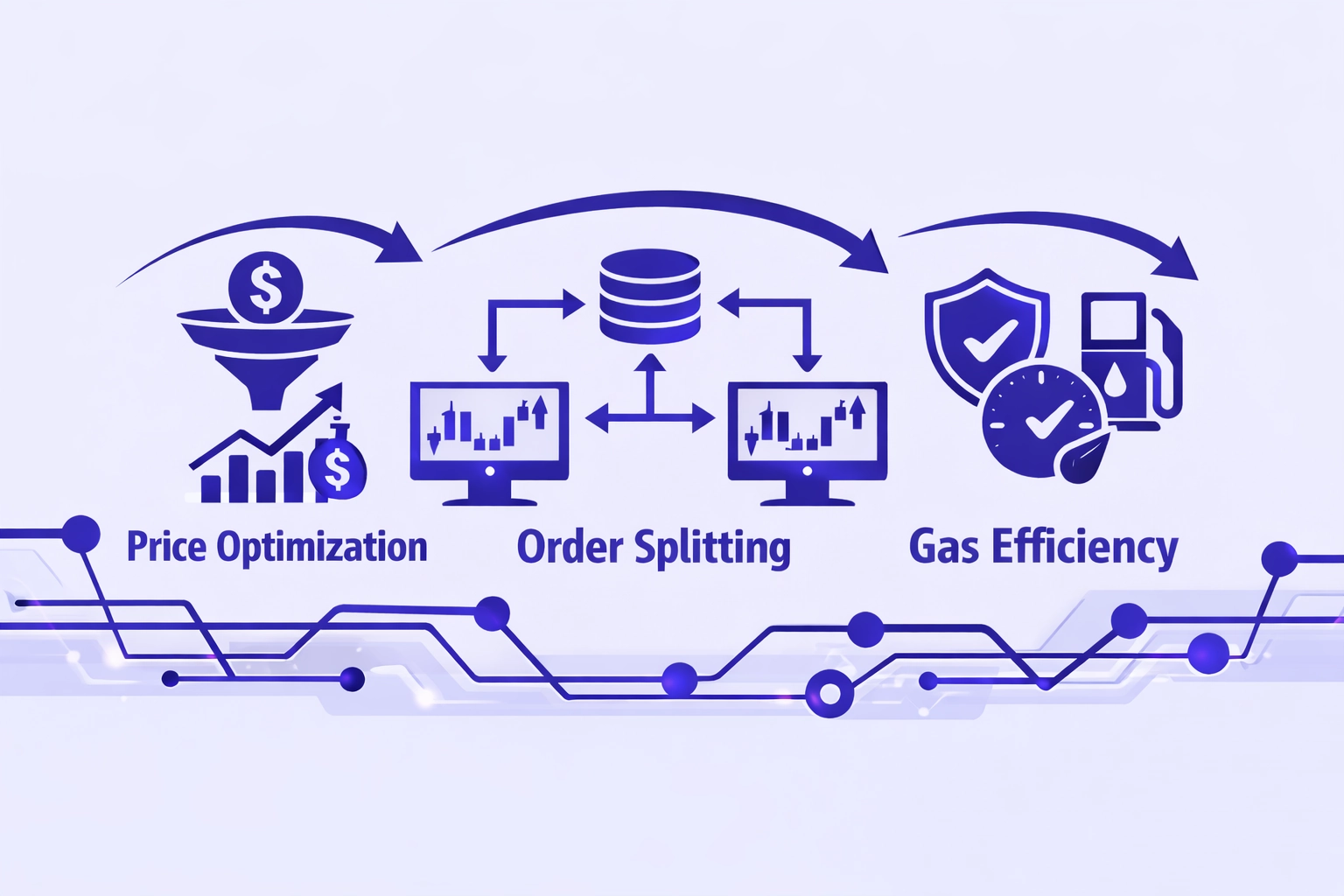
How Aggregator Contracts Maximize User Returns Automatically
Price Optimization
- Real-time price comparison
- Multi-venue analysis
- Best rate selection
- Transparent execution
Order Splitting
- Intelligent distribution
- Slippage minimization
- Depth utilization
- Impact reduction
Gas Efficiency
- Route optimization
- Batched execution
- Gas token usage
- Cost-benefit analysis
Yield Optimization Through DeFi Aggregator Smart Contracts
Beyond trading, DeFi aggregator contracts extend to yield optimization, automatically finding the best returns across lending protocols, liquidity pools, and staking opportunities. Yield aggregators like Yearn Finance use sophisticated strategies to maximize returns on deposited assets. These contracts monitor rates across Aave, Compound, and other protocols, automatically moving funds to capture highest yields while managing risk through diversification.
Typical APY Range
Yield TVL
Strategy Vaults
Gas Optimization Techniques Used by Modern DeFi Aggregators
Gas efficiency is critical for DeFi aggregator contracts, as complex routing logic can consume significant transaction fees. Leading aggregators employ multiple optimization techniques including assembly-level code optimization, efficient storage patterns, and calldata compression. Some protocols use gas tokens like CHI to reduce costs during high-fee periods. The routing algorithm itself balances potential price improvements against additional gas costs, ensuring net user savings even after fees.
DeFi Aggregator Contract Execution Lifecycle
User Request Initiation
User submits swap request with token pair, amount, and slippage tolerance parameters.
Liquidity Source Query
DeFi aggregator contracts query all integrated DEXs for current prices and available depth.
Route Calculation
Smart routing algorithm evaluates thousands of paths to determine optimal execution strategy.
Gas Estimation
Contract estimates total gas costs and verifies net savings exceed execution expenses.
User Approval
User reviews quote with expected output and confirms transaction with wallet signature.
Atomic Execution
DeFi aggregator contracts execute all swaps atomically in single transaction across venues.
Slippage Verification
Contract verifies output meets minimum requirements or reverts entire transaction safely.
Token Settlement
Output tokens transferred directly to user wallet with transaction confirmation and receipt.
Impact of Aggregator Contracts on AMM Liquidity Depth
DeFi aggregator contracts significantly impact AMM liquidity dynamics by directing volume to pools offering best rates. This creates competitive pressure for liquidity providers to offer tighter spreads and deeper pools. Aggregators also improve capital efficiency by utilizing liquidity across multiple venues rather than concentrating volume on single exchanges. The result is better execution for traders and increased fee revenue for LPs providing competitive rates.
Cross-Chain Liquidity Aggregation: Unlocking Capital Efficiency
| Chain | Aggregator Coverage | DEXs Integrated |
|---|---|---|
| Ethereum | Full coverage | 50+ DEXs |
| Arbitrum | Full coverage | 30+ DEXs |
| Polygon | Full coverage | 40+ DEXs |
| BNB Chain | Full coverage | 35+ DEXs |
Risk Management in DeFi Aggregator Contracts: Audits, Oracles and Safeguards
Security is paramount for DeFi aggregator contracts handling billions in user funds. Leading aggregators undergo multiple security audits from firms like Trail of Bits, OpenZeppelin, and Consensys Diligence. Oracle integration requires careful design to prevent price manipulation attacks. Safeguards include slippage protection, transaction deadlines, and circuit breakers for unusual market conditions. Enterprises across USA, UK, UAE, and Canada evaluate these security measures before integration.
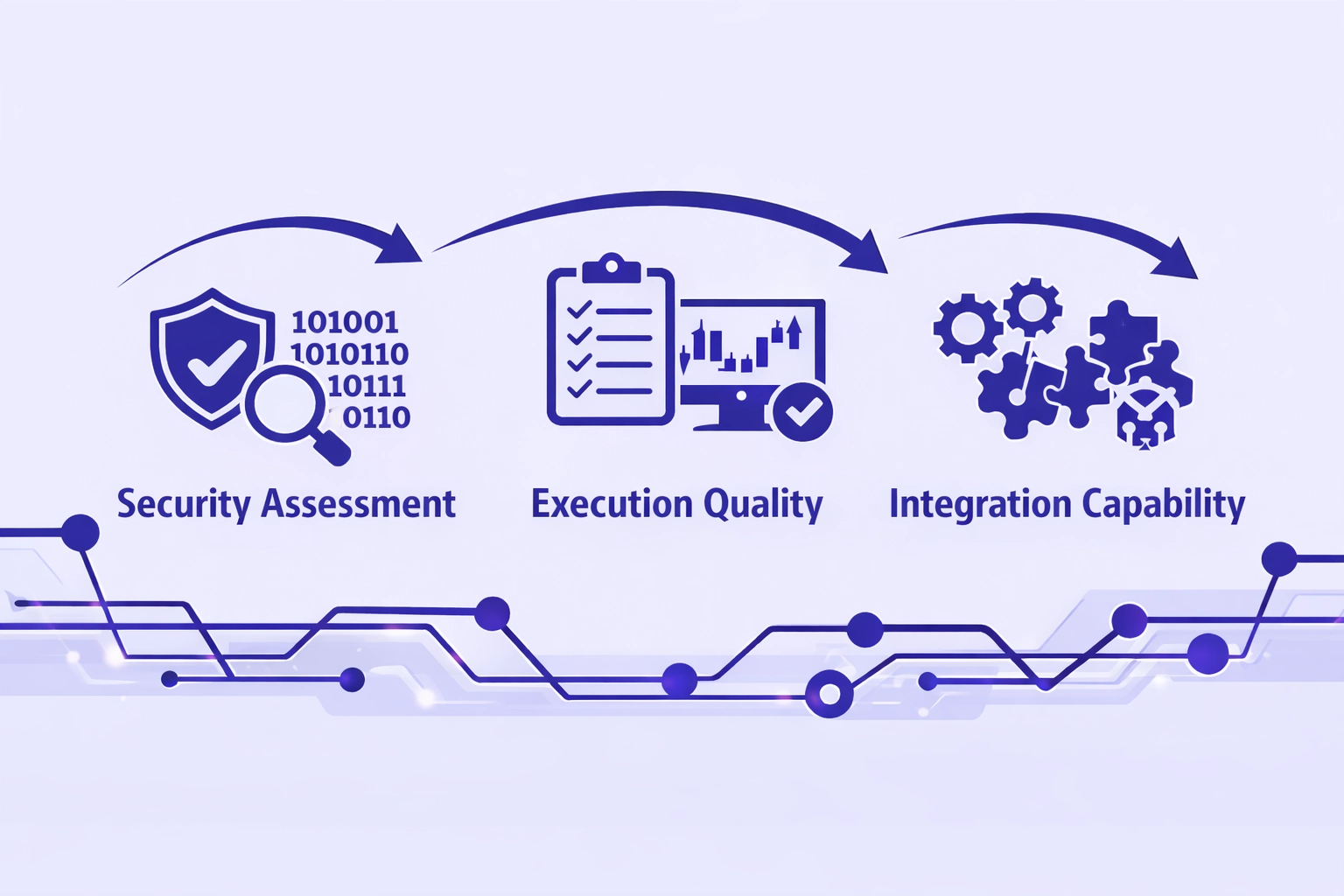
DeFi Aggregator Selection Criteria
Security Assessment
- Audit history review
- Bug bounty programs
- Incident response track
- Insurance coverage
Execution Quality
- Price improvement rates
- Slippage statistics
- Success rate metrics
- Gas efficiency
Integration Capability
- API documentation
- SDK availability
- Chain support
- Technical support
How DeFi Aggregators Improve Capital Utilization for Traders and LPs
DeFi aggregator contracts dramatically improve capital utilization by connecting fragmented liquidity pools into unified markets. Traders access deeper liquidity without needing positions across multiple venues. Liquidity providers benefit from increased volume directed to competitive pools. This efficiency creates positive feedback loops where better execution attracts more volume, which attracts more liquidity, further improving execution quality for all participants.
Institutional Adoption: Why Aggregator Contracts Attract Large Liquidity
| Feature | Institutional Benefit | Aggregator Solution |
|---|---|---|
| Large Order Execution | Minimal market impact | Smart order splitting |
| Compliance | Regulatory alignment | Audit trails, reporting |
| API Access | System integration | Enterprise APIs |
| Security | Fund protection | Multi-audit, insurance |
Real-World Use Cases of DeFi Aggregator Contracts in Live Markets
DeFi aggregator contracts power diverse real-world applications across global markets. Cryptocurrency funds use 1inch and Paraswap for efficient portfolio rebalancing. Payment providers integrate aggregators for competitive exchange rates. DAOs utilize aggregators for treasury diversification. Gaming platforms leverage aggregators for in-game token swaps. Enterprises across USA, UK, UAE, and Canada deploy these solutions for operational efficiency and cost savings.
Industry Standards for Secure DeFi Aggregator Contracts
Standard 1: Require minimum two independent security audits before mainnet deployment of aggregator contracts.
Standard 2: Implement slippage protection with user-defined minimum output requirements on all swap transactions.
Standard 3: Use decentralized price oracles with manipulation resistance for accurate routing decisions.
Standard 4: Maintain transaction deadline enforcement to prevent stale order execution in volatile markets.
Standard 5: Implement MEV protection mechanisms to prevent sandwich attacks and front-running exploitation.
Standard 6: Establish emergency pause mechanisms with multi-signature controls for rapid incident response.
The Future of DeFi Aggregator Contracts: AI Routing, MEV Protection and Beyond
The future of DeFi aggregator contracts includes transformative innovations that will further optimize user outcomes. AI-powered routing will predict optimal execution timing and market conditions. Intent-based systems will allow users to express desired outcomes rather than specific execution paths. Enhanced MEV protection through private mempools and batch auctions will eliminate sandwich attacks. Cross-chain aggregation will mature into seamless multi-chain execution.
With eight years of experience building DeFi infrastructure for enterprises across USA, UK, UAE, and Canadian markets, our agency sees DeFi aggregator contracts becoming essential infrastructure for all blockchain trading. Organizations investing in understanding and leveraging these protocols position themselves for competitive advantage as decentralized finance continues its growth trajectory.
Integrate DeFi Aggregator Contracts Into Your Platform
Our DeFi architects design and implement custom aggregation solutions optimizing trading execution for enterprise applications.
Frequently Asked Questions
Q1.1. What are DeFi aggregator contracts and how do they work?
DeFi aggregator contracts are smart contracts that scan multiple decentralized exchanges simultaneously to find optimal trading routes and prices. They split orders across liquidity sources, execute trades atomically, and return best possible rates to users. Enterprises across USA, UK, UAE, and Canada use them for efficient trading.
Q2.2. How do DeFi aggregator contracts improve trading returns?
DeFi aggregator contracts improve returns by comparing prices across dozens of DEXs, routing trades through optimal paths, and minimizing slippage through intelligent order splitting. Users typically save 1-5% compared to trading on single exchanges, with larger trades seeing greater savings through aggregation.
Q3.3. What is smart routing in DeFi aggregator contracts?
Smart routing in DeFi aggregator contracts refers to algorithmic pathfinding that determines the best execution strategy across multiple liquidity pools and DEXs. These algorithms consider price impact, gas costs, and available liquidity to construct optimal trade routes maximizing user returns.
Q4.4. Are DeFi aggregator contracts safe to use?
DeFi aggregator contracts from established protocols like 1inch, Paraswap, and 0x undergo extensive security audits and have processed billions in volume. However, users should verify contract addresses, understand approval permissions, and use aggregators with proven track records and transparent security practices.
Q5.5. How do DeFi aggregator contracts reduce gas fees?
DeFi aggregator contracts reduce gas fees through transaction batching, optimized contract execution paths, and gas token integration. Some aggregators subsidize gas costs or use meta-transactions. Advanced routing algorithms balance gas costs against price improvements to maximize net user returns.
Q6.6. Can DeFi aggregator contracts work across multiple blockchains?
Yes, modern DeFi aggregator contracts support cross-chain functionality through bridge integrations and multi-chain deployments. Protocols like Li.Fi and Socket aggregate liquidity across Ethereum, Polygon, Arbitrum, BSC, and other chains, enabling seamless cross-chain swaps with optimized routing.
Q7.7. Why do institutions use DeFi aggregator contracts?
Institutions use DeFi aggregator contracts for superior execution quality, reduced market impact on large orders, transparent pricing, and operational efficiency. Aggregators provide API access, compliance tools, and enterprise features that meet institutional requirements in markets across USA, UK, UAE, and Canada.
Explore Services
Related Services
Reviewed by

Aman Vaths
Founder of Nadcab Labs
Aman Vaths is the Founder & CTO of Nadcab Labs, a global digital engineering company delivering enterprise-grade solutions across AI, Web3, Blockchain, Big Data, Cloud, Cybersecurity, and Modern Application Development. With deep technical leadership and product innovation experience, Aman has positioned Nadcab Labs as one of the most advanced engineering companies driving the next era of intelligent, secure, and scalable software systems. Under his leadership, Nadcab Labs has built 2,000+ global projects across sectors including fintech, banking, healthcare, real estate, logistics, gaming, manufacturing, and next-generation DePIN networks. Aman’s strength lies in architecting high-performance systems, end-to-end platform engineering, and designing enterprise solutions that operate at global scale.