Ai Overview
Cross-chain compatibility refers to the ability of different blockchain networks to interact, communicate, and share information with each other. The Ronin Bridge hack ($620M, March 2022) exploited compromised validator keys. The Wormhole exploit ($320M, February 2022) resulted from a signature verification bug that allowed attackers to mint tokens without valid proofs. The Nomad hack ($190M, August 2022) exploited an initialization error that made every user’s address appear valid for withdrawals.
Key Takeaways
- •
Cross-chain compatibility enables different blockchain networks to communicate, share data, and transfer assets seamlessly, breaking down the silos that have historically limited blockchain adoption and utility.
- •
Interoperability protocols like LayerZero, Axelar, Wormhole, and Cosmos IBC provide the infrastructure for cross-chain messaging, each offering distinct security models, finality guarantees, and supported network ecosystems.
- •
Bridge architectures vary significantly in their trust assumptions—from centralized custodial bridges to trustless light client implementations—directly impacting security, speed, and decentralization tradeoffs.
- •
Multi-chain dApp development requires careful consideration of state synchronization, transaction ordering, user experience across networks, and handling the inherent latency of cross-chain operations.
- •
Security implications of cross-chain systems are significant—bridges have been targeted in some of the largest DeFi exploits, making rigorous auditing, monitoring, and fail-safe mechanisms essential.
- •
Liquidity fragmentation across chains creates challenges for DeFi protocols, driving innovation in cross-chain liquidity aggregation, unified liquidity pools, and chain-abstracted trading interfaces.
- •
Chain abstraction represents the next evolution, where users interact with blockchain applications without awareness of underlying networks—wallets and protocols handle chain selection and asset routing automatically.
- •
Enterprise adoption of blockchain increasingly depends on cross-chain capabilities, as organizations require solutions that can integrate with multiple networks, legacy systems, and evolving technology standards.
- •
Developer tooling for cross-chain development has matured significantly, with SDKs, testing frameworks, and deployment tools that abstract much of the complexity while maintaining security and reliability.
1. What is Cross-Chain Compatibility?
Cross-chain compatibility refers to the ability of different blockchain networks to interact, communicate, and share information with each other. In a world where hundreds of distinct blockchains exist—each with unique consensus mechanisms, smart contract languages, and design philosophies—cross-chain compatibility serves as the connective tissue that enables a unified blockchain ecosystem.
At its most fundamental level, cross-chain compatibility solves the “island problem” in blockchain technology. Each blockchain operates as an independent ledger with no native awareness of other networks. Ethereum doesn’t inherently know about transactions on Solana. Bitcoin has no mechanism to verify events on Polygon. This isolation, while providing security through independence, severely limits the potential of blockchain technology.
The Interoperability Spectrum
Cross-chain compatibility exists on a spectrum of sophistication. At the simplest level, centralized exchanges enable users to swap assets between chains—but this requires trusting a third party with custody. Moving up the spectrum, atomic swaps allow peer-to-peer exchanges without intermediaries but only support simple asset transfers. At the most advanced level, general-purpose messaging protocols enable arbitrary data and function calls between chains, supporting complex cross-chain applications.
Understanding where different solutions fall on this spectrum is crucial for blockchain developers. The right choice depends on your specific requirements for security, decentralization, speed, cost, and functionality.
Core Components of Cross-Chain Systems
Every cross-chain solution must address three fundamental challenges. First, verification: how does the destination chain know that an event actually occurred on the source chain? Second, transport: how does information move from one chain to another? Third, execution: how does the destination chain act on received information?
Different protocols answer these questions differently, leading to varying trust assumptions and capabilities. Some rely on trusted validators to attest to cross-chain events. Others use cryptographic proofs that can be verified on-chain. Still others leverage economic incentives and game theory to ensure honest behavior.
Industry Perspective: In our work with enterprise clients, we’ve seen cross-chain requirements evolve from “nice to have” to “absolutely essential.” Organizations increasingly recognize that betting on a single blockchain is risky—they need flexibility to leverage the best features of different networks while maintaining unified operations.
2. Why Cross-Chain Matters for Blockchain Development
The importance of cross-chain compatibility extends far beyond technical convenience. It fundamentally shapes how blockchain applications are designed, deployed, and operated. Understanding this impact is essential for developers building the next generation of decentralized systems.
Breaking the Single-Chain Limitation
Traditional blockchain development forces difficult tradeoffs. Need high throughput? Choose a chain optimized for speed, but sacrifice some decentralization. Need maximum security? Ethereum mainnet offers battle-tested infrastructure, but at premium gas costs. Need privacy? Specialized chains exist, but they have smaller ecosystems.
Cross-chain compatibility allows developers to escape these binary choices. A DeFi protocol can execute high-frequency trades on a fast L2 while settling final results on Ethereum for security. An NFT marketplace can store metadata on Arweave, execute trades on Polygon, and bridge valuable assets to Ethereum when needed.
Unified Liquidity and Network Effects
Liquidity fragmentation is one of the biggest challenges in today’s multi-chain world. The same token might exist on ten different chains, each instance with its own liquidity pool. This fragmentation increases slippage, reduces capital efficiency, and creates poor user experiences.
Cross-chain solutions address this by enabling liquidity to flow where it’s needed. Aggregators can route trades through the best available liquidity across chains. Bridge protocols allow liquidity providers to concentrate capital while serving users on multiple networks. The result is better pricing and more efficient markets.
Expanding User Reach
Different user communities have concentrated on different chains. Ethereum has the largest DeFi ecosystem. Solana attracts users seeking speed and low costs. BNB Chain has strong adoption in certain geographic regions. A single-chain application automatically excludes users on other networks.
Cross-chain applications can serve users wherever they are, on whatever chain they prefer. This dramatically expands potential user bases and allows protocols to benefit from network effects across the entire blockchain ecosystem rather than a single silo.
Future-Proofing Development
The blockchain landscape evolves rapidly. New chains launch regularly, some gaining significant traction. Existing chains upgrade and evolve. Regulatory environments shift, potentially favoring certain architectures. Building with cross-chain compatibility from the start provides flexibility to adapt as the ecosystem changes.
Applications designed for a single chain face costly migrations if circumstances change. Cross-chain-native applications can add or remove chain support with comparatively minor modifications, protecting development investments against ecosystem shifts.
3. Types of Cross-Chain Solutions
Cross-chain technology encompasses diverse approaches, each with distinct architectures, trust models, and use cases. Understanding these categories helps developers select appropriate solutions for their specific requirements.
Notary Schemes (Trusted Third Parties)
Notary schemes rely on trusted entities to verify and relay cross-chain information. Centralized exchanges represent the simplest form—you deposit Bitcoin, they credit you Bitcoin on their internal ledger, and you withdraw Ethereum from their reserves. More sophisticated versions use distributed notary sets where multiple parties must agree, reducing single points of failure.
The advantage is simplicity and speed. Notaries can confirm transactions quickly without waiting for complex cryptographic verification. The disadvantage is trust requirements—users must believe notaries will behave honestly. Many early bridge hacks exploited compromised notary keys.
Hash Time-Locked Contracts (HTLCs)
HTLCs enable trustless atomic swaps between chains that both support smart contracts (or HTLC-like functionality). The mechanism uses cryptographic hash locks and time locks to ensure either both sides of a swap complete or neither does.
In an HTLC swap, Alice locks her Ethereum with a hash lock. Bob locks his Bitcoin with the same hash lock. Alice reveals the secret (preimage) to claim Bob’s Bitcoin, which Bob can then use to claim Alice’s Ethereum. Time locks ensure if either party abandons the swap, the other can reclaim their funds.
HTLCs are trustless but limited. They only support simple exchanges, not general messaging. Both parties must be online and actively participating. They’re most useful for peer-to-peer trading scenarios.
Relay Chains and Sidechains
Relay chains serve as intermediary blockchains that facilitate communication between other networks. Polkadot’s relay chain connects parachains. Cosmos Hub connects zones via IBC. These architectures create blockchain ecosystems with native interoperability.
Sidechains are separate blockchains anchored to a main chain, typically with two-way pegs allowing assets to move between them. Polygon’s PoS chain started as an Ethereum sidechain. Liquid Network is a Bitcoin sidechain for faster settlement.
These approaches work well within their ecosystems but require additional bridges to connect with external chains like Ethereum or Solana.
Light Client Bridges
Light client bridges embed lightweight verification of one chain within another. Instead of trusting validators, the destination chain can verify source chain proofs directly using embedded consensus verification logic.
This approach offers strong security guarantees—the bridge inherits the security of both chains. However, it’s technically complex and computationally expensive. Running light client verification on-chain requires significant gas, making some implementations impractical without optimizations like zero-knowledge proofs.
General Message Passing Protocols
The most flexible cross-chain solutions enable arbitrary message passing between chains. Rather than just moving assets, these protocols can transmit any data—function calls, governance votes, oracle updates, or custom payloads.
LayerZero, Axelar, Wormhole, and Hyperlane all provide general message passing capabilities. They differ in their security models, supported chains, and feature sets. These protocols form the foundation for sophisticated cross-chain applications that go far beyond simple token transfers.
| Solution Type | Trust Model | Capabilities | Speed | Complexity |
|---|---|---|---|---|
| Notary Schemes | Trusted parties | Asset transfers | Fast | Low |
| HTLCs | Trustless | Atomic swaps | Variable | Medium |
| Relay Chains | Shared security | Full messaging | Medium | High |
| Light Clients | Cryptographic | Full messaging | Slow | Very High |
| Message Passing | Varies | Full messaging | Medium | Medium |
4. Major Interoperability Protocols
Several protocols have emerged as leaders in cross-chain infrastructure, each taking different approaches to the challenges of blockchain interoperability. Understanding their architectures and tradeoffs is essential for making informed integration decisions.
For a foundational understanding of how blockchains communicate, read our guide on Cross-Chain Communication: How It Works →
LayerZero
LayerZero is an omnichain interoperability protocol designed for lightweight cross-chain messaging. Its architecture separates the roles of message validation and delivery, allowing applications to configure their own security parameters.
The protocol uses Decentralized Verifier Networks (DVNs) to validate cross-chain messages. Applications can require multiple DVNs to verify each message, customizing security based on their risk tolerance. This modular security approach lets high-value applications use stricter verification while allowing lower-stakes use cases to optimize for speed and cost.
LayerZero has gained significant adoption for Omnichain Fungible Tokens (OFTs) and Omnichain NFTs (ONFTs), which are natively cross-chain from deployment rather than wrapped representations of single-chain assets.
Cosmos IBC
The Inter-Blockchain Communication (IBC) protocol is Cosmos’s native interoperability standard. It provides trustless communication between chains running the Tendermint consensus or compatible alternatives. IBC uses light client verification, where each connected chain runs a light client of the other to verify state proofs.
IBC’s strength is its tight integration with the Cosmos ecosystem. Chains built with the Cosmos SDK can enable IBC with minimal configuration. The protocol supports not just token transfers but arbitrary packet data, enabling sophisticated cross-chain applications.
The limitation is ecosystem scope—IBC works best between Cosmos chains. Connecting to non-Cosmos chains like Ethereum requires additional bridging infrastructure, though projects like Gravity Bridge address this gap.
Wormhole
Wormhole operates through a network of 19 Guardian nodes that observe events on connected chains and produce signed attestations. When 13 of 19 Guardians sign a message (a Verified Action Approval or VAA), it can be delivered and executed on the destination chain.
The protocol’s notable strength is its support for both EVM and non-EVM chains, including Solana, Near, Aptos, and Sui. This makes Wormhole particularly valuable for applications bridging between fundamentally different blockchain architectures.
Wormhole has faced security challenges—a February 2022 exploit resulted in $320 million in losses due to a signature verification vulnerability. The protocol has since undergone significant security improvements, but the incident highlights the risks in cross-chain infrastructure.
Axelar
Axelar operates as a dedicated proof-of-stake blockchain for cross-chain communication. Its validator set secures message passing between 50+ connected networks. Beyond simple transfers, Axelar’s General Message Passing (GMP) enables cross-chain smart contract calls.
A distinctive Axelar feature is its gas service, which allows users to pay destination chain gas fees on the source chain. This simplifies user experience—you don’t need destination chain tokens to complete cross-chain transactions.
Axelar also provides Interchain Token Service (ITS), enabling tokens to become natively interchain with preserved fungibility across networks.
Hyperlane
Hyperlane emphasizes permissionless deployment—anyone can deploy Hyperlane to new chains without permission from the core team. This contrasts with protocols that require governance approval for new chain support.
The protocol uses Interchain Security Modules (ISMs) that applications configure to define their verification requirements. Pre-built ISMs include multisig verification, optimistic verification with fraud proofs, and aggregation of multiple security mechanisms.
Hyperlane’s Warp Routes enable token bridging, while general message passing supports arbitrary cross-chain logic. The permissionless nature makes it attractive for projects launching on emerging chains that may not yet be supported by other protocols.
Implementation Note: When selecting an interoperability protocol, consider not just current features but roadmap alignment. LayerZero V2 and Wormhole’s NTT (Native Token Transfers) represent significant architectural evolutions. Building on a protocol means accepting coupling to its development trajectory.
5. Bridge Architecture Deep-Dive
Bridges are the practical implementations that enable assets to move between chains. Their architecture directly impacts security, user experience, and capital efficiency. Understanding bridge internals helps developers and users make informed decisions about which bridges to trust.
Lock-and-Mint Model
The most common bridge architecture locks assets on the source chain and mints synthetic representations on the destination. When you bridge USDC from Ethereum to Polygon using a lock-and-mint bridge, your USDC is locked in an Ethereum contract, and wrapped USDC is minted on Polygon.
The critical question is: what guarantees the locked assets will remain available for redemption? The bridge must maintain reserves equal to all circulating wrapped tokens. If bridge contracts are compromised or validators collude, those guarantees can fail.
Variants of lock-and-mint include liquidity pools on both ends (like Hop Protocol), which provide faster transfers through liquidity providers who take on bridge risk in exchange for fees.
Burn-and-Mint (Native Bridges)
Some bridges, particularly those operated by token issuers, use burn-and-mint mechanics. Instead of locking on the source and minting on the destination, tokens are burned (destroyed) on the source and minted fresh on the destination.
This model works when the bridge operator has mint authority on all supported chains. Circle’s Cross-Chain Transfer Protocol (CCTP) for USDC uses this approach—USDC is burned on the source chain and native USDC is minted on the destination, eliminating wrapped token fragmentation.
Optimistic Bridges
Optimistic bridges assume transactions are valid unless challenged during a dispute window. This is the same security model used by optimistic rollups like Arbitrum and Optimism for their native bridges.
The security relies on at least one honest watcher who will submit fraud proofs if invalid transactions are proposed. The tradeoff is withdrawal time—users must wait for the dispute period (often 7 days) to ensure no challenges arise before their funds are released.
Fast bridges like Across and Hop provide immediate liquidity by having liquidity providers front funds, taking on the risk of the dispute period in exchange for fees.
ZK-Proof Based Bridges
Zero-knowledge proofs offer a path to trustless bridging without the delays of optimistic verification. A ZK bridge can prove that a source chain transaction occurred without revealing all transaction details, and this proof can be verified on the destination chain.
The challenge is computational cost. Generating and verifying ZK proofs requires significant resources. However, advances in proving systems and hardware acceleration are making ZK bridges increasingly practical. Projects like zkBridge and Succinct are pioneering this approach.
Canonical vs. Third-Party Bridges
Canonical bridges are operated by the chains they connect—Arbitrum’s native bridge, Optimism’s gateway, Polygon’s PoS bridge. They typically offer the strongest security guarantees because they’re integral to the chain’s operation, but may be slower or more expensive than alternatives.
Third-party bridges operate independently of the chains they connect. They offer competitive features—faster speeds, lower fees, better UX—but introduce additional trust assumptions. Users must evaluate both the bridge’s security model and its operational track record.
6. Impact on Smart Contract Development
Cross-chain compatibility fundamentally changes how smart contracts are designed and developed. The patterns, security considerations, and testing requirements differ significantly from single-chain development.
Cross-Chain Contract Architecture
Cross-chain applications typically deploy contracts on multiple chains that communicate through messaging protocols. A common pattern is the “hub and spoke” model, where a primary contract on one chain coordinates with satellite contracts on others. Alternatively, peer-to-peer architectures treat all chain deployments as equals.
Contracts must handle asynchronous communication. Unlike local function calls that return immediately, cross-chain calls involve latency measured in minutes. State machines that track pending operations and handle completions when messages arrive are essential patterns.
Cross-Chain Contract Pattern:
// Simplified cross-chain token vault pattern

contract CrossChainVault {

mapping(bytes32 => PendingDeposit) public pendingDeposits;
// Initiate cross-chain deposit
function depositToChain(uint256 amount, uint16 destChain) external {
token.transferFrom(msg.sender, address(this), amount);
bytes32 depositId = keccak256(abi.encode(msg.sender, amount, block.timestamp));
pendingDeposits[depositId] = PendingDeposit(msg.sender, amount, Status.Pending);
// Send cross-chain message
messenger.send(destChain, abi.encode(depositId, msg.sender, amount));
}
// Receive confirmation from destination chain
function confirmDeposit(bytes32 depositId) external onlyMessenger {
pendingDeposits[depositId].status = Status.Completed;
emit DepositConfirmed(depositId);
}
}
Handling Cross-Chain Failures
Cross-chain operations can fail at multiple points: the source transaction might succeed but the message fails to deliver, the destination might reject the message, or execution might revert after partial completion. Contracts must handle these scenarios gracefully.
Common patterns include timeout mechanisms that allow users to reclaim funds if messages aren’t delivered within expected periods, retry logic for transient failures, and fallback handlers for permanent failures. The challenge is distinguishing between “slow” and “failed”—aggressive timeouts might trigger false recoveries.
State Synchronization Challenges
Maintaining consistent state across chains is inherently difficult. There’s no global clock or atomic commitment across independent blockchains. A token balance might appear available on one chain while the same tokens are being transferred from another.
Design patterns to manage this include conservative state updates (don’t update destination state until source is finalized), eventual consistency models (accept temporary inconsistency that resolves over time), and reservation systems (lock resources before cross-chain operations begin).
Gas and Fee Considerations
Cross-chain contracts must account for fees on multiple chains. The source transaction pays source chain gas. Most protocols require payment (on the source) for destination chain execution. Some operations require callbacks, adding return message costs.
Fee estimation is complex because destination gas prices may change between estimation and execution. Building in buffers and handling refunds for overpayment are important considerations. Some protocols offer fee estimation APIs that should be queried close to execution time.
Testing Cross-Chain Contracts
Testing cross-chain systems requires running multiple local chains or forks simultaneously. Tools like Foundry’s fork testing can simulate multiple networks, but synchronizing state between them requires custom tooling. Protocols like LayerZero and Axelar provide local testing environments that simulate their messaging infrastructure.
Testing should cover happy paths, timeout scenarios, retry behavior, message ordering edge cases, and failure recovery. The asynchronous nature of cross-chain communication makes deterministic testing challenging—consider using event-based assertions rather than immediate state checks.
7. Security Challenges and Solutions
Cross-chain infrastructure has been the target of some of the largest exploits in blockchain history. Understanding these security challenges is crucial for developers building on or integrating with cross-chain systems.
Historical Bridge Exploits
The Ronin Bridge hack ($620M, March 2022) exploited compromised validator keys. Attackers gained control of 5 of 9 validators, enough to approve fraudulent withdrawals. The Wormhole exploit ($320M, February 2022) resulted from a signature verification bug that allowed attackers to mint tokens without valid proofs. The Nomad hack ($190M, August 2022) exploited an initialization error that made every user’s address appear valid for withdrawals.
These incidents share common themes: single points of failure, insufficient validation, and operational security gaps. They’ve driven significant improvements in bridge architecture and security practices.
⚠️ Critical Security Insight: Over $2.5 billion has been lost to bridge exploits since 2021. When evaluating bridges, consider: How are validator keys secured? What happens if validators collude? Has the code been audited? Is there a bug bounty? What’s the incident response capability?
Validator Security
Bridges relying on validator attestations must protect against key compromise and collusion. Best practices include hardware security modules (HSMs) for key storage, geographic and organizational distribution of validators, threshold signatures requiring multiple parties, rotation policies for compromised or suspected keys, and monitoring for unusual validator behavior.
The validator set’s economic security matters too. Validators should have significant stake at risk—enough that the cost of attack exceeds potential gains. Some protocols require validators to stake tokens that can be slashed for misbehavior.
Smart Contract Security
Bridge contracts are high-value targets that require rigorous security practices. Multiple independent audits are essential—different auditors catch different vulnerability classes. Formal verification provides mathematical proofs of correctness for critical paths. Extensive test suites should cover edge cases, especially around message validation and fund custody.
Upgrade mechanisms require careful consideration. Immutable contracts can’t fix bugs but also can’t be compromised through governance attacks. Upgradeable contracts offer flexibility but introduce upgrade-related risks. Time-locked upgrades with monitoring provide middle ground.
Operational Security
Beyond code security, operational practices matter enormously. Access control to admin functions should require multi-sig with distributed key holders. Monitoring should alert on unusual activity—large transfers, rapid sequences, new contract interactions. Incident response plans should define roles, communication channels, and escalation procedures.
Circuit breakers that pause bridge operations when anomalies are detected can limit damage from exploits. The tradeoff is availability—overly sensitive triggers cause unnecessary disruption. Tuning these systems requires balancing security against usability.
User-Side Security
Applications integrating bridges should help users make informed decisions. Display which bridge is being used and its security model. Show estimated completion times accurately. Warn about large transfers that might benefit from splitting across multiple bridges. Verify contract addresses against official sources.
Consider implementing transfer limits that require additional confirmation for large amounts. While this adds friction, it provides protection against both user error and potential exploits.
8. Cross-Chain DeFi: Opportunities and Risks
Decentralized finance has been the primary driver of cross-chain innovation. The ability to access liquidity, yield opportunities, and financial instruments across multiple chains creates compelling use cases—but also introduces new categories of risk.
Cross-Chain Liquidity Aggregation
Liquidity fragmentation across chains leads to worse pricing for users. A token might have deep liquidity on Ethereum but thin markets on Arbitrum. Cross-chain aggregators solve this by routing trades through the best available liquidity regardless of chain.
Protocols like LI.FI, Socket, and Squid aggregate DEXs and bridges across chains, finding optimal paths for cross-chain swaps. A user wanting to swap ETH on Arbitrum for SOL on Solana can execute this in a single transaction, with the aggregator handling all intermediate steps.
Cross-Chain Lending and Borrowing
Cross-chain lending protocols allow users to collateralize assets on one chain and borrow on another. This unlocks liquidity without selling holdings and enables capital efficiency across chains.
The challenge is collateral management. If collateral value drops, liquidations must happen quickly—but cross-chain message latency can delay the process. Protocols address this with conservative collateral ratios, fast-path liquidation mechanisms, and cross-chain oracle integration.
Yield Optimization Across Chains
Different chains offer different yield opportunities. Yield aggregators that operate across chains can automatically move capital to the highest-yielding opportunities, accounting for bridge costs and risks.
These strategies require careful risk assessment. Higher yields often come with higher risk—either from the underlying protocol or from the cross-chain infrastructure used to access it. Sophisticated yield optimizers weight returns against risk factors including bridge security.
Risks Unique to Cross-Chain DeFi
Cross-chain DeFi introduces risks beyond traditional DeFi. Bridge risk means assets can be lost if bridges are compromised. Oracle risk multiplies as price feeds must be accurate across all chains. Execution risk increases with multi-step transactions that might partially complete. Liquidity risk emerges when cross-chain routes become unavailable during market stress.
Users and protocols must account for these risks through diversification (using multiple bridges), position sizing (limiting cross-chain exposure), and monitoring (watching for bridge issues that might affect positions).
Building cross-chain DeFi applications? Learn how Web3 SDKs simplify multi-chain development in our technical guide: How Web3 SDKs Manage Cross-Chain Interactions →
9. NFTs and Cross-Chain Portability
Non-fungible tokens present unique challenges and opportunities for cross-chain compatibility. Unlike fungible tokens that can be wrapped and bridged relatively simply, NFTs carry metadata, provenance, and utility that must be preserved across chains.
The NFT Portability Challenge
An NFT is more than a token ID. It includes metadata (name, description, attributes), media (images, videos, 3D models), ownership history (provenance), and potentially utility (access rights, game items, membership benefits). Moving an NFT across chains must preserve all these elements.
Different chains have different NFT standards. Ethereum uses ERC-721 and ERC-1155. Solana has Metaplex standards. Flow has its own NFT architecture. Cross-chain NFT solutions must translate between these standards while preserving NFT integrity.
Omnichain NFT Standards
LayerZero’s ONFT (Omnichain Non-Fungible Token) standard enables NFTs to exist natively on multiple chains. Rather than wrapped representations, an ONFT can move between chains while maintaining its identity. The token is burned on the source chain and minted on the destination, preserving the single-instance nature of NFTs.
This approach solves the wrapped token problem for NFTs but requires the collection to be deployed as an ONFT from the start (or migrated). Existing collections on single chains would need migration paths to become omnichain.
Cross-Chain NFT Marketplaces
Marketplaces are adapting to multi-chain NFT ecosystems. Some aggregate listings across chains, showing users the complete market regardless of chain. Others enable cross-chain purchases, where buyers on one chain can acquire NFTs on another through integrated bridging.
These capabilities expand market liquidity and buyer reach. A collector on Polygon can bid on Ethereum NFTs without first bridging assets manually. Sellers access buyers across the entire ecosystem rather than just their deployment chain.
Gaming and Metaverse Interoperability
Blockchain games increasingly span multiple chains—deploying on L2s for fast gameplay while settling ownership on mainnet for security. Cross-chain compatibility enables game assets to move between contexts: use an item in one game, sell it in another, display it in a virtual world on a third chain.
The vision of truly interoperable metaverse assets remains aspirational but is becoming more achievable as cross-chain infrastructure matures. Standards for cross-platform asset representation and utility recognition are emerging areas of development.
10. Enterprise Use Cases
Enterprise adoption of blockchain increasingly requires cross-chain capabilities. Organizations can’t afford to be locked into single networks—they need flexibility to work with partners on different chains, comply with varying regulatory requirements, and adapt to evolving technology.
Supply Chain Across Networks
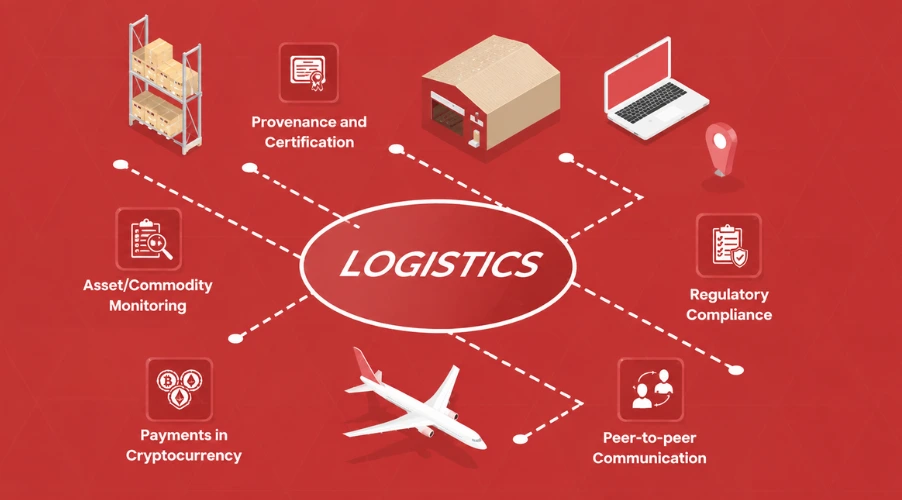
Supply chains involve multiple organizations, each potentially using different blockchain platforms. A manufacturer might use one chain, their logistics partner another, and customs authorities a third. Cross-chain compatibility enables these disparate systems to share data and verify events across organizational boundaries.
Use cases include verifying origin claims (did this component actually come from the certified supplier?), tracking custody transfers, and automating payments upon verified delivery. Cross-chain messaging protocols enable these workflows without requiring all participants to use the same blockchain.
Cross-Border Payments and Settlement
International payments often involve multiple banking networks and currencies. Blockchain-based settlement can accelerate these transfers, but the multi-jurisdictional nature of international finance means no single blockchain will dominate.
Cross-chain bridges enable value transfer between networks optimized for different jurisdictions or use cases. Stablecoins can move between chains to reach the most appropriate network for final settlement. Central bank digital currencies (CBDCs), when they emerge, will likely require interoperability with commercial blockchain networks.
Multi-Chain Asset Tokenization
Real-world asset tokenization—representing property, securities, or commodities as blockchain tokens—benefits from cross-chain distribution. A tokenized real estate investment might be created on a compliant private chain but traded on public markets across multiple networks.
Cross-chain compatibility enables issuers to reach investors wherever they are while maintaining regulatory compliance on the issuance side. Secondary trading can occur on any supported chain, with bridges ensuring fungibility across markets.
Enterprise Blockchain Strategy
Forward-thinking enterprises are adopting multi-chain strategies from the start. Rather than betting on a single platform, they build with interoperability in mind—choosing standards and architectures that support future cross-chain requirements.
Key considerations include protocol selection (favoring networks with strong interoperability roadmaps), smart contract design (building with cross-chain messaging patterns), and vendor evaluation (ensuring partners support multi-chain operations).
Enterprise Implementation:
We helped a logistics consortium implement cross-chain document verification spanning Hyperledger Fabric (for enterprise participants) and Polygon (for public verification). Cross-chain attestations enabled third parties to verify shipment documents without accessing the private network. Result: 60% reduction in document verification time, 100% audit trail integrity.
11. Developer Tools and Best Practices
The tooling landscape for cross-chain development has matured significantly. Developers now have access to SDKs, testing frameworks, and deployment tools that make building multi-chain applications more accessible.
Cross-Chain Development SDKs
Modern Web3 SDKs like Viem, Ethers.js, and wagmi provide robust multi-chain support. They handle provider management across networks, normalize chain differences, and provide typed interfaces for common operations. Higher-level SDKs from protocols like thirdweb, LI.FI, and Axelar add cross-chain-specific functionality.
When selecting SDKs, consider chain coverage (which networks are supported), abstraction level (how much control do you need versus convenience), community and maintenance (is the project actively developed), and integration patterns (does it fit your application architecture).
Testing Multi-Chain Applications
Testing cross-chain systems requires simulating multiple networks simultaneously. Foundry’s fork testing can create multiple forked environments. Protocol-specific tools like LayerZero’s testnet environment or Axelar’s local development mode simulate their messaging infrastructure.
Key testing scenarios include successful message delivery end-to-end, timeout and retry behavior, partial failure handling, fee estimation accuracy, and state consistency after cross-chain operations. Automated testing pipelines should run these scenarios on every change.
Deployment Strategies
Deploying to multiple chains introduces complexity in contract management, verification, and upgrades. Strategies to manage this include deterministic deployment (using CREATE2 or similar for consistent addresses across chains), configuration management (centralizing chain-specific parameters), and automated verification (scripting block explorer verification for all deployments).
Consider deployment ordering when contracts must reference each other across chains. Deploy contracts that don’t depend on remote addresses first, then configure cross-chain references after all deployments complete.
Best Practices Summary
Design for Failure: Cross-chain operations will fail sometimes. Build retry mechanisms, timeout handlers, and recovery paths into your architecture from the start.
Minimize Cross-Chain Dependencies: Each cross-chain call adds latency and risk. Design systems to batch operations when possible and function gracefully when cross-chain communication is delayed.
Security First: Verify message origins rigorously. Don’t trust data from other chains without validation. Implement rate limits and circuit breakers for cross-chain endpoints.
Monitor Everything: Cross-chain systems have more moving parts than single-chain applications. Comprehensive monitoring across all chains and bridges is essential for detecting issues early.
Document Thoroughly: Future maintainers need to understand cross-chain flows. Document which chains are supported, which bridges are used, what happens on failure, and how to add new chains.
12. The Future: Chain Abstraction
Chain abstraction represents the next evolution of cross-chain technology—a future where users interact with blockchain applications without awareness of underlying networks. Assets flow automatically to where they’re needed, and the complexity of multi-chain operations is completely hidden from end users.
What Chain Abstraction Means
Today, users must consciously manage which chain they’re using. They select networks in their wallet, bridge assets manually, and pay gas with chain-specific tokens. Chain abstraction eliminates these steps. Users simply state what they want to do—”buy this NFT,” “provide liquidity to this pool,” “stake these tokens”—and the infrastructure handles everything else.
This requires advances across the stack: wallets that manage assets across chains automatically, applications that route operations optimally, and infrastructure that makes cross-chain execution as seamless as single-chain operations.
Emerging Chain Abstraction Solutions
Several projects are building toward chain abstraction. NEAR’s Chain Signatures enable accounts on NEAR to sign transactions for any chain, creating universal accounts. Particle Network’s Universal Accounts aggregate balances across chains into unified interfaces. Polygon’s AggLayer aims to create unified liquidity across L2s with near-instant cross-chain operations.
Intent-based protocols like Across, Anoma, and Essential separate what users want to accomplish from how it’s executed. Users sign intents, and solvers compete to fulfill them optimally—potentially across multiple chains.
Technical Requirements
Chain abstraction requires improvements in several areas. Account abstraction (ERC-4337 and equivalents) enables smart contract wallets that can manage cross-chain operations. Faster bridging with sub-minute finality makes chain switching imperceptible. Unified gas payment allows using any token for fees on any chain. Better indexing provides real-time visibility into assets and operations across all networks.
These pieces are coming together. Account abstraction is live on major networks. Bridge speeds are improving. Gas abstraction services are launching. The chain-abstracted future is becoming achievable.
Implications for Developers
Developers should build with chain abstraction in mind even before full solutions arrive. Design applications that don’t assume users have specific chain configurations. Use SDKs that support multiple chains flexibly. Consider how your application would work in a chain-abstracted world and build toward that vision.
The transition will be gradual. Power users will continue choosing chains deliberately while mainstream users increasingly rely on abstraction. Supporting both modes—explicit chain selection and automatic routing—will be important during the transition.
13. Implementation Roadmap
For organizations looking to add cross-chain capabilities, here’s a practical roadmap based on our implementation experience.
Phase 1: Assessment and Planning
Requirements Analysis: Which chains do you need to support now? Which might you need in the future? What types of cross-chain operations are required—simple transfers, messaging, or complex orchestration?
Protocol Evaluation: Assess interoperability protocols against your requirements. Consider security models, supported chains, feature sets, and costs. Create a shortlist for deeper technical evaluation.
Risk Assessment: Understand the risks of your cross-chain architecture. What happens if a bridge is compromised? How do you handle extended outages? What’s your exposure in various failure scenarios?
Phase 2: Proof of Concept
Testnet Implementation: Build minimal cross-chain functionality on testnets. Test message delivery, error handling, and recovery mechanisms. Validate assumptions about latency and costs.
Security Review: Conduct preliminary security review of cross-chain components. Identify attack surfaces and mitigation strategies. Plan for comprehensive audits before mainnet.
Integration Testing: Test integration with your existing systems. Verify that cross-chain operations work correctly with your database, frontend, and monitoring infrastructure.
Phase 3: Production Deployment
Audit and Hardening: Conduct thorough security audits of all cross-chain components. Address findings and re-audit critical changes. Implement monitoring and alerting.
Staged Rollout: Deploy to mainnet with conservative limits. Start with small transfer caps and limited chain support. Gradually expand as you gain operational confidence.
Documentation and Training: Document cross-chain architecture for operations teams. Create runbooks for common scenarios and incident response. Train support staff on cross-chain-specific issues.
Phase 4: Optimization and Expansion
Performance Optimization: Based on production data, optimize for cost and speed. Adjust routing logic, caching strategies, and batch operations as appropriate.
Chain Expansion: Add support for additional chains based on user demand. Each new chain requires security review, testing, and operational preparation.
Feature Enhancement: Build more sophisticated cross-chain features as your team’s expertise grows. Consider cross-chain governance, unified analytics, and advanced automation.
Embracing the Multi-Chain Future
Cross-chain compatibility has evolved from experimental feature to essential infrastructure. The blockchain ecosystem’s fragmentation—once seen as a weakness—is becoming a strength as interoperability protocols enable each chain to focus on its strengths while remaining connected to the broader ecosystem.
For developers, this means new opportunities and new responsibilities. The ability to build applications that span multiple chains opens possibilities that single-chain development can’t match. But it also requires understanding new security models, architectural patterns, and operational considerations.
The trajectory is clear: we’re moving toward a future where chain boundaries matter less than they do today. Users will interact with blockchain applications without thinking about which network they’re using. Liquidity will flow where it’s needed. Assets will be truly portable.
Building with cross-chain compatibility today positions you for that future. Start with clear requirements, choose protocols carefully, implement with security as the top priority, and design for a world where chains are implementation details rather than user-facing choices.
Frequently Asked Questions
Q1.What happens to assets if a bridge is hacked?
Assets locked in compromised bridge contracts may be lost. This has happened in major exploits. Mitigation strategies include using multiple bridges to spread risk, favoring bridges with insurance or recovery mechanisms, limiting exposure in any single bridge, and monitoring bridge security status.
Q2.Can make existing single-chain application cross-chain?
Yes, but the effort depends on your current architecture. Applications designed with modular state management adapt more easily. Tightly coupled systems may require significant refactoring. Plan for cross-chain messaging patterns, async operation handling, and multi-chain deployment infrastructure.
Q3.How long do cross-chain transfers take?
Times vary significantly. Fast bridges using liquidity pools can complete in minutes. Standard message-passing protocols typically take 5-15 minutes. Native optimistic rollup withdrawals take 7 days for full security. Choose based on your speed vs. security tradeoff requirements.
Q4.Which cross-chain solution is most secure?
Security depends on the specific implementation. Generally, native L2 bridges (like Arbitrum’s or Optimism’s) inherit Ethereum’s security but are slower. Light client bridges offer strong trustless security but are computationally expensive. Validator-based bridges are faster but require trusting the validator set. Evaluate based on your specific risk tolerance and requirements.
Q5.What's the difference between a bridge and an interoperability protocol?
Bridges are specific implementations for moving assets between two chains. Interoperability protocols are broader infrastructure that enables any type of cross-chain communication, including asset transfers, messaging, and contract calls. Bridges are often built on top of interoperability protocols.
Explore Services
Related Services
Reviewed by

Aman Vaths
Founder of Nadcab Labs
Aman Vaths is the Founder & CTO of Nadcab Labs, a global digital engineering company delivering enterprise-grade solutions across AI, Web3, Blockchain, Big Data, Cloud, Cybersecurity, and Modern Application Development. With deep technical leadership and product innovation experience, Aman has positioned Nadcab Labs as one of the most advanced engineering companies driving the next era of intelligent, secure, and scalable software systems. Under his leadership, Nadcab Labs has built 2,000+ global projects across sectors including fintech, banking, healthcare, real estate, logistics, gaming, manufacturing, and next-generation DePIN networks. Aman’s strength lies in architecting high-performance systems, end-to-end platform engineering, and designing enterprise solutions that operate at global scale.