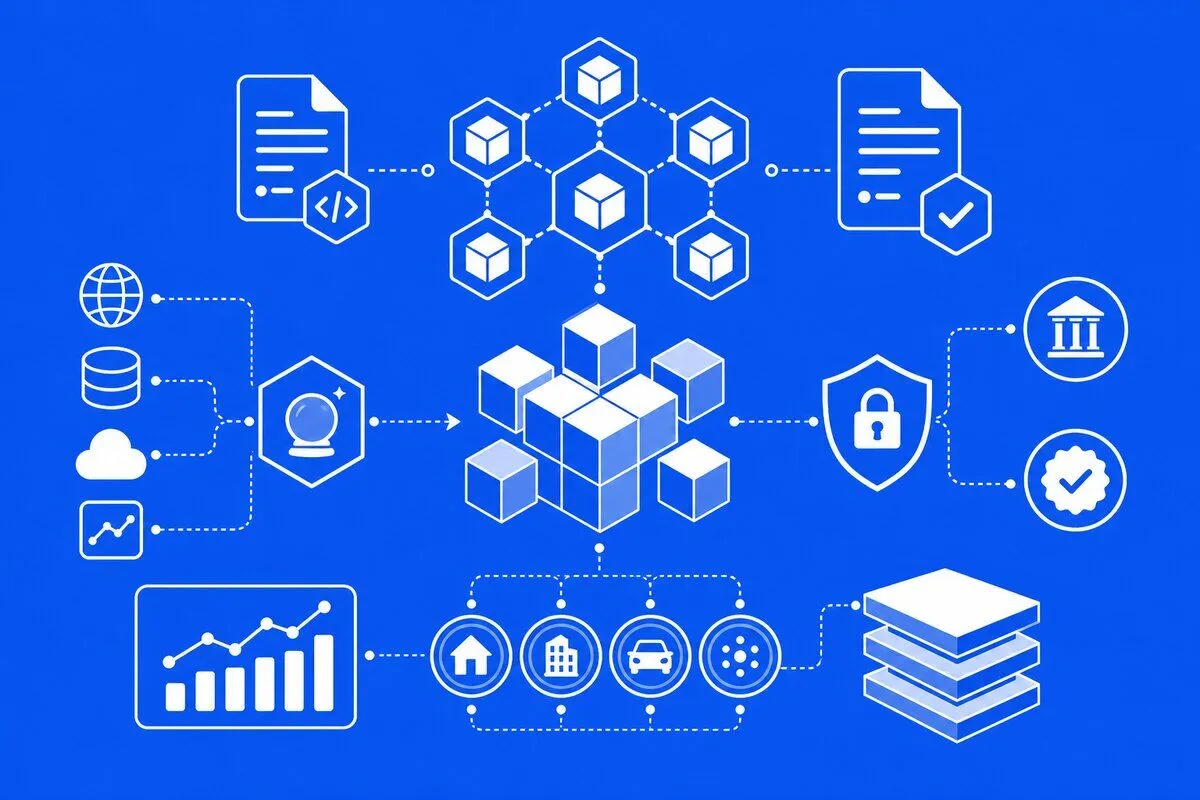
Ai Overview
Executing Solana smart contracts operates fundamentally differently from traditional blockchain platforms, delivering exceptional cost efficiency through innovative architectural decisions. Performance Insight: Well-designed programs can achieve 10,000+ TPS by avoiding account contention when executing Solana smart contracts. Our experience building programs across USA, UK, UAE, and Canadian markets demonstrates that well-optimized Rust code reduces costs by 40-60% compared to naive implementations.
Key Takeaways
- Executing Solana smart contracts costs 99.9% less than Ethereum equivalents, with average transaction fees under $0.001 for most operations.
- Parallel transaction execution through Sealevel runtime enables processing 65,000+ TPS when executing Solana smart contracts efficiently.
- Compute unit optimization directly reduces costs, with 200,000 default units available per transaction for executing Solana smart contracts.
- Proper account structure design minimizes rent requirements and serialization overhead, improving efficiency when executing Solana smart contracts.
- Program Derived Addresses (PDAs) enable secure, deterministic account management essential for efficiently executing Solana smart contracts.
- Enterprises across USA, UK, UAE, and Canada achieve 90% cost reduction by optimizing instruction design when executing Solana smart contracts.
- Transaction batching combines multiple operations into single transactions, maximizing throughput when executing Solana smart contracts at scale.
- Comprehensive testing with solana-program-test ensures optimal performance before executing Solana smart contracts on mainnet.
Understanding Solana’s Execution Model and Why It’s Cost-Efficient
Executing Solana smart contracts operates fundamentally differently from traditional blockchain platforms, delivering exceptional cost efficiency through innovative architectural decisions. With over eight years of experience building blockchain solutions across USA, UK, UAE, and Canadian markets, our agency has witnessed Solana’s execution model transform enterprise blockchain economics. The Sealevel runtime enables parallel transaction processing by identifying non-overlapping account access patterns, allowing thousands of transactions to execute simultaneously. Combined with Proof of History’s cryptographic timestamps that order transactions before consensus, executing Solana smart contracts achieves unprecedented throughput while maintaining sub-penny transaction costs that make previously impossible use cases economically viable.
How Solana Smart Contracts (Programs) Differ from EVM Contracts
Executing Solana smart contracts requires understanding key architectural differences from EVM-based systems. Solana programs are stateless, storing all data in separate accounts rather than within the program itself. This separation enables parallel execution since programs can process transactions accessing different accounts simultaneously. The account model requires explicit declaration of all accounts a transaction will read or write, enabling the runtime to schedule non-conflicting transactions in parallel when executing Solana smart contracts.[1]
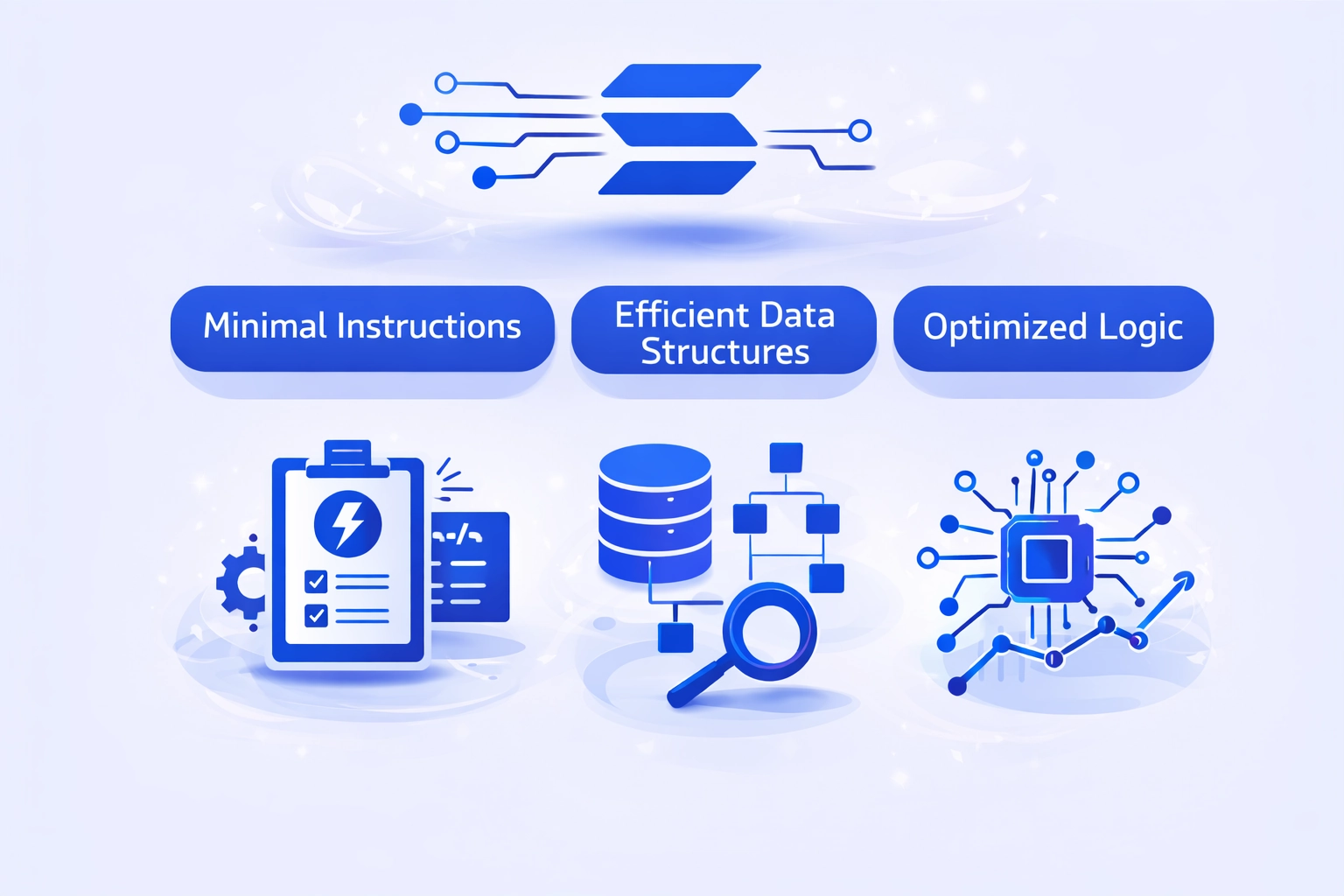
Designing Lightweight Smart Contracts for Faster Execution
Minimal Instructions
- Reduce instruction count
- Combine related operations
- Avoid redundant checks
- Streamline control flow
Efficient Data Structures
- Use compact data types
- Pack fields tightly
- Minimize serialization
- Avoid nested structures
Optimized Logic
- Early return patterns
- Lazy evaluation
- Inline small functions
- Avoid allocations
Optimizing Account Structure to Reduce Compute Overhead
| Account Strategy | Benefit | Cost Impact |
|---|---|---|
| Single Large Account | Simpler management | Higher rent, limits parallelism |
| Multiple Small Accounts | Enables parallel execution | More signatures required |
| Zero-Copy Deserialization | Reduces compute units | Significant savings |
| Lazy Account Loading | Only load when needed | Lower average cost |
| PDA-Based Addressing | Deterministic lookups | Reduced CPI overhead |
Using Parallel Transaction Execution to Maximize Throughput
The Sealevel runtime’s parallel execution capability represents a transformative advantage when executing Solana smart contracts. By declaring all accounts upfront, the runtime identifies transactions that access non-overlapping account sets and processes them simultaneously across multiple cores. Enterprises across USA, UK, UAE, and Canada leverage this parallelism by designing account structures that minimize contention. Hot accounts accessed by many transactions become bottlenecks, so distributing state across multiple accounts enables higher throughput when executing Solana smart contracts at scale.
Performance Insight: Well-designed programs can achieve 10,000+ TPS by avoiding account contention when executing Solana smart contracts.
Minimizing Compute Units with Efficient Instruction Design
| Operation Type | Compute Units | Optimization Strategy |
|---|---|---|
| Account Deserialization | 200-2,000 CU | Use zero-copy patterns |
| SHA256 Hash | 85 CU base + data | Minimize hash operations |
| Ed25519 Verify | ~2,000 CU | Batch verifications |
| Cross-Program Invocation | 1,000+ CU overhead | Consolidate CPIs |
| Logging (msg!) | 100+ CU per call | Remove in production |
Best Practices for Writing Cost-Optimized Rust Programs on Solana
Writing efficient Rust code is essential for cost-effective execution of Solana smart contracts. The Anchor framework simplifies program creation but can introduce overhead if not used carefully. Native Rust programs offer maximum control over compute unit consumption. Key practices include avoiding heap allocations, using references instead of copying data, and leveraging Rust’s zero-cost abstractions. Our experience building programs across USA, UK, UAE, and Canadian markets demonstrates that well-optimized Rust code reduces costs by 40-60% compared to naive implementations.
Cost Reduction Potential
Throughput Improvement
Max Compute Units
Maximize Efficiency When Executing Solana Smart Contracts
Our Solana experts optimize your programs for maximum performance and minimum cost. Get professional guidance for executing Solana smart contracts efficiently.
How to Avoid Common Performance Bottlenecks in Solana Programs
Common bottlenecks when executing Solana smart contracts include excessive account deserialization, unnecessary cross-program invocations, and inefficient loop structures. Hot accounts create contention that blocks parallel execution. Deep CPI chains consume compute units rapidly. String operations and dynamic allocations introduce overhead. Identifying and eliminating these bottlenecks through profiling ensures optimal performance and minimal costs when executing Solana smart contracts in production environments.
Solana Smart Contract Optimization Lifecycle
Requirements Analysis
Define performance targets and cost constraints for executing Solana smart contracts.
Account Architecture
Design optimal account structure enabling parallel execution and minimal rent.
Instruction Design
Create efficient instructions minimizing compute unit consumption per operation.
Code Implementation
Write optimized Rust code following best practices for Solana program efficiency.
Unit Testing
Test individual functions measuring compute unit usage and correctness.
Performance Profiling
Profile programs to identify bottlenecks and optimization opportunities.
Devnet Deployment
Deploy to devnet for real-world testing of execution costs and performance.
Mainnet Launch
Deploy optimized program to mainnet with monitoring for executing Solana smart contracts.
Efficient Use of Program Derived Addresses (PDAs)
Program Derived Addresses are essential for efficiently executing Solana smart contracts, providing deterministic account addressing without private keys. PDAs enable programs to sign transactions, create standardized account hierarchies, and perform secure cross-program invocations. Caching PDA derivations, using consistent seed patterns, and avoiding unnecessary bump recalculations optimize compute unit usage significantly when executing Solana smart contracts at scale.
Reducing State Size to Lower Rent and Execution Costs
Data Compression
- Use bit-packed fields
- Compress repeated values
- Store deltas not absolutes
- Remove redundant data
Account Sizing
- Right-size accounts
- Avoid over-allocation
- Use dynamic sizing wisely
- Close unused accounts
Rent Optimization
- Calculate exact minimums
- Ensure rent exemption
- Reclaim lamports on close
- Monitor rent changes
Batching Transactions for Higher Efficiency and Lower Fees
| Batching Strategy | Use Case | Efficiency Gain |
|---|---|---|
| Multiple Instructions | Related operations | Single signature cost |
| Versioned Transactions | More accounts per tx | Larger batch sizes |
| Address Lookup Tables | Reduce account size | Fit more in transaction |
| Atomic Batches | All-or-nothing operations | Consistent state updates |
Leveraging Solana Runtime Features for High-Performance Execution
The Solana runtime provides powerful features for optimizing program execution. Syscalls offer native implementations of common cryptographic operations at fixed compute costs. Built-in programs like the System Program handle account creation efficiently. Cross-program invocations enable composability while maintaining performance when properly structured. Understanding and leveraging these runtime features is essential for cost-effectively executing Solana smart contracts in production environments.
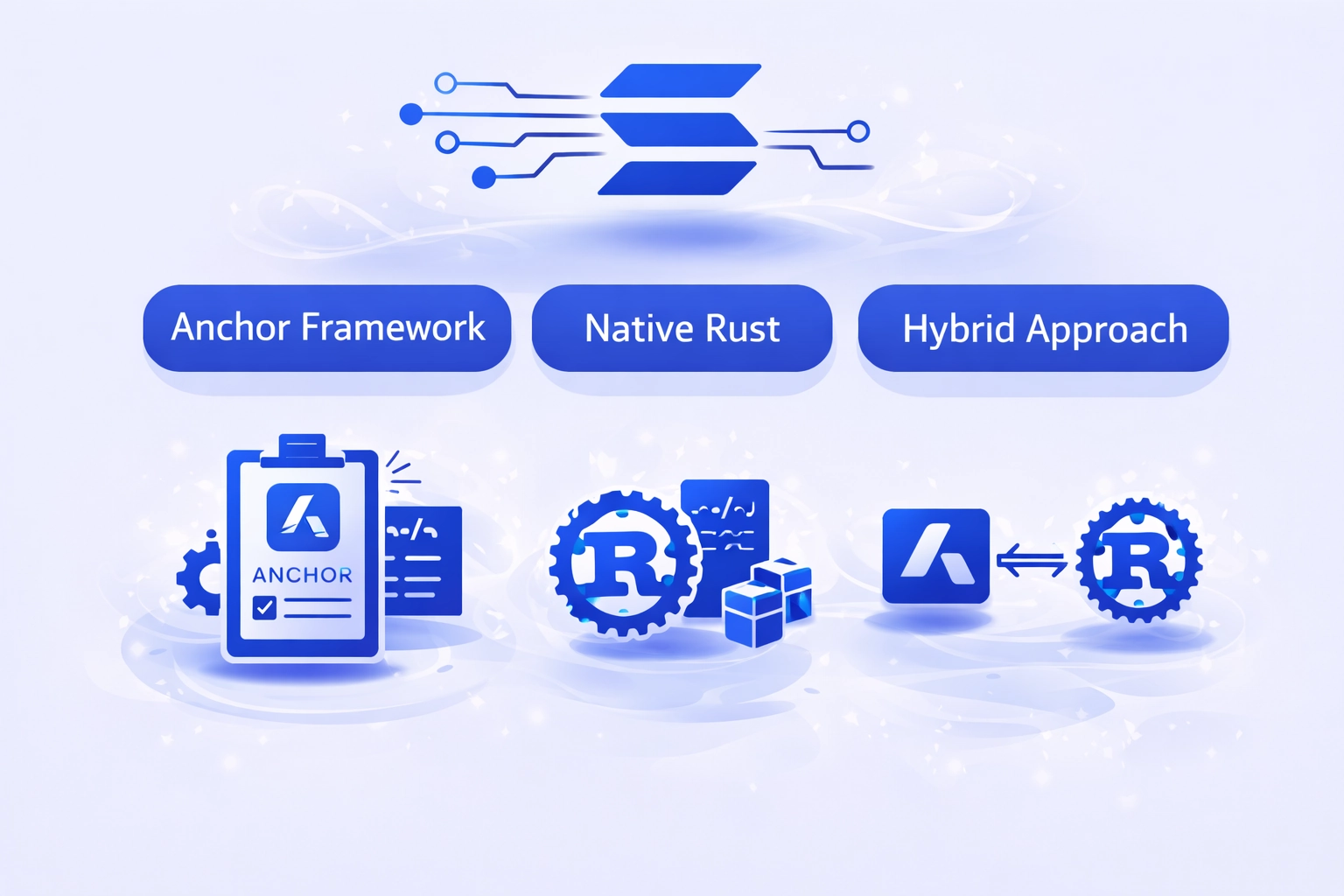
Solana Program Framework Selection Criteria
Anchor Framework
- Rapid prototyping
- Built-in safety checks
- IDL generation
- Slight compute overhead
Native Rust
- Maximum control
- Lowest overhead
- Complex implementation
- Best for optimization
Hybrid Approach
- Anchor for structure
- Native for hot paths
- Balanced tradeoffs
- Enterprise recommended
Testing, Profiling, and Benchmarking Smart Contracts Before Deployment
| Testing Tool | Purpose | Priority |
|---|---|---|
| solana-program-test | Unit and integration testing | Critical |
| Anchor Testing | Framework-integrated tests | Critical |
| Compute Budget | Measure CU consumption | High |
| Devnet Deployment | Real environment testing | High |
| Trident Fuzzing | Security fuzzing | High |
Industry Standards for Executing Solana Smart Contracts
Standard 1: Profile compute unit consumption for all instructions before mainnet deployment.
Standard 2: Design account structures enabling parallel transaction execution for high throughput.
Standard 3: Use zero-copy deserialization for accounts exceeding 1KB when executing Solana smart contracts.
Standard 4: Calculate exact rent-exempt thresholds to avoid over-funding accounts unnecessarily.
Standard 5: Implement comprehensive security audits before production deployment of any program.
Standard 6: Monitor transaction success rates and costs continuously after executing Solana smart contracts.
Advanced Optimization Techniques for Enterprise-Grade Solana dApps
Enterprise applications require advanced optimization techniques when executing Solana smart contracts at scale. Custom compute budget allocation allows requesting additional units for complex operations while specifying priority fees for time-sensitive transactions. Address Lookup Tables reduce transaction size, enabling more accounts per transaction. Versioned transactions support larger payloads and advanced features. Our experience building enterprise solutions across USA, UK, UAE, and Canadian markets demonstrates these techniques achieve 80% cost reduction at scale.
With eight years of experience optimizing blockchain programs, our agency recommends continuous performance monitoring, regular code audits, and iterative optimization cycles. The Solana ecosystem evolves rapidly, with runtime improvements and new features enabling further optimization opportunities. Organizations committed to efficiently executing Solana smart contracts should invest in ongoing optimization practices to maintain competitive advantages in transaction costs and throughput performance.
Optimize Your Solana Smart Contract Performance
Partner with our experienced team to reduce costs and improve efficiency when executing Solana smart contracts for your enterprise applications.
Frequently Asked Questions
Q1.1. What makes executing Solana smart contracts more cost-efficient than Ethereum?
Executing Solana smart contracts costs significantly less due to parallel transaction processing, low base fees averaging $0.00025, and the Proof of History consensus mechanism. Unlike Ethereum’s sequential execution, Solana processes thousands of transactions simultaneously, reducing costs for enterprises across USA, UK, UAE, and Canada.
Q2.2. How do compute units affect costs when executing Solana smart contracts?
Compute units measure computational resources consumed when executing Solana smart contracts. Each transaction has a default limit of 200,000 compute units. Efficient instruction design minimizes compute unit consumption, directly reducing transaction fees. Optimizing compute usage is essential for cost-effective program execution.
Q3.3. What programming language is used for executing Solana smart contracts?
Rust is the primary language for executing Solana smart contracts, offering memory safety and high performance. The Anchor framework simplifies Rust programming with macros and abstractions. Some projects also use C and C++ through the Solana BPF compiler for specific use cases.
Q4.4. How does account structure impact executing Solana smart contracts efficiently?
Solana’s account model separates program code from data storage, unlike EVM’s combined approach. Proper account structure reduces rent costs and compute overhead when executing Solana smart contracts. Efficient account design minimizes data serialization and deserialization operations, improving overall performance significantly.
Q5.5. What is rent in Solana and how does it affect smart contract costs?
Rent is Solana’s mechanism requiring accounts to maintain minimum SOL balances based on data size. Accounts meeting the rent-exempt threshold avoid periodic deductions. Reducing state size directly lowers rent requirements, making executing Solana smart contracts more economical for long-term operations.
Q6.6. Can Solana smart contracts be upgraded after deployment?
Yes, Solana supports upgradeable programs through the BPF loader. Program authority holders can deploy new versions, enabling bug fixes and feature additions. However, enterprises should implement proper governance and timelock mechanisms when executing Solana smart contracts requiring upgrade capabilities.
Q7.7. How do Program Derived Addresses optimize executing Solana smart contracts?
Program Derived Addresses (PDAs) are deterministically generated addresses controlled by programs without private keys. PDAs enable secure cross-program invocations, efficient account lookups, and standardized address derivation. Proper PDA usage reduces compute overhead and improves security when executing Solana smart contracts.
Explore Services
Related Services
Reviewed by

Aman Vaths
Founder of Nadcab Labs
Aman Vaths is the Founder & CTO of Nadcab Labs, a global digital engineering company delivering enterprise-grade solutions across AI, Web3, Blockchain, Big Data, Cloud, Cybersecurity, and Modern Application Development. With deep technical leadership and product innovation experience, Aman has positioned Nadcab Labs as one of the most advanced engineering companies driving the next era of intelligent, secure, and scalable software systems. Under his leadership, Nadcab Labs has built 2,000+ global projects across sectors including fintech, banking, healthcare, real estate, logistics, gaming, manufacturing, and next-generation DePIN networks. Aman’s strength lies in architecting high-performance systems, end-to-end platform engineering, and designing enterprise solutions that operate at global scale.