Ai Overview
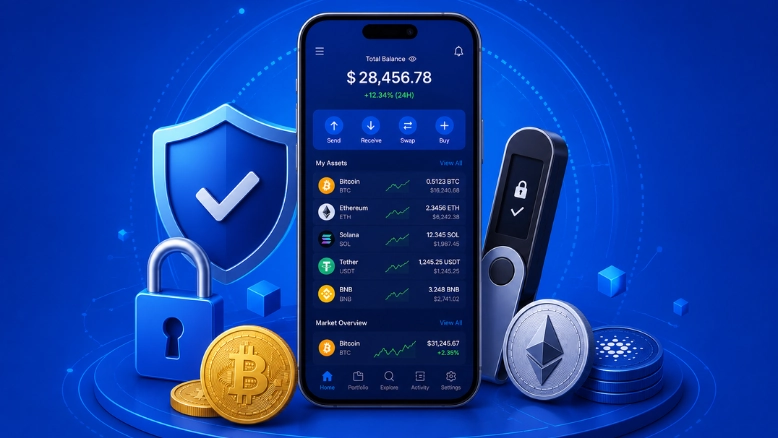
Cryptocurrency storage security has become one of the most consequential technology decisions individuals and organizations make in 2026. Three distinct cold storage architectures each offer different security levels, operational complexity, and cost profiles suited to different user requirements. CC EAL5+ certified secure element, Bluetooth mobile connectivity, supports 5,500+ assets across all major chains. CC EAL5+ certified secure element, Bluetooth connectivity for iOS and Android, 5,500+ supported assets.
Cold Wallets Explained: The Future of Secure Crypto Storage in 2026
Cryptocurrency storage security has become one of the most consequential technology decisions individuals and organizations make in 2026. As digital asset values have grown to represent meaningful proportions of personal wealth and corporate treasury reserves across the USA, UK, UAE, and Canada, the sophistication and frequency of attacks targeting stored crypto assets have grown proportionally. Software wallets connected to the internet, regardless of their encryption quality or the reputation of the companies behind them, share a fundamental structural vulnerability: private keys and signing operations exist within environments that malware, remote attackers, and phishing campaigns can potentially reach. The consequences of a successful attack are permanent and irreversible in ways that traditional financial account compromises are not.
The cold wallet addresses this fundamental vulnerability at an architectural level rather than a defensive one. By keeping private keys completely offline in physical storage that has no network connectivity, cold wallet architecture eliminates the entire category of remote attacks that represents the highest-volume threat against cryptocurrency holders. A private key that has never been connected to the internet cannot be stolen through the internet regardless of how sophisticated the attack or how thoroughly the attacker has compromised network-connected devices around the cold wallet. This structural protection has made cold storage the unambiguous security gold standard for serious cryptocurrency holders since the earliest days of Bitcoin and continues to represent the highest achievable security tier in 2026.
This comprehensive guide covers everything you need to understand about cold wallets in 2026, from the fundamental concepts and working architecture through the major cold wallet types, top devices, setup procedures, security best practices, and the emerging trends that will define the next generation of cold storage solutions. Explore professional wallet development services at Nadcab Labs.
What is a Cold Wallet?
A cold wallet is any cryptocurrency key storage method where private keys are generated and maintained in an environment that has no connection to the internet at any point during normal operation. The term cold refers to the absence of network connectivity, contrasting with hot wallets that are always connected to online environments. Cold wallets do not store cryptocurrency directly. Like all wallet types, they store the private keys that cryptographically prove ownership of on-chain assets and enable the creation of authorized transactions that transfer those assets between blockchain addresses.
A useful real-life analogy for understanding cold wallets is the difference between cash stored in a physical bank vault versus money held in an online bank account. Your online bank account is accessible instantly from anywhere with an internet connection, which is convenient but means anyone who compromises your credentials can access it remotely. Your cash in a physical vault requires physical presence and specific authorization procedures to access, which makes spontaneous remote theft essentially impossible regardless of how skilled the attacker is. Cold wallets apply exactly this principle to cryptocurrency private key storage, trading connectivity convenience for the structural security of physical isolation.
The Core Security Principle
A private key that has never been exposed to an internet-connected environment cannot be stolen through that environment. Cold wallet security is not a defense against attacks. It is an architectural decision that removes the attack surface entirely by ensuring the most valuable cryptographic material never exists where attacks can reach it.
Types of Cold Wallets
Three distinct cold storage architectures each offer different security levels, operational complexity, and cost profiles suited to different user requirements.
The cold wallet category encompasses several distinct storage architectures that share the core principle of offline key storage while differing significantly in their security assurance level, ease of use, cost, and suitability for different use cases. Understanding the characteristics of each type enables individuals and organizations to select the cold storage approach that correctly matches their security requirements, technical sophistication, and operational needs rather than defaulting to the most commonly marketed option regardless of fit.
3.2 Paper Wallets
Physically printed public and private key pairs
Paper wallets represent the simplest cold storage format: a physical document containing a printed or hand-written private key and its corresponding public address. They provide absolute offline security because the key material exists only as physical ink on paper with no electronic components that can be remotely attacked. While largely superseded by hardware wallets for practical use, paper wallets remain relevant for specific scenarios including inheritance planning, long-term cold archival storage of assets that will not be accessed for years, and jurisdictions where hardware wallet procurement is difficult. The primary risks are physical deterioration of the paper, fire, flood, and the inherent insecurity of the key generation environment if generated on an internet-connected device.
3.3 Air-Gapped Devices
Fully offline computer systems with no wireless capability
Air-gapped devices are complete computer systems that have been physically modified or configured to have no network interfaces of any kind, including WiFi, Bluetooth, cellular, and all wired network connectivity. They communicate with connected systems exclusively through offline data transfer methods such as microSD cards, USB drives, or QR code scanning. Air-gapped systems represent the maximum achievable cold storage security tier and are used by institutional cryptocurrency custodians, exchanges managing billions in reserves, and security-conscious advanced users managing significant holdings. The complexity of secure air-gapped operation makes this approach unsuitable for most individual users but essential for organizations where a hardware wallet’s residual software complexity is considered an unacceptable risk.
How Cold Wallets Work
Understanding how cold wallets work technically clarifies why their security guarantees are structural rather than defensive and why they represent a qualitatively different security tier from even the most carefully secured software wallet. The cold wallet’s value is not that it defends against attacks better than software wallets. It is that it removes the private key from the environments where those attacks operate, making the attacks simply irrelevant to the cold-stored key regardless of their sophistication or success against connected systems.
Offline Private Key Generation and Storage
When a cold wallet is initialized, the device generates a cryptographically secure master seed using its internal random number generator in an environment with no network connectivity. The seed is immediately used to derive the BIP-44 HD wallet key hierarchy, and the master seed and all derived private keys remain permanently within the device’s secure element or physical medium. The key generation process never touches an internet-connected environment at any point.
Public Address Sharing Without Key Exposure
The cold wallet derives public addresses from the stored private keys using one-way cryptographic functions that make it mathematically impossible to reverse the process and recover the private key from the public address. These public addresses can be safely shared with anyone for receiving funds without creating any security risk, because public addresses contain no information that enables unauthorized signing or fund access.
Offline Transaction Signing
When funds need to be sent, the companion software application constructs the unsigned transaction and transmits it to the cold wallet device through a USB, Bluetooth, or QR code channel. The device displays the transaction details on its own trusted display, the user physically confirms the details and approves the transaction, and the device signs the transaction internally using the stored private key. Only the completed signature is returned to the software application.
Blockchain Broadcasting Without Key Exposure
The signed transaction is broadcast to the blockchain network by the internet-connected companion software using the signature returned by the cold wallet device. The blockchain network validates the cryptographic signature to verify authorization without any further interaction with the private key. The private key played its role entirely within the cold wallet device and returns to offline storage until the next transaction requires its use.
Cold Wallet vs Hot Wallet: Complete Comparison
The choice between cold and hot wallet storage is not binary. Most sophisticated cryptocurrency holders and all institutional deployments use both wallet types in combination, with cold wallets holding the majority of long-term reserves and hot wallets managing the smaller operational balance needed for active transactions. Understanding the specific differences between these storage models enables users to make informed decisions about how to allocate assets between them and what risk levels they are accepting in each allocation decision.
| Dimension | Cold Wallet | Hot Wallet |
|---|---|---|
| Internet Connectivity | Offline — private keys never touch internet-connected environments | Always connected — keys stored on network-accessible devices |
| Security Level | Maximum | Moderate |
| Transaction Convenience | Requires physical device access and manual confirmation step for each transaction | Instant transactions from any device without physical hardware requirement |
| Malware Risk | Negligible | High |
| Phishing Risk | Very low — device physical possession required for all fund movements | High — credential theft alone can enable complete account takeover |
| Physical Risk | Device loss or damage can result in fund loss without proper seed backup | Device loss recoverable through cloud account credentials in most cases |
| Cost | Hardware device cost of USD 50 to 400 plus ongoing maintenance | Generally free software applications with optional premium features |
| Best Use Case | Long-term holdings, significant value reserves, treasury management | Daily transactions, DeFi interaction, small operational balances |
| Recommended For | Investors, institutions, anyone holding more than one month of income in crypto | Active traders, DeFi users, small operational amounts only |
Limitations of Cold Wallets
Cold wallets provide unmatched digital security but introduce real-world limitations that users must understand and plan for before adopting them as their primary storage method. The following limitations are not reasons to avoid cold storage for significant holdings, but they are genuine tradeoffs that require thoughtful mitigation strategies to ensure cold wallet adoption delivers its full security benefit without creating new risks through improper physical security or operational practices.
| Limitation | Impact | Mitigation |
|---|---|---|
| Less Convenient for Daily Use | Medium | Maintain a small hot wallet balance for active daily transactions while keeping the majority of holdings in cold storage |
| Risk of Physical Loss or Damage | High | Store seed phrase backup in a physically secure separate location on fire and water-resistant metal backup media; consider geographically distributed backup copies |
| Initial Setup Complexity | Medium | Follow official manufacturer setup guides step by step, take time to understand the seed phrase concept fully before proceeding, and consider professional assistance for large institutional deployments |
| Hardware Purchase Cost | Low-Medium | USD 50–400 cost is minimal relative to the value of assets typically stored; treat it as mandatory security infrastructure cost rather than optional premium spending |
How to Set Up a Cold Wallet Step by Step
A proven eight-step setup process for securely initializing a cold wallet and establishing the backup and operational security practices that protect your assets long-term.
Choose the Right Cold Wallet for Your Needs
Select your device based on the cryptocurrencies you hold, your technical comfort level, and your connectivity requirements. Ledger Nano X is ideal for multi-currency holders who need mobile Bluetooth connectivity. Trezor Model T suits users who prioritize open-source auditability. Coldcard is the best choice for Bitcoin-focused maximum security. Purchase exclusively from the manufacturer’s official website to guarantee device integrity.
Verify Package Integrity Before Use
Upon receiving the device, inspect the packaging tamper-evident seals carefully before opening. Any evidence of prior opening should prompt immediate return and replacement from the manufacturer. Both Ledger and Trezor provide specific integrity verification procedures during initial setup that detect devices pre-programmed with compromised firmware before any key generation occurs.
Initialize Device and Generate Seed Phrase
Connect the device to a computer running the official companion application and follow the initialization wizard to generate a new wallet. The device will generate a 24-word seed phrase displayed on its own screen. This seed phrase is the master key from which all account private keys derive and represents your complete ability to recover all funds if the device is ever lost, damaged, or fails. The device screen is the only trusted source for this information.
Record Seed Phrase on Physical Backup Media
Write the complete 24-word seed phrase onto the recovery card provided with the device or onto a metal backup plate for fire and flood resistance. Record every word in the exact sequence displayed, verify accuracy by reading it back, and store it immediately in a physically secure location. Never type the seed phrase into any digital device, take a photograph of it, or store it in any cloud service. The seed phrase must never exist in digital form.
Set a Strong PIN Code
Configure the device PIN during setup. Choose a PIN that is at minimum six digits, preferably eight, that you have not used for any other device or service. The PIN protects against unauthorized use of the physical device and triggers a wipe after a defined number of incorrect attempts, protecting against brute-force physical access attacks. Memorize the PIN rather than writing it down, but have a secure recovery process planned in case of memory failure.
Install Applications for Your Cryptocurrencies
Through the companion application, install the blockchain-specific apps for each cryptocurrency you hold on the hardware device. These apps enable the device to handle the specific signing protocols for each supported blockchain. Update the device firmware to the latest version through the official companion application before installing any blockchain apps or moving any funds to the device.
Verify Receiving Addresses on Device Screen
Before sending any funds to your cold wallet, always verify the receiving address directly on the hardware device’s own screen through the address verification feature in the companion application. This confirms that the address shown in the software matches what the device has generated and that malware on the connected computer has not substituted a different address in the display. Only send to addresses you have explicitly verified on the device screen.
Test Recovery Before Storing Significant Value
Before transferring any significant holdings to the cold wallet, test the complete seed phrase recovery process using the manufacturer’s recovery testing feature. This verifies that your seed phrase backup is correct and that you understand the recovery process before your funds depend on it. A seed phrase that cannot be recovered is equivalent to no backup at all, and discovering this only when you actually need it is a catastrophic outcome that testing prevents.
Best Cold Wallets in 2026
Top hardware wallet recommendations across different user profiles and security requirements.
Ledger Nano X
~$149
CC EAL5+ certified secure element, Bluetooth connectivity for iOS and Android, 5,500+ supported assets. The most versatile choice for users who hold multiple cryptocurrencies and need mobile wallet access alongside desktop use.
Best For
Multi-currency holders, mobile users
Trezor Safe 3
~$79
Open-source firmware auditable by independent security researchers, EAL6+ secure element in Safe 3, supports 9,000+ assets. The preferred choice for security researchers and users who trust verified open-source code over closed hardware certification.
Best For
Security researchers, transparency-focused users
Coldcard Mk4
~$150
Bitcoin-only device with full air-gap capability via microSD, open-source firmware, dual secure elements, and advanced features like duress PINs and multi-signature coordination. The gold standard for Bitcoin maximalists and security-focused advanced users.
Best For
Bitcoin maximalists, advanced security users
Ledger Flex
~$249
Ledger’s 2024 flagship device with E Ink touchscreen for clear transaction detail verification, CC EAL6+ certified secure element, NFC and Bluetooth connectivity. Designed for users who want the best user experience without compromising on security certification level.
Best For
Premium UX, institutional individual use
Role of Cold Wallets in Cryptocurrency Wallet Development
In cryptocurrency wallet development, cold storage integration represents a security architecture decision that fundamentally shapes what user segments a platform can serve and what trust level it can establish in regulated markets. Cryptocurrency exchanges, institutional custody platforms, and enterprise treasury applications that handle significant user fund volumes are expected by users, regulators, and security auditors in the USA, UK, UAE, and Canada to implement cold storage for the majority of assets under management. Platforms that cannot demonstrate cold storage capability face structural disadvantages in competing for institutional users who evaluate this capability as a prerequisite rather than a differentiator.
Developer Integration Approaches
Developers integrate cold storage through hardware wallet SDK integration for consumer wallets, hardware security module APIs for institutional platforms, and multi-signature contract frameworks that coordinate signing across geographically distributed cold storage devices for maximum operational resilience.
Exchange and Platform Architecture
Production exchange security architecture typically separates holdings into hot wallet operational reserves holding 5-10 percent and cold storage reserves holding 90-95 percent, with automated sweep systems that move funds from hot wallets to cold storage above defined thresholds to continuously minimize hot wallet exposure.
Security Architecture Standards
Modern wallet development security architecture incorporates cold storage alongside multi-signature governance, time-locked transactions, geographically distributed key shards, and regular cold storage balance verification through proof-of-reserve mechanisms that allow external verification without key disclosure.
Future of Cold Wallets in 2026 and Beyond
The future of cold wallet technology is being shaped by the intersection of growing institutional adoption, expanding Web3 use cases, and hardware security innovation that is pushing the boundaries of what cold storage devices can securely support. Hardware wallet manufacturers are investing significantly in expanding device capability beyond simple transaction signing toward DeFi interaction approval, Web3 identity authentication, and cross-chain operation support that makes cold wallets relevant to an increasingly broad range of digital asset use cases. The devices being designed today are positioning cold storage as the security foundation for the entire Web3 ecosystem rather than simply the storage solution for long-term cryptocurrency holders.
AI and Blockchain Security
AI-powered threat analysis integrated into cold wallet companion applications will identify suspicious transaction patterns, warn about known malicious addresses, and flag unusual signing requests before users confirm potentially fraudulent operations on their hardware devices.
Institutional Adoption Growth
Enterprise-grade hardware security module cold storage adoption is accelerating across the institutional sector as regulators in the USA, UK, UAE, and Canada increasingly expect demonstrable cold storage practice from licensed digital asset service providers.
Web3 Identity Integration
Cold wallet hardware evolving into comprehensive Web3 identity anchors that enable hardware-secured signing for website authentication, verifiable credential issuance, and decentralized identity assertions beyond purely financial transaction authorization use cases
Hardware Evolution
Next-generation devices featuring larger trusted display surfaces for complex DeFi operation verification, biometric authentication binding, multi-party computation coordination support, and expanded cross-chain protocol coverage are reshaping what cold storage hardware can securely enable.
Common Cold Wallet Mistakes to Avoid
The majority of cold wallet security failures are not caused by hardware vulnerabilities or sophisticated attacks. They result from predictable operational mistakes that bypass the device’s technical protections entirely. Understanding these common mistakes before adopting cold storage enables users to avoid the errors that have caused the most documented cold wallet asset loss events, ensuring that the exceptional security the hardware provides is fully realized in practice rather than undermined by operational oversights.
| Mistake | Risk Level | Prevention |
|---|---|---|
| Losing or Improperly Storing Seed Phrase | Critical | Store on fire-resistant metal backup media in locked secure location; test recovery before storing significant value |
| Buying Counterfeit Hardware Wallets | Critical | Purchase exclusively from official manufacturer website; never from Amazon third-party sellers, eBay, or unverified resellers regardless of price discounts offered |
| Ignoring Firmware Updates | High | Subscribe to manufacturer security advisories; apply updates promptly through official companion application only; never delay known security patch updates |
| Storing Seed Phrase Digitally in Any Form | Critical | Never type, photograph, screenshot, email, or cloud-store seed phrases in any digital format; physical-only storage is the absolute rule with no exceptions |
| Failing to Verify Addresses on Device Screen | High | Always read the full receiving address character by character on the hardware device screen before confirming; never trust only the connected computer’s software display |
Conclusion: Cold Wallets as the Security Foundation of Digital Asset Management
Cold wallets have been and will continue to be the highest available security tier for cryptocurrency storage because they address the fundamental structural vulnerability of all software wallets at an architectural level rather than a defensive one. By removing private keys from internet-connected environments entirely, cold storage eliminates the attack surface that the most sophisticated malware, phishing campaigns, and remote attackers depend on, providing security guarantees that no amount of software security investment can replicate. In a threat landscape where the financial incentives driving crypto attacks continue to grow alongside asset values, this structural protection is not a luxury consideration but a security necessity for anyone holding significant digital assets.
The practical barriers to cold wallet adoption have never been lower. Hardware devices from Ledger and Trezor are available at accessible price points, companion applications make setup straightforward for non-technical users, and the security education resources available from manufacturers and the broader community help new users avoid the operational mistakes that have historically accounted for most cold wallet asset loss events. The investment of time to understand cold storage correctly and USD 50 to 400 for quality hardware is modest relative to the value of assets that cold storage protects and the irreversible consequences of a successful hot wallet attack.
For businesses building cryptocurrency wallet infrastructure across the USA, UK, UAE, and Canada, cold storage integration is increasingly an expectation rather than a differentiator. Institutional users require demonstrable cold storage capability. Regulators look favorably on platforms that implement recognized cold storage standards. Security auditors evaluate cold storage implementation as a core competency. Businesses that invest in cold storage architecture now position themselves to serve the highest-value user segments and meet the regulatory expectations that are converging toward explicit cold storage requirements for licensed digital asset service providers.
Who Should Use Cold Wallets
Cold wallets are recommended for anyone holding cryptocurrency that represents more than a few weeks of income equivalent in value, long-term investors who do not need daily transaction access, businesses managing digital treasury reserves, institutions and funds with fiduciary obligations over digital assets, and anyone who has experienced or seriously fears the security limitations of software-only wallet storage. If the loss of your current cryptocurrency holdings would represent a meaningful financial setback, cold storage is the appropriate protection level for those holdings and the security investment is justified by the asset value being protected.
Frequently Asked Questions
Q1.What is a Cold Wallet in cryptocurrency?
A Cold Wallet is an offline crypto storage method that keeps private keys disconnected from the internet, making it highly secure from hacking and cyber threats.
Q2.Is a Cold Wallet safe for storing crypto?
Yes, a Cold Wallet is considered the safest way to store cryptocurrency because it operates offline and protects assets from online attacks.
Q3.What are the types of Cold Wallets?
The main types of Cold Wallets include hardware wallets, paper wallets, and air-gapped devices.
Q4.What is the difference between a hot wallet and a Cold Wallet?
A hot wallet is connected to the internet, while a Cold Wallet is offline, offering better security but less convenience for frequent transactions.
Q5.Can a Cold Wallet be hacked?
A Cold Wallet cannot be hacked online, but it can be compromised if someone gains physical access or your private keys/seed phrase.
Q6.Are Cold Wallets free or paid?
Some Cold Wallets like paper wallets are free, while hardware wallets usually require a one-time purchase.
Q7.How do I set up a Cold Wallet?
To set up a Cold Wallet, you need to initialize the device or generate keys offline, securely store your seed phrase, and follow proper security practices.
Q8.Who should use a Cold Wallet?
A Cold Wallet is ideal for long-term investors, crypto holders, and anyone looking for maximum security for their digital assets.
Q9.What happens if I lose my Cold Wallet?
If you lose your Cold Wallet, you can recover your funds using the backup seed phrase. Without it, your crypto may be permanently lost.
Q10.Are Cold Wallets the future of crypto security?
Yes, with increasing cyber threats, Cold Wallets are becoming essential for secure crypto storage and are expected to play a major role in the future.
Explore Services
Related Services
Reviewed by

Aman Vaths
Founder of Nadcab Labs
Aman Vaths is the Founder & CTO of Nadcab Labs, a global digital engineering company delivering enterprise-grade solutions across AI, Web3, Blockchain, Big Data, Cloud, Cybersecurity, and Modern Application Development. With deep technical leadership and product innovation experience, Aman has positioned Nadcab Labs as one of the most advanced engineering companies driving the next era of intelligent, secure, and scalable software systems. Under his leadership, Nadcab Labs has built 2,000+ global projects across sectors including fintech, banking, healthcare, real estate, logistics, gaming, manufacturing, and next-generation DePIN networks. Aman’s strength lies in architecting high-performance systems, end-to-end platform engineering, and designing enterprise solutions that operate at global scale.