Ai Overview
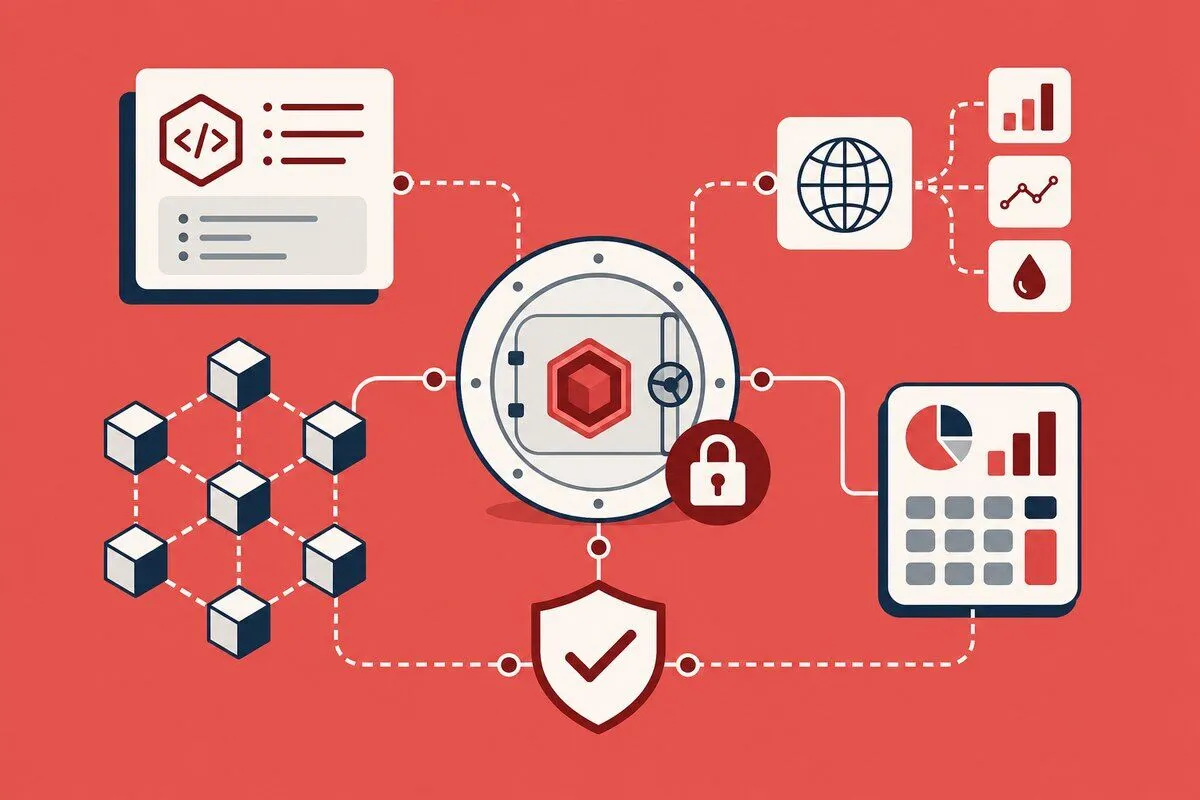
Ownership manipulation in real estate takes many forms, but all variants share a common enabling condition: a centralized, trusted record system that can be corrupted by insiders, forgers, or sophisticated fraudsters. In traditional property markets across India, UAE, Singapore, and the USA, property ownership records are maintained by government registries, title companies, and legal databases that operate in isolation from one another.
Key Takeaways
- ✓ Blockchain real estate security eliminates ownership manipulation by storing tamper-proof property records across thousands of distributed network nodes simultaneously.
- ✓ A 2026 Deloitte report estimates blockchain adoption could save the US real estate market $10 billion annually in title insurance and administrative costs.
- ✓ Dubai’s Land Department has integrated blockchain with its official land registry, recording tokenized property deeds on the XRP Ledger with government-level validation.
- ✓ Smart contracts in blockchain real estate security automate compliance enforcement, fund escrow, and ownership transfer, removing human intermediaries as fraud vectors.
- ✓ AES-256 encryption, TLS 1.3 transport security, and elliptic curve cryptography are the core encryption standards that protect digital property ownership records on blockchain platforms.
- ✓ India and Singapore are piloting blockchain land registries that reduce title search timelines from weeks to seconds, eliminating the administrative gaps exploited by fraudsters.
- ✓ Decentralized property security eliminates single points of failure by distributing ownership records across multiple nodes, making unauthorized alterations computationally infeasible.
- ✓ Blockchain fraud prevention in real estate stops forged deed submissions, duplicate property sales, and unauthorized lien placements through cryptographic ownership proof at every transaction step.
- ✓ AI-powered transaction monitoring integrated into blockchain real estate platforms detects anomalous ownership patterns and flags potential manipulation attempts before they are executed.
- ✓ Regulatory compliance and blockchain real estate security are converging in 2026, with UAE VARA, India SEBI, and Singapore MAS all mandating on-chain audit trails for digital property platforms.
Across our eight-plus years of working at the frontier of blockchain-powered property investment, one problem has remained stubbornly persistent in traditional real estate markets worldwide: ownership manipulation. Whether through forged title deeds in India, fraudulent land registry entries in UAE, duplicate property sales in Singapore, or deed fraud targeting vulnerable homeowners in the UK and USA, manipulation of property ownership records has caused billions of dollars in losses to investors, homeowners, and governments every single year. The structural vulnerability lies in the centralized, paper-based, and fragmented nature of traditional property record systems.
Blockchain real estate security offers the most structurally sound solution to ownership manipulation that the property industry has ever encountered. By recording every ownership transfer as a cryptographically signed, immutable, and distributed ledger entry, blockchain technology removes the centralized attack surfaces that fraudsters exploit. Platforms enabling Real Estate Tokenization on secure blockchain infrastructure are not simply digitizing old processes. They are fundamentally rebuilding the trust architecture of property ownership from the ground up.
This expert guide examines every dimension of blockchain real estate security in 2026. From the specific manipulation tactics that plague traditional systems, to the cryptographic mechanisms, smart contract safeguards, identity controls, encryption standards, and regulatory frameworks that collectively make blockchain property security the most robust option available today. For builders, investors, regulators, and property owners in India, UAE, Singapore, and beyond, understanding this security landscape is no longer optional. It is a strategic and commercial necessity.
Understanding Ownership Manipulation in Real Estate Systems
Ownership manipulation in real estate takes many forms, but all variants share a common enabling condition: a centralized, trusted record system that can be corrupted by insiders, forgers, or sophisticated fraudsters. In traditional property markets across India, UAE, Singapore, and the USA, property ownership records are maintained by government registries, title companies, and legal databases that operate in isolation from one another. This fragmentation creates the gaps that manipulation exploits.
The most prevalent manipulation types documented across these markets include title deed forgery, where fraudsters create convincing counterfeit ownership documents and use them to sell properties they do not own. Duplicate registration fraud occurs when the same property is simultaneously registered under different ownership identities across fragmented registry systems. Illegal encumbrances involve the unauthorized placement of liens or mortgages against properties without the legitimate owner’s knowledge or consent. Insider manipulation happens when registry employees with administrative access alter ownership records for financial gain or coercion.
In India specifically, land fraud has been estimated to involve thousands of cases annually, with fragmented state-level registry systems providing insufficient cross-verification capabilities. In Dubai, the rapid pace of real estate transactions during market booms historically created conditions where fraudulent transfers could occur before verification systems caught them. These are not failures of individual institutions. They are structural vulnerabilities of the centralized property record paradigm. Blockchain real estate security addresses these vulnerabilities at their architectural root, not through incremental process improvements but through a fundamental redesign of how ownership records are created, stored, and verified.
Title Deed Forgery
Counterfeit ownership documents used to fraudulently transfer or sell properties to unsuspecting buyers.
Duplicate Registration
Same property registered under multiple identities across fragmented, non-communicating registry systems.
Unauthorized Liens
Illegal encumbrances placed against properties without the legitimate owner’s knowledge or authorization.
Insider Registry Fraud
Administrative staff with privileged access altering ownership records for financial gain or under coercion.
How Blockchain Strengthens Property Ownership Integrity
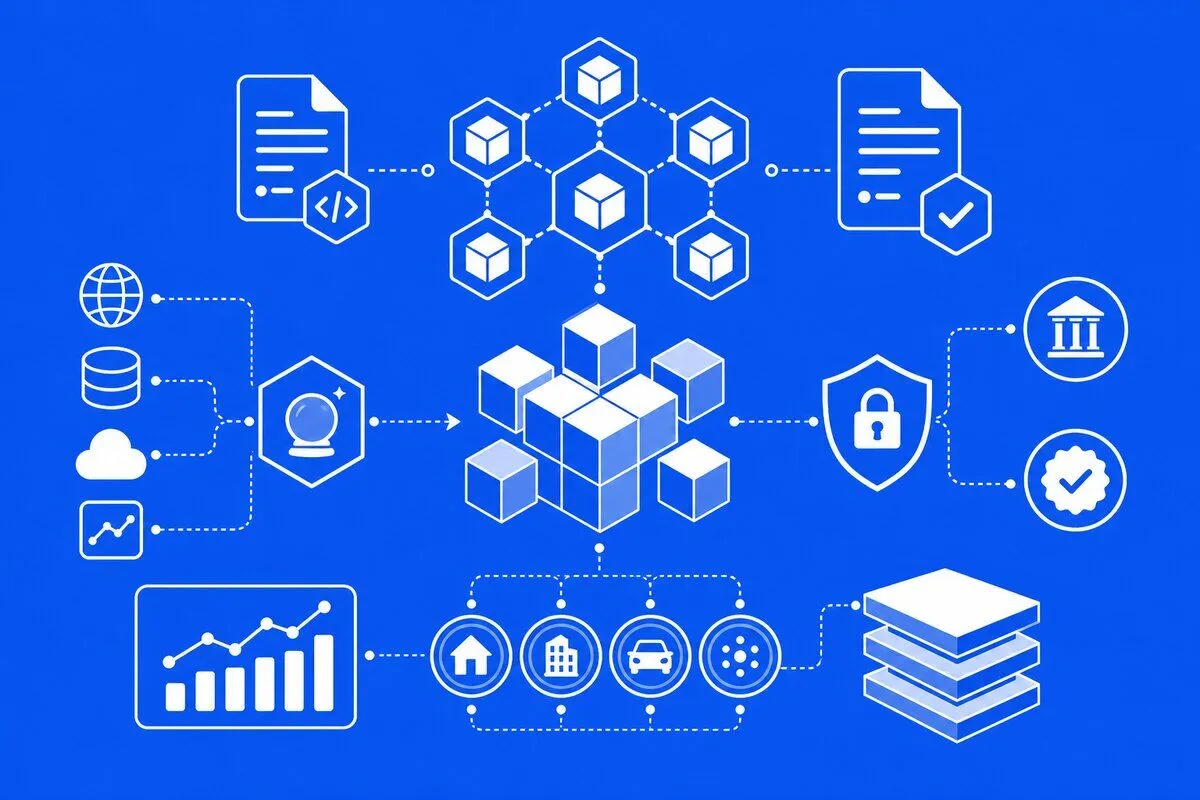
The core mechanism through which blockchain real estate security strengthens property ownership integrity is immutability through distributed consensus. When an ownership transfer is recorded on a blockchain network, it is broadcast to every participating node, validated by the network’s consensus mechanism, bundled into a cryptographically sealed block, and permanently added to the chain. Altering that record after confirmation requires recalculating every subsequent block while simultaneously controlling the majority of network computing power, a task that is practically impossible on established public blockchain networks.
This structural immutability transforms property ownership integrity in ways that no traditional system can replicate. Every property on a blockchain-secured registry has a complete, unbroken, and cryptographically verifiable ownership history that any authorized party can audit in real time. There are no gaps in the record, no paper documents that can be lost or forged, and no database administrator with unchecked power to edit historical entries. The record is what it is, permanently and provably.
Practical deployments of this principle are already active across key markets. Georgia’s national land registry recorded over 1.5 million land titles on blockchain infrastructure, demonstrating government-scale deployment. Dubai’s Land Department integrated blockchain property records with the XRP Ledger, creating government-verified digital title deeds. India’s pilot registries in select states are using distributed ledger technology to create property records that cannot be manipulated by any single administrative authority, directly addressing the corruption and fraud patterns that have historically plagued land registration in high-density urban markets.
Secure property ownership records on blockchain also enable instant verification. Rather than conducting a title search that takes days or weeks in traditional systems, any party with authorized access can verify the complete ownership history of a property in seconds. This speed advantage is not merely a convenience. It is a security feature, because slow verification processes create windows of opportunity for fraudulent transactions to be inserted before the check is complete.
Common Security Gaps in Traditional Real Estate Transactions
Traditional real estate transactions suffer from a consistent set of security vulnerabilities that blockchain property security is specifically engineered to close. Understanding these gaps is essential for evaluating why blockchain real estate security represents such a significant structural improvement over the status quo. Our team has directly observed each of these vulnerabilities in projects spanning India, UAE, Singapore, and the UK property markets over the past eight-plus years.
Centralized databases controlled by single administrative entities represent the primary vulnerability in traditional systems. When a single government registry office or title company database is the authoritative source of ownership truth, corruption of that database, whether through hacking, insider manipulation, or physical document destruction, can invalidate property rights for thousands of owners simultaneously. The American Land Title Association has documented that nearly 25 percent of title searches in the USA uncover issues requiring resolution before closing, a figure reflecting the chronic unreliability of fragmented traditional records.
Paper-based documentation creates another critical security gap. Physical deeds can be forged with sufficient skill, lost in disasters, and destroyed intentionally to obscure ownership history. The aftermath of the 2010 Haiti earthquake illustrated how the destruction of physical property records can paralyze land ownership clarity for an entire nation for years, with communities unable to rebuild because no one could prove who owned what.
| Security Gap | Traditional System Risk | Blockchain Real Estate Security Solution |
|---|---|---|
| Centralized Records | Single point of corruption or failure | Distributed nodes eliminate single-point vulnerability |
| Paper Documentation | Forgeable, losable, destroyable | Encrypted digital records with cryptographic signatures |
| Slow Verification | Days to weeks, creating fraud windows | Real-time on-chain verification in seconds |
| Insider Access | Privileged admins can edit records | Immutable records require multi-node consensus to alter |
| Fragmented Systems | Cross-registry gaps enable duplicate fraud | Unified ledger visible to all authorized parties |
| No Audit Trail | Historical edits untraceable | Complete, timestamped, immutable ownership history |
Role of Smart Contracts in Securing Property Ownership
Smart contracts are the automated enforcement engine within blockchain real estate security systems. They replace the trust previously placed in human intermediaries, such as attorneys, escrow officers, and notaries, with mathematically guaranteed code execution that cannot be overridden by any single party. This replacement is not merely an efficiency improvement. It is a security transformation, because human intermediaries represent manipulation points that sophisticated fraudsters can target through bribery, coercion, or impersonation.
In a blockchain-secured property transaction, the smart contract holds the buyer’s funds in an on-chain escrow that releases automatically when predefined conditions are cryptographically verified. These conditions include confirmed identity verification of both parties, legal clearance from integrated title search oracles, payment of all associated fees and taxes, and successful recording of the new ownership entry on the registry ledger. If any condition fails, the contract either halts the transaction entirely or initiates a return of funds to the buyer without requiring human intervention.
This automated escrow mechanism directly eliminates one of the most common manipulation vectors in property transactions: the misappropriation of buyer funds by fraudulent sellers or corrupt intermediaries. In markets like India where advance payment fraud has been widely documented, smart contract escrow provides buyers with cryptographic certainty that their funds cannot be accessed until every contractual condition is satisfied and verified on-chain.
Transfer restriction smart contracts add another layer of blockchain real estate security by enforcing investor eligibility rules directly within the token transfer logic. When a property token transfer is initiated, the smart contract queries an on-chain whitelist registry that contains verified, compliant investor wallet addresses. Transfers to non-whitelisted addresses are automatically rejected, preventing token ownership from moving to unverified or non-compliant parties regardless of what any human administrator might intend or attempt.[1]
Preventing Data Tampering Through Decentralized Ledgers

Data tampering prevention is the most technically foundational capability of blockchain real estate security. A decentralized ledger prevents tampering through a combination of cryptographic linking, consensus requirements, and distributed storage that makes unauthorized record alteration economically and computationally prohibitive at every layer of the system. Unlike traditional databases where a sufficiently privileged attacker can update records silently, blockchain records are structured so that any modification attempt is immediately detectable by all network participants.
Each block in a blockchain contains a cryptographic hash of the preceding block’s contents. This creates a chain where any modification to a historical record changes its hash, which in turn invalidates every subsequent block’s hash reference. To successfully tamper with a past ownership record, an attacker would need to recalculate the cryptographic hashes of every block added to the chain since the record was created, and do so faster than the honest network continues to add new blocks. On networks with significant hash power or stake, this attack is practically impossible.
Tamper-proof property records on decentralized ledgers also benefit from geographic distribution. Major blockchain networks maintain nodes across dozens of countries simultaneously. For a property record in India, the same ownership data is simultaneously stored in nodes operating across Europe, Asia, and North America. Destroying or corrupting the record would require simultaneously compromising nodes in every jurisdiction, an attack that has no real-world precedent on a major established network.
Decentralized property security also provides built-in disaster recovery that traditional centralized systems cannot match. When a natural disaster, cyberattack, or infrastructure failure destroys a central registry server, the records stored on that server may be permanently lost. On a distributed blockchain, the destruction of any number of individual nodes does not affect the integrity or availability of the overall record, because identical copies persist across the remaining network participants globally.
Identity Verification and Access Control in Blockchain Real Estate
Identity verification is the gateway security layer in every blockchain real estate security system. No matter how robust the underlying blockchain infrastructure is, the security of the entire system ultimately depends on whether the identities of the parties initiating property transactions are reliably authenticated. If a fraudster can successfully impersonate a legitimate property owner and pass identity verification, they can instruct the smart contract to execute a fraudulent transfer that the blockchain will dutifully and permanently record as valid.
Modern blockchain real estate platforms integrate multi-layer identity verification systems that combine government document authentication, biometric liveness detection, and behavioral analysis to create high-confidence identity assurance. In India, this means Aadhaar-based eKYC that verifies identity against the national biometric database with real-time confirmation. In the UAE, Emirates ID verification integrates with government databases directly. In Singapore, the MyInfo and Singpass digital identity systems provide bank-grade identity confirmation for platform onboarding.
Once verified, investor and owner identities are linked to specific wallet addresses that are registered in an on-chain whitelist maintained by the platform’s compliance smart contracts. Role-based access control (RBAC) systems then define exactly which actions each verified identity is permitted to perform within the platform. A standard investor can buy and sell property tokens. A property manager can update operational records. An administrator can approve new property listings. No role can exceed its defined permissions regardless of intent, and all permission grants require multi-signature authorization from senior platform administrators.
Decentralized identity (DID) standards emerging in 2026 represent the next evolution of identity verification in digital property ownership protection systems. Rather than each platform maintaining separate identity databases, DID standards allow verified credentials to be carried by users across multiple platforms without repeated verification. This improves both security, by reducing the number of databases storing sensitive identity data, and user experience, by eliminating redundant onboarding across different property platforms.
Encryption Standards That Protect Property Data
The encryption standards deployed within a blockchain real estate security system determine whether sensitive property data, investor personal information, transaction details, and legal documents remain confidential even if other layers of the system are compromised. Our team insists on banking-grade encryption standards for every platform we architect, because the value of the assets being protected demands nothing less. Real estate data protection at this level is not an optional premium feature. It is the baseline expectation for any platform operating in India, UAE, Singapore, or any regulated market worldwide.
For data at rest, AES-256 encryption is the industry standard. Property records, investor documents, KYC files, and transaction histories stored in platform databases are all encrypted using 256-bit keys that would require trillions of years to brute-force with current computing technology. Database encryption keys are themselves managed using hardware security modules (HSMs) that store key material in tamper-resistant physical hardware, preventing key extraction even if a server is physically compromised.
For data in transit between clients and platform servers, and between platform microservices, TLS 1.3 is the mandatory protocol. TLS 1.3 reduces handshake complexity compared to its predecessor while strengthening the underlying cipher suites, eliminating legacy vulnerabilities that older TLS versions exposed. All API communications between the platform backend and external services such as payment gateways, identity verification providers, and property registry integrations are encrypted and authenticated using TLS 1.3 with certificate pinning to prevent man-in-the-middle attacks.
On-chain property records use elliptic curve cryptography (ECC) for digital signatures that authenticate ownership transactions. The secp256k1 curve used by Ethereum and Bitcoin provides 256-bit security with significantly smaller key sizes than equivalent RSA implementations, making verification computationally efficient while maintaining cryptographic strength. Zero-knowledge proof integration, an emerging capability in 2026, allows platforms to prove compliance attributes about investors to regulators without revealing underlying personal data, advancing both real estate data protection and privacy simultaneously.
Core Encryption Stack in Blockchain Real Estate Security
Ensuring Transparency Without Compromising Security
One of the most sophisticated design challenges in blockchain real estate security is achieving the transparency required for investor trust and regulatory auditability without compromising the privacy of sensitive property owner and investor data. Blockchain’s public ledger model creates an apparent tension between these two requirements: full transparency exposes personal information to anyone inspecting the chain, while full privacy undermines the auditability that makes blockchain valuable for property security in the first place.
Next-generation blockchain real estate platforms resolve this tension through layered visibility architectures. Public on-chain records include only the information necessary for ownership verification and transaction authentication: wallet addresses, token transfer amounts, timestamps, and smart contract execution confirmations. Sensitive personal identity data, financial details, and confidential legal documents are stored off-chain in encrypted databases linked to on-chain records through cryptographic commitments rather than direct exposure.
Permissioned access layers add further precision to this transparency architecture. Regulators in UAE, Singapore, and India can be granted read access to compliance records that investors cannot see. Investors can view their own complete transaction history but not other investors’ positions. Property managers can access operational data without seeing investor financial details. This role-based visibility architecture ensures that every stakeholder has exactly the transparency they legitimately require, and nothing beyond it.
Zero-knowledge proof technology represents the most advanced solution to the transparency-privacy balance in digital property ownership protection. A zero-knowledge proof allows one party to prove to another that a statement is true, such as “this investor is accredited under UAE VARA standards,” without revealing the underlying data that makes the statement true. This capability allows regulatory compliance to be verified on-chain without storing personal data on a public ledger, satisfying both transparency and privacy requirements simultaneously.
Fraud Prevention Mechanisms in Tokenized Property Platforms
Blockchain fraud prevention in real estate operates across multiple layers of a tokenized property platform, each targeting specific fraud typologies that have been documented in traditional markets. Unlike preventive controls in conventional systems that often rely on human review processes that can be delayed, bypassed, or corrupted, blockchain-based fraud prevention mechanisms are automated, consistent, and enforceable at the protocol level through smart contract logic that cannot be overridden by any individual platform participant.
Duplicate ownership prevention is enforced by the immutable ledger’s inability to record the same token as belonging to two different owners simultaneously. Once a property token is registered to a specific wallet address, every subsequent transfer must originate from that wallet. Any attempt to claim ownership from a different wallet without a valid transfer from the current owner will be rejected by the smart contract automatically, making double-selling structurally impossible in a properly designed tokenized property system.
Transaction monitoring AI integrated into blockchain real estate security platforms adds a behavioral intelligence layer that complements the structural protections of the ledger itself. Machine learning models analyze transaction patterns in real time, flagging anomalies such as unusually rapid token transfers immediately after acquisition, wallet addresses matching known fraud typologies, and transaction sequences that resemble money laundering patterns documented in regulatory guidance from VARA, SEBI, and MAS.
Oracle security is a critical but often overlooked fraud prevention dimension. Smart contracts can only enforce conditions based on data they receive from external sources called oracles. If an oracle feeding property valuation, title clearance, or payment confirmation data to a smart contract is compromised, a fraudster can trigger contract execution under false conditions. Robust blockchain real estate security architectures use decentralized oracle networks such as Chainlink that aggregate data from multiple independent sources and use cryptographic attestation to verify data integrity before it reaches the smart contract.
Regulatory Compliance and Security Alignment in Blockchain Real Estate
Regulatory compliance and blockchain real estate security are not separate concerns in 2026. They are deeply intertwined dimensions of the same platform integrity requirement. Regulators in every major market have recognized that the same immutable audit trail and automated enforcement capabilities that make blockchain valuable for investor security also make it a powerful tool for regulatory oversight. This alignment is accelerating formal regulatory engagement with blockchain property platforms across India, UAE, Singapore, and the UK.
UAE’s VARA requires all virtual asset platforms, including those handling tokenized real estate, to maintain comprehensive KYC records, implement AML screening, conduct regular security audits, and provide regulators with on-demand access to transaction records. The blockchain-native audit trail satisfies these requirements more completely and cost-effectively than any traditional compliance system, because every transaction is already permanently recorded with full timestamped detail.
India’s SEBI is developing digital securities guidelines that explicitly recognize the compliance advantages of blockchain-based audit trails for investor protection enforcement. Singapore’s MAS Digital Token Offering framework requires platforms to demonstrate technical controls that prevent unauthorized token transfers, a requirement that compliant smart contracts fulfill by design rather than by additional process overhead.
| Jurisdiction | Regulator | Key Security Requirement | Blockchain Alignment |
|---|---|---|---|
| UAE (Dubai) | VARA / DLD | Full KYC, AML, on-demand audit access | Native on-chain audit trail |
| India | SEBI | Investor protection, transaction records | Immutable Aadhaar-linked records |
| Singapore | MAS | Transfer controls, digital securities | Smart contract transfer restrictions |
| UK | FCA | Digital Securities Sandbox compliance | Permissioned ledger with regulator access |
| USA | SEC | Reg D / Reg A+ investor accreditation | On-chain accreditation whitelists |
Challenges in Implementing Blockchain Real Estate Security
Implementing blockchain real estate security at production scale is not without significant technical, regulatory, and organizational challenges. Our eight-plus years of hands-on experience building these systems has given us direct insight into where implementations most commonly encounter difficulty, and what mitigation strategies are most effective for platforms operating in demanding markets like India, UAE, and Singapore. Acknowledging these challenges honestly is part of our commitment to giving clients the complete picture they need for informed decision-making.
Smart contract vulnerability management is the most technically demanding ongoing challenge. Unlike traditional software where bugs can be patched silently after deployment, smart contract errors are immutable on-chain and may be actively exploitable the moment they are discovered. Comprehensive pre-deployment auditing significantly reduces risk, but it cannot eliminate it entirely. Platforms must implement upgradeability patterns that allow contract improvements without sacrificing security, maintain active bug bounty programs, and carry appropriate insurance coverage for residual smart contract risk.
Private key management represents the human security layer challenge that no amount of cryptographic sophistication fully resolves. If a property owner loses their private key or it is stolen through phishing or social engineering, they may lose access to their tokenized assets permanently. Platforms serving retail investors in India and UAE must provide institutional-grade custodial options that protect keys on behalf of users who are not blockchain-native, while ensuring these custodial systems themselves meet the highest security standards.
Regulatory fragmentation across jurisdictions creates compliance implementation complexity that directly impacts security architecture decisions. A platform built to meet VARA requirements in UAE may need significant architectural modifications to satisfy SEBI guidelines in India or MAS requirements in Singapore. Building multi-jurisdiction compliance into the core security architecture from the outset, rather than attempting to retrofit it later, is the only scalable approach for platforms with international ambitions.
Implementation Challenge Complexity Ratings
Future of Secure Property Ownership with Blockchain Technology
The future of blockchain real estate security is defined by three converging forces: deeper government integration with blockchain property registries, more sophisticated privacy-preserving cryptography, and the emergence of AI-powered security monitoring systems that operate in real time across distributed ledger environments. Each of these forces is already visible in early-stage deployments across India, UAE, Singapore, and global markets, and each will reach maturity within the next three to five years.
Government-blockchain integration is accelerating rapidly. Dubai’s Land Department has committed to tokenizing 7% of its entire real estate market, approximately $16 billion in property value, by 2033. India’s pilot blockchain land registries in multiple states are demonstrating the feasibility of government-grade secure property ownership records on distributed ledgers. As these government integrations mature, the blockchain security layer and the sovereign land registry layer will merge into a single, authoritative, and cryptographically secured system of record for property ownership.
Zero-knowledge proof adoption will advance the privacy-transparency balance in blockchain real estate security to levels that satisfy even the most stringent data protection regulations, including India’s DPDP Act, UAE’s PDPL, and Singapore’s PDPA. Property transaction participants will be able to prove compliance, ownership, and eligibility to regulators and counterparties without exposing any underlying personal or financial data to the public blockchain layer. This capability resolves the remaining objection to full blockchain transparency among privacy-conscious institutional investors.
AI-powered fraud detection integrated natively into blockchain real estate platforms will eventually create self-defending property ecosystems where manipulation attempts are identified and countered before they succeed, rather than detected after damage has been done. The combination of blockchain’s structural immutability with AI’s pattern recognition capabilities represents the most powerful fraud prevention architecture that the real estate industry has ever had access to, and it is becoming commercially deployable at scale in 2026 and beyond.
Blockchain Real Estate Security Roadmap: 2026 to 2030
2026
Government-blockchain registry integration active in UAE and India pilot states. AI-powered transaction monitoring deployed on leading platforms.
2027
Decentralized identity standards adopted across Singapore, UAE, and India platforms. Zero-knowledge compliance proofs enter mainstream production use.
2028
Cross-chain interoperability security matures. Property records portable across Ethereum, XRP Ledger, and national permissioned chains with full security preservation.
2030
Blockchain-sovereign registry merger complete in leading markets. Ownership manipulation in tokenized property markets reduced to statistically negligible levels globally.
Blockchain Real Estate Security Is the Foundation of Trustworthy Property Markets
Ownership manipulation in real estate is not an unsolvable problem. It is a structural problem created by centralized, fragmented, and paperbased record systems that blockchain technology is specifically engineered to replace. The combination of immutable distributed ledgers, cryptographically enforced smart contracts, banking-grade encryption, AI-powered fraud detection, and regulatory-aligned compliance systems creates a blockchain real estate security architecture that is orders of magnitude more resistant to manipulation than any traditional property record system.
For investors, builders, regulators, and property owners in India, UAE, Singapore, and internationally, the message from our eight-plus years of field experience is clear. Blockchain real estate security is not a future aspiration. It is a present-day commercial and regulatory imperative. Platforms that build their security foundations correctly today will earn the investor trust, regulatory confidence, and market position that define long-term leadership in the tokenized property space.
The technology is ready. The regulation is advancing. The market demand is proven. The only remaining question for serious participants in the property tokenization space is whether they will build their security architecture with the precision and expertise this historic market opportunity demands.
Secure Your Property Platform with Blockchain
Our expert team builds tamper-proof blockchain real estate security systems for platforms in India, UAE, and Singapore. Let us protect your investors and assets.
Frequently Asked Questions
Q1.1. How does blockchain actually prevent property fraud?
Blockchain records every ownership transfer as a permanent, cryptographically sealed entry across a distributed network. No single party can alter the record without network-wide consensus, making fraudulent deed changes, duplicate sales, and forged title documents practically impossible in a properly implemented blockchain real estate security system.
Q2.2. Is blockchain property ownership legally recognized in India and UAE?
Both India and UAE are actively advancing legal frameworks for blockchain-based property records. Dubai’s Land Department already records tokenized property titles on the XRP Ledger, while India’s state governments in Maharashtra and Telangana are piloting blockchain land registries, giving on-chain records growing legal standing in both markets.
Q3.3. Can hackers tamper with blockchain property records?
Altering a confirmed blockchain record requires controlling more than 51% of the network simultaneously, which is computationally and economically prohibitive on major networks. The primary security risks in blockchain real estate security systems lie not in the chain itself but in smart contract code vulnerabilities and private key management practices.
Q4.4. What is the difference between traditional title records and blockchain property records?
Traditional title records are stored in centralized databases vulnerable to data loss, manipulation, and unauthorized edits. Blockchain property records are distributed across thousands of nodes, cryptographically signed, and immutable once confirmed. This structural difference makes blockchain records significantly more resistant to tampering, fraud, and administrative errors.
Q5.5. How do smart contracts protect buyers and sellers in property transactions?
Smart contracts hold funds in escrow on-chain and release them only when predefined conditions are verified and confirmed. This eliminates counterparty risk, ensures neither buyer nor seller can unilaterally withdraw from the transaction once terms are agreed, and removes the need for trusted intermediaries to manage transaction security.
Q6.6. What encryption standards are used in blockchain real estate platforms?
Production-grade blockchain real estate security systems use AES-256 encryption for stored data, TLS 1.3 for data in transit, and elliptic curve cryptography (ECC) for digital signatures on property ownership records. These are the same encryption standards used by global banking institutions and government security agencies worldwide.
Q7.7. How does identity verification work in blockchain real estate systems?
Investors and property owners undergo KYC verification through biometric identity checks, government document authentication, and liveness detection. Verified identity credentials are then linked to wallet addresses and enforced through smart contract whitelists, ensuring only authenticated parties can execute property token transfers on the platform.
Q8.8. Is tokenized real estate more secure than traditional property investment?
Tokenized real estate combines the security of cryptographic ownership records with automated compliance enforcement through smart contracts. When built on audited, well-architected platforms, it eliminates many traditional fraud vectors including forged deeds, double selling, and unauthorized title transfers while adding real-time auditability for all stakeholders.
Q9.9. What are the biggest security challenges facing blockchain real estate platforms in 2026?
The primary challenges include smart contract vulnerabilities from poorly audited code, private key management failures that can expose token ownership, regulatory uncertainty creating compliance gaps, and interoperability risks when assets move across multiple blockchain networks. All of these are addressable through disciplined security engineering and ongoing monitoring practices.
Q10.10. How do Singapore and UAE regulators approach blockchain real estate security?
Singapore’s MAS mandates that tokenized real estate platforms meet digital securities compliance standards including rigorous KYC, AML screening, and data protection. UAE’s VARA enforces similar requirements with additional alignment to Dubai Land Department registry standards. Both jurisdictions are among the world’s most progressive in establishing formal security and compliance expectations for blockchain property platforms.
Explore Services
Related Services
Reviewed by

Aman Vaths
Founder of Nadcab Labs
Aman Vaths is the Founder & CTO of Nadcab Labs, a global digital engineering company delivering enterprise-grade solutions across AI, Web3, Blockchain, Big Data, Cloud, Cybersecurity, and Modern Application Development. With deep technical leadership and product innovation experience, Aman has positioned Nadcab Labs as one of the most advanced engineering companies driving the next era of intelligent, secure, and scalable software systems. Under his leadership, Nadcab Labs has built 2,000+ global projects across sectors including fintech, banking, healthcare, real estate, logistics, gaming, manufacturing, and next-generation DePIN networks. Aman’s strength lies in architecting high-performance systems, end-to-end platform engineering, and designing enterprise solutions that operate at global scale.