Ai Overview
Bitcoin has evolved from a speculative digital currency into a legitimate business asset class that forward-thinking organizations incorporate into their growth strategies. Rather than stating “we want to accept Bitcoin Growth Strategy payments,” organizations should specify transaction volume targets, processing cost thresholds, settlement time requirements, and integration timelines. These operational considerations significantly impact payment success rates and cost efficiency.
Key Takeaways
- A structured Bitcoin growth strategy framework enables businesses to systematically evaluate technology partners and avoid costly implementation mistakes.
- Security, custody, and compliance expertise should be non-negotiable criteria when selecting Bitcoin Growth Strategy infrastructure partners for enterprise implementations.
- Lightning Network capabilities have become essential for businesses requiring instant payments and high transaction throughput at minimal cost.
- Technology partners must demonstrate regulatory alignment across target jurisdictions including USA, UK, UAE, and Canada for compliant operations.
- Custom wallet, node infrastructure, and API capabilities determine how effectively Bitcoin Growth Strategy solutions integrate with existing business systems.
- Total cost of ownership analysis should include implementation, maintenance, scaling, and long-term support expenses beyond initial project fees.
- Interoperability with existing ERP, accounting, and financial systems reduces friction and accelerates Bitcoin Growth Strategy adoption across organizational workflows.
- Case-based validation through reference checks and portfolio review provides evidence of partner capability beyond marketing claims.
- Risk management strategies enabled by experienced partners protect businesses from volatility, security threats, and operational disruptions.
- Future-proof Bitcoin Growth Strategy ecosystems require partners committed to ongoing innovation, protocol upgrades, and emerging technology integration.
Understanding Bitcoin Growth Strategy as a Long-Term Business Growth Asset
Bitcoin has evolved from a speculative digital currency into a legitimate business asset class that forward-thinking organizations incorporate into their growth strategies. Major corporations across USA, UK, UAE, and Canada now hold Bitcoin Growth Strategy on their balance sheets, accept it as payment, and build infrastructure around its capabilities. This transformation reflects growing confidence in Bitcoin’s long-term value proposition and its utility beyond simple store-of-value applications, including integration with Decentralized Exchange platforms for enhanced liquidity options.
The business case for Bitcoin Growth Strategy adoption extends across multiple dimensions including treasury diversification, cross-border payment efficiency, customer acquisition among crypto-native demographics, and competitive positioning in rapidly digitizing markets. Organizations that strategically integrate Bitcoin capabilities often discover operational advantages their competitors cannot easily replicate, creating sustainable differentiation in crowded marketplaces.
However, realizing Bitcoin’s potential requires more than simply purchasing the asset. Businesses need comprehensive infrastructure including secure custody solutions, payment processing capabilities, accounting integrations, and compliance frameworks. This infrastructure complexity drives the need for specialized technology partners who understand both Bitcoin Growth Strategy technical intricacies and enterprise business requirements.
Defining Business Objectives Before Adopting Bitcoin Solutions
Clear business objectives form the foundation of any successful Bitcoin growth strategy. Organizations must articulate specific outcomes they seek from Bitcoin Growth Strategy adoption, whether treasury optimization, payment processing expansion, new customer acquisition, or operational efficiency gains. Vague objectives lead to scope creep, misaligned partnerships, and implementations that fail to deliver measurable business value.
Objective definition should include quantifiable metrics that enable progress tracking and partner accountability. Rather than stating “we want to accept Bitcoin Growth Strategy payments,” organizations should specify transaction volume targets, processing cost thresholds, settlement time requirements, and integration timelines. These specific objectives translate directly into partner selection criteria and contract performance standards.
Different objectives demand different partner capabilities. Treasury management requires deep custody and security expertise. Payment processing demands Lightning Network proficiency and point-of-sale integration experience. Cross-border operations need partners with multi-jurisdictional regulatory knowledge. Matching objectives to partner strengths prevents the common mistake of selecting generalist vendors for specialized requirements.
Role of Technology Partners in Bitcoin Infrastructure Building
Technology partners serve as force multipliers that enable businesses to achieve Bitcoin Growth Strategy adoption outcomes impossible with internal resources alone. Few organizations possess the specialized expertise required to build secure custody systems, implement Lightning Network infrastructure, or navigate complex regulatory landscapes across multiple jurisdictions. Partners bridge these capability gaps while transferring knowledge that builds internal competency over time.
The partner relationship extends beyond initial implementation to ongoing operations, upgrades, and strategic evolution. Bitcoin Growth Strategy protocol changes, security threat landscapes, and regulatory requirements shift continuously. Partners who maintain active engagement with Bitcoin ecosystem evolution help clients adapt proactively rather than reactively to these changes.
Selecting partners is fundamentally different from procuring commoditized technology services. The nascent state of enterprise Bitcoin Growth Strategy infrastructure means significant variation exists in partner capabilities, methodologies, and track records. This variation creates both risk and opportunity, as businesses that select excellent partners gain substantial advantages over competitors who choose poorly.
Evaluating Blockchain Expertise and Bitcoin Protocol Knowledge
Deep Bitcoin protocol knowledge distinguishes capable partners from generalist blockchain vendors. Bitcoin Growth Strategy unique architecture, including UTXO model, script language, and consensus mechanisms, requires specialized expertise that general blockchain experience does not provide. Partners should demonstrate understanding of Bitcoin-specific concepts rather than relying on Ethereum or other protocol experience as proxy credentials.
| Expertise Area | Key Indicators | Evaluation Method |
|---|---|---|
| Protocol Fundamentals | UTXO understanding, script capabilities | Technical interviews, documentation review |
| Network Operations | Node management, mempool analysis | Infrastructure demonstrations |
| Security Practices | Multi-sig, HSM integration, key management | Security audit reports, certifications |
| Lightning Network | Channel management, routing optimization | Live implementations, performance metrics |
| Ecosystem Engagement | BIP contributions, community participation | GitHub activity, conference presentations |
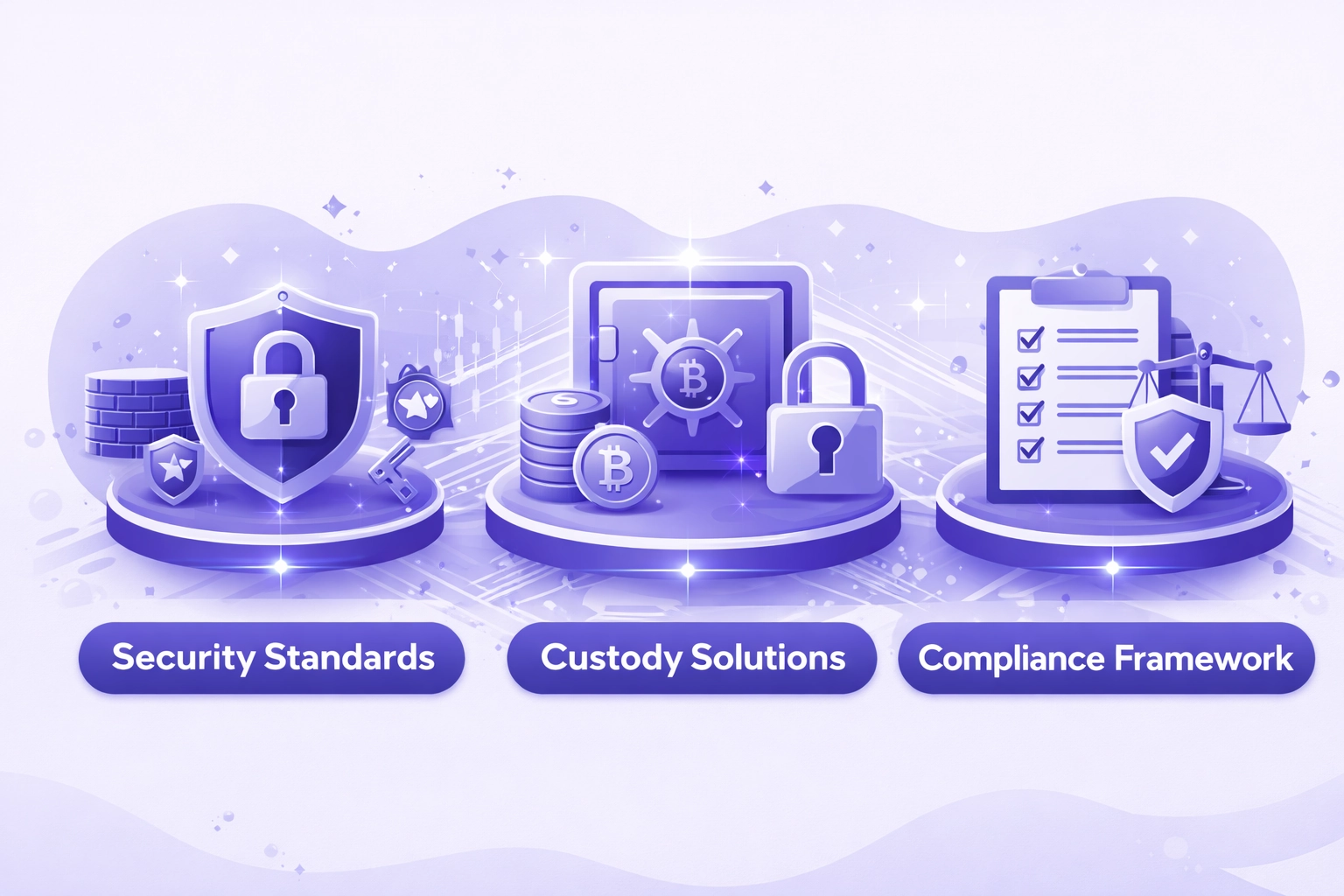 Security, Custody, and Compliance as Core Selection Criteria
These three pillars form non-negotiable requirements for any Bitcoin Growth Strategy technology partnership consideration.
Security Standards
- Multi-signature wallet implementations
- Hardware security module integration
- Penetration testing protocols
- Incident response procedures
Custody Solutions
- Cold storage architecture design
- Key ceremony management
- Geographic distribution options
- Recovery and backup systems
Compliance Framework
- AML/KYC implementation expertise
- Multi-jurisdictional licensing support
- Audit trail and reporting systems
- Regulatory change monitoring
Assessing Partner Experience with Bitcoin Growth Strategy Payment Integrations
Payment integration experience indicates partner capability to deliver solutions that work in real commercial environments. Theoretical knowledge differs substantially from practical experience handling edge cases, failure scenarios, and performance optimization under production loads. Partners should demonstrate completed payment implementations across relevant industries and transaction volumes comparable to client requirements.
Key experience indicators include point-of-sale system integrations, e-commerce platform connections, invoice management solutions, and settlement automation implementations. Partners should provide reference clients willing to discuss their experiences, including challenges encountered and how partners resolved them. Reluctance to provide references often indicates limited successful implementations.
Geographic experience matters for businesses operating across multiple markets. Partners with implementations in USA, UK, UAE, and Canada understand varying payment infrastructure landscapes, consumer behaviors, and regulatory requirements across these jurisdictions. This cross-market experience reduces implementation risk for international businesses pursuing global Bitcoin Growth Strategy payment strategies.[1]
Scalability Considerations for Enterprise Bitcoin Adoption
Enterprise Bitcoin implementations must accommodate growth without requiring complete infrastructure rebuilds. Scalability encompasses transaction throughput, user capacity, geographic distribution, and feature expansion. Partners should articulate clear scaling pathways that align with client growth projections and demonstrate experience scaling systems from startup volumes to enterprise levels.
Bitcoin Growth Strategy base layer constraints make Layer-2 solutions essential for high-volume applications. Partners must understand when on-chain transactions are appropriate versus when Lightning Network or other scaling solutions provide better economics. This architectural judgment significantly impacts long-term operational costs and user experience quality.
Infrastructure scalability includes node capacity, database performance, API throughput, and monitoring systems. Partners should provide performance benchmarks from existing implementations and explain how architecture accommodates traffic spikes common in retail and e-commerce applications. Businesses in rapidly growing markets like Dubai and Toronto require partners confident in supporting aggressive growth trajectories.
Lightning Network Capabilities and Layer-2 Readiness
Lightning Network proficiency has become a differentiating capability among Bitcoin Growth Strategy technology partners. The protocol enables instant, near-zero-fee transactions essential for retail, micropayments, and streaming payment applications. Partners should demonstrate operational Lightning nodes, channel management expertise, and liquidity provisioning capabilities that ensure reliable payment routing.
Evaluation should examine partner understanding of Lightning economics including channel capacity planning, fee optimization, and rebalancing strategies. These operational considerations significantly impact payment success rates and cost efficiency. Partners who treat Lightning as a simple add-on rather than a core competency often deliver suboptimal implementations.
Advanced Lightning capabilities include atomic swaps, submarine swaps for on-chain/off-chain transitions, and integration with Lightning Service Providers for improved reliability. Partners at the frontier of Lightning innovation can implement cutting-edge solutions that provide competitive advantages for early-adopter businesses in their respective markets.
Custom Wallet, Node, and API Capabilities
Custom capabilities enable businesses to create differentiated Bitcoin Growth Strategy experiences rather than relying on off-the-shelf solutions that competitors can easily replicate. Partners should demonstrate flexibility in adapting core Bitcoin infrastructure to specific business requirements while maintaining security standards that protect assets and operations.
| Capability | Business Application | Evaluation Focus |
|---|---|---|
| Custom Wallets | Branded user experiences, specialized features | UI/UX portfolio, security architecture |
| Node Infrastructure | Transaction verification, network participation | Uptime metrics, failover capabilities |
| API Integration | System connectivity, automation | Documentation quality, support responsiveness |
| Webhook Systems | Real-time notifications, event processing | Reliability guarantees, delivery mechanisms |
| Reporting Tools | Analytics, compliance documentation | Customization options, export formats |
Regulatory Alignment and Jurisdictional Compliance Support
Evaluating partner regulatory capabilities requires systematic assessment across multiple compliance dimensions.
Licensing Knowledge
Partner understands licensing requirements across USA, UK, UAE, and Canadian jurisdictions relevant to Bitcoin business operations.
AML/KYC Systems
Proven implementation experience with anti-money laundering and customer verification systems meeting regulatory standards.
Reporting Capabilities
Automated reporting tools generate documentation required for tax authorities and regulatory examinations efficiently.
Travel Rule Compliance
Partner implements FATF travel rule requirements for transactions exceeding thresholds with compliant counterparty information sharing.
Change Monitoring
Active monitoring of regulatory changes across jurisdictions with proactive client notification and adaptation recommendations.
Legal Network Access
Established relationships with cryptocurrency-specialized legal counsel available for complex compliance questions and regulatory guidance.
Operational Reliability and Long-Term Technical Support
Bitcoin infrastructure operates continuously without holidays or downtime windows. Partners must demonstrate 24/7 monitoring capabilities, rapid incident response procedures, and service level agreements appropriate for financial operations. Operational reliability directly impacts revenue when payment systems fail and brand reputation when customer-facing applications become unavailable.
Long-term technical support extends beyond initial implementation to ongoing maintenance, security updates, and feature enhancements. Partners should articulate support models including response time guarantees, escalation procedures, and named account management for enterprise clients. Businesses should verify support quality through reference checks with existing partner clients.
Partner financial stability affects long-term support continuity. Businesses should assess partner capitalization, revenue diversity, and market position to gauge likelihood of ongoing operations. Partnerships with undercapitalized vendors carry migration risk if partners fail to sustain operations through market downturns common in cryptocurrency industries.
Cost Transparency and Total Ownership Economics
Understanding total cost of ownership prevents budget surprises that derail Bitcoin growth strategies. Partners should provide comprehensive cost breakdowns covering implementation, ongoing operations, scaling, and contingencies. Hidden fees, unclear pricing models, and scope creep represent common cost challenges in technology partnerships that transparent partners proactively address.
| Cost Category | Components | Planning Considerations |
|---|---|---|
| Implementation | Setup, integration, customization, testing | Fixed vs time-and-materials models |
| Recurring Operations | Hosting, monitoring, maintenance, support | Monthly vs annual payment options |
| Transaction Fees | Per-transaction charges, network fees | Volume discount thresholds |
| Scaling Costs | Capacity expansion, feature additions | Growth projection alignment |
| Exit Costs | Data migration, contract termination | Lock-in period implications |
Interoperability with Existing Financial and ERP Systems
1. System Inventory
Document existing financial systems, ERP platforms, and accounting software requiring Bitcoin integration connectivity.
2. API Assessment
Evaluate partner API capabilities against existing system integration requirements and data exchange formats.
3. Data Mapping
Define how Bitcoin transaction data maps to existing accounting codes, chart of accounts, and reporting structures.
4. Workflow Design
Create automated workflows connecting Bitcoin events to downstream processes including reconciliation and reporting.
5. Testing Protocol
Execute comprehensive integration testing validating data accuracy, timing, and error handling across connected systems.
6. Rollout Planning
Develop phased rollout plan minimizing operational disruption while establishing integration monitoring and support procedures.
7. Performance Monitoring
Implement monitoring dashboards tracking integration health, transaction volumes, and error rates for proactive issue detection.
8. Continuous Optimization
Establish ongoing optimization processes improving integration efficiency and adapting to evolving business requirements.
Risk Management Strategies Enabled by the Right Partner
Experienced Bitcoin technology partners enable sophisticated risk management strategies that protect businesses from volatility, security threats, and operational disruptions. These capabilities transform Bitcoin from a speculative asset into a manageable component of business operations. Partners should demonstrate comprehensive risk management frameworks rather than treating risk as an afterthought.
Volatility management includes instant conversion options, hedging integrations, and treasury management tools that maintain desired Bitcoin exposure levels automatically. Partners experienced with enterprise clients understand the importance of predictable cash flows and provide tools that balance Bitcoin benefits against volatility risks appropriate for each client’s risk tolerance.
Security risk management encompasses insurance coverage, incident response plans, and business continuity procedures specific to cryptocurrency operations. Partners should maintain relationships with specialized insurance providers and demonstrate tested recovery procedures that minimize loss exposure in worst-case scenarios affecting businesses in Toronto, London, Dubai, and American markets.
Case-Based Validation of Bitcoin Technology Partnerships
Reference checks and case study analysis provide evidence of partner capability beyond marketing claims and sales presentations. Businesses should request detailed case studies demonstrating implementations similar to their requirements and conduct direct conversations with reference clients. This validation investment prevents costly partnership mistakes that derail Bitcoin growth strategies.
Effective reference conversations explore implementation challenges, support responsiveness, and whether partners delivered promised outcomes within agreed timelines and budgets. Questions should address both technical performance and relationship quality, as long-term partnerships require effective communication and collaborative problem-solving beyond initial implementation phases.
Portfolio analysis reveals partner specialization and experience depth. Partners with extensive implementations in specific industries or use cases bring relevant domain knowledge that accelerates projects. Conversely, partners without comparable implementations may require significant learning curves that extend timelines and introduce execution risk into Bitcoin growth strategies.
Building a Future-Proof Bitcoin Growth Ecosystem
Partners committed to innovation ensure your Bitcoin growth strategy remains competitive as technology evolves.
Standard 1: Partners should demonstrate active engagement with Bitcoin protocol evolution and upcoming improvement proposals.
Standard 2: Innovation investment in emerging technologies like Taproot, OP_CAT, and advanced Lightning features indicates forward-thinking orientation.
Standard 3: Architecture decisions should accommodate future scaling solutions without requiring complete infrastructure replacement.
Standard 4: Partner roadmaps should align with industry direction and demonstrate commitment to ongoing platform enhancement.
Standard 5: Ecosystem partnerships with complementary service providers expand capabilities available to partner clients over time.
Standard 6: Training and knowledge transfer programs build internal client capabilities that reduce long-term partner dependency.
Standard 7: Flexible contract structures accommodate evolving requirements without excessive renegotiation overhead or penalty exposure.
Standard 8: Commitment to open standards and interoperability prevents vendor lock-in that constrains future strategic options.
Bitcoin Growth Strategy Partner Selection Checklist
Technical Capability
- Bitcoin protocol expertise verified
- Lightning Network proficiency confirmed
- Custom capability demonstrated
Security Standards
- Custody architecture reviewed
- Audit reports validated
- Insurance coverage confirmed
Business Alignment
- Cost transparency established
- Support model agreed
- Growth capacity validated
Reference Validation
- Client references contacted
- Case studies reviewed
- Implementation quality verified
Accelerate Your Bitcoin Growth Strategy with Expert Partners!
Connect with our team of Bitcoin infrastructure specialists who have delivered 100+ enterprise implementations across USA, UK, UAE, and Canada.
Frequently Asked Questions
Q1.1. What is a Bitcoin growth strategy for businesses?
A Bitcoin growth strategy is a comprehensive framework that guides organizations in adopting, integrating, and scaling Bitcoin-based solutions to achieve long-term business objectives. It encompasses technology selection, partner evaluation, infrastructure planning, and risk management. Businesses across USA, UK, UAE, and Canada implement these strategies to leverage Bitcoin for payments, treasury management, and competitive advantage while ensuring regulatory compliance and operational security throughout their adoption journey.
Q2.2. How do businesses choose the right Bitcoin technology partner?
Businesses evaluate Bitcoin technology partners based on protocol expertise, security practices, regulatory compliance capabilities, and proven track record with enterprise implementations. Key criteria include Lightning Network proficiency, custom wallet capabilities, API integration experience, and long-term support commitment. Organizations should assess partner portfolios, request client references, verify security certifications, and ensure alignment with specific industry requirements before finalizing partnerships for Bitcoin infrastructure projects.
Q3.3. Why is security critical in Bitcoin infrastructure partnerships?
Security forms the foundation of any Bitcoin growth strategy because cryptocurrency assets face constant threats from hackers, insider attacks, and protocol vulnerabilities. Technology partners must demonstrate expertise in multi-signature custody solutions, cold storage implementations, key management protocols, and penetration testing methodologies. Inadequate security can result in irreversible asset losses, regulatory penalties, and reputational damage that undermines the entire Bitcoin adoption initiative for businesses.
Q4.4. What role does Lightning Network play in enterprise Bitcoin adoption?
The Lightning Network enables instant, low-cost Bitcoin transactions essential for business applications requiring high throughput and minimal fees. Technology partners with Lightning expertise can implement payment channels, liquidity management solutions, and seamless integration with existing point-of-sale systems. Enterprises in retail, e-commerce, and financial services increasingly require Lightning capabilities to make Bitcoin practical for everyday commercial operations and customer-facing applications.
Q5.5. How do regulatory considerations impact Bitcoin technology partner selection?
Regulatory alignment significantly influences partner selection as Bitcoin businesses must comply with varying requirements across jurisdictions including USA, UK, UAE, and Canada. Partners should demonstrate expertise in AML/KYC implementation, tax reporting frameworks, licensing requirements, and cross-border compliance protocols. Organizations face substantial legal and financial risks when partners lack understanding of regulatory landscapes, making compliance capability a critical evaluation criterion for Bitcoin growth strategy execution.
Reviewed by

Aman Vaths
Founder of Nadcab Labs
Aman Vaths is the Founder & CTO of Nadcab Labs, a global digital engineering company delivering enterprise-grade solutions across AI, Web3, Blockchain, Big Data, Cloud, Cybersecurity, and Modern Application Development. With deep technical leadership and product innovation experience, Aman has positioned Nadcab Labs as one of the most advanced engineering companies driving the next era of intelligent, secure, and scalable software systems. Under his leadership, Nadcab Labs has built 2,000+ global projects across sectors including fintech, banking, healthcare, real estate, logistics, gaming, manufacturing, and next-generation DePIN networks. Aman’s strength lies in architecting high-performance systems, end-to-end platform engineering, and designing enterprise solutions that operate at global scale.