Ai Overview
At its core, AI Agent Frameworks architecture is the structured engineering approach through which autonomous agents are designed, deployed, and coordinated within a digital system. The architecture governing this behavior is what separates functional agents from truly intelligent ones. Enterprises in India face a unique combination of scale requirements, cost pressures, and talent availability that makes scalable AI agent frameworks particularly attractive.
Key Takeaways
- ✓ AI Agent Frameworks provide the structural foundation that enables intelligent, autonomous systems to plan, act, and complete multi-step business tasks independently.
- ✓ By Q1 2026, 80% of enterprise applications now embed at least one AI agent, marking a sharp rise from just 33% adoption reported in 2024 by Gartner.
- ✓ Leading AI Agent Frameworks in 2026 include LangChain, CrewAI, AutoGen, Microsoft Semantic Kernel, and Kaji, each serving different enterprise complexity levels.
- ✓ Indian enterprises across fintech, healthcare, and IT sectors are rapidly deploying AI agent framework solutions to automate internal workflows and customer-facing operations.
- ✓ Multi-agent orchestration is operationalizing fast, with 22% of production AI deployments now coordinating three or more agents working in parallel on complex tasks.
- ✓ IDC forecasts that AI agent systems and related frameworks will contribute toward $22.5 trillion in cumulative global economic value creation by the year 2031.
- ✓ Scalable AI agent frameworks reduce operational costs significantly, with median agent deployment payback achieved in just 5.1 months according to BCG and Forrester surveys.
- ✓ AI agent architecture requires built-in observability tools, with 89% of organizations using monitoring systems to trace agent steps, tool calls, and decision logic in real time.
- ✓ Choosing the wrong AI automation framework leads to project failure, with Gartner estimating 40% of agentic AI deployments canceled by 2027 due to poor risk controls.
- ✓ The Model Context Protocol (MCP) is becoming the standard integration layer for AI agent frameworks, with over 9,400 public servers now enabling cross-vendor agent ecosystems globally.
- ✓ AI agent systems for business deliver real-time decision making at scale, enabling organizations to process, analyze, and act on data far faster than traditional software pipelines.
- ✓ Intelligent AI agent frameworks in 2026 are evolving beyond task automation to become cognitive infrastructure powering entire enterprise decision-making and operations layers.
Over our eight-plus years of building intelligent digital systems for enterprises across India and global markets, few technologies have reshaped our practice as fundamentally as AI Agent frameworks. These are not simply tools or libraries. They are the architectural backbone that determines how intelligent, autonomous systems think, plan, collaborate, and act within modern digital infrastructure. The conversation in 2026 has shifted entirely: organizations are no longer asking whether AI agents are viable. They are asking how to build agent systems that are reliable, scalable, and genuinely transformative for their operations.
AI Agent Frameworks provide the structural foundation, libraries, orchestration logic, and integration layers that enable autonomous agents to operate effectively inside complex enterprise environments. From customer service automation to financial compliance auditing, from supply chain optimization to research and data analysis, AI agent framework solutions are becoming the operating system of the modern enterprise. This blog breaks down how this architecture works, why it matters, and what India-focused and global businesses need to know to build smarter digital systems in 2026 and beyond.
Understanding AI Agent Frameworks Architecture in Digital Systems
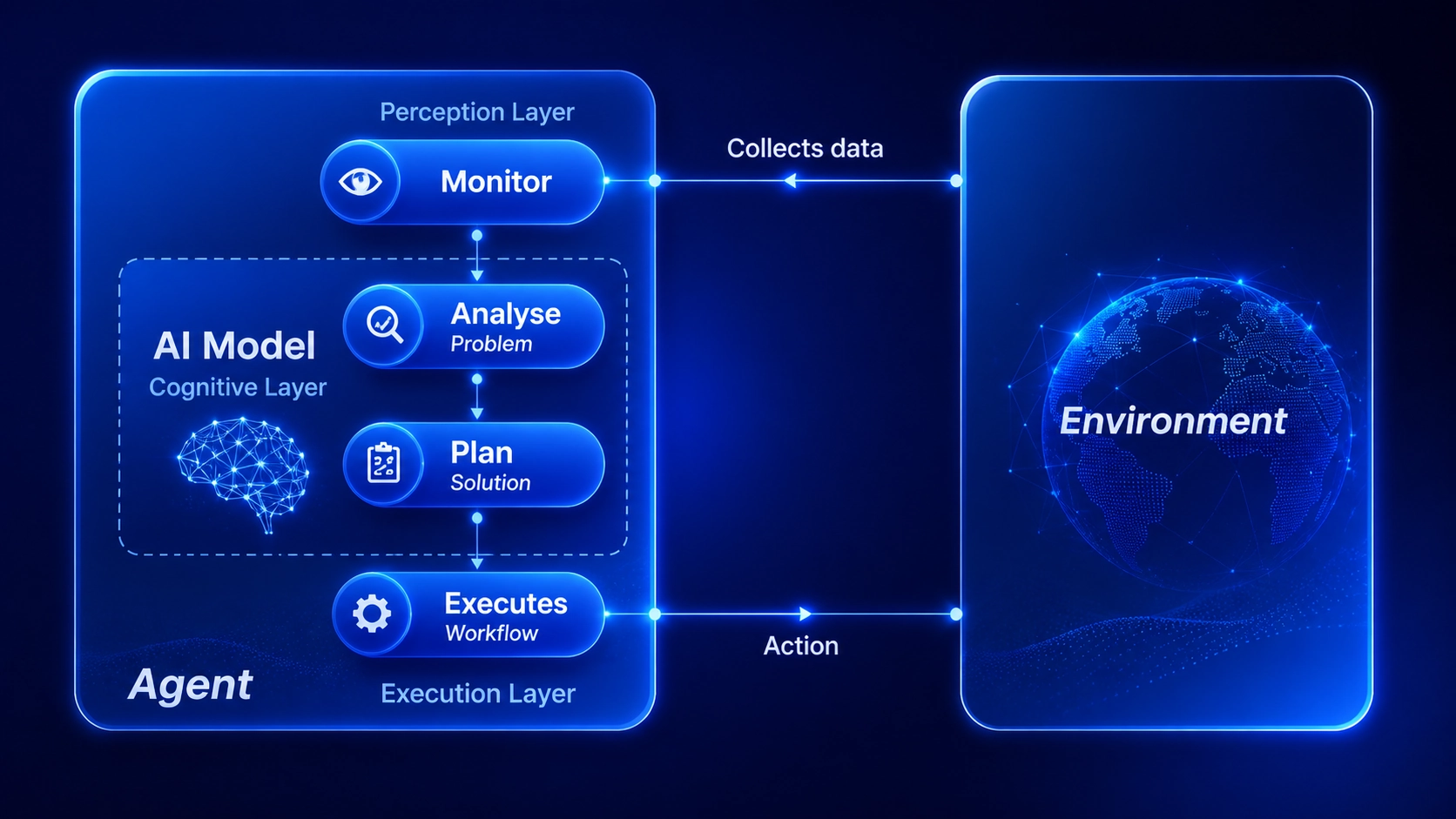
At its core, AI Agent Frameworks architecture is the structured engineering approach through which autonomous agents are designed, deployed, and coordinated within a digital system. Unlike traditional software that executes predefined scripts, an AI agent framework gives the agent the ability to perceive its environment, reason about it, select appropriate tools, and take action toward a defined goal, all without constant human instruction. The architecture governing this behavior is what separates functional agents from truly intelligent ones.
In practice, the architecture consists of several interconnected layers: the perception layer that captures inputs from APIs, databases, and user interfaces; the reasoning layer powered by large language models (LLMs); the action layer that calls tools and executes outcomes; and the memory layer that retains context across multi-step workflows. For Indian enterprises building scalable AI systems, understanding this layered architecture is the first step toward deploying agents that work reliably at production scale rather than failing under real-world complexity.
The AI agent architecture is not a monolithic design. It is a composable system where each component can be tuned, replaced, or extended depending on the business requirement. This composability is what makes AI Agent Frameworks genuinely powerful for enterprise systems that need to evolve over time without complete rebuilds.
How AI Agent Frameworks Architecture Drives Smart System Design
Smart system design in 2026 is inseparable from AI Agent Frameworks. The decision to integrate an agentic architecture into a digital system is a fundamental design choice, not a feature addition. When engineers and product architects choose a framework early in the system design process, they unlock a fundamentally different approach to how the system handles complexity, ambiguity, and changing conditions in real time.
Traditional digital systems are deterministic: given input A, the system always produces output B. AI agent systems are goal-directed: given objective A, the agent determines the best path to achieve it, adapting its approach based on intermediate results and available tools. This shift from rule-based to goal-based design is what makes AI automation frameworks so transformative for businesses operating in dynamic environments, which describes virtually every enterprise in India’s competitive market today.
Practically, this means that systems built on solid AI agent architecture handle edge cases more gracefully, recover from failures more intelligently, and scale their decision-making capabilities without requiring proportional increases in engineering effort. The framework provides the scaffolding. Intelligent behavior emerges from the design choices made within it.
Key Building Blocks of AI Agent Frameworks Architecture Explained
Every AI Agent Framework, regardless of vendor or design philosophy, is built from a common set of architectural building blocks. Understanding these components allows engineering teams to evaluate frameworks objectively, avoid vendor lock-in, and make informed decisions about which framework best suits their specific digital system requirements in 2026.
The building blocks operate in concert. A weakness in any one component creates bottlenecks that limit the overall intelligence and reliability of the system. Our experience with enterprise AI systems in India has consistently shown that teams which invest time in understanding each building block before selecting a framework produce substantially better outcomes than those who choose based on popularity alone.
| Building Block | Function | Key Frameworks That Excel |
|---|---|---|
| LLM Reasoning Engine | Core intelligence layer for planning and decision making | LangChain, AutoGen, CrewAI |
| Tool Integration Layer | Connects agents to APIs, databases, and external services | Semantic Kernel, Kaji, LangChain |
| Memory System | Retains short-term and long-term context across sessions | LangChain, AutoGen |
| Agent Orchestrator | Manages coordination of multiple agents on shared tasks | CrewAI, AutoGen, Kaji |
| Observability Layer | Monitors, traces, and logs all agent actions in real time | All enterprise frameworks |
| Governance Controls | Enforces compliance rules, guardrails, and audit trails | Kaji, Semantic Kernel |
How AI Agents Interact Within Modern Digital System Architecture
Understanding agent interaction models is essential for any team building on AI Agent Frameworks. In a single-agent system, one agent handles the entire task pipeline from input to output. While simpler to build, this model has clear limitations in complex scenarios. Multi-agent systems, by contrast, distribute subtasks across specialized agents that communicate, share context, and coordinate their outputs to achieve a shared objective, highlighting how AI Automation can improve operational efficiency through intelligent workflow coordination. This is where the true power of modern AI agent architecture becomes evident.
In multi-agent systems, agents interact through defined communication protocols. An orchestrator agent breaks down a high-level goal into subtasks and assigns them to specialized worker agents. Each worker completes its task and reports results back. The orchestrator then synthesizes these results and determines next steps. This model mirrors how high-performing teams operate in Indian enterprises: a project manager coordinates specialists who each contribute domain expertise toward a shared deliverable.
CrewAI and AutoGen are particularly strong at enabling this interaction model. CrewAI specializes in collaborative agents that share tasks through real-time communication, making it well suited for workflows where context must be shared continuously across multiple intelligent AI agent frameworks operating in parallel.
Why AI Agent Frameworks Are Essential for Smarter Digital Systems
The case for AI Agent Frameworks in 2026 is no longer theoretical. The data is clear and compelling. According to IDC research presented at Directions 2026, AI agents are redefining the enterprise software model from tools that require user interaction to systems that execute outcomes autonomously at scale.[1] This is not a gradual improvement. It is a structural redesign of how enterprise software delivers value.
For India’s rapidly growing technology sector, the imperative is especially strong. Enterprises in India face a unique combination of scale requirements, cost pressures, and talent availability that makes scalable AI agent frameworks particularly attractive. A well-designed agentic system can handle workloads that would require hundreds of additional staff at traditional linear staffing models, compressing costs and accelerating outputs simultaneously.
Beyond economics, AI Agent Frameworks enable smarter digital systems by building in adaptability. Unlike rigid rule-based automation, agentic systems adjust to new inputs, recover from partial failures, and improve their approach over time through feedback loops. This adaptability is precisely what separates intelligent digital infrastructure from sophisticated but brittle legacy automation.
Operational Efficiency
Agent systems reduce manual task overhead, allowing teams to focus on strategic work while AI handles repetitive, rule-based execution at scale.
Speed of Execution
AI agents operate continuously without fatigue, processing and acting on data flows in real time, a critical advantage for time-sensitive enterprise workflows.
System Adaptability
Agentic architectures adjust behavior based on intermediate outcomes, making digital systems resilient to edge cases that would break traditional automation pipelines.
Governance and Compliance
Enterprise-grade AI automation frameworks include built-in compliance guardrails, audit logging, and access controls that meet regulatory requirements in India and globally.
How AI Agent Architecture Enhances System Intelligence and Efficiency
The intelligence enhancement that AI agent architecture delivers comes from three interdependent capabilities: contextual awareness, tool-use proficiency, and iterative self-correction. A well-designed AI agent framework enables all three to operate in concert, producing a digital system that behaves intelligently across a wide range of inputs rather than only in the specific scenarios it was explicitly programmed to handle.
Contextual awareness means the agent retains and uses relevant information across a multi-step workflow. If an agent is automating a financial compliance review for an Indian BFSI firm, it needs to remember information from earlier in the workflow when making decisions later. Without robust memory architecture, each step is handled in isolation, producing fragmented outputs. With it, the agent behaves like an experienced analyst who retains full case context throughout the review.
System efficiency is enhanced because agents eliminate the coordination overhead between software components. In a traditional architecture, multiple API calls, data transforms, and human review cycles might take days. An AI agent system handles the entire pipeline in hours or minutes, with consistent quality across every iteration. This is the efficiency gain that Indian enterprises operating at scale find most compelling about scalable AI systems built on modern agent frameworks.
Role of AI Agent Frameworks in Creating Scalable Digital Ecosystems
Scalability is the defining challenge of enterprise AI in 2026. Building a single agent that works in a sandbox is a solved problem. Building a scalable AI agent framework that operates reliably across thousands of concurrent workflows, integrates with legacy enterprise systems, and maintains consistent output quality under variable load conditions is an engineering challenge that requires deliberate architectural choices from day one.
The most scalable frameworks separate concerns cleanly. The reasoning logic handled by the LLM is decoupled from the tool execution logic, which is decoupled from the memory layer, which is decoupled from the orchestration layer. This separation means each component can be independently scaled, optimized, or replaced without cascading failures across the system. For large Indian IT enterprises and global organizations building digital ecosystems on agent infrastructure, this architectural discipline is non-negotiable.
The Model Context Protocol (MCP), now adopted by over 9,400 public servers globally, is becoming the standard interoperability layer for scalable AI systems. By standardizing how agents connect to enterprise data sources, MCP removes a major friction point in scaling agentic deployments from pilot to enterprise-wide rollout, enabling the cross-vendor agent ecosystems that large-scale digital systems require.
How AI Agent Frameworks Support Real-Time Decision-Making Systems
Real-time decision making is a capability that separates genuinely intelligent digital systems from sophisticated data pipelines. AI Agent Frameworks enable real-time decision making by combining fast LLM inference with streaming data access, immediate tool execution, and dynamic re-planning when conditions change mid-workflow. This combination allows agents to respond to new information as it arrives rather than working only with data available at the start of a task.
In practical terms, consider an Indian e-commerce platform managing inventory and logistics. A real-time AI agent system can simultaneously monitor supplier delivery delays, check warehouse stock levels, analyze current demand signals, and proactively reorder or reroute inventory, all without human intervention and within minutes of the triggering event. This is AI agent architecture operating as designed: transforming raw data into intelligent, timely action.
The 89% observability adoption rate among organizations with AI agents in production confirms that real-time decision systems require equally real-time monitoring. Teams that deploy agents without trace-level observability have dramatically higher rollback rates. Real-time intelligence and real-time oversight must scale together for AI agent systems for business to deliver sustained value rather than short-lived results.
Real-Time Decision Cycle in AI Agent Architecture
Data Flow and Processing in AI Agent Frameworks Architecture
Data is the fuel of every AI agent system. How an AI Agent Framework manages data flow determines the agent’s speed, accuracy, and reliability across complex workflows. The data processing architecture within a framework defines how inputs are captured, transformed, stored, retrieved, and acted upon across every step of an agent’s reasoning cycle. Poor data architecture is the most common root cause of agent failures in enterprise deployments.
In a well-designed AI agent architecture, data flows through structured pipelines. Raw inputs from user queries, database calls, or API responses are preprocessed and formatted for LLM consumption. The LLM produces structured reasoning steps and tool calls. Tool outputs are parsed, validated, and either returned as final outputs or fed back into the next reasoning cycle. Memory stores relevant context for use in future steps. Each of these transitions must be handled efficiently and reliably at production scale.
| Data Layer | Role in AI Agent System | Critical Requirement |
|---|---|---|
| Input Preprocessing | Normalizes raw data for LLM processing | Schema validation and format consistency |
| Context Management | Maintains relevant history across agent steps | Token window management and retrieval speed |
| Tool Output Parsing | Converts tool results into agent-readable format | Error handling and fallback logic |
| Vector Memory Store | Enables semantic retrieval of past context | Low latency retrieval at scale |
| Audit and Logging | Records all agent actions for compliance review | Immutable logs with full trace capability |
How AI Agent Frameworks Improve System Automation and Accuracy
One of the most significant value propositions of AI automation frameworks is the simultaneous improvement in both automation coverage and output accuracy. Traditional automation approaches force a tradeoff: broader coverage requires more complex rules, which increases brittleness and error rates. AI agent frameworks break this tradeoff by using LLM reasoning to handle variability intelligently rather than with brittle conditional logic.
Accuracy in agent systems is governed by the quality of the reasoning model, the reliability of tool integrations, and the robustness of the evaluation framework. Teams that implement automated evaluations on every prompt change have a 9% production rollback rate, compared to 47% rollback rate for teams without such evaluations, according to Forrester’s 2026 research. This data point makes the case clearly: accuracy at scale requires systematic evaluation built into the AI agent framework workflow from the start.
For Indian enterprises where compliance, data accuracy, and audit readiness are non-negotiable requirements, this evaluation discipline is particularly important. Intelligent AI agent frameworks that include built-in eval harnesses, regression testing, and output quality metrics allow teams to maintain high automation coverage without compromising the accuracy standards that regulated industries demand.
Integration of AI Agent Frameworks with Modern Tech Stacks
The practical value of any AI Agent Framework is realized only when it integrates cleanly with the existing technology stack of the enterprise deploying it. Frameworks that require extensive infrastructure changes or operate only within proprietary ecosystems create the vendor lock-in risk that is currently one of the most significant concerns for enterprise architects building agentic AI strategies in 2026. The choice of AI agent architecture is therefore inseparable from the choice of integration approach.
Microsoft Semantic Kernel, for example, is purpose-built for enterprises running on .NET, Python, or Java codebases with existing business logic, databases, and internal APIs. Its plugin-based architecture mirrors familiar software design patterns, making it accessible for engineering teams that already have strong enterprise software experience. LangChain, by contrast, offers broader flexibility and a larger tool ecosystem, making it preferable for teams building custom agent logic from scratch.
For Indian enterprises already operating on cloud infrastructure from AWS, Azure, or GCP, the integration path for scalable AI agent frameworks is well established. Each major cloud provider has native integrations with leading AI agent frameworks, enabling teams to deploy agentic systems without abandoning their existing cloud architecture investments. The 68% MCP adoption rate among production deployments signals that standardized integration is now the norm rather than the exception.
Future Scope of AI Agent Frameworks in Intelligent System Architecture
The future of AI Agent Frameworks in intelligent system architecture is moving in one clear direction: greater autonomy with greater accountability. The frameworks of 2027 and beyond will not simply automate tasks. They will manage entire operational domains, coordinating fleets of specialized agents across complex, dynamic environments while maintaining the governance standards that regulated enterprises require. For Indian businesses building digital infrastructure today, the architecture choices made now will determine their competitive position in this emerging landscape.
Several trajectory signals are already visible in 2026. Multi-model agent systems, where agents dynamically select the best LLM for each subtask, are replacing single-model approaches. Cross-vendor agent collaboration through MCP is enabling ecosystems where agents from different vendors cooperate on shared workflows. Regulatory frameworks in India and the EU are maturing, pushing AI agent architecture toward mandatory explainability, audit logging, and human oversight mechanisms at the system design level.
By 2028, Gartner predicts 33% of enterprise software applications will include embedded AI agents. The organizations that invest in robust, scalable AI agent framework infrastructure today will be the ones positioned to capture this opportunity systematically rather than scrambling to retrofit intelligent capabilities into legacy architectures. The intelligent digital systems of the next decade will be built on the agentic foundations being laid right now, and the framework choices being made today will define which organizations lead and which follow.
Build Smarter Systems with AI Agent Frameworks
Our team helps Indian enterprises design, select, and deploy the right AI agent framework for their specific digital system needs, from strategy to production.
People Also Ask
Q1.1. What are AI agent frameworks and why do businesses use them?
AI agent frameworks are structured software environments that enable the creation, coordination, and deployment of autonomous AI agents. Businesses use them to automate complex workflows, reduce manual effort, and build intelligent systems that execute tasks independently with speed and consistency.
Q2.2. Which AI agent framework is best for enterprises in India?
For enterprises in India, frameworks like LangChain, CrewAI, Microsoft Semantic Kernel, and AutoGen are widely adopted. The best choice depends on your existing tech stack, team expertise, use case complexity, and whether you prioritize low-code accessibility or deep customization capability at scale.
Q3.3. How do AI agent frameworks actually work inside a digital system?
AI agent frameworks provide the structural logic, tooling, and orchestration layer that allows AI agents to perceive inputs, plan actions, use tools, and execute tasks. They coordinate how agents communicate, share context, retrieve data, and complete multi-step goals within a digital system architecture.
Q4.4. Are AI agent frameworks suitable for small businesses or only large enterprises?
AI agent frameworks suit businesses of all sizes. Lightweight options like CrewAI and LangChain are accessible to startups and mid-size firms. Enterprise-grade frameworks like Kaji or Microsoft Semantic Kernel are built for large organizations requiring security, compliance, and production-scale agent orchestration capabilities.
Q5.5. What is the difference between an AI agent and a regular AI chatbot?
A chatbot responds to inputs in a conversational way but requires constant human prompting. An AI agent, by contrast, operates autonomously, plans multi-step tasks, uses external tools, makes decisions, and executes outcomes without needing a human to guide every action in the workflow.
Q6.6. Can AI agent frameworks integrate with existing software and databases?
Yes, modern AI agent frameworks are built for integration. They connect to databases, APIs, CRMs, ERPs, cloud services, and third-party tools through standardized protocols like the Model Context Protocol (MCP). This makes them suitable for embedding intelligent automation into existing enterprise technology stacks in India and globally.
Q7.7. How are Indian companies using AI agent frameworks in 2026? I
Indian enterprises across IT services, fintech, healthcare, and e-commerce are actively deploying AI agent frameworks to automate customer support, financial analysis, compliance checks, and internal productivity workflows. India’s large technology talent pool and growing AI investment are accelerating adoption significantly across sectors.
Q8.8. What are the security risks of using AI agent frameworks?
Key risks include prompt injection attacks, data exfiltration through community-shared agent tools, unauthorized access to enterprise systems, and model hallucinations causing incorrect autonomous actions. Enterprises must implement robust governance, access controls, observability tools, and regular audits when deploying AI agent frameworks in production environments.
Q9.9. How long does it take to build a system using an AI agent framework?
Timeline varies by complexity. A focused single-agent workflow can be built and tested within two to four weeks. Multi-agent orchestration systems with enterprise integrations, compliance controls, and custom tooling typically require two to six months of structured design, testing, and iterative refinement before full production deployment.
Q10.10. What is the future of AI agent frameworks in the next few years?
AI agent frameworks will become the default operating layer for enterprise software. By 2028, Gartner predicts 33% of enterprise applications will embed AI agents. Frameworks will evolve toward greater autonomy, multi-agent collaboration, real-time decision making, and tighter regulatory compliance tooling as AI becomes core infrastructure.
Explore Services
Related Services
Reviewed by

Naman Singh
Co-Founder & CEO, Nadcab Labs
Naman Singh is the Co-Founder and CEO of Nadcab Labs, where he drives the company’s vision, global growth, and strategic expansion in blockchain, fintech, and digital transformation. A serial entrepreneur, Naman brings deep hands-on experience in building, scaling, and commercializing technology-driven businesses. At Nadcab Labs, Naman works closely with enterprises, governments, and startups to design and implement secure, scalable, and business-ready Web3 and blockchain solutions. He specializes in transforming complex ideas into high-impact digital products aligned with real business objectives. Naman has led the development of end-to-end blockchain ecosystems, including token creation, smart contracts, DeFi and NFT platforms, payment infrastructures, and decentralized applications. His expertise extends to tokenomics design, regulatory alignment, compliance strategy, and go-to-market planning—helping projects become investor-ready and built for long-term sustainability. With a strong focus on real-world adoption, Naman believes in building blockchain solutions that deliver measurable value, solve practical problems, and unlock new growth opportunities for organizations worldwide.