Ai Overview
In the last few years, Crypto Exchanges have grown very fast as more people start trading digital assets like Bitcoin, Ethereum, and other cryptocurrencies. Millions of users now use these platforms every day for trading, investing, and using decentralized finance services. This approach is very helpful for Crypto Exchanges because it allows fast and low-cost transactions between traders without constantly interacting with the blockchain.
Key Takeaways
- Layer-2 scaling solutions help Crypto Exchanges solve major scalability issues such as slow transaction speed and high network fees.
- As trading activity grows, modern crypto exchange development requires technologies that can handle large numbers of transactions efficiently.
- Layer-2 scaling for crypto exchanges improves performance by processing many transactions off the main blockchain while still using Layer-1 for security.
- Popular Layer-2 solutions for crypto exchanges include rollups, state channels, and sidechains, which help reduce network congestion.
- By implementing Layer-2 scaling solutions, Crypto Exchanges can offer faster trade execution, lower gas fees, and better user experience.
- Despite integration challenges, Layer-2 scaling for crypto exchanges is becoming an essential part of future-ready crypto exchange development.
Growth of Crypto Exchanges and Increasing Scalability Demands
In the last few years, Crypto Exchanges have grown very fast as more people start trading digital assets like Bitcoin, Ethereum, and other cryptocurrencies. Millions of users now use these platforms every day for trading, investing, and using decentralized finance services. Because of this rapid growth, the demand for better technology in crypto exchange development has also increased. When too many users trade at the same time, blockchain networks can become slow, and transaction fees may go higher. This creates scalability problems for many exchanges. To handle these challenges, developers are now focusing on advanced technologies that can support large trading volumes and faster transactions.
Why Layer-2 Scaling Solutions Are Becoming Essential in Crypto Exchange Development
To solve these scalability issues, Layer-2 scaling solutions are becoming very important in modern crypto exchange development. These technologies work on top of the main blockchain and help process transactions faster while reducing network congestion. With Layer-2 scaling for crypto exchanges, platforms can manage a large number of transactions without slowing down the system. Another advantage is lower gas fees, which makes trading more affordable for users. Many modern platforms are now integrating Layer-2 solutions for crypto exchanges so that they can offer better speed, improved performance, and smoother user experience. As the crypto market keeps growing, using these scaling technologies is slowly becoming a necessary step for exchanges that want to remain competitive.
Scalability Challenges in Crypto Exchanges
As the number of users on Crypto Exchanges continues to grow, scalability has become one of the biggest challenges in crypto exchange development. Many exchanges need to process thousands of trades, deposits, and withdrawals every second, but most blockchain networks have limited transaction capacity. When a network becomes busy, transactions start getting delayed and fees increase. This directly affects the performance of trading platforms and can create frustration for users. Because of this, many developers are now exploring Layer-2 scaling solutions to improve transaction speed and overall efficiency. Without better scaling methods like Layer-2 scaling for crypto exchanges, it becomes difficult for platforms to handle large trading volumes smoothly.
Blockchain Trilemma and Its Impact on Crypto Exchanges
One of the main reasons behind scalability issues is the concept known as the blockchain trilemma. It explains that blockchain networks often struggle to balance three key elements at the same time: decentralization, security, and scalability. Most networks focus strongly on decentralization and security to keep transactions safe and transparent. However, this sometimes reduces the ability of the network to process a large number of transactions quickly. For Crypto Exchanges, this limitation can cause slower order execution and delays in processing transactions. That is why modern crypto exchange development is increasingly exploring Layer-2 solutions for crypto exchanges to overcome these limitations while still maintaining strong security.
Decentralization vs Security vs Scalability
Decentralization means that no single authority controls the blockchain, which increases transparency and trust. Security ensures that all transactions are protected from hacking or manipulation. Scalability, on the other hand, refers to the ability of a network to handle a large number of transactions at once. The challenge is that improving one of these areas can sometimes weaken the others. For example, increasing scalability might reduce decentralization. Because of this complex balance, developers are now using Layer-2 scaling solutions that work on top of the main blockchain to improve scalability without sacrificing decentralization or security.
Network Congestion and High Transaction Fees
Another major problem for many Crypto Exchanges is network congestion. When too many users send transactions on the blockchain at the same time, the network becomes overloaded. As a result, users must pay higher fees to get their transactions confirmed faster. This situation is very common during periods of high trading activity. High transaction fees can discourage users from trading frequently and may reduce the overall efficiency of an exchange platform. By implementing Layer-2 scaling for crypto exchanges, many of these transactions can be processed off the main chain, which helps reduce congestion and keeps fees lower.
Effects of Slow Transactions on Crypto Exchange Performance
Slow transactions can significantly affect the performance and reputation of Crypto Exchanges. When trades take longer to execute or deposits are delayed, users may lose important trading opportunities. This can create dissatisfaction and reduce trust in the platform. In competitive markets, even small delays can make traders move to another exchange with better performance. For this reason, many companies involved in crypto exchange development are focusing on integrating Layer-2 solutions for crypto exchanges to improve speed and reliability. These technologies help ensure that trading platforms remain efficient even during periods of high market activity.
Understanding Layer-2 Scaling Solutions
As the crypto industry grows, many Crypto Exchanges are facing problems related to slow transaction speed and high network fees. Traditional blockchain networks often cannot handle a very large number of transactions at the same time, which creates scalability issues. Because of this, developers working in crypto exchange development are now focusing on new technologies that can improve the efficiency of blockchain systems. One of the most effective approaches is using Layer-2 scaling solutions. These solutions are designed to work on top of existing blockchains and help exchanges process more transactions quickly while maintaining security. With the help of Layer-2 scaling for crypto exchanges, platforms can manage heavy trading activity more smoothly and provide a better experience for users.
What Are Layer-2 Solutions for Crypto Exchanges?
Layer-2 solutions for crypto exchanges are technologies that operate on top of the main blockchain network, which is often called Layer-1. Instead of processing every transaction directly on the main chain, these solutions handle many transactions separately and then send the final result back to the main blockchain. This method helps improve transaction speed and reduces the pressure on the primary network. For modern Crypto Exchanges, this approach is very useful because trading platforms need to process thousands of transactions within seconds. By using Layer-2 scaling solutions, exchanges can support larger user activity without slowing down their systems.
How Layer-2 Scaling for Crypto Exchanges Works
The concept of Layer-2 scaling for crypto exchanges is quite simple. It allows transactions to be processed outside the main blockchain network and then combines them before sending them back to the main chain for verification. This reduces the number of operations that the main blockchain has to process. For companies involved in crypto exchange development, this approach helps build platforms that are faster, more efficient, and capable of handling large trading volumes.
Off-Chain Transaction Processing
One important feature of Layer-2 scaling solutions is off-chain transaction processing. In this process, many transactions are handled outside the main blockchain network instead of being recorded individually on the chain. Once these transactions are processed, the final data is submitted back to the main network. This helps Crypto Exchanges process trades faster and reduces delays that users often face during busy trading periods.
Reducing Load on Layer-1 Blockchains
Another key advantage of Layer-2 solutions for crypto exchanges is that they reduce the workload on Layer-1 blockchains. When fewer transactions are processed directly on the main network, congestion decreases and confirmation times become faster. This also helps reduce transaction fees for users. Because of these benefits, many modern crypto exchange development projects are now integrating Layer-2 scaling for crypto exchanges to build platforms that can handle high trading volumes without performance issues.
Key Layer-2 Solutions for Crypto Exchanges
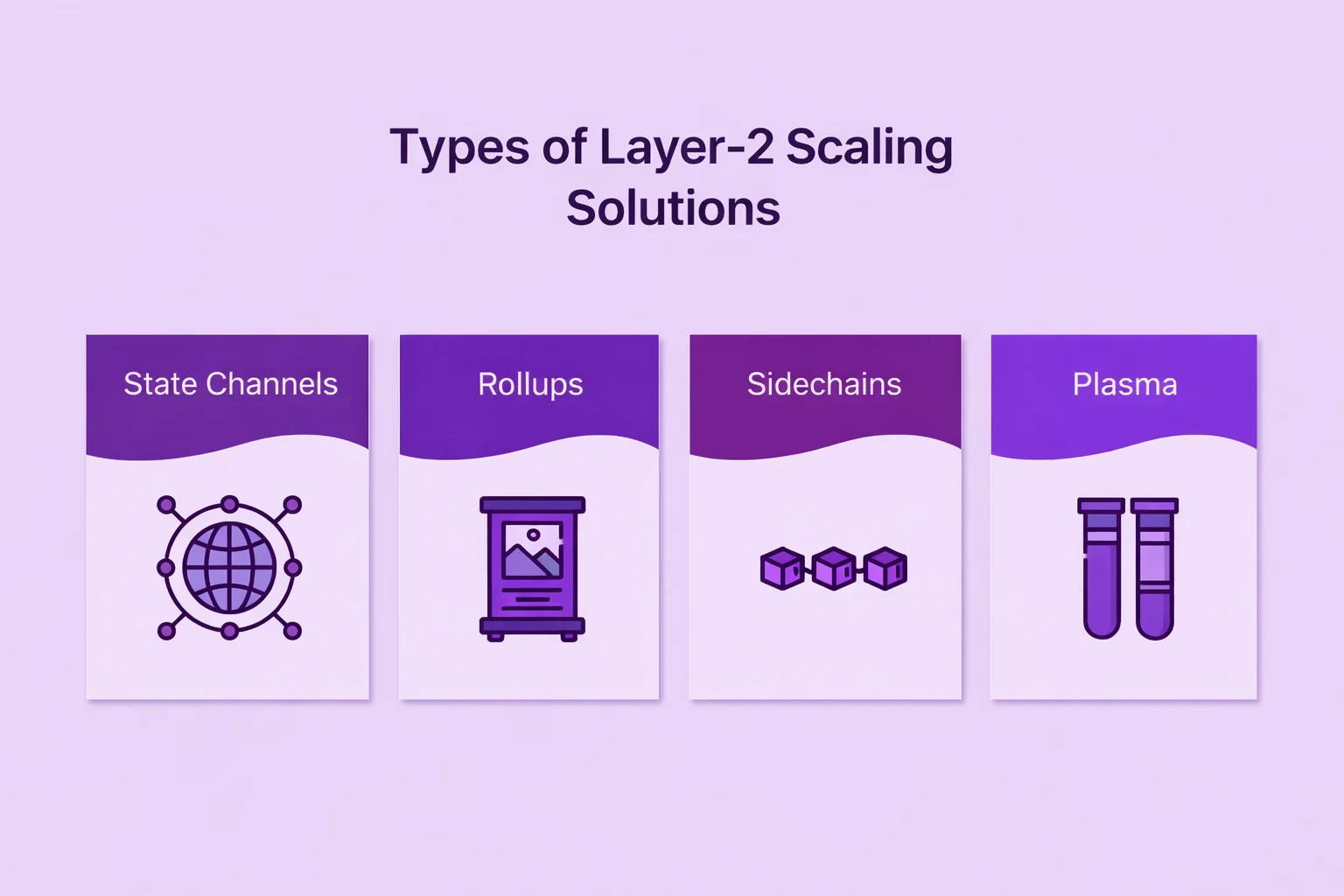
As trading activity increases on Crypto Exchanges, developers need better technologies to manage large numbers of transactions without slowing down the platform. This is where Layer-2 scaling solutions become very important in modern crypto exchange development. These technologies help exchanges process transactions faster, reduce network congestion, and lower transaction costs. Different types of Layer-2 solutions for crypto exchanges have been developed to solve scalability issues while still maintaining blockchain security. Each solution works in a different way, but all of them aim to improve the efficiency and performance of trading platforms.
Rollups (Optimistic Rollups and Zero-Knowledge Rollups)
Rollups are one of the most popular Layer-2 scaling solutions used in blockchain networks today. In this approach, multiple transactions are grouped together and processed outside the main blockchain. After processing, the combined transaction data is submitted to the main chain for verification. This process reduces the workload on the primary network and improves transaction speed. There are two main types of rollups used in Layer-2 scaling for crypto exchanges: Optimistic Rollups and Zero-Knowledge Rollups. Optimistic rollups assume that transactions are valid unless someone challenges them, while zero-knowledge rollups use advanced cryptographic proofs to verify transactions instantly. Both methods help Crypto Exchanges process large trading volumes more efficiently.
State Channels for Faster Transactions
State channels are another important technology used in Layer-2 solutions for crypto exchanges. In this system, two or more users can conduct multiple transactions between themselves off the main blockchain network. These transactions happen instantly and are only recorded on the main chain once the interaction is completed. This approach is very helpful for Crypto Exchanges because it allows fast and low-cost transactions between traders without constantly interacting with the blockchain. For developers involved in crypto exchange development, state channels offer a practical way to improve transaction speed and reduce network congestion.
Sidechains and Plasma for Scaling Crypto Exchanges
Sidechains and Plasma are also widely used Layer-2 scaling solutions designed to improve blockchain scalability. Sidechains are separate blockchains connected to the main network that allow transactions to be processed independently. Once the transactions are completed, they can be transferred back to the main blockchain. Plasma works in a similar way by creating smaller chains connected to the main blockchain to handle transactions more efficiently. By using these Layer-2 solutions for crypto exchanges, developers can build platforms that support higher trading activity while keeping transaction costs low. These technologies are becoming an important part of modern crypto exchange development as exchanges continue to scale and attract more users.
Benefits of Layer-2 Scaling for Crypto Exchanges
As the number of users on Crypto Exchanges continues to grow, exchanges must handle a huge amount of transactions every second. Traditional blockchain networks often struggle with this demand, which can lead to slow processing and higher fees. This is why many platforms are now adopting Layer-2 scaling solutions as part of modern crypto exchange development. These technologies help exchanges process transactions more efficiently while maintaining security and reliability. With Layer-2 scaling for crypto exchanges, trading platforms can deliver faster services, lower costs, and better performance for users.
Faster Transaction Processing and Trade Execution
One of the biggest advantages of Layer-2 solutions for crypto exchanges is faster transaction processing. In many cases, blockchain networks take time to confirm transactions because every transaction must be verified on the main chain. By using Layer-2 scaling solutions, many transactions can be processed outside the main blockchain and then recorded later. This process makes trade execution much quicker. For Crypto Exchanges, faster transaction processing means traders can buy or sell assets without waiting too long, which improves the overall trading experience.
Lower Gas Fees and Reduced Trading Costs
High transaction fees are a common problem on many blockchain networks, especially during periods of heavy trading activity. When the network becomes crowded, users often need to pay higher gas fees to get their transactions confirmed faster. With Layer-2 scaling for crypto exchanges, most transactions are handled off-chain, which reduces the load on the main blockchain. Because of this, transaction fees become lower and trading becomes more affordable. For companies working in crypto exchange development, implementing Layer-2 solutions for crypto exchanges can help attract more users by offering cost-efficient trading options.
Improved Performance and Scalability for High-Volume Trading
Another major benefit of Layer-2 scaling solutions is improved platform performance. Large Crypto Exchanges often process thousands of transactions during peak trading periods. Without proper scalability solutions, the system may become slow or overloaded. By integrating Layer-2 scaling for crypto exchanges, developers can build platforms that support high trading volumes without reducing performance. This makes the exchange more reliable and capable of handling a growing user base. In modern crypto exchange development, scalability has become a key factor for long-term success.
Enhanced Security Through Layer-1 Settlement
Security is always a top priority for Crypto Exchanges, as users trust these platforms with their digital assets. One important advantage of Layer-2 solutions for crypto exchanges is that they still rely on the security of the main blockchain network. Even though many transactions are processed off-chain, the final transaction data is settled on the Layer-1 blockchain. This means that the strong security and transparency of the main network are still maintained. Because of this combination of speed and security, Layer-2 scaling solutions are becoming an essential part of secure and scalable crypto exchange development.
Role of Layer-2 Scaling in Modern Crypto Exchange Development
In today’s rapidly growing crypto market, exchanges need strong infrastructure to handle increasing user activity and trading demand. Modern crypto exchange development is no longer only about creating a platform where users can buy and sell digital assets. It also involves building systems that can support high performance, advanced features, and smooth user experience. This is where Layer-2 scaling solutions play an important role. By adding an extra layer on top of the main blockchain, Layer-2 scaling for crypto exchanges helps platforms process transactions more efficiently while maintaining security. Because of these advantages, many developers are now integrating Layer-2 solutions for crypto exchanges to build faster and more scalable trading platforms.
Supporting High Trading Volumes on Crypto Exchanges
As the popularity of cryptocurrencies increases, Crypto Exchanges must handle a very large number of transactions every day. During periods of high trading activity, many blockchain networks struggle to process all transactions quickly. This can lead to delays and slow platform performance. With Layer-2 scaling solutions, exchanges can process a large portion of transactions outside the main blockchain, which helps manage high trading volumes more effectively. For companies involved in crypto exchange development, using Layer-2 scaling for crypto exchanges allows them to build platforms that remain stable and efficient even when trading activity increases significantly.
Improving User Experience with Faster Confirmations
User experience is one of the most important factors for the success of Crypto Exchanges. Traders expect transactions to be confirmed quickly so they can react to market changes without delay. When transactions take too long to process, users may lose trading opportunities and become frustrated with the platform. By integrating Layer-2 solutions for crypto exchanges, platforms can significantly reduce confirmation times. These Layer-2 scaling solutions allow many transactions to be processed faster, which improves the overall experience for traders. Faster confirmations also make the platform more reliable and attractive for new users.
Enabling DeFi, NFT, and Advanced Trading Features
Modern Crypto Exchanges now offer much more than simple cryptocurrency trading. Many platforms support decentralized finance services, NFT trading, staking, and other advanced features. These services require high transaction capacity and fast processing speeds. Without proper scalability solutions, it becomes difficult to manage these complex services efficiently. By using Layer-2 scaling for crypto exchanges, developers can create platforms that support DeFi applications, NFT marketplaces, and advanced trading tools without performance issues. This makes Layer-2 solutions for crypto exchanges an important part of the future of crypto exchange development, as platforms continue to expand their services and attract more users.
Layer-2 Solutions for Cross-Chain and Interoperable Crypto Exchanges
The crypto market is growing very fast and users are no longer limited to one blockchain network. Today, traders often use assets from different blockchains like Ethereum, BNB Chain, or other networks. Because of this, modern Crypto Exchanges need systems that can support interoperability and cross-chain trading. In advanced crypto exchange development, developers are now integrating Layer-2 scaling solutions to make cross-chain interactions faster and more efficient. These technologies help reduce delays and network congestion while allowing exchanges to connect multiple blockchain networks. With Layer-2 solutions for crypto exchanges, platforms can support smoother asset transfers and improve the overall trading experience for users.
| Aspect | Layer-1 Blockchain | Layer-2 Scaling Solutions |
|---|---|---|
| Transaction Processing | All transactions are processed directly on the main blockchain. | Transactions are processed off-chain and later settled on the main blockchain. |
| Transaction Speed | Slower during high network activity. | Much faster processing due to off-chain handling. |
| Transaction Fees | Higher gas fees when network congestion increases. | Lower fees because fewer transactions are processed on Layer-1. |
| Network Load | Heavy load on the main blockchain network. | Reduces congestion by handling transactions separately. |
| Scalability | Limited scalability due to blockchain capacity. | Highly scalable and capable of handling large transaction volumes. |
| Use in Crypto Exchanges | Basic infrastructure for blockchain transactions. | Improves performance and scalability of modern crypto exchanges. |
Importance of Cross-Chain Trading in the Crypto Market
Cross-chain trading has become an important feature for many Crypto Exchanges because users want the flexibility to trade assets across different blockchain networks. Without cross-chain capability, traders would need to move their assets manually between different platforms, which can be slow and expensive. In modern crypto exchange development, supporting multiple blockchain networks helps exchanges attract more users and expand their services. By using Layer-2 scaling for crypto exchanges, platforms can improve the speed and efficiency of cross-chain transactions while reducing the pressure on the main blockchain networks.
How Layer-2 Scaling Enables Faster Cross-Chain Transactions
One major advantage of Layer-2 scaling solutions is their ability to process transactions faster by handling many operations outside the main blockchain. When exchanges integrate Layer-2 solutions for crypto exchanges, cross-chain transactions can be executed more quickly compared to traditional blockchain processing. This helps reduce delays that usually occur when assets move between different networks. For developers working in crypto exchange development, this approach makes it easier to build platforms that support fast and reliable cross-chain trading. As a result, Crypto Exchanges can offer more efficient services to traders who operate across multiple blockchain ecosystems.
Expanding Liquidity Across Multiple Blockchain Networks
Liquidity is a key factor for the success of any trading platform. When Crypto Exchanges support assets from multiple blockchain networks, they can attract a larger number of traders and investors. This leads to higher trading activity and better market liquidity. By implementing Layer-2 scaling for crypto exchanges, platforms can handle transactions from different networks more efficiently without slowing down the system. These Layer-2 scaling solutions allow exchanges to manage higher trading volumes while maintaining performance. In modern crypto exchange development, expanding liquidity through cross-chain support is becoming an important strategy for building competitive and scalable exchanges.
Challenges in Implementing Layer-2 Scaling Solutions
While Layer-2 scaling solutions offer many advantages for modern Crypto Exchanges, implementing them is not always simple. Developers must carefully design the system to make sure it works smoothly with the main blockchain network. In many cases, integrating Layer-2 solutions for crypto exchanges requires technical expertise, proper infrastructure, and continuous updates. During crypto exchange development, teams need to consider factors like compatibility, transaction security, and smooth asset movement between blockchain layers. If these aspects are not managed properly, the platform may face technical problems or user experience issues. Because of this, planning and selecting the right scaling approach becomes very important when implementing Layer-2 scaling for crypto exchanges.
Selecting the Right Layer-2 Technology for Crypto Exchange Development
There are different types of Layer-2 scaling solutions available today, such as rollups, state channels, and sidechains. Each technology has its own advantages and limitations. For companies involved in crypto exchange development, choosing the right technology depends on the goals and features of the exchange platform. Some solutions focus more on transaction speed, while others provide stronger security or better scalability. If the wrong solution is selected, it may affect the overall efficiency of Crypto Exchanges. Therefore, developers must carefully analyze the platform’s requirements before integrating Layer-2 solutions for crypto exchanges.
Managing Layer-1 and Layer-2 Asset Transfers
Another challenge in Layer-2 scaling for crypto exchanges is managing the movement of assets between Layer-1 and Layer-2 networks. When users deposit or withdraw funds, the system needs to transfer assets between these layers safely and efficiently. If the process is slow or complicated, it can affect the user experience. In many Crypto Exchanges, this transfer process must be optimized so that users can move their assets without confusion or delays. During crypto exchange development, developers need to design reliable mechanisms that ensure secure and smooth transactions between the two blockchain layers.
Keeping Up with the Rapidly Evolving Layer-2 Ecosystem
The blockchain industry is constantly changing, and Layer-2 scaling solutions are evolving very quickly. New technologies and improvements are introduced frequently, which means developers must stay updated with the latest innovations. For businesses working in crypto exchange development, keeping track of these changes is important to maintain a competitive platform. If Crypto Exchanges do not adapt to new advancements in Layer-2 solutions for crypto exchanges, they may fall behind other platforms that offer better speed and scalability. Because of this, continuous research and system upgrades are necessary when implementing Layer-2 scaling for crypto exchanges.
Final Thoughts
As the crypto industry continues to grow, scalability has become a major challenge for many Crypto Exchanges. High transaction volumes, network congestion, and rising fees can affect the overall performance of trading platforms. This is why Layer-2 scaling solutions are becoming an essential part of modern crypto exchange development. By processing transactions more efficiently and reducing the load on main blockchain networks, Layer-2 scaling for crypto exchanges helps platforms deliver faster transactions, lower costs, and better user experiences.
Build Your Crypto Exchange with Expert Developers
Create a secure, high-performance crypto exchange with our expert development team.
Although there are some challenges in implementation, the benefits of Layer-2 solutions for crypto exchanges make them a valuable technology for building scalable and future-ready trading platforms. As blockchain technology continues to evolve, integrating these scaling solutions will play an important role in helping exchanges support growing user demand and advanced crypto services.
Frequently Asked Questions
Q1.What are Layer-2 scaling solutions in crypto exchanges?
Layer-2 scaling solutions are technologies built on top of the main blockchain (Layer-1) that help process transactions faster and reduce network congestion. In Crypto Exchanges, these solutions allow platforms to handle more transactions while lowering fees and improving overall performance.
Q2.Why is Layer-2 scaling important for crypto exchange development?
In modern crypto exchange development, scalability is a major challenge because exchanges must process thousands of transactions quickly. Layer-2 scaling for crypto exchanges helps improve transaction speed, reduce costs, and provide a smoother trading experience for users.
Q3.How do Layer-2 solutions improve the performance of crypto exchanges?
Layer-2 solutions for crypto exchanges process many transactions outside the main blockchain and later record the final data on the Layer-1 network. This reduces congestion, speeds up transaction confirmations, and improves the overall efficiency of Crypto Exchanges.
Q4.What are the most common types of Layer-2 scaling solutions?
Some of the most popular Layer-2 scaling solutions include rollups (Optimistic Rollups and Zero-Knowledge Rollups), state channels, sidechains, and plasma chains. These technologies help Crypto Exchanges scale their platforms and support higher trading volumes.
Q5.Can Layer-2 scaling reduce transaction fees on crypto exchanges?
Yes, Layer-2 scaling for crypto exchanges helps reduce transaction fees by processing many transactions off the main blockchain. This decreases network congestion and allows users to trade on Crypto Exchanges with lower gas fees.
Q6.Are Layer-2 solutions secure for crypto exchanges?
Yes, most Layer-2 solutions for crypto exchanges inherit the security of the main blockchain network because final transaction data is settled on Layer-1. This ensures that exchanges can scale their platforms without compromising security.
Explore Services
Related Services
Reviewed by

Aman Vaths
Founder of Nadcab Labs
Aman Vaths is the Founder & CTO of Nadcab Labs, a global digital engineering company delivering enterprise-grade solutions across AI, Web3, Blockchain, Big Data, Cloud, Cybersecurity, and Modern Application Development. With deep technical leadership and product innovation experience, Aman has positioned Nadcab Labs as one of the most advanced engineering companies driving the next era of intelligent, secure, and scalable software systems. Under his leadership, Nadcab Labs has built 2,000+ global projects across sectors including fintech, banking, healthcare, real estate, logistics, gaming, manufacturing, and next-generation DePIN networks. Aman’s strength lies in architecting high-performance systems, end-to-end platform engineering, and designing enterprise solutions that operate at global scale.