Ai Overview
The decentralized application landscape has evolved dramatically over the last few years. As blockchain ecosystems grow and global user bases in the USA, UK, UAE, and Canada expand, so does the pressure on foundational infrastructure to deliver speed, affordability, and reliability. Building decentralized applications today without considering Layer 2 scalability is no longer a strategic option; it is a technical oversight that can severely limit user adoption and operational efficiency.
The decentralized application landscape has evolved dramatically over the last few years. As blockchain ecosystems grow and global user bases in the USA, UK, UAE, and Canada expand, so does the pressure on foundational infrastructure to deliver speed, affordability, and reliability. Building decentralized applications today without considering Layer 2 scalability is no longer a strategic option; it is a technical oversight that can severely limit user adoption and operational efficiency.
Our agency has spent over eight years architecting and deploying blockchain solutions for clients across multiple industries and continents. In that time, one truth has become undeniable: DApps on Layer 2 Networks represent the most viable path to mass adoption. This guide brings together our accumulated expertise to walk you through everything from foundational concepts to practical implementation, helping you build scalable, secure, and future-proof DApps on Layer 2 Networks.
Key Takeaways
- DApps on Layer 2 Networks process transactions off-chain and settle on Layer 1, reducing fees by up to 100x compared to base chain operations.
- Layer 2 blockchain solutions like rollups and state channels enable scalable DApps capable of handling thousands of transactions per second.
- Ethereum Layer 2 solutions including Arbitrum, Optimism, Polygon, and zkSync each offer unique trade-offs in speed, cost, and security.
- Choosing the right Layer 2 network for DApp deployment depends on your throughput needs, EVM compatibility, and target user geography.
- Layer 2 DApp development requires knowledge of Solidity or Cairo, plus tooling like Hardhat, Foundry, Ethers.js, and testnet environments.
- Smart contracts must be optimised specifically for Layer 2 compatibility, accounting for differences in gas models and bridging mechanics.
- Security audits, multi-stage testing on Layer 2 testnets, and continuous monitoring are essential before and after mainnet deployment.
- Layer 2 scaling solutions for Ethereum DApps enable global user onboarding without sacrificing decentralization or base-layer security.
- The best Layer 2 networks for DApp deployment in 2025 combine mature ecosystems with strong developer tooling, liquidity, and governance frameworks.
- Following structured, stage-by-stage processes when building on Layer 2 networks reduces risk, accelerates delivery timelines, and improves long-term maintainability.
1. What Are Layer 2 Networks in Blockchain?
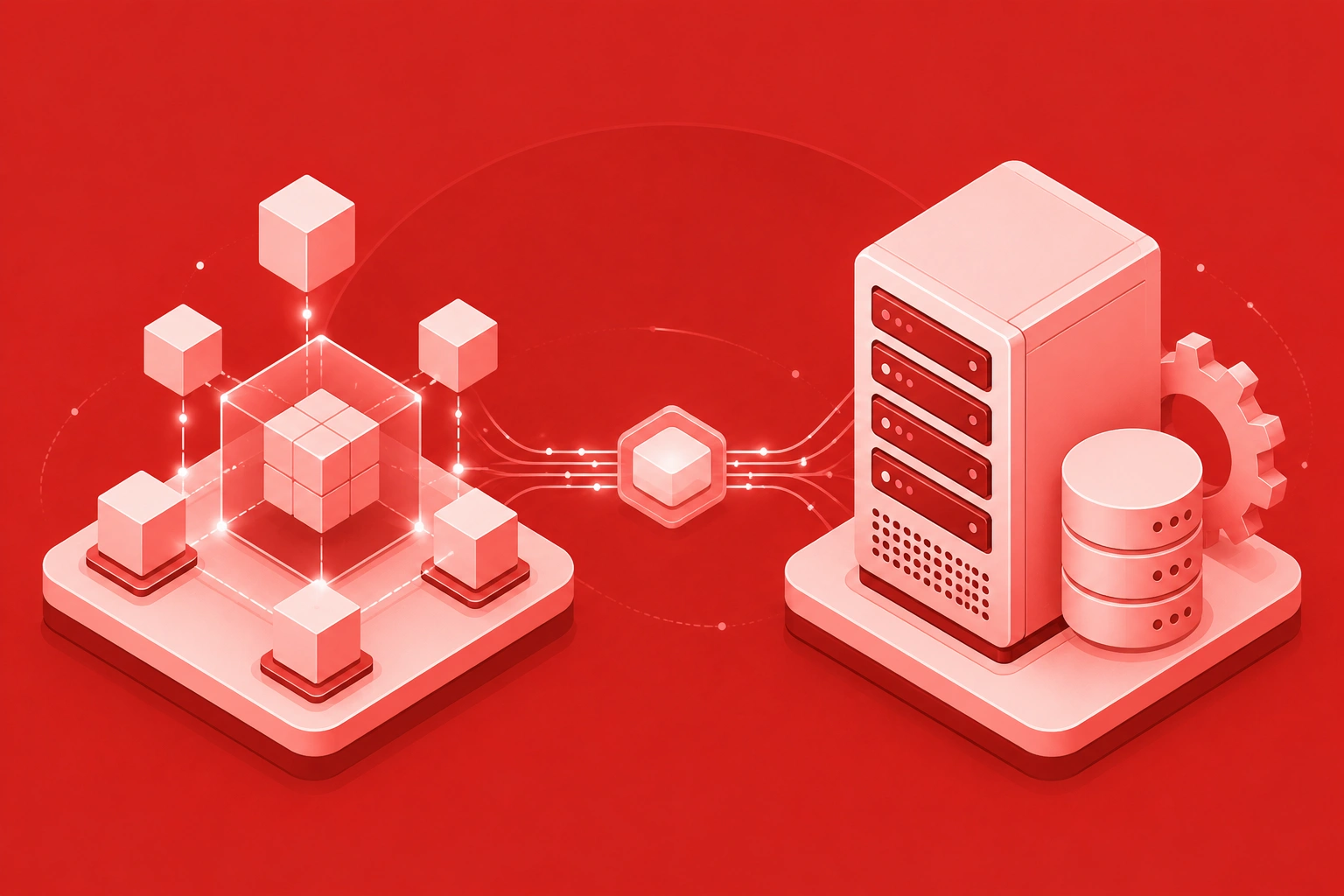
Layer 2 networks are secondary frameworks constructed on top of a base blockchain, commonly referred to as Layer 1. Their core purpose is to extend the computational and transactional capacity of the underlying chain without altering its consensus rules or security model. In practical terms, Layer 2 networks process transactions independently and then post compressed proof or data batches back to the Layer 1 chain for final settlement.
The concept emerged as a direct response to the scalability bottlenecks observed on networks like Ethereum, where congestion during high-demand periods led to prohibitive gas fees and slow confirmation times. For businesses in the USA and UK deploying consumer-facing DApps, such limitations translated directly into poor user experiences and lost revenue.
Layer 2 blockchain solutions preserve the trustless, permissionless nature of their parent chains while dramatically increasing efficiency. They are not competing with Layer 1 but rather complementing it — allowing the base layer to focus on security and finality while Layer 2 handles the high-frequency, low-cost transaction workload. This architectural separation is what makes DApps on Layer 2 Networks so powerful for real-world applications.
Real-World Example
Uniswap V3 deployed on Arbitrum (a leading Ethereum Layer 2 solution) reduced swap fees from several dollars on Ethereum mainnet to fractions of a cent, enabling retail traders in the UK and Canada to participate in DeFi without prohibitive costs. This single integration drove millions of new user transactions within weeks of launch.
2. Why Scalability Is Important for DApp Development?
Scalability is not a luxury feature; it is a foundational requirement for any application aiming to serve thousands or millions of concurrent users. For scalable DApps to compete with traditional web applications in terms of speed and cost, the underlying infrastructure must be capable of processing high transaction volumes without degradation in performance.
Consider the experience of DApp users in the UAE, where mobile-first audiences demand sub-second responsiveness. When transactions take minutes to confirm and cost tens of dollars in gas, the case for using a blockchain-based application collapses entirely. Scalability is what bridges the gap between blockchain’s promise and practical usability.
From a business perspective, scalability directly affects user retention, revenue potential, and market positioning. Applications built without scalable infrastructure face ceilings on growth that become painfully apparent once they attract significant traffic. Layer 2 DApp development specifically addresses these concerns by offloading computational workload from the congested mainchain, allowing applications to scale horizontally while maintaining the trustless guarantees users expect from blockchain technology.
3. How Layer 2 Solutions Improve DApp Performance
Layer 2 solutions improve DApp performance across three core dimensions: transaction throughput, cost efficiency, and finality speed. By moving the bulk of computational activity off the main chain, Layer 2 networks free DApps from the bottlenecks that plague base-layer blockchains during periods of high demand.
Transaction costs on Layer 2 networks can be 10 to 100 times lower than on Layer 1, which has a profound impact on DApp usability. For gaming DApps, DeFi platforms, and NFT marketplaces serving users in Canada and the USA, this cost reduction is often the difference between a viable product and one that users abandon due to high friction.
Performance gains on Layer 2 also come with preserved security. Leading Ethereum Layer 2 solutions like Optimism and Arbitrum inherit Ethereum’s security model through their fraud-proof or validity-proof mechanisms. This means DApps built on these networks enjoy high throughput without sacrificing the cryptographic security guarantees that make blockchain valuable in the first place. For enterprise clients in the UAE and UK, this balance of performance and security is a critical procurement criterion.
4. Types of Layer 2 Scaling Solutions
Not all Layer 2 scaling solutions are built the same way. Each type comes with specific trade-offs in security, latency, cost, and compatibility that DApp builders must understand before choosing a path forward.
Optimistic Rollups
Assume transactions are valid by default, using fraud proofs only when disputes arise. Arbitrum and Optimism use this model. Great EVM compatibility for Ethereum Layer 2 solutions.
ZK Rollups
Use zero-knowledge proofs to cryptographically validate every batch. zkSync and StarkNet lead this category. Offer near-instant finality and strong privacy guarantees.
State Channels
Allow parties to transact privately off-chain, settling only the final state on Layer 1. Ideal for high-frequency micro-transactions in payment DApps and gaming.
Sidechains
Independent blockchains running parallel to Layer 1 with their own consensus. Polygon PoS operates as a sidechain variant. Offer high flexibility but with different security assumptions.
Plasma
An older framework using child chains anchored to Ethereum mainnet. Now largely superseded by rollups but still in use for specific asset-transfer scenarios.
Validium
Similar to ZK rollups but stores data off-chain. Enables very high throughput with lower costs. Used in StarkEx-powered exchanges and NFT platforms.
5. Popular Layer 2 Networks for DApp Development
The Layer 2 ecosystem has matured rapidly. Several networks have emerged as dominant platforms for Layer 2 DApp development, each with unique strengths, tooling ecosystems, and developer communities.
6. Layer 1 vs Layer 2: Key Differences Developers Should Know
Understanding the architectural and operational differences between Layer 1 and Layer 2 is essential before committing to a Layer 2 DApp development strategy. These differences affect everything from gas management to smart contract compatibility.[1]
| Attribute | Layer 1 (Ethereum) | Layer 2 Networks |
|---|---|---|
| Transaction Speed | ~15 TPS | Up to 100,000 TPS |
| Gas Fees | High ($5-$100+) | Very Low ($0.001-$0.05) |
| Security Model | Native Consensus | Inherited from L1 |
| EVM Compatibility | Full | Mostly Full (varies) |
| Finality Time | ~12 seconds | Seconds to minutes |
Want to understand how decentralized applications work from the ground up?
7. Prerequisites for Building DApps on Layer 2 Networks
Before beginning Layer 2 DApp development, teams must establish a solid foundation of technical knowledge and infrastructure. Rushing into production without proper preparation is one of the most common causes of costly rebuilds and security incidents.
A thorough understanding of Solidity, the primary smart contract language for EVM-compatible Layer 2 networks, is essential. Developers should be comfortable with contract inheritance, interfaces, events, and gas optimisation patterns. Additionally, proficiency in JavaScript or TypeScript is required for front-end integration using libraries like Ethers.js or Web3.js.
Teams also need familiarity with wallet standards (EIP-1193, WalletConnect), IPFS for decentralized storage, and basic cryptographic concepts including hashing, signatures, and Merkle trees. For projects in the UAE and Canada operating under regulatory frameworks, understanding compliance requirements around KYC/AML integration is equally important before architectural decisions are made.
8. Essential Tools and Frameworks for Layer 2 DApp Development
The right tooling stack can dramatically reduce time-to-market for DApps on Layer 2 Networks. Over eight years, we have refined our preferred toolkit based on project complexity, team size, and target network requirements.
Core Tool Stack for Layer 2 DApp Development
Hardhat / Foundry
The primary smart contract testing and deployment frameworks. Hardhat excels for JavaScript-centric teams; Foundry is preferred for performance-intensive Solidity testing workflows.
Ethers.js / Web3.js
JavaScript libraries for interacting with Ethereum-compatible Layer 2 networks. Ethers.js is the modern standard, offering a cleaner API and smaller bundle size than Web3.js.
OpenZeppelin Contracts
Audited, reusable smart contract libraries covering token standards, access control, and governance. Essential for reducing attack surface in Layer 2 DApp development.
The Graph Protocol
Decentralized indexing protocol for querying blockchain data efficiently. Critical for building data-rich DApps on Layer 2 networks without overloading RPC endpoints.
WalletConnect / RainbowKit
Wallet integration libraries enabling seamless connection across MetaMask, Coinbase Wallet, Ledger, and 300+ other wallets. Essential for scalable DApps serving diverse global audiences.
Tenderly
Real-time smart contract monitoring, transaction simulation, and alerting platform. Invaluable for teams managing live DApps on Layer 2 Networks in production environments.
9. Choosing the Right Layer 2 Network for Your DApp
Selecting the right Layer 2 network for your DApp is one of the most consequential early decisions in Layer 2 DApp development. The wrong choice can lead to migration costs, ecosystem misalignment, and suboptimal user experiences down the line.
Network Selection Criteria: 3-Step Framework
Step 1: Define DApp Type
Identify whether your DApp is DeFi, gaming, NFT, identity, or enterprise. Each category aligns with different Layer 2 network strengths.
Step 2: Evaluate TPS and Cost
Match your expected transaction volume and user count against network throughput benchmarks and average fee data.
Step 3: Check Ecosystem Fit
Evaluate liquidity depth, partner protocol availability, bridge infrastructure, and community size relevant to your DApp’s use case.
For enterprise clients in the UK and UAE, we typically recommend Arbitrum for its mature DeFi ecosystem and robust bridge security. For consumer gaming DApps targeting North American audiences in the USA and Canada, Polygon remains the most pragmatic choice given its low fees and broad wallet support. zkSync Era is our recommendation for teams prioritising privacy and long-term ZK roadmap alignment.
10. Step-by-Step Process to Build Scalable DApps on Layer 2
Our agency follows a structured, stage-gated process when building DApps on Layer 2 Networks. This methodology has been refined across 80+ projects and reflects industry best practices for how to build scalable DApps on Layer 2 networks efficiently.
Layer 2 DApp Build Process
Step 01 – Requirements and Architecture Design
Define the DApp’s user flows, data model, and smart contract logic. Select the target Layer 2 network based on the criteria framework. Document all integration points including wallets, oracles, and bridges.
Step 02 – Smart Contract Writing
Write modular, gas-optimised Solidity contracts using OpenZeppelin base libraries. Implement Layer 2-specific patterns for batch processing, calldata compression, and cross-chain messaging.
Step 03 – Local and Testnet Testing
Run unit tests with Hardhat or Foundry locally. Deploy to the target network’s testnet (e.g., Arbitrum Goerli, Polygon Mumbai) for end-to-end validation before any mainnet exposure.
Step 04 – Front-End Integration
Build the user interface with React or Next.js, integrating Ethers.js for contract interaction and RainbowKit or WalletConnect for wallet connectivity across all major providers.
Step 05 – Security Audit
Commission a third-party audit covering reentrancy, overflow, access control, and Layer 2-specific attack vectors. Address all critical and high-severity findings before deployment.
Step 06 – Mainnet Deployment and Monitoring
Deploy contracts to mainnet with multi-sig governance controls. Set up Tenderly alerts, The Graph subgraphs, and analytics dashboards to monitor DApp health in real time.
11. Designing Smart Contracts for Layer 2 Compatibility
Smart contracts designed for Layer 1 do not always behave identically on Layer 2 networks. Differences in opcodes, gas cost models, block timestamps, and cross-chain messaging interfaces require developers to adapt their contract design patterns thoughtfully.
Calldata compression is a significant optimisation target on Layer 2 networks because rollups post calldata to Layer 1 and charge accordingly. Minimising calldata size — through tight struct packing, eliminating redundant parameters, and using events instead of storage where possible — directly reduces the cost of every transaction on your DApp.
For DApps requiring cross-chain functionality, native bridges and messaging protocols like LayerZero, Wormhole, or the network’s canonical bridge must be integrated with care. Improper bridge integrations have been the source of several high-profile exploits, making this one of the highest-risk areas in Layer 2 DApp development. Our agency mandates independent review of all bridge integration code as a non-negotiable checkpoint.
Industry Standard: Contract Upgrade Safety
Upgradeable contract patterns (proxy patterns) must be implemented with transparent or UUPS proxies and governed by multi-signature wallets. Deploying upgradeable contracts without proper access controls is considered a critical security failure by all major Layer 2 audit firms.
12. Integrating Wallets and Web3 Libraries
Wallet integration is the primary touchpoint between users and DApps on Layer 2 Networks. A poorly implemented wallet connection flow is one of the most common reasons users abandon DApps within seconds of arrival, regardless of the underlying technology’s quality.
RainbowKit is now the industry-standard wallet connection library for EVM-compatible Layer 2 networks, providing out-of-the-box support for MetaMask, Coinbase Wallet, WalletConnect, and Ledger. It handles network switching, chain detection, and error states automatically, reducing integration complexity significantly. For DApps targeting UAE users, ensuring wallet compatibility with regional providers and hardware wallets is an additional consideration.
Web3 libraries must also be configured correctly for each Layer 2 network’s RPC endpoints and chain IDs. Hardcoding mainnet configurations and forgetting testnet setups is a common source of deployment errors. We recommend using environment-based configuration files that separate testnet, staging, and production network parameters cleanly. This pattern prevents costly misdeployments and simplifies CI/CD pipeline management.
13. Testing and Deploying Your DApp on Layer 2 Networks
Comprehensive testing is non-negotiable for DApps on Layer 2 Networks. Smart contract vulnerabilities, once exploited on mainnet, are irreversible. Our agency applies a multi-layered testing methodology across every project we deliver.
Testnet deployments on networks like Arbitrum Sepolia and Polygon Mumbai should simulate realistic user behaviour including high-frequency transaction bursts, edge-case inputs, and wallet disconnection scenarios. Only after passing all staged testing gates should teams proceed to mainnet deployment.
14. Best Practices for Building Scalable and Secure DApps
Across our eight-plus years of Layer 2 DApp development, we have codified a set of best practices that consistently deliver better outcomes for clients in the USA, UK, UAE, and Canada.
Principle 1: Minimal Attack Surface
Deploy only what is necessary on-chain. Move auxiliary logic off-chain where possible to reduce the number of exploitable code paths.
Principle 2: Gas Optimisation First
Even on low-fee Layer 2 networks, gas efficiency signals professional engineering and directly benefits users during periods of network congestion.
Principle 3: Multi-Sig Governance
Never deploy upgradeable contracts with a single private key as owner. Multi-signature wallets are the industry standard for production Layer 2 DApp governance.
Principle 4: Event-Driven Architecture
Use Solidity events for all state changes that must be consumed by front-ends or external services. This reduces RPC load and improves DApp responsiveness significantly.
Principle 5: Decentralized Data Indexing
Rely on The Graph or equivalent indexing protocols rather than centralised databases for on-chain data retrieval to maintain your DApp’s trustless properties.
Principle 6: Continuous Security Monitoring
Deploy real-time monitoring tools post-launch. Anomaly detection and automated alerting can prevent minor incidents from escalating into catastrophic exploits.
Principle 7: User Experience Parity
Scalable DApps should match Web2 applications in responsiveness and simplicity. Complexity must be abstracted behind clean interfaces, especially for non-technical users.
Principle 8: Incremental Decentralization
Launch with some centralised components for agility, then progressively decentralise governance, oracles, and data storage as the DApp matures and user trust is established.
15. Common Challenges in Layer 2 DApp Development
Building DApps on Layer 2 Networks is not without its technical and operational challenges. Being aware of these pitfalls in advance enables teams to engineer around them proactively rather than discover them at significant cost post-launch.
Liquidity fragmentation is a particularly nuanced challenge for DeFi DApps on Layer 2 Networks. When users and assets are spread across Arbitrum, Optimism, Polygon, and zkSync simultaneously, the effective liquidity depth on any single network is lower than what exists on Ethereum mainnet. DApp architects must design with this reality in mind, often integrating cross-chain liquidity aggregators like Socket or Li.Fi to provide seamless user experiences despite the fragmented landscape.
[2]
16. The Future of Layer 2 Networks in DApp Development
The trajectory of Layer 2 networks points toward a future of even greater scalability, improved interoperability, and expanding developer tooling. The ZK proof space in particular is advancing rapidly, with teams across the globe working to make ZK verification faster, cheaper, and more accessible to mainstream developers.
Concepts like “Layer 3” application-specific chains (app-chains) built on top of Layer 2 networks are already emerging, enabling DApps to operate on their own dedicated throughput environment while still anchoring security to Ethereum. Projects targeting global enterprise audiences in the USA, UK, UAE, and Canada are increasingly evaluating app-chains as a long-term infrastructure strategy.
Interoperability protocols are also maturing rapidly. Native cross-rollup communication standards will reduce the friction of bridging assets and state between Layer 2 networks, gradually resolving the liquidity fragmentation challenges that exist today. As these protocols standardise, the next generation of DApps on Layer 2 Networks will operate fluidly across multiple chains without users needing to understand the underlying complexity.
For teams planning long-term blockchain product roadmaps, our agency’s recommendation is clear: Layer 2 DApp development is not a niche specialisation; it is the mainstream standard for all serious blockchain applications being built today. Investing in understanding the Layer 2 landscape now positions organisations to capture the full value of this rapidly maturing ecosystem as adoption accelerates globally.
Expert Perspective
By 2027, the majority of Ethereum transaction volume is projected to flow through Layer 2 networks rather than the base layer. Teams that master Layer 2 scaling solutions for Ethereum DApps today are building on the infrastructure rails of tomorrow’s decentralised internet. The window to establish technical leadership in this space is open now but closing fast.
Ready to Build Scalable DApps on Layer 2 Networks?
Partner with our 8+ year blockchain agency to architect and launch high-performance DApps on Layer 2 — on time, on budget, and built to scale.
Frequently Asked Questions
Q1.What are DApps on Layer 2 Networks?
DApps on Layer 2 Networks are decentralized applications that run on secondary blockchain frameworks built on top of a primary chain like Ethereum. These Layer 2 blockchain solutions handle transactions off the main chain, then settle them on-chain. This architecture allows DApps to process thousands of transactions per second, significantly reducing gas fees and latency while preserving the security guarantees of the underlying Layer 1 blockchain infrastructure.
Q2.How do Layer 2 networks improve DApp scalability?
Layer 2 networks improve DApp scalability by processing transactions outside the congested main chain and batching them for final settlement. Techniques like rollups, state channels, and sidechains allow scalable DApps to handle much higher throughput than native Layer 1 systems. For developers in the USA, UK, UAE, and Canada targeting global users, this means their DApps can onboard millions of users without compromising on speed, cost, or decentralization.
Q3.What are the best Layer 2 networks for DApp development?
The best Layer 2 networks for DApp development include Polygon, Arbitrum, Optimism, zkSync, and StarkNet. Each offers distinct advantages: Polygon is widely adopted and EVM-compatible, Arbitrum provides robust tooling for complex DApps, Optimism focuses on simplicity and Ethereum alignment, while zkSync and StarkNet leverage zero-knowledge proofs for superior privacy and throughput. The best choice depends on your DApp’s requirements around cost, speed, and ecosystem.
Q4.Is Ethereum Layer 2 suitable for enterprise DApp projects?
Yes, Ethereum Layer 2 solutions are highly suitable for enterprise DApp projects. They inherit Ethereum’s security while dramatically lowering transaction costs and confirmation times. Enterprises in the UK, Canada, and UAE are already leveraging Ethereum Layer 2 solutions for financial applications, supply chain management, and identity verification. The growing ecosystem of audited tools, established governance frameworks, and deep liquidity makes them a top choice for production-grade enterprise applications.
Q5.How much does it cost to build DApps on Layer 2 Networks?
The cost to build DApps on Layer 2 Networks varies based on project complexity, smart contract logic, and the chosen network. Layer 2 DApp development is typically 60-80% cheaper to operate than equivalent Layer 1 deployments due to lower gas fees. Initial setup, audits, and tooling can range from a few thousand to hundreds of thousands of dollars. Partnering with an experienced agency ensures cost-efficient architecture decisions from the start.
Q6.What programming languages are used in Layer 2 DApp development?
Layer 2 DApp development primarily uses Solidity for EVM-compatible networks like Polygon, Arbitrum, and Optimism. For StarkNet, Cairo is the native language. JavaScript and TypeScript are used extensively for front-end integration via libraries like Ethers.js and Web3.js. Rust is gaining traction for performance-sensitive Layer 2 environments. Developers also use Hardhat, Foundry, and Truffle frameworks for testing and deploying smart contracts across various Layer 2 networks.
Q7.How do you test DApps before deploying on Layer 2 networks?
Testing DApps before deploying on Layer 2 networks involves several stages: unit testing individual smart contract functions using Hardhat or Foundry, integration testing with testnet deployments on networks like Polygon Mumbai or Arbitrum Goerli, and end-to-end testing using simulated user interactions. Security audits by third-party firms are strongly recommended before mainnet launch. Monitoring tools like Tenderly and The Graph help track DApp behaviour in staging environments before full production rollout.
Explore Services
Related Services
Reviewed by

Aman Vaths
Founder of Nadcab Labs
Aman Vaths is the Founder & CTO of Nadcab Labs, a global digital engineering company delivering enterprise-grade solutions across AI, Web3, Blockchain, Big Data, Cloud, Cybersecurity, and Modern Application Development. With deep technical leadership and product innovation experience, Aman has positioned Nadcab Labs as one of the most advanced engineering companies driving the next era of intelligent, secure, and scalable software systems. Under his leadership, Nadcab Labs has built 2,000+ global projects across sectors including fintech, banking, healthcare, real estate, logistics, gaming, manufacturing, and next-generation DePIN networks. Aman’s strength lies in architecting high-performance systems, end-to-end platform engineering, and designing enterprise solutions that operate at global scale.