
Native Solana Restaking, Scaled Into a Hardware-Accelerated L1
Solayer is a non-custodial restaking protocol that lets holders of SOL and Solana liquid staking tokens reuse their staked capital to secure additional Solana-native services, instead of leaving that economic security locked to base-layer consensus alone. The protocol has since expanded beyond restaking into InfiniSVM, a hardware-accelerated Layer 1 blockchain built for sub-second finality, positioning Solayer as one of the more structurally ambitious DeFi infrastructure platforms in the Solana ecosystem.
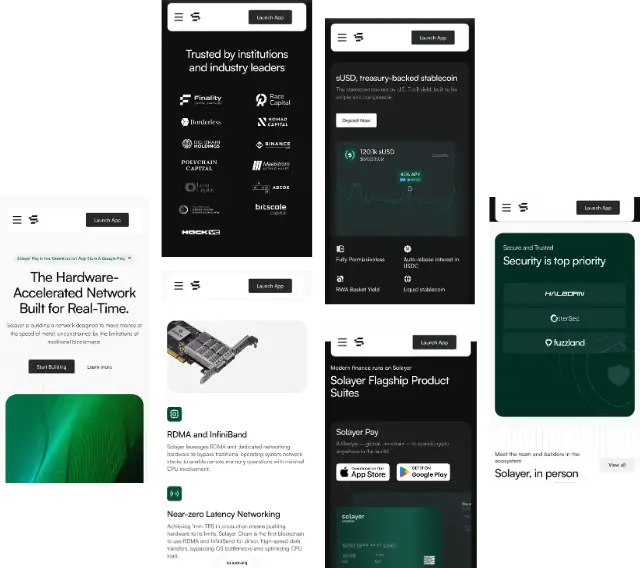
Get Started with Solayer
Users deposit native SOL or major Solana LSTs mSOL, JitoSOL, bSOL, INF and receive sSOL, a liquid restaking token. Restaked capital secures additional Solana-native services while continuing to earn base staking yield, service rewards, and a share of MEV.
Unlike Ethereum’s EigenLayer, which largely secures services external to Ethereum, Solayer focuses on “endogenous” Actively Validated Services that run natively inside the Solana ecosystem, keeping restaked security closer to the assets and applications it’s protecting.
Solayer extended its restaking yield engine into sUSD, a stablecoin collateralized by short-duration U.S. Treasury exposure with additional yield layered in from restaking and MEV activity, placing it inside the broader RWA-backed stablecoin category.
Solayer’s flagship infrastructure bet: a standalone SVM-compatible chain offloading transaction processing onto programmable hardware, using InfiniBand/RDMA-style interconnects between nodes to push throughput well beyond typical software-only blockchain limits.
InfiniSVM batches transactions into shreds verified across a network of provers under a hybrid PoA/PoS model, using Solana itself as a fallback consensus venue, a censorship-resistant design choice distinct from standard validator-only consensus.
LAYER functions as both the governance token for Solayer’s protocol suite and the native gas/staking token for InfiniSVM, with a fixed 1 billion supply and the majority allocated toward community and ecosystem incentives.
A $35 million fund, launched January 2026, seeds early and growth-stage projects building on InfiniSVM in real-time DeFi, payments, AI-driven systems, and tokenized real-world assets.
Solana’s validator set has always secured the base chain effectively, but that security historically stopped there. Any new application-specific network, specialized execution environment, or service layered around Solana had to either bootstrap an entirely new validator set from scratch or rely on bridges with weaker trust assumptions than Solana’s own base layer.
This created a familiar bottleneck for builders: meaningful economic security existed on Solana, locked inside SOL staking, but there was no native mechanism to extend that security to anything beyond consensus itself. Ethereum had already solved a version of this problem through EigenLayer, but that model was built around Ethereum’s validator economics and largely directs restaked capital toward services external to Ethereum.
Solana needed a restaking layer designed around its own architecture, one capable of supporting endogenous services without compromising the speed and low-fee characteristics that define the chain. Beyond that, the broader thesis the team was chasing went further: even with restaking solved, software-only execution was approaching a performance ceiling that the next generation of real-time DeFi, payments, and AI-driven applications would outgrow. That’s the gap InfiniSVM was built to close.

Deposited SOL and LSTs are pooled into Solayer’s restaking layer, which issues sSOL as a liquid, composable receipt token. Stakers act as the supply side, applications needing security and throughput guarantees act as the demand side, and validators allocate stake-weighted resources between them, conceptually similar to how cloud infrastructure providers allocate compute on demand.
InfiniSVM moves portions of transaction execution onto programmable hardware rather than relying purely on commodity server software. Combined with InfiniBand/RDMA-class networking between nodes, the architecture targets near-microsecond inter-node communication, a meaningfully different engineering approach from most SVM and EVM chains currently in production.
Solayer’s contracts are open-source and have undergone audit processes including work with OtterSec, with key protocol-level actions gated behind decentralized multisig approval rather than single-key administrative control.
The chain uses software-defined networking across multiple execution clusters, designed to scale bandwidth dynamically based on application demand rather than running a fixed-capacity single execution path, the design choice behind its reported 330,000+ TPS alpha mainnet performance.
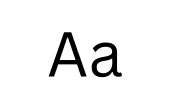
Visual identity and design elements
Primary font family and usage
Brand colors
#000000
#ffffff
#084d3e
Architecture Approach
Rather than launching InfiniSVM as a standalone bet, Solayer staged its infrastructure build in sequence: prove restaking demand first, then use that adoption base to justify the far more capital- and engineering-intensive hardware-acceleration roadmap. The restaking layer needed to support permissionless integration for any Solana-native service while keeping the liquid receipt token (sSOL) composable across the broader Solana DeFi stack, lending markets, LPing, and structured yield products alike.
The InfiniSVM build extended this same principle into infrastructure: rather than competing on software optimizations alone, the team bet on hardware-level differentiation, programmable acceleration chips and high-speed interconnects, as the more durable performance moat. This positioned Solayer not as another L1 chasing marginal throughput gains, but as a chain explicitly designed around workloads that need sub-second finality: real-time DeFi, payments, and AI-agent-driven transaction volume.
Adoption Results
As of 2026, Solayer’s restaking layer has processed deposits in the hundreds of millions of dollars across several hundred thousand unique wallets, with backing from institutional investors including Polychain Capital and Binance Labs. The InfiniSVM alpha mainnet went live in January 2026, reporting throughput above 330,000 TPS and finality near 400 milliseconds, alongside the rollout of a $35 million ecosystem fund directed at revenue-generating applications built on the chain. WalletConnect integration into the Solayer Explorer, completed in March 2026, has since reduced onboarding friction for both users and developers connecting to InfiniSVM.
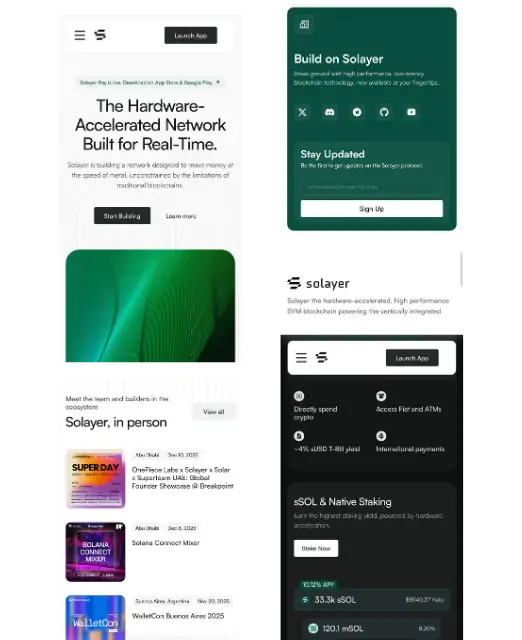
Liquidity and Adoption Scale
Solayer’s restaking TVL, while substantial for a Solana-native protocol, remains meaningfully smaller than Ethereum’s EigenLayer. The protocol’s growth depends on enough Solana-native projects committing to restaking to reach a sustainable security floor rather than competing on raw TVL alone.
Token Volatility and Communication
LAYER has experienced sharp price corrections tied to scheduled token unlocks, compounded at times by limited team communication around treasury movements, a relevant risk factor for any token transitioning from a protocol governance asset into a chain-level gas token.
Execution Risk on Hardware Claims
InfiniSVM’s throughput figures are currently alpha-mainnet results. Sustaining 330,000+ TPS, let alone scaling toward the team’s long-term 1M+ TPS target, under real, adversarial production load remains unproven at the scale claimed.
Endogenous AVS Dependency
Solayer’s restaking model is most effective when there’s a healthy pipeline of Solana-native services that actually need restaked security. Growth is partly dependent on third-party builder activity rather than purely on Solayer’s own roadmap execution.
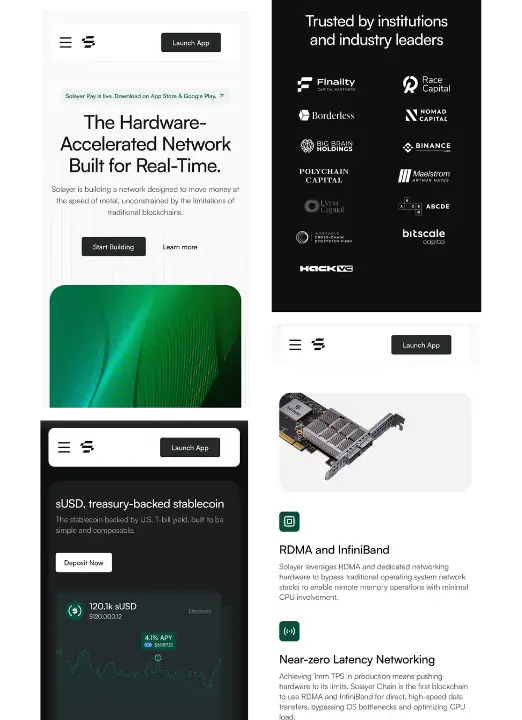
Solayer’s restaking layer runs on Solana mainnet, using Rust-based Solana program architecture for its core restaking and liquid token logic. InfiniSVM is built as an SVM-compatible Layer 1 using programmable hardware acceleration, InfiniBand/RDMA networking, and a hybrid proof-of-authority/proof-of-stake consensus model. Audit coverage includes OtterSec, with sUSD collateralized through short-duration U.S. Treasury exposure.