Decentralized RWA Trading Platform
Canborsa is a next-generation decentralized trading platform that bridges traditional finance and blockchain technology through Real-World Asset (RWA) tokenization. The platform enables users to trade tokenized stocks, commodities, cryptocurrencies, and perpetual contracts within a secure self-custodial ecosystem. By combining decentralized infrastructure with real-world asset accessibility, Canborsa creates a seamless trading experience for modern investors.
Get Started with Canborsa
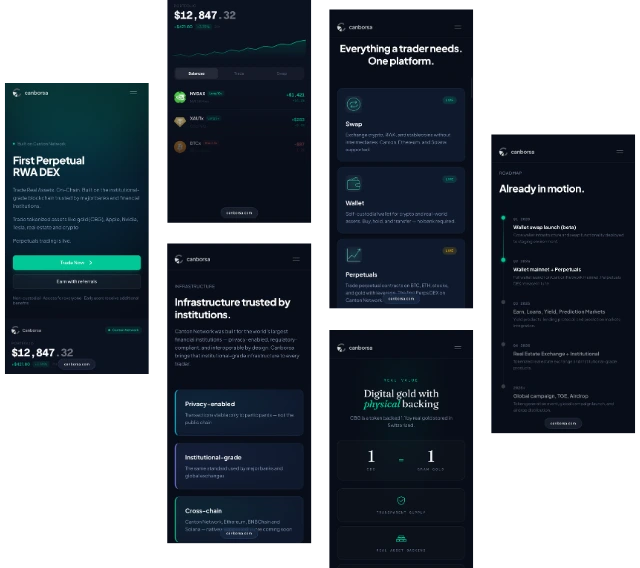
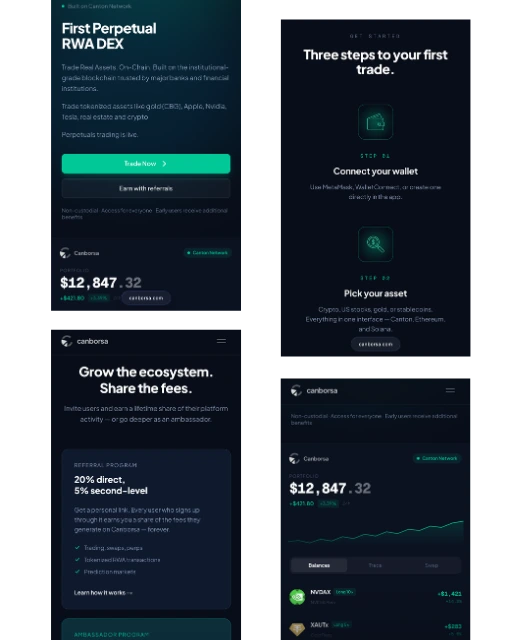
Canborsa enables users to trade tokenized stocks, commodities, cryptocurrencies, and perpetual contracts through a single platform, simplifying access to diverse financial markets.
The platform converts real-world assets into blockchain-based tokens, allowing users to invest in stocks, gold, oil, and other assets with greater accessibility.
Users retain complete ownership of their private keys and digital assets through a secure wallet, ensuring transparency, security, and independent asset control.
Canborsa supports leveraged long and short positions across multiple asset classes, enabling traders to maximize opportunities and improve capital efficiency.
The platform facilitates seamless on-chain swaps between cryptocurrencies, stablecoins, and tokenized assets with fast execution and transparent settlement.
Token holders can participate in governance decisions, influencing protocol upgrades, ecosystem development, and strategic initiatives across the platform.
Advanced liquidity mechanisms help ensure smooth trade execution, competitive pricing, reduced slippage, and improved market efficiency for users.
Canborsa enables secure settlement across tokenized stocks, commodities, and cryptocurrencies, creating a unified trading experience within one ecosystem.
The client envisioned a decentralized financial ecosystem capable of combining traditional financial markets with blockchain infrastructure. The objective was to remove barriers such as brokerage restrictions, limited trading hours, centralized custody, and complex onboarding procedures.
The platform needed to support tokenized stocks, commodities, and cryptocurrencies while maintaining institutional-grade security, scalability, and user accessibility. Another key requirement was enabling self-custody, ensuring users retained full ownership of their assets without relying on centralized intermediaries.
To achieve long-term sustainability, the platform also required advanced liquidity management, governance participation, and support for perpetual trading markets capable of handling large transaction volumes.
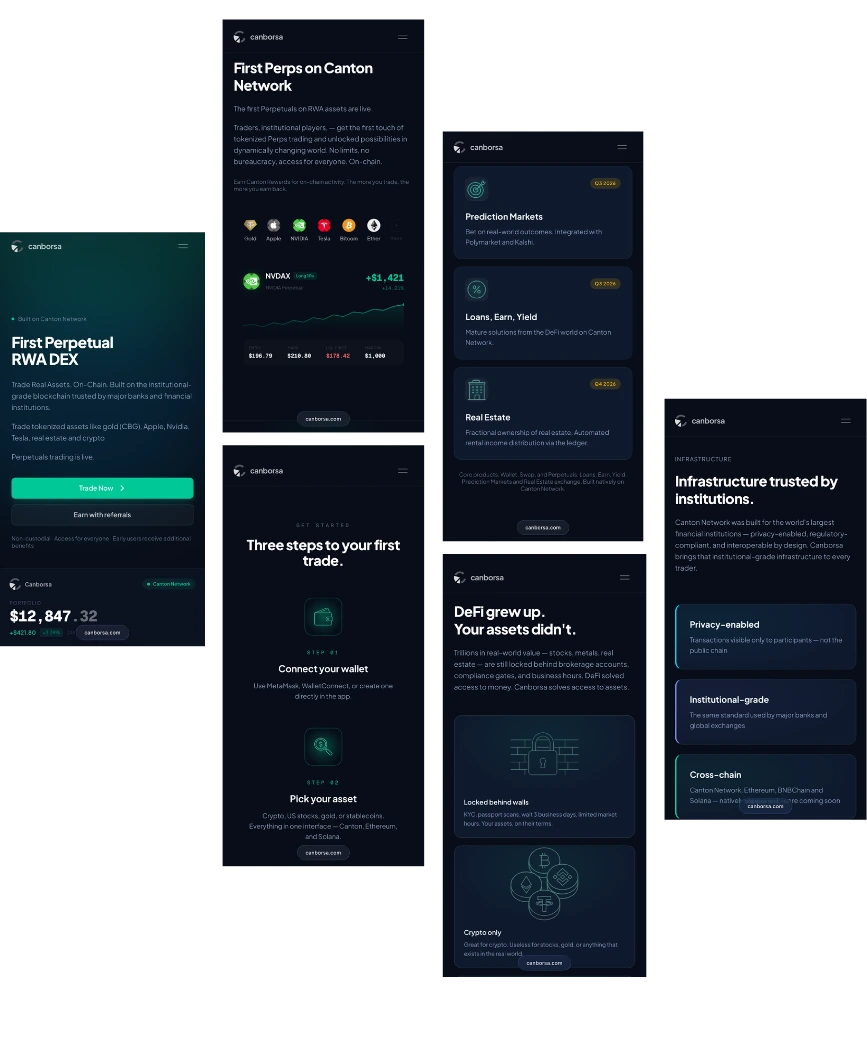
Utilizes Proof of Stake to validate transactions efficiently, enabling secure block production, lower operational costs, improved scalability, and sustainable participation across the network.
Empowers approved validators to verify transactions, maintain network integrity, and contribute to decentralized governance while ensuring transparency and operational reliability.
Provides rapid transaction finality for tokenized assets and trading operations, reducing settlement delays and ensuring reliable execution across decentralized financial markets.
Supports interoperability mechanisms that enable seamless communication between blockchain networks, facilitating secure asset transfers and expanding ecosystem connectivity.
Leverages audited smart contracts and automated verification processes to protect user funds, prevent vulnerabilities, and maintain trust across trading activities.
Applies Byzantine Fault Tolerance principles to ensure uninterrupted network performance, safeguarding transactions and maintaining consensus even during validator failures.
Visual identity and design elements
Primary font family and usage
Brand colors
#06383e
#080d18
Canborsa development focused on creating a decentralized trading infrastructure capable of supporting traditional and blockchain-based assets within a single ecosystem. The project began with designing a scalable architecture that could process high trading volumes while maintaining transparency and security.
Development milestones included implementing tokenized asset frameworks, self-custodial wallet functionality, perpetual trading modules, liquidity systems, and governance mechanisms. Multiple rounds of performance testing and smart contract audits ensured platform stability and user trust.
The development team prioritized user experience, enabling traders from both traditional finance and Web3 backgrounds to interact with the platform through a simplified interface.
Canborsa successfully launched a decentralized ecosystem that supports tokenized stocks, commodities, cryptocurrencies, and perpetual markets. The platform significantly reduced reliance on traditional intermediaries while offering users direct access to global markets.
The self-custody model improved user ownership and security, while tokenized assets expanded investment opportunities beyond conventional crypto markets. The integration of perpetual trading and liquidity systems enhanced trading flexibility and overall platform efficiency.
Canborsa established itself as a modern RWA-focused trading platform capable of supporting future growth across decentralized finance and tokenized asset markets.
Operating a platform that supports tokenized real-world assets required aligning with changing global regulations. The challenge was maintaining transparency, legal readiness, and decentralized functionality without compromising user accessibility.
Managing liquidity across tokenized stocks, commodities, and crypto markets demanded a strong infrastructure. The platform needed to ensure smooth trade execution, minimal slippage, and stable pricing during varying market conditions.
Protecting trading operations and user assets required extensive smart contract testing and auditing. Security measures were implemented to reduce vulnerabilities, strengthen reliability, and safeguard ecosystem interactions.
Integrating multiple asset classes into a unified trading environment presented technical complexity. The platform needed seamless interaction between tokenized assets, cryptocurrencies, and stablecoins without affecting performance.
Supporting growing transaction volumes required a scalable architecture capable of maintaining low latency and fast execution. Infrastructure optimization was essential to ensure consistent performance during peak trading activity.
Simplifying access to decentralized trading was a major challenge. The platform focused on intuitive navigation, wallet connectivity, and streamlined onboarding to make advanced financial tools accessible to all users.
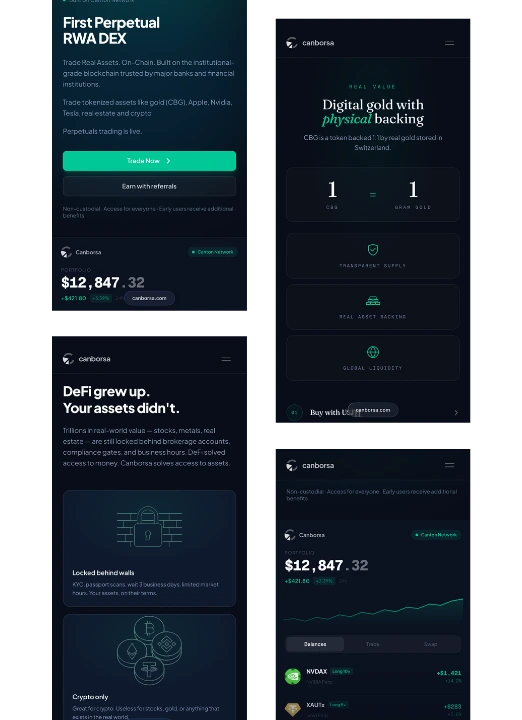
Canborsa is powered by a modern blockchain architecture that combines scalability, security, and interoperability.